What is Scrum project management? Definition, Methodology and Best practices
Scrum project management is defined as an agile framework used to manage complex projects, particularly in software development.
Scrum project management is defined as an agile framework used to manage complex projects, particularly in software development.
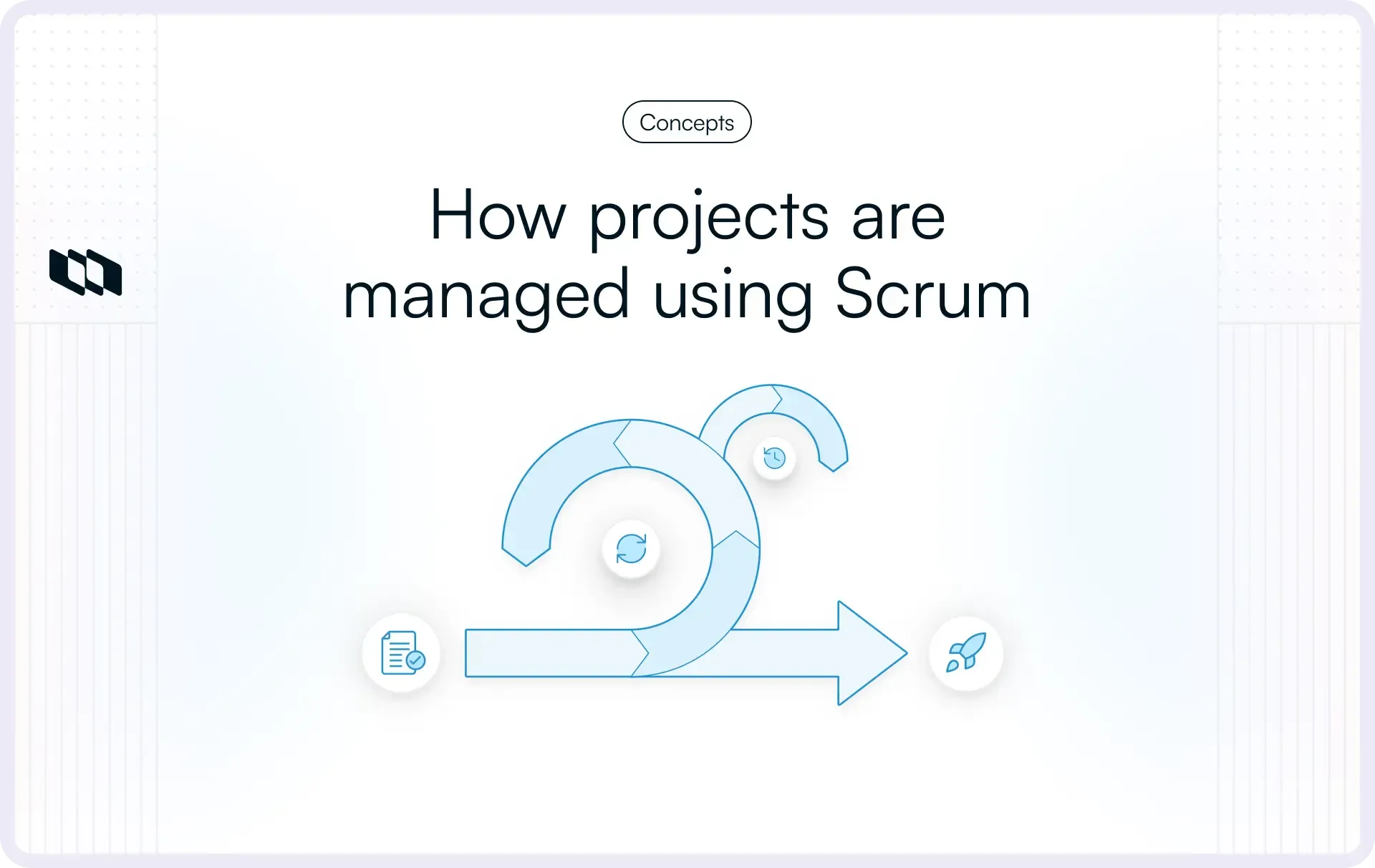
Introduction
Imagine launching a product where every few weeks you can see real progress, gather feedback, and adjust direction without derailing the entire project. This is the promise of Scrum project management, a framework built for teams operating in fast-changing environments. Rather than relying on long, rigid plans, the Scrum methodology organizes work into focused sprints that prioritize learning and delivery simultaneously. For product, engineering, and cross-functional teams managing complex work, the Scrum framework in project management provides a structured way to move faster while staying aligned with evolving goals.
What is Scrum project management?
Scrum project management is defined as an agile framework used to manage complex projects, particularly in software development.
It is designed to help teams work iteratively and incrementally, allowing them to deliver functional pieces of a product in short, time-boxed intervals known as sprints.
Scrum emphasizes collaboration, flexibility, and continuous improvement, enabling teams to adapt to changes quickly and respond to feedback from stakeholders throughout the project. The framework relies on specific roles, events, and artifacts to ensure the team stays aligned and productive.
The core roles in Scrum are the product owner, Scrum master, and development team. The product owner is responsible for defining and prioritizing the features of the product, ensuring that the team works on the most valuable tasks.
The Scrum master facilitates the process, ensuring the team follows Scrum practices and removes any obstacles that could impede progress. The development team is responsible for delivering the work in each sprint. Together, these roles work collaboratively to ensure the project progresses efficiently.
Scrum operates in sprints, which typically last two to four weeks. Each sprint begins with a sprint planning meeting, where the team selects a set of tasks (user stories) from the product backlog to complete during the sprint. The daily stand-up meetings, called daily scrums, help the team stay aligned and address any issues.
At the end of the sprint, a sprint review is conducted to showcase the completed work to stakeholders and gather feedback. Following that, the sprint retrospective allows the team to reflect on the process and identify areas for improvement in the next sprint.
For example, consider a company developing a mobile banking app. Using Scrum methodology, product owner prioritizes the features, such as user login and account management, and adds them to the product backlog. In each sprint, the team selects features to work on, such as implementing the login screen. After two weeks, they present the completed login functionality to stakeholders in the sprint review, receiving feedback and making adjustments as needed. This iterative approach helps the team deliver a product that works as per stakeholder expectations, and user-centeric.
Related: What is Kanban project management?
Key components of Scrum project management methodology
The key components of Scrum project management methodology include specific roles, events, and artifacts that structure the process and foster collaboration, transparency, and continuous improvement. These components ensure that teams work efficiently and stay aligned with project goals. Here are the main components:
1. Scrum roles
Scrum defines three key roles that each play a specific part in the project:
- Product owner: Responsible for defining the product vision, managing the product backlog, and ensuring that the team works on tasks that provide the most value to stakeholders. The product owner prioritizes the work to be done and communicates the overall goals and objectives to the team.
- Scrum master: The Scrum master ensures the team follows Scrum principles and practices, helps remove obstacles that hinder progress, and fosters a productive and collaborative environment.
- Development team: A cross-functional group of professionals responsible for delivering the product increments. The team is self-organizing and accountable for completing the tasks selected for each sprint.
2. Scrum events
Scrum uses a series of regular events to create rhythm and ensure continuous progress:
- Sprint: A time-boxed iteration, usually lasting two to four weeks, during which the development team works on specific tasks from the product backlog.
- Sprint planning: A meeting held at the start of each sprint where the team collaborates with the product owner to decide which tasks from the product backlog will be worked on during the sprint. The team estimates the effort required and sets clear goals.
- Daily Scrum: A short, daily stand-up meeting (usually 15 minutes) where the team discusses progress, identifies any blockers, and aligns on the work for the day.
- Sprint review: A meeting at the end of the sprint where the team presents the completed work to stakeholders and gathers feedback.
- Sprint retrospective: A retrospective reflection meeting that is held at the end of each sprint to discuss what went well, what didn’t, and how they can improve in the next sprint, thereby incorporating continuous improvements.
3. Scrum artifacts
Scrum includes three key artifacts that provide transparency and focus for the team:
- Product backlog: A dynamic list of all desired features, enhancements, bug fixes, and technical work needed for the product.
- Sprint backlog: A list of tasks or user stories selected from the product backlog that the development team commits to completing during the sprint. It provides a focused list of goals for the current iteration.
- Increment: The product increment is the cumulative result of all completed work at the end of a sprint. Each increment is a functional version of the product that is potentially releasable, even if not all features are complete.
4. "Definition of done"
This is a shared understanding within the team of what it means for work to be considered complete. It typically includes criteria for quality, functionality, and testing, ensuring that no work is considered “done” unless it meets the agreed-upon standards. This promotes accountability and ensures a consistent level of quality in each sprint.
Scrum project management process: Key steps
The Scrum project management process follows a structured yet flexible set of key steps that ensure continuous progress and adaptability. These steps enable teams to deliver value incrementally while allowing for regular feedback and improvements. Here are the key steps in the Scrum project management process:
1. Product backlog creation and prioritization
The process begins with the creation of the product backlog, managed by the product owner. The product backlog is a dynamic list of all features, functionalities, bug fixes, and technical tasks that are required for the product. Each item in the backlog is prioritized based on its value to the business or the customer. The product owner continuously refines and reorders the backlog as new information or changes are received.
2. Sprint planning
At the beginning of each sprint (typically two to four weeks), the team holds a sprint planning meeting. During this meeting, the development team collaborates with the product owner to select high-priority items from the product backlog that will be worked on during the sprint. The team then breaks down these items into smaller, manageable tasks and sets clear sprint goals. The amount of work selected is based on the team’s capacity and past performance.
3. Sprint execution
During sprint execution, the team collaborates closely and works in a self-organizing manner to complete the tasks. No further changes are typically made to the sprint backlog during execution to allow the team to focus on the defined goals. The team uses Scrum tools (such as a task board or Kanban board) to track progress visually.
4. Daily scrum (stand-up) meetings
Every day during the sprint, the team holds a daily scrum or stand-up meeting, which typically lasts about 15 minutes. In this meeting, team members briefly discuss what they did yesterday, what they plan to do today, and any blockers or challenges they are facing. This ensures the team stays aligned and addresses any issues that could impede progress.
5. Sprint review
At the end of each sprint, stakeholders provide feedback, which is taken into account for future sprints. The sprint review helps ensure that the product is evolving in line with stakeholder expectations and needs.
6. Sprint retrospective
This is a meeting where the team reflects on the sprint to identify what went well, what didn’t, and how processes can be improved for the next sprint. The goal of the retrospective is continuous improvement, helping the team enhance their performance and efficiency in future sprints.
7. Product backlog refinement
Between sprints, the product backlog is continuously refined by the product owner, often with input from the team. This ensures that the product backlog remains up-to-date and aligned with the evolving needs of the stakeholders and the project.
These key steps form a cycle that repeats throughout the development process, allowing the team to deliver functional, incremental improvements to the product while adapting to changes and continuously refining their approach.
Related: Agile versus Scrum project management
Scrum values and pillars that guide the framework
Scrum project management works effectively when teams understand the principles that support the Scrum framework, not just the process itself. The Scrum methodology is built on empiricism, where teams learn from real progress and continuously adjust their approach. The pillars and values of Scrum provide a shared foundation that helps teams collaborate more effectively, maintain quality, and deliver consistent results in complex project environments.
Three pillars of Scrum
The Scrum framework in project management is guided by three core pillars that ensure teams stay aligned, transparent, and adaptable throughout the project lifecycle.
These pillars help teams make informed decisions, respond quickly to change, and maintain visibility across all stages of work.
- Transparency: Work stays visible and easy to understand. Teams make priorities, progress, blockers, and quality standards clear through the product backlog, sprint backlog, and a shared definition of done. Transparency reduces surprises and helps stakeholders trust the Scrum process in project management.
- Inspection: Teams regularly check progress and outcomes, not just activity. Sprint reviews, daily scrums, and retrospectives create frequent moments to inspect what was delivered, what changed, and what risks are emerging. Inspection keeps the team aligned with the sprint goal and the real needs behind the work.
- Adaptation: When inspection reveals new information, teams adjust quickly. That could mean changing backlog priorities, improving the way the team plans sprints, or fixing a recurring delivery bottleneck. Adaptation is what makes Scrum project management strong in environments where requirements evolve.
Scrum values
Alongside the pillars, the Scrum methodology is supported by five values that shape how teams collaborate and make decisions. These values guide team behavior and help ensure that Scrum remains effective even as projects grow more complex and fast-moving.
- Commitment: The team commits to the sprint goal and follows through with ownership. This does not mean committing to an unrealistic scope. It means taking responsibility for delivering the most important outcomes within the team’s capacity.
- Focus: Teams concentrate on what matters most in the sprint. Focus protects delivery from constant context switching and helps the Scrum framework stay effective even when priorities compete.
- Openness: Team members share progress, risks, and concerns early. Openness makes daily scrums useful, improves sprint reviews, and ensures issues get solved before they become late-stage surprises.
- Respect: Scrum teams work best when each role is trusted. Respect shows up as listening, collaborating across functions, and valuing each person’s contribution. It also supports healthy disagreement without politics.
- Courage: Scrum requires the courage to surface problems, push back on unclear requests, and improve ways of working. This value supports honest retrospectives and better decision-making in the Scrum project management process.
When these pillars and values guide the team, the Scrum process becomes more than a set of recurring meetings. It becomes a structured system that supports continuous improvement, stronger collaboration, and more predictable delivery across complex projects.
Benefits of using Scrum methodology for project management
The Scrum methodology plays a crucial role in project management, particularly in complex and dynamic environments like software development. Its emphasis on flexibility, collaboration, and continuous improvement makes it highly effective for delivering high-quality products in shorter cycles.
Here are the key benefits of using Scrum for project management:
- Promotes adaptability and flexibility
Scrum is designed to handle changing requirements, which is critical in fast-paced or evolving projects. Unlike traditional project management methods, Scrum allows teams to adapt to changes in project scope or customer needs without disrupting the entire process. Each sprint offers an opportunity to reassess priorities, making the methodology well-suited for projects where requirements are expected to change frequently. This adaptability ensures that the final product remains aligned with stakeholder expectations.
- Enhances collaboration and transparency
One of Scrum’s core strengths is its focus on collaboration among team members, product owners, and stakeholders. The use of daily stand-up meetings, sprint reviews, and retrospectives fosters open communication and ensures that everyone is on the same page. As a result, problems can be resolved quickly, and stakeholders remain engaged throughout the project’s lifecycle.
- Encourages continuous improvement
Scrum emphasizes continuous improvement through regular feedback loops and retrospectives. This ongoing process of reflection allows teams to refine their practices, improve efficiency, and increase the quality of their work over time. Teams using Scrum are encouraged to experiment with new ideas and solutions, fostering innovation while learning from mistakes.
- Delivers value incrementally
Scrum’s sprint-based approach allows teams to deliver functional increments of the product regularly, typically every two to four weeks. This incremental delivery model ensures that stakeholders receive value early and often, rather than waiting until the end of the project to see results. It also allows for early testing and feedback, which helps identify issues sooner and make adjustments. This incremental delivery minimizes risks and ensures that the product continuously evolves to meet user needs.
Related: What is software project management?
When to use Scrum project management
Scrum project management works best in environments where priorities evolve, feedback shapes direction, and teams need consistent visibility into progress. While the scrum methodology is widely used across product and engineering teams, it is not the right fit for every type of work. Understanding where the scrum framework in project management delivers the most value helps teams adopt it with clarity and realistic expectations.
When Scrum works best
Scrum becomes highly effective when teams operate in fast-moving environments that require adaptability, collaboration, and frequent delivery of value.
- Evolving requirements: Scrum works well when project requirements are expected to change or become clearer over time. Instead of locking scope early, teams can adjust priorities every sprint based on stakeholder feedback and new insights. This flexibility makes the Scrum process in project management suitable for complex and uncertain projects.
- Product development environments: The scrum methodology is particularly effective for software, product, and digital platform development, where features are built incrementally. Teams can deliver usable increments frequently, validate them with users, and refine direction without waiting for a long release cycle.
- Cross-functional teams: Scrum is designed for teams that include multiple skill sets, such as engineering, design, product, and quality. When work requires close collaboration across roles, the scrum framework creates shared ownership and clear visibility into who is doing what and why.
- Frequent feedback cycles: Projects that benefit from regular stakeholder or user feedback are well-suited to Scrum project management. Sprint reviews and iterative releases allow teams to gather input early, validate assumptions, and reduce the risk of building the wrong solution.
When Scrum may not be ideal
Although the scrum framework in project management is versatile, there are situations where it may add unnecessary complexity or fail to deliver its full benefits.
- Fixed scope and fixed timeline projects: Projects with rigid scope, strict deadlines, and minimal expected change often benefit more from traditional planning approaches. When deliverables and timelines are fully defined upfront, the iterative nature of Scrum may offer limited advantage.
- Highly predictable operational work
Routine operational tasks that follow a consistent and repeatable process may not require sprint-based planning or frequent retrospectives. In such environments, simpler workflow management systems can be more efficient. - Very small or solo workflows: Scrum relies on collaboration, shared ownership, and structured events. For very small teams or individual contributors managing independent tasks, the full Scrum process may feel unnecessary and heavy.
- Environments resistant to iteration: Scrum requires openness to feedback, adaptation, and continuous improvement. Organizations that prefer strict top-down planning, limited transparency, or infrequent stakeholder involvement may struggle to benefit from the scrum methodology.
Choosing the right approach depends on the nature of the work, the team structure, and the level of uncertainty involved. When applied in the right context, scrum project management provides a structured yet flexible system that helps teams deliver value consistently while adapting to change.
Scrum vs. Agile project management
Many teams confuse “Agile” with “Scrum,” causing adoption challenges. Agile is a broad approach focusing on iterative delivery, customer feedback, and adaptability. Scrum is a specific Agile framework with defined roles, events, and artifacts for short, predictable cycles. A clear understanding helps choose the right method and set team expectations.
Agile is the philosophy, Scrum is the framework
- Agile project management is a mindset and set of principles. It describes how teams should approach complex work, including working iteratively, collaborating closely with stakeholders, and learning through frequent delivery. Agile does not prescribe one exact process.
- Scrum methodology is a structured framework within Agile. It provides a concrete operating system for delivery through sprints, with clear ownership and recurring events that create rhythm. This is why the Scrum framework in project management is often the default choice when teams want both flexibility and structure.
Key differences between Agile and Scrum
Factor | Agile project management | Scrum project management |
What it is | A broad philosophy and set of principles | A specific framework that implements Agile |
Structure | Flexible, can be adapted in many ways | Defined roles, events, and artifacts |
Planning cadence | Varies by team and method | Sprint-based planning, usually 2–4 weeks |
Roles | Not fixed, depends on the approach | Product owner, Scrum master, development team |
Delivery rhythm | Iterative delivery, cadence varies | Regular increments are delivered every sprint |
Best for | Teams want flexibility in how they work | Teams need a clear system for execution |
When teams confuse Scrum and Agile
Teams often run into problems when they treat Scrum as a set of meetings rather than a delivery system, or when they assume that Agile automatically means Scrum.
Common confusion patterns include:
- Calling any sprint-based workflow “Agile” without clear ownership: Teams run sprints, but lack a true product backlog, prioritization, and a product owner who owns value decisions. This results in a delivery that appears busy but lacks direction.
- Running Scrum ceremonies without using the Scrum framework properly: Stand-ups, sprint reviews, and retrospectives happen, but there is no clear definition of done, no usable increment, and no real stakeholder feedback loop. The Scrum process becomes routine instead of a system for learning and delivery.
- Assuming Agile means no planning: Agile still requires planning. Scrum simply shifts planning into smaller cycles so teams can plan with better information and adjust based on what they learn each sprint.
If your team wants a clear, repeatable way to manage Agile projects, Scrum provides the structure. If your team needs more flexibility in how work flows, Agile can be practiced through other methods too, but Scrum remains one of the most widely adopted frameworks for managing complex work in modern teams.
Common mistakes teams make when using Scrum project management
Scrum project management yields strong results when teams apply it with clarity and discipline. Many struggle to see improvements due to inconsistent fundamentals. Identifying common mistakes early ensures Scrum serves as an effective execution system, not just a series of meetings.
1. Treating Scrum as only a set of meetings
One of the most frequent mistakes is reducing Scrum project management to daily stand-ups and sprint ceremonies. When teams focus only on meetings without aligning priorities, defining sprint goals, or delivering usable increments, the process becomes mechanical. Scrum is not a meeting schedule. It is a structured workflow designed to deliver value in short cycles. Teams should treat each sprint as a focused delivery window with clear outcomes rather than a sequence of recurring calls.
2. Weak product ownership and unclear priorities
The success of the scrum process in project management depends heavily on strong product ownership. When the product backlog lacks clear prioritization or when the product owner is not actively guiding decisions, teams often work on low-impact tasks or shift direction frequently. A strong product owner maintains a well-structured backlog, communicates priorities clearly, and ensures the team always understands the value behind each sprint.
3. Overloading sprints with too much work
Teams sometimes commit to more work than they can realistically complete within a sprint. This creates stress, unfinished tasks, and inconsistent delivery. Effective Scrum project management relies on realistic sprint planning based on team capacity and past performance. Committing to achievable goals helps teams maintain quality and deliver consistent increments rather than partially completed work.
4. Skipping or rushing retrospectives
Retrospectives are central to continuous improvement in the Scrum methodology, yet many teams treat them as optional or rush through them. When retrospectives are skipped, recurring issues remain unresolved, and the team loses the opportunity to refine its workflow. Teams should use retrospectives to identify patterns, address blockers, and implement small process improvements that compound over time.
5. Unclear definition of done
A weak or inconsistent definition of done leads to confusion about when work is truly complete. Without clear quality criteria, tasks may move forward with unresolved issues, incomplete testing, or missing documentation. Establishing a shared definition of done ensures that every increment delivered during the sprint meets the same standard of quality and usability.
6. Limited stakeholder involvement
Scrum relies on regular feedback to keep delivery aligned with expectations. When stakeholders are absent from sprint reviews or provide minimal input, teams lose valuable insight into whether the delivered work meets real needs. Active stakeholder participation in reviews and feedback cycles ensures that each sprint contributes to meaningful progress and reduces the risk of late-stage rework.
Avoiding common pitfalls ensures Scrum is used effectively. Clear ownership, realistic planning, consistent feedback, and a strong definition of done make Scrum a reliable system for delivering complex projects predictably and aligned.
Best Practices for using Scrum project management
Using Scrum project management effectively requires a combination of discipline, collaboration, and adaptability. Here are some best practices for ensuring success with Scrum:
1. Clearly define the product backlog
The product backlog should be continuously refined, with clearly prioritized user stories, tasks, or features. Keeping backlog items small, manageable, and well-defined helps the development team understand and execute tasks efficiently during sprints.
2. Ensure active involvement of the product owner
The product owner plays a critical role in Scrum as the bridge between the stakeholders and the development team. To ensure project success, the product owner must be actively involved in sprint planning, backlog grooming, and providing feedback during sprint reviews. Clear communication and collaboration between the product owner and the team are key to ensuring that the team works on the most valuable features and that stakeholder expectations are met.
3. Hold effective sprint planning and retrospectives
Sprint planning and retrospectives are two of the most important Scrum events. During sprint planning, it’s important to set realistic goals based on the team’s capacity and to break down large tasks into smaller, achievable ones. Team members should fully understand their roles and the sprint objectives. Retrospectives should be used as a platform for continuous improvement, where the team openly discusses what went well and what didn’t, identifying actionable improvements for the next sprint. Regular, honest retrospectives foster a culture of learning and adaptation.
4. Facilitate regular and meaningful daily stand-ups
The daily scrum (stand-up) meetings are an essential part of keeping the team aligned and identifying any blockers. Best practices for stand-ups include keeping them short (around 15 minutes) and focused on three key questions: What was accomplished yesterday? What will be done today? Are there any impediments? The Scrum master should ensure that stand-ups are productive and that any issues are addressed quickly outside the meeting to avoid derailing the discussion. This keeps the team synchronized and helps maintain steady progress.
5. Limit work in progress (WIP)
Managing work in progress (WIP) is important for maintaining team focus and ensuring high-quality outputs. It’s recommended that teams limit the number of tasks they are working on simultaneously to avoid overloading team members and creating bottlenecks. By focusing on completing one task or a set of tasks at a time, the team can deliver fully functional increments at the end of each sprint, rather than partially completed work.
6. Encourage cross-functional team collaboration
Scrum relies on a self-organizing, cross-functional team where members from different disciplines (development, design, testing, etc.) collaborate closely to achieve common goals. To get the most out of Scrum, encourage team members to share knowledge, work together on tasks, and help each other. This enhances productivity, builds team cohesion, and helps the team respond more flexibly to challenges. The Scrum master should encourage a collaborative environment and remove any barriers to teamwork.
7. Ensure the definition of done is clear and followed
The definition of done (DoD) is a critical part of Scrum that ensures that everyone on the team has a shared understanding of what it means for a task or feature to be considered complete. Best practices include defining clear criteria for the DoD, such as code being tested, reviewed, and documented. The team should strictly adhere to this definition to maintain consistent quality throughout the project. Having a well-established DoD helps prevent incomplete or low-quality work from being considered "done."
8. Adapt based on feedback
Scrum is all about continuous improvement, and this extends beyond team retrospectives. Stakeholder feedback gathered during sprint reviews should be taken seriously and used to adjust the product backlog and project priorities. Being responsive to feedback ensures the product stays relevant and valuable.
How to measure success in Scrum projects
Successful Scrum management is measured by consistent delivery, predictable progress, and meaningful outcomes, not by meetings or busy sprints. It relies on practical metrics to ensure delivery speed, quality, and stakeholder alignment.
The following metrics help teams determine whether the Scrum framework in project management improves execution over time.
1. Sprint velocity
Sprint velocity measures how much work a team completes in a sprint. It is usually calculated based on story points or completed tasks. Over several sprints, velocity reveals the team’s average delivery capacity.
Rather than comparing teams, velocity helps each team plan more realistically. When teams understand their typical capacity, sprint planning becomes more predictable, and commitments become more achievable.
2. Sprint burndown
A sprint burndown chart tracks how much work remains over time. It gives teams a simple visual of whether work is progressing as planned. If the burndown shows slow progress early in the sprint, the team can identify blockers and adjust quickly.
Burndown trends help teams maintain steady progress and avoid last-minute rushes at the end of the sprint.
3. Cycle time and lead time
Cycle time measures how long it takes for a task to move from active work to completion. Lead time measures the total time from when a request is created to when it is delivered. These metrics provide insight into delivery speed and workflow efficiency.
Tracking the cycle and lead time helps teams identify bottlenecks, reduce delays, and improve workflow across sprints.
4. Sprint goal success rate
Each sprint should have a clearly defined goal that aligns with product priorities. Measuring how often sprint goals are achieved provides a strong indicator of planning accuracy and team focus. Consistently meeting sprint goals shows that the team is selecting realistic work and executing effectively.
If sprint goals are frequently missed, teams may need to adjust scope, improve prioritization, or refine estimation practices.
5. Stakeholder satisfaction
Scrum emphasizes continuous feedback and alignment with stakeholders. Regular input from product leaders, customers, and internal stakeholders helps teams determine whether delivered increments create real value. Stakeholder satisfaction can be measured through sprint reviews, feedback sessions, and adoption of delivered features. High satisfaction levels indicate that the Scrum process in project management is aligned with business and user needs.
Tracking these metrics together provides a balanced view of success. Instead of focusing solely on activity, teams can evaluate delivery consistency, workflow efficiency, and value creation, ensuring that Scrum project management drives meaningful outcomes over time.
Final thoughts
Scrum project management provides a structured way for teams to manage complex work without losing flexibility. By organizing work into short, focused cycles, the scrum methodology creates clarity around priorities, ownership, and progress while allowing teams to adapt as requirements evolve. This balance of structure and adaptability makes the Scrum framework in project management effective for modern product and engineering teams.
Scrum works best when ownership is clear, work stays visible, and feedback is continuous. When teams treat Scrum as a complete delivery system rather than a set of recurring meetings, it becomes a reliable way to deliver value consistently, improve collaboration, and maintain alignment between strategy and execution across fast-moving projects.
Frequently asked questions
Q1. What are the 5 principles of Scrum?
The five core principles of Scrum are commitment, focus, openness, respect, and courage. These principles guide how Scrum teams collaborate, make decisions, and deliver work. They ensure that the Scrum framework in project management supports transparency, accountability, and continuous improvement across every sprint.
Q2. What is Agile vs Scrum?
Agile project management is a broad philosophy focused on iterative delivery, collaboration, and adapting to change. Scrum is a framework within Agile that defines roles, events, and artifacts to help teams execute work in structured sprints. In simple terms, Agile describes the mindset, while Scrum provides the practical system for managing projects.
Q3. What are the 5 phases of a Scrum?
The Scrum process in project management typically follows five key phases within each sprint cycle: backlog creation and prioritization, sprint planning, sprint execution, sprint review, and sprint retrospective. These phases repeat continuously, allowing teams to deliver incremental value while refining their workflow and priorities over time.
Q4. What are Scrum 3 pillars?
The three pillars of the Scrum methodology are transparency, inspection, and adaptation. Transparency ensures work and progress are visible to everyone. Inspection allows teams to regularly evaluate outcomes and processes. Adaptation enables teams to adjust priorities and workflows based on feedback and results, making Scrum effective for evolving projects.
Q5. What is the 3 5 3 rule in Scrum?
The 3-5-3 rule in Scrum is a simple structure used by some teams to maintain clarity during daily stand-ups: each team member shares 3 updates, meetings stay within 5 minutes per person, and discussions focus on 3 areas: progress, plans, and blockers. While not an official Scrum rule, this guideline helps teams keep daily scrums focused and efficient.
Recommended for you



 Download for Mac
 Download for Android