Agile versus Scrum project management
Agile and Scrum are both widely used in project management, especially in software development, but they have distinct differences. Agile is a broader project management philosophy, while Scrum is a specific framework that falls under the Agile umbrella.
Agile and Scrum are both widely used in project management, especially in software development, but they have distinct differences. Agile is a broader project management philosophy, while Scrum is a specific framework that falls under the Agile umbrella.
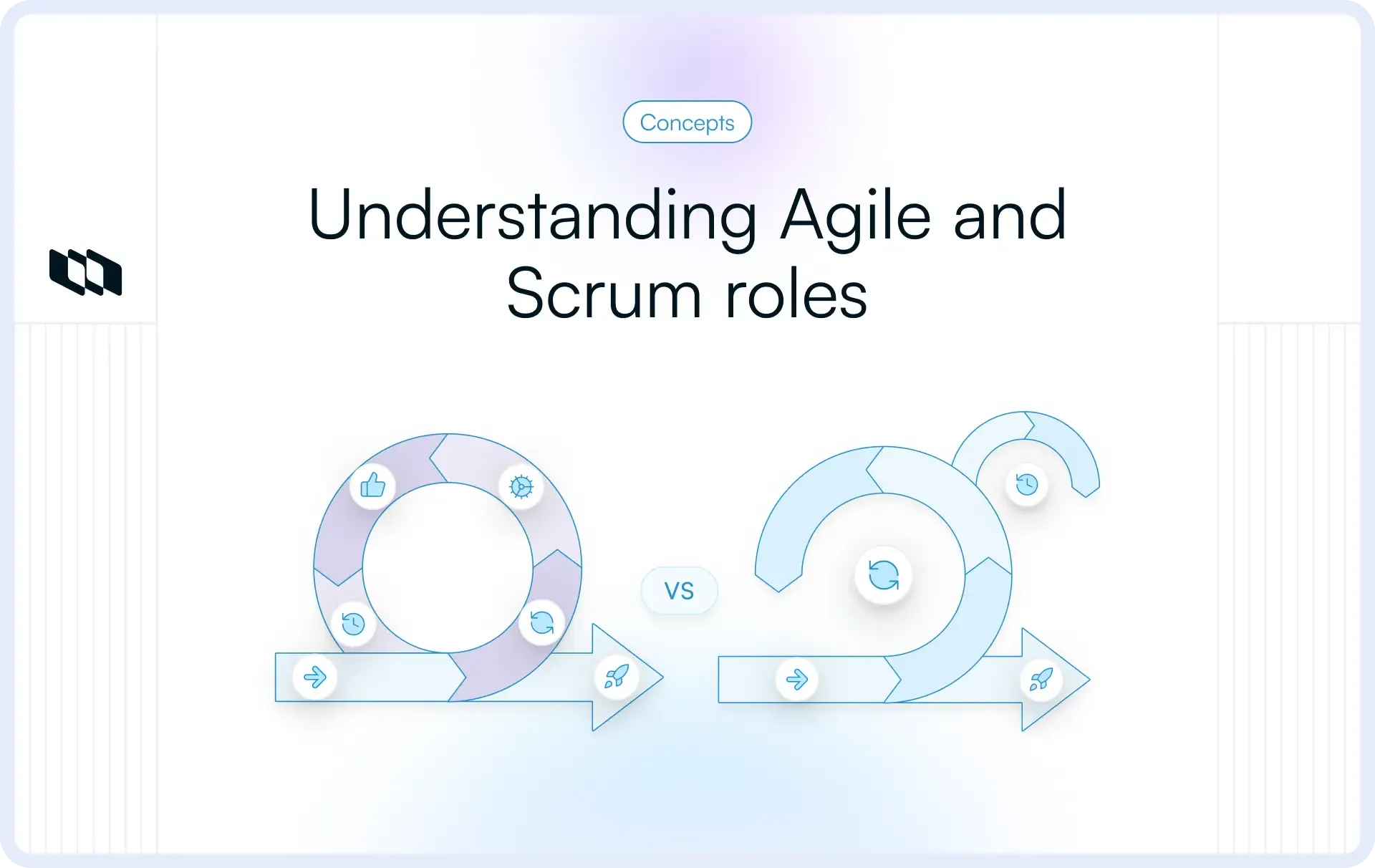
Agile versus Scrum project management: Key Differences
Agile and Scrum are both widely used in project management, especially in software development, but they have distinct differences. Agile is a broader project management philosophy, while Scrum is a specific framework that falls under the Agile umbrella. Here are the key differences between Agile and Scrum:
1. Framework versus philosophy
- Agile: Agile is a general project management philosophy that emphasizes flexibility, continuous feedback, and iterative progress. It is not tied to any specific set of practices, and there are several methodologies (such as Scrum, Kanban, and Lean) that fall under the Agile approach.
- Scrum: Scrum is a specific type of Agile methodology. It provides a structured approach to managing work, with defined roles (product owner, scrum master, development team), events (sprints, sprint reviews, daily scrums), and artifacts (product backlog, sprint backlog, increment). Scrum therefore follows a more defined process than Agile.
2. Flexibility versus structure
- Agile: Agile, as a philosophy, allows for more flexibility in terms of how a team operates. Teams can adopt various Agile methodologies (like Scrum, Kanban, or Extreme Programming) based on the nature of the project and the team’s needs. It encourages continuous communication and does not prescribe a fixed set of roles or ceremonies.
- Scrum: Scrum is more structured, with defined roles, ceremonies, and artifacts that must be followed. Scrum teams work in sprints, and each sprint has a strict cycle that includes sprint planning, execution, review, and retrospective.
3. Roles and responsibilities
- Agile: Agile methodologies may or may not define specific roles for the team. In many Agile practices, the team works collaboratively without a strict hierarchy or designated roles. The focus is on self-organization and adaptability, and team members often share responsibilities.
- Scrum: Scrum clearly defines three primary roles: the product owner, who manages the product backlog and prioritizes work; the scrum master, who facilitates the process and removes obstacles; and the development team, which delivers the work. These roles have clearly defined responsibilities and are essential in the Scrum framework.
4. Iterations and time-boxing
- Agile: Agile methodologies generally focus on delivering work in iterations, but the length of these iterations and the structure can vary. Agile methods like Kanban do not necessarily require fixed-length iterations and instead focus on continuous delivery and flow.
- Scrum: Scrum strictly follows time-bound iterations called sprints, that are fixed periods for the team to focus on delivering tasks from the backlog. The sprint length is predefined, and once it starts, no changes are made to the sprint backlog.
5. Delivery approach
- Agile: Agile methodologies encourage continuous delivery, where small increments or changes can be delivered frequently based on the project’s needs and feedback from stakeholders. Agile teams can release working software or features at any point in time, depending on the chosen methodology (e.g., Kanban allows for continuous delivery without the constraints of sprints).
- Scrum: Scrum follows a more structured delivery approach, where a potentially shippable product increment is delivered at the end of each sprint. Work is planned and executed in cycles, and delivery happens in increments aligned with the sprint cycle.
6. Changes during iterations
- Agile: Agile methodologies, in general, can be more flexible when it comes to making changes during iterations. Depending on the method being used, changes can be made to the work in progress to adapt to new information or feedback.
- Scrum: Scrum is more rigid in this regard. This provides focus and stability, allowing the team to concentrate on completing the planned tasks.
7. Project size and team structure
- Agile: Teams can adopt different Agile practices based on the size, complexity, and scope of the project. Agile can be customized for both large and small teams, as well as distributed teams.
- Scrum: Scrum is typically used for smaller, cross-functional teams (generally 7-9 members). Scrum’s framework works best when teams are small and can collaborate closely. For larger projects, Scrum may need to be scaled using frameworks like Scrum of Scrums or the Scaled Agile Framework (SAFe).
8. Scope and objectives
- Agile: Agile is more focused on adaptability and customer satisfaction, and the scope of the project can evolve throughout its lifecycle. Agile projects often welcome changes, even late in development, as long as they bring value to the customer.
- Scrum: Scrum also values adaptability, but it is more focused on delivering working increments within each sprint. Changes to the scope are welcomed, but only at the end of each sprint when the next sprint planning occurs. This ensures that the team can focus on the goals set for each sprint.
In summary, Agile is a broad philosophy that promotes flexibility and iterative development, while Scrum is a specific, structured framework within Agile that follows defined roles, events, and time-boxed iterations. Scrum provides a more prescriptive approach to managing work within Agile, with a focus on teamwork, sprint cycles, and incremental delivery.\
Agile and Scrum project management: Similarities
Agile and Scrum project management share several similarities, as Scrum is a specific framework that operates under the broader Agile philosophy.
Here are the key similarities between Agile and Scrum:
1. Iterative and incremental development
Both Agile and Scrum follow an iterative and incremental approach to project management. Instead of delivering the entire product at once, they focus on developing small, functional increments that can be reviewed and improved in short cycles.
2. Focus on customer collaboration
Agile and Scrum place a strong emphasis on collaboration with customers or stakeholders. The goal is to ensure that the product being developed aligns with user needs and provides value. Both methodologies prioritize regular feedback from stakeholders, allowing the development team to make necessary changes and refine the product based on real-world input.
3. Adaptability and flexibility
Both Agile and Scrum are designed to accommodate changing requirements. They encourage flexibility, allowing the project scope, priorities, and tasks to evolve as new information or feedback emerges. This makes both approaches ideal for environments where requirements are not fully defined at the outset or where they are likely to change over time.
4. Continuous improvement
Continuous improvement is a key principle in both Agile and Scrum. Teams regularly reflect on their processes, identify areas for enhancement, and implement changes to improve efficiency and quality. In Scrum, this is formalized through sprint retrospectives, while in Agile, it is a more generalized practice embedded in the iterative cycles.
5. Cross-functional teams
Both Agile and Scrum teams consist of members with diverse skill sets who work collaboratively to complete tasks. The emphasis is on self-organization, where team members share responsibilities and contribute to various aspects of the project, from development to testing.
6. Emphasis on transparency
Transparency is fundamental to both Agile and Scrum. They promote open communication and visibility into the project’s progress. This is achieved through regular meetings, such as daily stand-ups in Scrum, and frequent updates to stakeholders. The goal is to ensure that everyone involved in the project has a clear understanding of the current status and any potential challenges.
7. Focus on delivering value
Agile and Scrum both prioritize breaking down projects into smaller increments, they ensure that usable parts of the product can be delivered early and often. This approach helps teams address high-priority needs first and continuously deliver valuable results throughout the project.
8. Time-boxed iterations
Agile and Scrum both utilize time-boxed iterations for development cycles. While Scrum specifically uses sprints (usually two to four weeks), Agile methodologies also employ short, fixed-length iterations to ensure regular delivery of work. Time-boxing helps maintain focus, ensures regular delivery, and keeps the project on track.
Recommended for you



 Download for Mac
 Download for Android