Stop
force-fitting
It’s time to end the era of force-fitting. Your work should not conform to tools. Tools should adapt to your work.
jiranotionasanaclickupmondaylinear

Your switch to Plane is free.

Don't let your present control your future. Switch from your current work management tool. We’ll cover the cost of the remainder of your contract with any tool starting today.
CLAIM MY CONTRACT'S MATCH
Switch to PlaneSwitch to Plane
It is time to use software that adapts to how you work, not the other way around.
You do not deserve opinions that force-fit your workflow.
Your work does not follow a single structure. Your tool should not pretend it does. Stop bending real projects into someone else's "perfect process."

What Plane gives you,

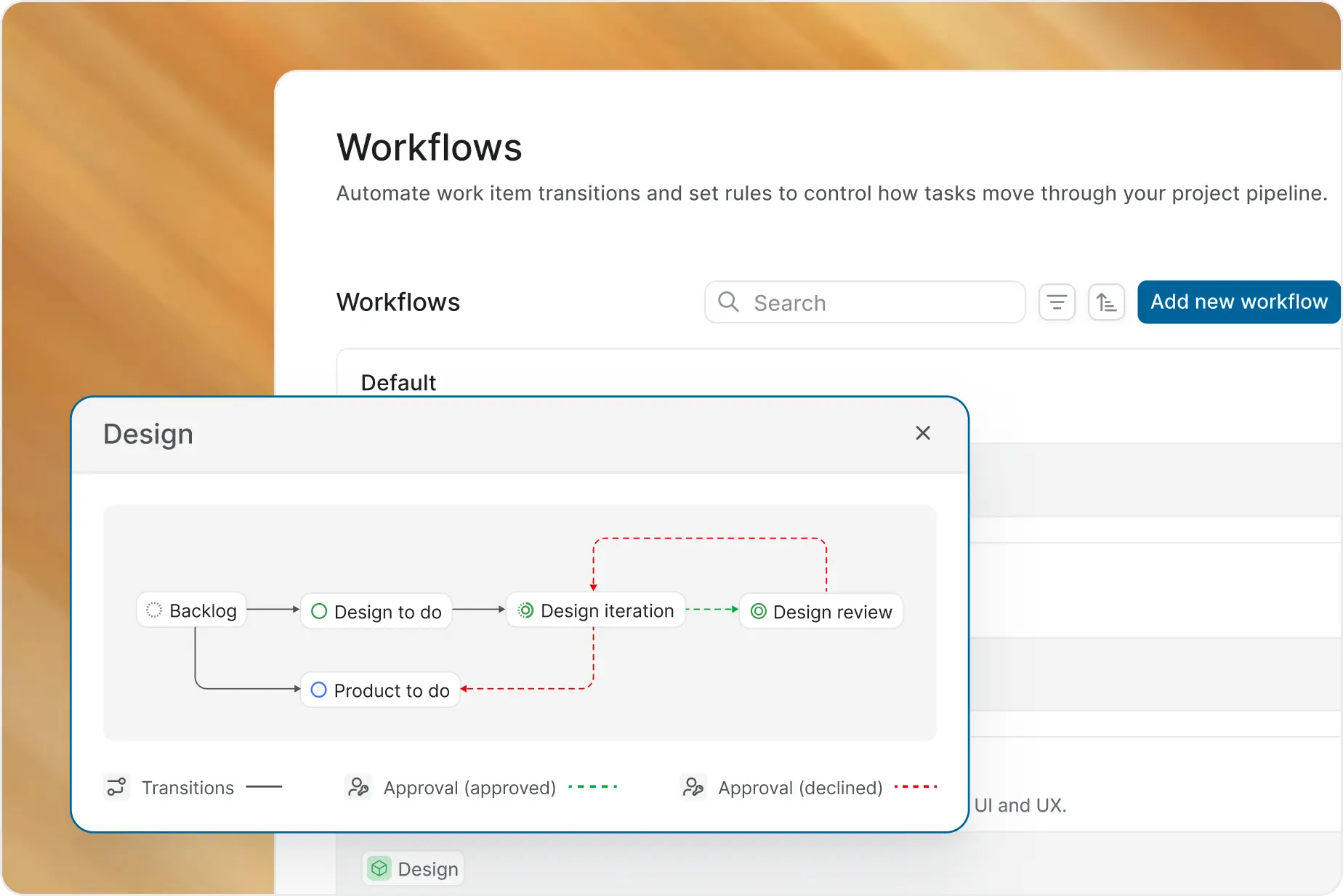
  • Work item types: correctly model bugs, requests, incidents, and tasks
  • Custom properties: capture the context your team actually needs
  • Structure without rigidity: consistent workflows that are adaptable to each team
/switch/deserve/dont-force-fot-workflows-desktop-light.webp
You do not deserve knowledge split away from work.
When documentation exists in separate systems, context leaks, specifications deviate, and decisions are lost. And your team spends more time searching than shipping.

What Plane gives you,

  • Pages: specs, meeting notes, decisions inside the project
  • Wiki: company knowledge that is easy to find and keep current
  • Linked context: docs and work items stay connected
/switch/deserve/dont-force-fot-knowledge-desktop-light.webp
You do not deserve AI that only rewrites notes.
If artificial intelligence only reformulates sentences to appear more polished, it is not helping. You do not need a rewriting tool. You require mechanisms that foster workflow momentum.

What Plane gives you,

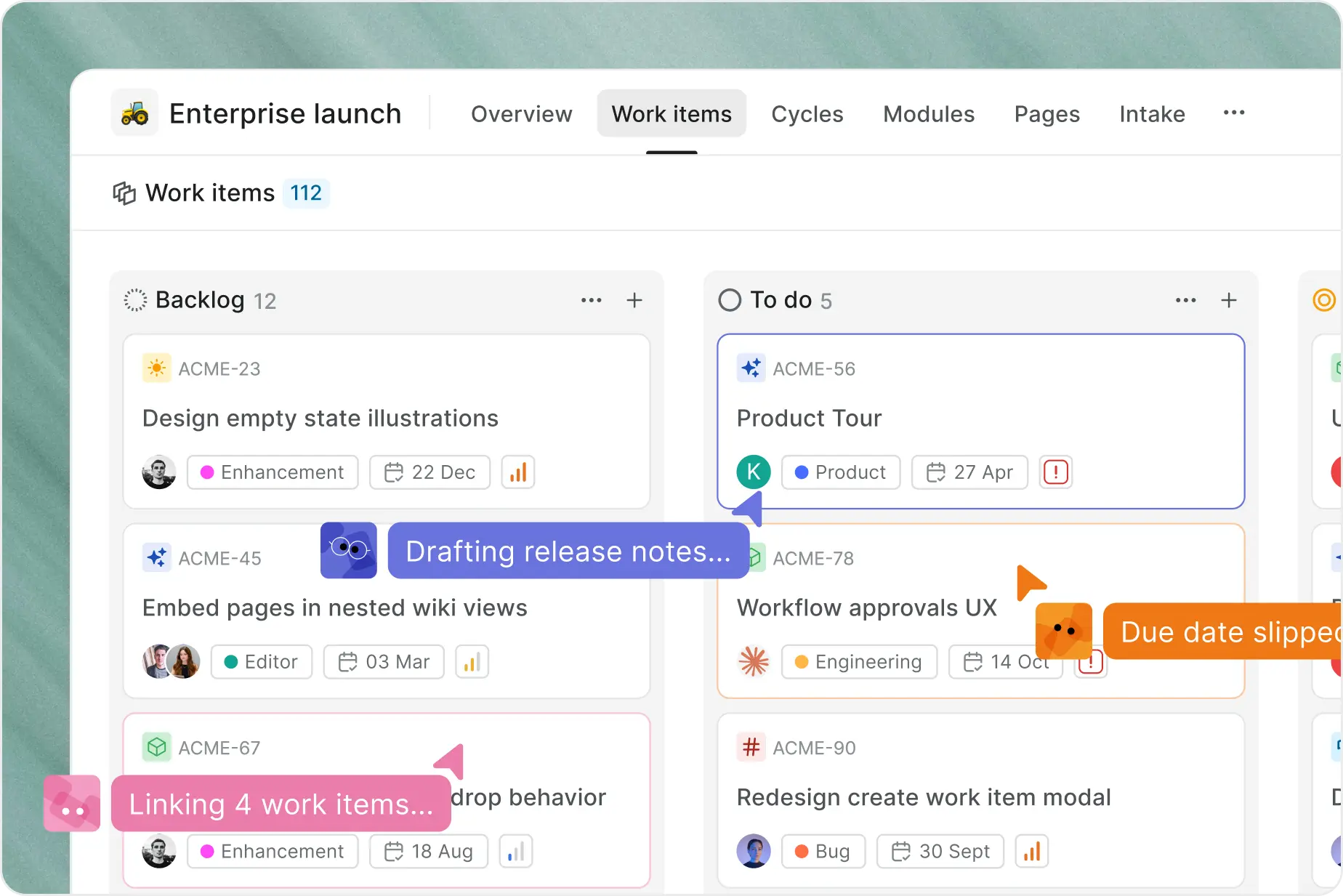
  • Context-aware assistance: works where the work actually lives
  • Summaries and updates: turn activity into clear status
  • Drafting + structuring: from messy thoughts to clean specs
/switch/deserve/dont-force-fot-ai-desktop-light.webp
You do not deserve vendors locking away your data.
Your projects are your history. Your backlog is your strategy. You should not need external authorization to retain ownership of your created work.

What Plane gives you,

  • Open-source core: transparency and long-term control
  • Self-hosted options: run it on your terms
  • Freedom to choose: no forced platform decisions
/switch/deserve/dont-force-fit-editions-desktop-light.webp
You do not deserve slow tools that break your flow.
Speed is not a luxury in project management; it distinguishes productive flow from operational friction, and facilitates adoption over abandonment.

What Plane gives you,

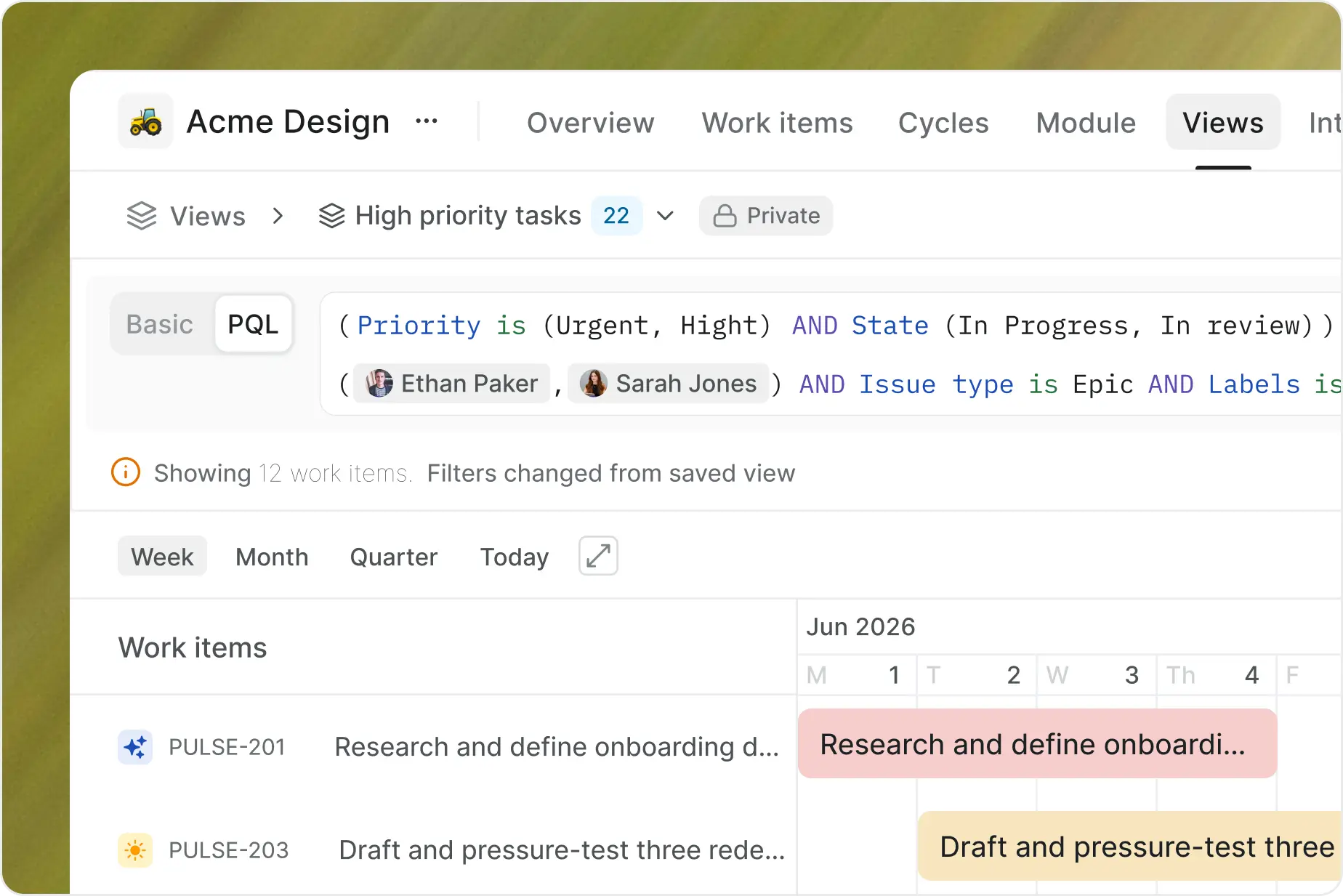
  • Fast navigation: fewer loading walls, more doing
  • Keyboard-first actions: move without hunting
  • Quick jump: get to what you need instantly
/switch/deserve/dont-force-fot-speed-desktop-light.webp
You do not deserve customer feedback outside your workflow.
Clients and customers should not be disconnected from internal workflows. Feedback should reside within the same systems where decisions are formulated.

What Plane gives you,

  • Intake: capture external requests in a structured way
  • Triage before backlog: keep noise out, keep signal in
  • One pipeline: feedback → work item → plan → ship
/switch/deserve/dont-force-fit-intake-desktop-light.webp
You deserve a better way to work,
You deserve Plane.

Frequently asked questions

Common questions about switching from rigid project management tools to Plane.
Workflows should not be constrained by software limitations.
What is the earliest indicator of force-fitting in a tool?

It functions efficiently only when user behavior aligns precisely with predefined expectations. However, real projects rarely conform in this way. As complexity increases, teams resort to improvised solutions, informal conventions, and temporary workarounds.

Why does a tool initially feel efficient but become cumbersome over time?

This often occurs when distinct categories of work are forced into uniform classifications. Bugs are relabeled as “tasks,” and feature requests as “tickets,” leading to a breakdown in clarity and loss of confidence in the project board.

What does “flexibility” entail in the context of project management?

It refers to a system’s capacity to represent work in its authentic complexity—accommodating diverse types, data fields, and functional needs—without compromising the integrity of the overall workflow.

Knowledge should be integrated within the environments where work happens.
Why is shared understanding often rebuilt each week?

A common reason is fragmented knowledge. People do not forget; the tools simply allow context to be lost.

Why does onboarding remain time-consuming despite the presence of comprehensive documentation?

Often, it is because such documentation is not contextually linked to actual project workflows. New team members do not require additional documents; rather, they need immediate access to relevant information aligned with the specific tasks at hand.

What does placing documentation close to the work change in practice?

It reduces meetings, cuts down on repeated questions, and helps avoid rehashing past decisions. Teams move forward with shared clarity.

Artificial intelligence should enhance clarity, not merely refine phrasing.
Why do many AI tools feel superficial in practice?

Because they lack contextual awareness. Without understanding the specific nature of your work, AI can only rephrase, it cannot clarify, connect, summarize, or support real progress.

What role should AI play in project management?

It should reduce coordination overhead, summarize progress, identify obstacles, assist with drafting updates, and transform informal input into actionable plans.

How can we distinguish genuine value from superficial appeal?

If the software saves time beyond writing tasks, such as by simplifying post-meeting follow-ups, streamlining updates, and clarifying decisions—then it offers meaningful utility.

Control is peace. Choice is progress.
What does vendor lock-in look like in practice?

It often includes abrupt pricing changes, essential features placed behind paywalls, enforced upgrades, and imposed workflows. Migration becomes difficult, leaving users dependent on the platform.

Why is "export" not the same as genuine platform freedom?

Because exports are often incomplete or poorly formatted. True vendor lock-in lies in the workflows, historical data, and the operational cost of migration.

What should a modern work platform provide?

Flexibility: cloud-based deployment for speed, self-hosted options for control, and assurance that user data will not be used as leverage.

Speed demonstrates respect for users' time.
Isn't performance a "nice to have"?

Not in tools that are used continuously. Seemingly minor delays accumulate into substantial productivity loss, eventually leading to decreased engagement or abandonment.

Why do teams revert to spreadsheets and messaging platforms?

Because these tools offer immediate responsiveness. When primary systems are slow, users seek workarounds. That's how process decay starts.

What does high performance unlock for teams?

More frequent updates, improved data hygiene, and more reliable execution. When maintaining the system is effortless, teams are more likely to keep it current.

Integrate external stakeholders into internal workflows.
Why is customer feedback often disorganized?

Because it arrives through multiple unstructured channels, calls, direct messages, forms, and informal documents, and is repeatedly reinterpreted before being transformed into actionable work.

What are the consequences of storing feedback outside core systems?

It undermines accountability and reduces visibility. Requests are lost, prioritization becomes inconsistent, and updates devolve into constant status-checking.

What should an effective feedback-to-delivery process look like?

A streamlined intake system, clearly defined ownership, structured data fields, and a triage step at the outset—ultimately resulting in trackable work linked to active projects and measurable outcomes.

Ready to switch
It’s time to end the era of force-fitting.
Your work should not conform to tools. Tools should adapt to your work.
Talk to sales
Plane
Nacelle