How to manage cross-functional teams effectively
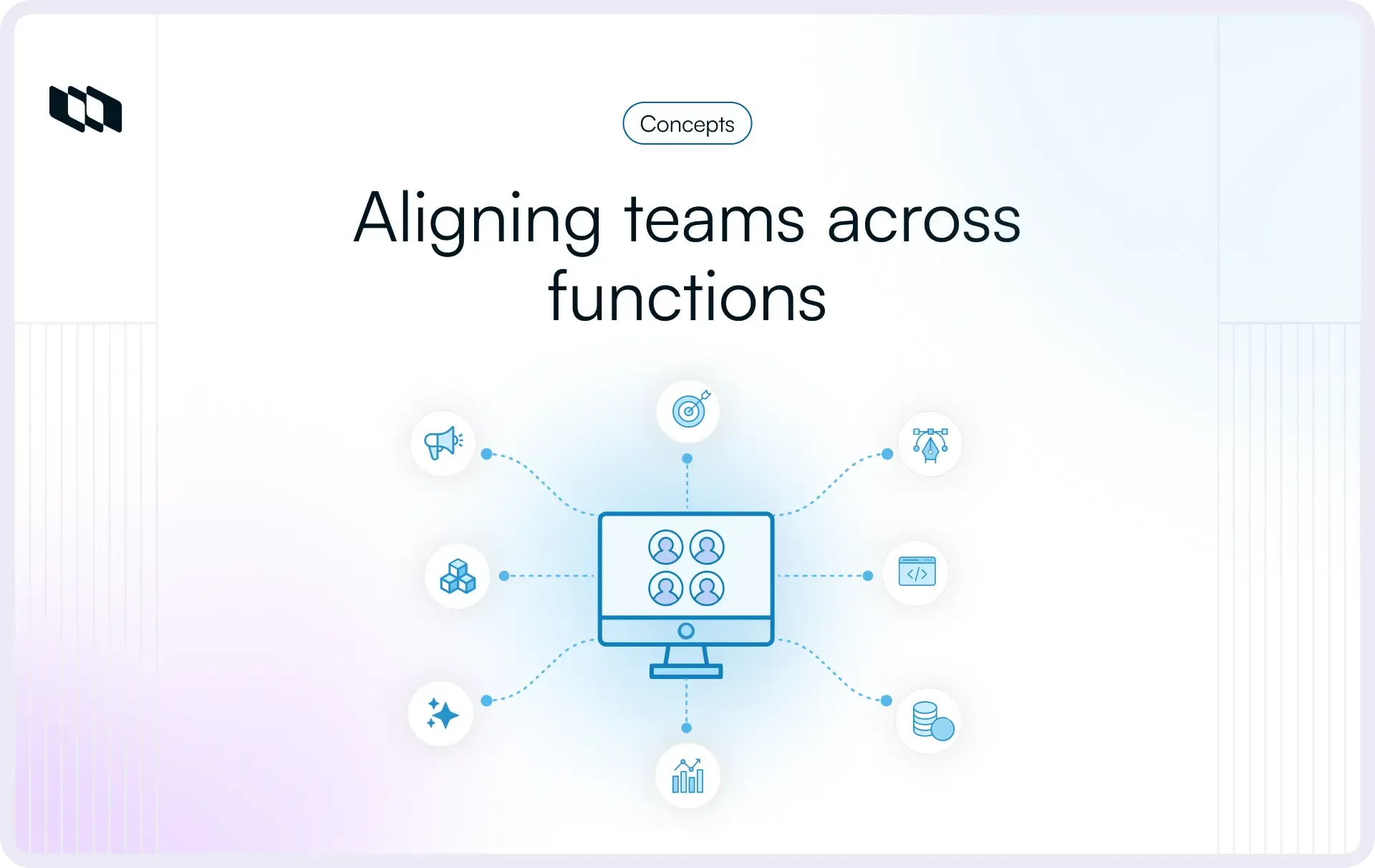
Introduction
Every major initiative today spans multiple teams. A feature release involves product planning, engineering execution, design reviews, marketing coordination, and customer support readiness, all happening simultaneously. Without strong cross-functional team management, progress slows, and priorities drift across functions. Managing cross-functional teams effectively requires clear goals, defined roles, and shared visibility into work and decisions. This guide outlines proven strategies for improving cross-functional collaboration and helping teams deliver outcomes together with focus and alignment.
What is a cross-functional team?
A cross-functional team brings together people from different departments to work toward a shared outcome that requires coordinated effort across roles. Instead of operating in isolated functions, team members collaborate around a single goal, a single timeline, and a single set of success metrics.
Cross-functional teams differ from traditional functional teams in structure and ownership. Functional teams focus on department-specific goals such as engineering delivery, marketing campaigns, or design quality. Cross-functional teams focus on a shared outcome, with work remaining interdependent and progress depending on continuous coordination across functions. Effective cross-functional team management ensures that priorities, responsibilities, and decisions remain aligned, enabling work to move forward without delays or confusion.
Examples of cross-functional teams
Some common examples of cross-functional teams include:
- Product feature launch team involving product managers, engineers, designers, and QA, working toward a release milestone
- Go-to-market campaign team involving marketing, product, sales, and customer success, planning and executing a launch
- Incident response team involving engineering, support, and operations, resolving critical issues quickly
- Migration or transformation project team involving engineering, security, and operations, managing system or process changes
Why cross-functional collaboration matters in modern organizations
Modern projects rarely sit within a single department. Product development, customer experience, infrastructure changes, and growth initiatives all require multiple teams working together toward a single outcome. Strong cross-functional collaboration ensures that this interdependent work moves forward with clarity, speed, and alignment across the organization.
1. Most work today spans multiple functions
A typical initiative involves product managers defining scope, engineers building features, designers shaping experience, marketers preparing launches, and support teams handling customer impact. Each function contributes to the same outcome, yet progress only occurs when these teams coordinate effectively. Managing cross-functional teams ensures that dependencies between functions remain visible and aligned from planning to delivery.
2. Faster decision-making through direct collaboration
When teams operate in silos, decisions move slowly across layers of approvals and updates. Cross-functional team management brings decision-makers together within a single execution loop, reducing delays and improving responsiveness. Direct collaboration between functions helps teams resolve questions quickly, adjust priorities in real time, and maintain project momentum.
3. Better problem-solving through diverse expertise
Complex problems require perspectives from multiple disciplines. Engineers identify technical risks, designers highlight usability concerns, and marketers understand customer expectations. Cross-functional collaboration brings this expertise to bear early in the process, leading to stronger solutions and fewer late-stage revisions. Teams that manage cross-functional work effectively make more informed decisions and deliver higher-quality outcomes.
4. Reduced handoffs and execution delays
Traditional functional workflows rely on sequential handoffs where one team completes work before another begins. Each handoff introduces waiting time, miscommunication, and rework. Managing cross-functional teams effectively reduces these gaps by enabling parallel progress and shared ownership. Teams stay aligned on timelines, dependencies, and expectations, which helps work move forward without unnecessary delays.
5. Stronger alignment between business goals and execution
Cross-functional teams connect strategic objectives with day-to-day execution. Business goals defined by leadership translate into product direction, engineering priorities, and customer-facing initiatives through coordinated planning. Clear cross-functional collaboration ensures that every function understands the broader objective and contributes toward measurable outcomes. This alignment improves delivery consistency and helps organizations execute complex initiatives with greater confidence.
When cross-functional teams work best?
Cross-functional teams enhance speed and alignment when goals, ownership, and dependencies are clear. Proper use avoids complexity and keeps teams outcome-focused.
In this section, we examine where cross-functional team management delivers the most value and where it can create friction.
When cross-functional teams are the right approach
Here are the scenarios in which managing cross-functional teams leads to faster, more reliable execution.
- Complex, multi-step initiatives: Projects that involve multiple stages and stakeholders benefit from coordinated execution across functions. Product launches, platform migrations, and customer experience improvements require continuous alignment between teams to maintain progress and quality.
- Work requiring frequent coordination: Some initiatives depend on regular interaction between departments. Product, engineering, design, and marketing often need shared visibility into timelines and priorities. Strong cross-functional team management ensures that dependencies stay aligned and decisions move forward without delays.
- Time-sensitive execution: When timelines are tight and outcomes carry business impact, cross-functional collaboration supports faster decision-making. Direct coordination across teams reduces waiting time and helps organizations respond quickly to changes.
- Innovation and experimentation: New initiatives often require insights from multiple disciplines. Cross-functional teams bring together technical expertise, customer understanding, and business context, thereby improving experimentation and accelerating learning across projects.
When they create more friction than value
Cross-functional collaboration enhances execution only when tasks demand shared ownership and coordination; without clear goals or support, it adds complexity and hinders progress.
The following situations signal when cross-functional team management may create more friction than value.
- Unclear goals and outcomes: Cross-functional teams require clearly defined objectives. When goals remain vague, teams struggle to align priorities, and execution slows across functions.
- No dedicated ownership or leadership: Every cross-functional initiative needs a single accountable owner who drives progress and makes decisions. Without clear ownership, responsibility becomes fragmented, and coordination becomes difficult.
- Purely functional work: Tasks that remain within a single department require minimal cross-functional collaboration. Adding a cross-functional structure to such work increases complexity without improving outcomes.
- Lack of leadership support: Effective cross-functional collaboration requires alignment with leadership. Managers must support shared priorities and allocate time for coordination so teams can execute without competing demands.
Why managing cross-functional teams is challenging
Cross-functional collaboration offers speed and alignment but can also lead to delays and complexity without structure. Effective management requires addressing coordination gaps, unclear ownership, and competing priorities early, enabling teams to focus on results.
This section highlights the most common challenges that affect cross-functional team management across organizations.
1. Competing priorities across departments
Each function operates with its own goals, timelines, and success metrics. Engineering focuses on delivery quality, marketing prioritizes launch timelines, and leadership tracks business outcomes. Without shared priorities, teams optimize for departmental success instead of collective results. Strong cross-functional team management aligns teams around one outcome and ensures priorities remain consistent across functions.
2. Unclear ownership and decision authority
Cross-functional initiatives involve multiple stakeholders, which often leads to confusion about who owns decisions and execution. When ownership remains undefined, decisions move slowly, and accountability becomes fragmented. Managing cross-functional teams effectively requires clear responsibility mapping and defined decision authority so teams can move forward with confidence.
3. Communication gaps and information silos
Information often spreads across meetings, chat threads, documents, and project tools. Teams spend time searching for updates instead of executing work. Communication gaps create misunderstandings and duplicate effort. Effective cross-functional collaboration depends on shared visibility into progress, decisions, and changes so every team stays aligned.
4. Lack of trust and alignment
Cross-functional work requires teams to share context, raise risks, and collaborate openly. Limited trust between departments reduces transparency and slows problem-solving. Teams hesitate to question decisions or surface concerns early. Building alignment and trust across functions strengthens collaboration and supports faster execution.
5. Capacity constraints and context switching
Most cross-functional initiatives run alongside regular functional responsibilities. Team members balance project work with daily tasks, which increases context switching and reduces focus. Without realistic planning and leadership support, timelines slip, and quality suffers. Managing cross-functional teams effectively includes planning around capacity and protecting dedicated time for collaboration and delivery.
The foundation of effective cross-functional management
Effective cross-functional collaboration requires clear goals, ownership, and decision-making authority. Defined structures enable faster progress, reduce coordination hurdles, and guide seamless execution across teams. This section outlines the core elements that set up cross-functional teams for consistent, aligned delivery.
1. Align on a single shared outcome
Every cross-functional team needs one clearly defined outcome that guides priorities and decisions. When teams align on a shared objective, work across functions moves in the same direction, and trade-offs become easier to manage. Before execution begins, establish what the team is working toward and how success will be evaluated.
Define early:
- What success looks like in practical terms
- How progress and results will be measured
- What “done” means for the initiative
A shared outcome helps teams focus on results rather than departmental preferences and supports stronger cross-functional management throughout the project lifecycle.
2. Define roles, responsibilities, and decision rights
Unclear ownership slows execution and creates repeated discussions. Cross-functional teams work best when responsibilities and decision authority remain transparent across functions.
Clarifying ownership early prevents confusion and keeps work moving without delays.
Define clearly:
- Who owns execution and drives progress
- Who contributes and provides input
- Who reviews deliverables
- Who makes the final decisions
Simple responsibility mapping ensures that cross-functional collaboration remains structured and efficient as work progresses.
3. Establish clear goals tied to business impact
Cross-functional initiatives deliver value when work connects directly to measurable business outcomes. Teams need clarity on how their efforts support product growth, customer experience, operational efficiency, or revenue goals. Clear alignment between execution and business impact helps teams prioritize effectively and maintain focus throughout the project.
4. Secure leadership alignment and support
Leadership support ensures that cross-functional teams receive the time, resources, and attention required for execution. Managers across departments must align on priorities and protect team bandwidth so collaboration remains consistent. When leadership actively supports cross-functional work, teams can focus on delivery instead of negotiating priorities across functions.
How to manage cross-functional teams effectively: A practical system
Managing cross-functional teams is simpler with a unified operating system, ensuring shared clarity, quick decisions, and visible execution. Informal coordination relies on memory and meetings, while a structured system ensures repeatable and predictable collaboration.
Now we will walk through a practical system for managing cross-functional teams effectively, from setup to execution.
1. Create a simple team charter before starting
A team charter is a short agreement that defines how the team will work together. It reduces confusion, prevents misalignment, and helps new stakeholders quickly understand the initiative. Strong cross-functional teams treat this as a starting ritual, not a document that sits unused.
Start with a one-page charter that clearly defines execution expectations for every function.
Include the essentials:
- Objective and scope: what the team will deliver, and what stays outside scope
- Roles and responsibilities: who owns execution, who contributes, who reviews, who decides
- Success metrics: how the team will measure progress and outcomes
- Communication norms: where updates happen and how fast responses are expected
- Escalation path: what to do when blockers or priority conflicts appear
A clear charter supports cross-functional collaboration by providing a shared reference point when questions arise.
2. Make work visible in one shared workspace
Cross-functional work breaks when teams track progress in separate tools and separate threads. Updates spread across chat, email, documents, and meetings, and people spend time asking for status rather than moving tasks forward. Managing cross-functional teams effectively requires shared visibility so work can be coordinated without constant follow-ups.
The next step is to create a shared space where the team can track both work and context.
Your shared workspace should capture:
- Tasks: what needs to be done and what comes next
- Owners: who is responsible for each item
- Updates: progress notes and current status in plain language
- Decisions: what was decided, by whom, and why
- Documents: requirements, specs, meeting notes, and reference links
This single source of truth reduces status chasing and keeps cross-functional team management grounded in real progress instead of assumptions.
3. Plan with dependencies and capacity in mind
Cross-functional projects rarely fail because teams do not plan tasks. They fail because teams overlook dependencies and overestimate capacity. Work looks simple on paper until handoffs begin and timelines collide. Cross-functional collaboration improves when planning reflects the real constraints of interdependent work.
Build your plan around what blocks progress, not just what needs to be built.
Plan for the realities:
- Handoffs: where one function depends on another to move forward
- Workload: who has enough bandwidth to own critical tasks
- Realistic timelines: estimates that include review cycles and decision time
A useful approach is to identify the top dependencies early and assign an owner to each, so someone actively drives coordination rather than letting it drift.
4. Establish clear communication norms
Cross-functional teams often communicate a lot, yet still miss key context. The issue is not volume; it is a lack of structure. When update habits vary across functions, teams lose time and create misunderstandings. Managing cross-functional teams effectively requires communication norms that keep everyone aligned without increasing the number of meetings. Set a few clear rules to keep collaboration consistent and predictable.
Define these norms early:
- Where updates happen: one channel and one workspace that everyone uses
- When meetings are needed: decisions, conflict resolution, milestone resets, and urgent blockers
- Response expectations: typical reply windows for questions, reviews, and approvals
- Documentation practices: where decisions, changes, and key context are recorded
Clear communication norms strengthen cross-functional collaboration by reducing guesswork about where information lives and how to get answers.
5. Run lightweight execution cadences
Cross-functional work needs rhythm. Without it, teams lose alignment, and updates become reactive. With too many rituals, teams lose time and energy. Strong cross-functional team management relies on a small set of consistent cadences that keep progress visible and decisions moving.
Use simple, repeatable check-ins that help teams coordinate withouta heavy process.
A lightweight cadence can include:
- Weekly planning: confirm priorities, review dependencies, and adjust scope based on capacity
- Async check-ins: short updates that clarify progress, blockers, and next steps
- Milestone reviews: validate that the team is moving toward the shared outcome
- Dependency reviews: check what is waiting on whom and resolve bottlenecks early
Consistency matters more than complexity. A few rituals done well create stability across functions.
6. Manage risks, blockers, and changes early
Cross-functional projects change often. New constraints appear, priorities shift, and dependencies break timelines. Teams stay effective when they surface risks early and manage blockers as part of execution, not as emergency events. Cross-functional collaboration improves when obstacles are visible, owned, and resolved quickly.
Treat blockers and risks as first-class work items, not side conversations.
A practical approach:
- Make blockers visible: mark blocked work clearly so teams see friction early
- Assign an owner: one person drives resolution and follows through
- Resolve quickly: clarify the decision needed, escalate when required, and document outcomes
This approach keeps cross-functional team management steady even when plans shift, helping teams maintain execution momentum across complex initiatives.
Managing conflict in cross-functional teams
Conflict arises in cross-functional initiatives with differing priorities. When managed well, it enhances decision-making and alignment; ignored, it hampers execution and collaboration. Effective management demands a structured approach to resolve disagreements early. This section explores where conflict typically emerges and how teams can resolve it constructively without disrupting progress.
Common sources of conflict
Understanding the root causes helps teams address issues early and maintain strong cross-functional collaboration.
- Priority differences: Each function balances its own roadmap and deliverables. Product teams may push for new features, engineering may focus on stability, and marketing may prioritize launch timelines. These differences create friction when priorities compete for limited time and attention.
- Resource constraints: Cross-functional initiatives often rely on shared resources across teams. Limited bandwidth, shifting deadlines, and unexpected work can create tension when multiple functions depend on the same people or timelines.
- Quality versus speed debates: Engineering and design teams often focus on quality and long-term stability, while business and marketing teams emphasize speed and delivery timelines. Without clear alignment on goals and trade-offs, these discussions can stall decisions and delay progress.
- Unclear scope and expectations: When the scope remains undefined or changes frequently, teams interpret goals differently. Misalignment around what needs to be delivered and by when leads to repeated discussions and rework across functions.
How to resolve conflict constructively
Cross-functional team management improves when teams follow a simple and repeatable resolution approach. Structured resolution keeps discussions focused on outcomes and helps teams move forward quickly. Use this practical loop to resolve cross-functional conflicts and maintain execution momentum.
- Restate the shared goal: bring the discussion back to the common outcome the team is working toward
- Clarify constraints: outline timelines, capacity, and risks affecting each function
- Identify the decision owner: confirm who has the authority to make the final call
- Agree on the next step: decide what action the team will take and who will own it
- Document and move forward: capture the decision and continue execution without revisiting the same debate
A consistent approach to conflict resolution strengthens cross-functional collaboration by keeping teams aligned on outcomes, ownership, and next steps.
Building trust across cross-functional teams
Trust enhances cross-functional collaboration, enabling teams to tackle complexity confidently. Low trust hinders open communication and innovation. Effective management requires fostering trust through transparency, accountability, and shared ownership.
This section explains how teams can build trust through everyday execution rather than relying on informal rapport.
1. Create psychological safety through clarity
Psychological safety improves when expectations, roles, and goals remain clear. Teams speak up and share context when they understand what success looks like and how their work contributes to shared outcomes. Clear ownership and defined decision paths reduce hesitation and help cross-functional teams communicate openly about risks, constraints, and ideas.
Leaders can reinforce clarity by documenting responsibilities, regularly confirming priorities, and ensuring that every function understands its role in delivery. This clarity supports stronger cross-functional team management and encourages active participation across teams.
2. Encourage transparency and early feedback
Cross-functional collaboration improves when teams consistently share updates, risks, and progress. Early visibility into issues helps teams resolve problems before they grow into delays. Teams that practice regular updates and open feedback loops maintain alignment across functions and adapt quickly to changes.
Encouraging transparency includes:
- Sharing progress updates regularly in a shared workspace
- Raising risks or blockers early
- Inviting feedback across functions before finalizing decisions
These habits help teams stay aligned and support steady execution across complex initiatives.
3. Recognize contributions across functions
Recognition reinforces shared ownership and strengthens collaboration. Cross-functional work often involves contributions that remain less visible across departments. Acknowledging efforts across functions builds mutual respect and keeps teams invested in shared outcomes.
Simple practices such as highlighting cross-functional wins, sharing credit across teams, and recognizing collaborative effort in reviews help maintain strong relationships and support long-term cross-functional collaboration across projects.
Final thoughts
Cross-functional work has become the default operating model for modern organizations. Most meaningful initiatives now require product, engineering, design, marketing, and operations to move in sync toward shared outcomes. Managing cross-functional teams effectively ensures that this complexity translates into progress rather than confusion.
Effective cross-functional team management is designed through clear processes and shared understanding. Teams that invest in structure and alignment build collaboration that scales across projects and supports reliable execution over time.
Frequently asked questions
Q1. How do you manage a cross-functional team?
Managing cross-functional teams effectively requires clear goals, defined ownership, and shared visibility into work. Start by aligning teams around a single outcome, assigning clear roles and decision-making authority, and creating a shared workspace where progress and updates remain visible. Establish communication norms, run consistent planning and review cadences, and address blockers early. Strong cross-functional collaboration depends on clarity, accountability, and structured coordination across functions.
Q2. What are the 5 C’s of team management?
The 5 C’s of effective team management include clarity, communication, collaboration, coordination, and consistency.
- Clarity: define goals, roles, and expectations
- Communication: maintain structured and transparent updates
- Collaboration: encourage cross-functional teamwork toward shared outcomes
- Coordination: align tasks, timelines, and dependencies
- Consistency: follow repeatable processes and cadences
These principles support stronger team alignment and execution across projects.
Q3. What is a cross-functional team?
A cross-functional team consists of people from different departments working together toward a shared outcome. Instead of operating within separate functional silos, members collaborate across roles with shared ownership and interdependent tasks. Cross-functional teams are commonly used for product launches, transformation initiatives, and complex projects that require coordination across functions.
Q4. What are the 3 C’s of collaboration?
The 3 C’s of collaboration are communication, coordination, and cooperation.
- Communication: Sharing information clearly and consistently
- Coordination: Aligning tasks, timelines, and responsibilities
- Cooperation: Working together toward a shared outcome
These elements strengthen cross-functional collaboration and help teams execute efficiently across departments.
Q5. What are the 7 C’s of teamwork?
The 7 C’s of teamwork include clarity, communication, collaboration, commitment, coordination, capability, and continuous improvement. Together, these elements create a strong foundation for managing cross-functional teams and maintaining alignment across complex projects. Teams that focus on these principles improve decision-making, reduce friction, and deliver outcomes more consistently.
Recommended for you



 Download for Mac
 Download for Android