Context switching: How to reduce productivity killers
Introduction
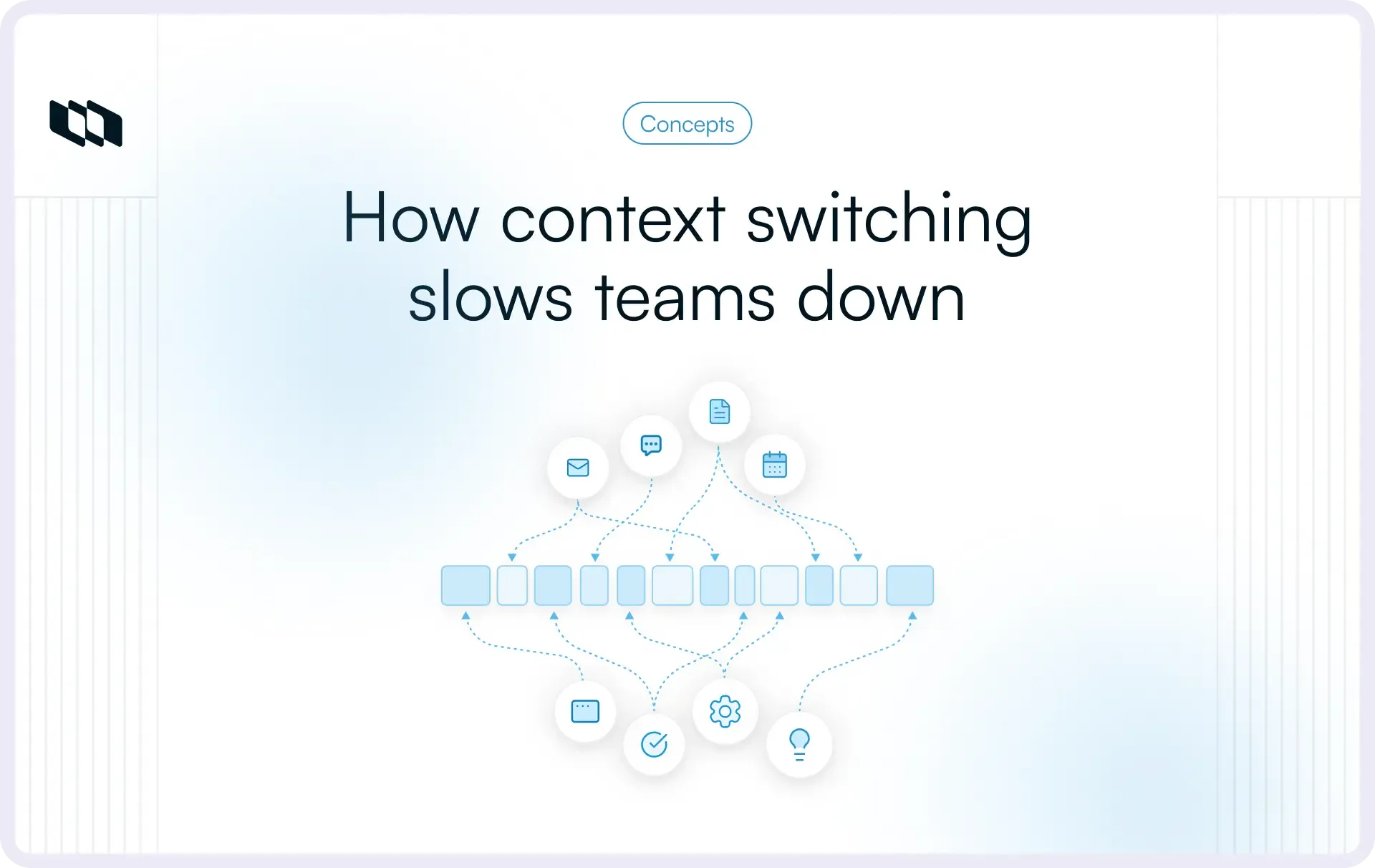
Context switching is one of the biggest productivity killers in modern work. Teams move between tasks, tools, and conversations all day, yet end most days feeling busy without real progress. Each switch pulls attention away from focused work and increases the time it takes to regain clarity. In project management and product teams, this shows up as unfinished tasks, repeated handoffs, and constant follow-ups. This guide explains what context switching looks like in the workplace and how teams can reduce context switching to improve focus, output, and decision quality.
What is context switching at work?
Context switching at work occurs when a person shifts attention between tasks, tools, or conversations within a short period. Each shift forces the brain to pause one line of thinking and rebuild another. This reset takes effort, even when the switch feels small.
In modern teams, context switching rarely comes from a single big interruption. It builds up through many small changes in focus across the day.
What context switching looks like in day-to-day work
Context switching often shows up during routine work rather than complex moments. A task starts with a clear intent, then attention shifts elsewhere before it reaches completion.
Common situations include:
- Writing a document, then checking messages mid-way
- Reviewing a ticket, then joining a meeting before finishing
- Switching between planning, execution, and follow-ups repeatedly
- Moving across tools to find context, updates, or decisions
Each switch breaks continuity. When work resumes, time goes into recalling context rather than making progress.
Common examples of context switching at work
Context switching in the workplace usually falls into four patterns.
- Task switching: Moving between unrelated tasks such as planning, execution, review, and support within the same hour.
- Tool switching: Jumping between project management tools, chat apps, documents, and email to piece together work context.
- Meeting interruptions: Breaking focused work to attend meetings that reset mental flow multiple times a day.
- Message-driven switching: Responding to pings, comments, and updates as they arrive instead of in planned windows.
These patterns feel productive on the surface, yet they increase mental load and reduce sustained focus.
Context switching vs. multitasking
Context switching and multitasking often get grouped together, but they describe different behaviors.
- Multitasking is the attempt to perform multiple activities simultaneously.
- Context switching refers to moving between tasks sequentially.
In knowledge work, the brain processes tasks one at a time. Each switch incurs a setup cost, during which attention rebuilds context, goals, and next steps. This is why frequent task switching affects productivity more than expected. The cost comes from repetition and recovery rather than the work itself.
Why context switching happens so often at work
Context switching at work usually comes from how work is structured and shared. Most teams operate in environments where attention gets pulled in many directions throughout the day. These patterns build up quietly and turn task switching into a default way of working.
1. Always-on communication and notifications
Modern work runs on constant communication. Chat tools, comments, emails, and alerts create steady interruptions. Each notification invites a quick check that turns into a context switch. Over time, this pattern trains teams to react instead of focus. Productivity drops as attention keeps resetting between messages and ongoing work.
2. Unclear priorities and shifting urgent work
When priorities lack clarity, everything feels important. Teams switch between tasks because ownership and urgency stay loosely defined. A new request arrives and immediately competes with planned work. This creates frequent task switching and unfinished work. Context switching grows as people keep recalibrating what matters most.
3. Meeting-heavy calendars that fragment the day
Meetings divide the workday into small blocks. Focused work rarely fits into these gaps. Each meeting forces a mental reset before and after. When calendars stay full, deep work struggles to find space. Context switching increases as people switch between discussion and execution modes.
4. Too many tools and places to check for updates
Tool sprawl adds another layer of context switching in the workplace. Work details live across project tools, documents, chat threads, and dashboards. Finding information requires constant app switching. Each move pulls attention away from the task at hand and adds cognitive load. Over time, productivity killers multiply through scattered systems.
The real cost of context switching
Context switching rarely looks harmful in the moment. The cost appears over time through slower progress, lower quality, and rising mental strain. These productivity killers affect how teams think, plan, and deliver work.
1. Loss of focus and slow refocus time
Each time attention moves away from a task, focus breaks. When work resumes, the brain needs time to recall context, decisions, and next steps. This refocus time repeats throughout the day. As context switching increases, the time spent doing real work keeps shrinking.
2. More errors and rework
Context switching in the workplace increases the likelihood of mistakes. Details get missed when attention shifts too often. Work moves forward with a partial understanding, leading to corrections later. Rework grows as teams revisit tasks that lacked full focus the first time. Productivity suffers as effort goes into fixing rather than advancing.
3. Mental fatigue and stress
Frequent task switching places constant demand on working memory. The brain stays in a state of alertness rather than flow. Over time, this creates mental fatigue. Stress rises as people feel busy yet behind. Context switching at work turns sustained effort into fragmented energy.
4. Reduced creativity and deep thinking
Creative and strategic work needs uninterrupted time. Context switching interrupts the development of thought before ideas mature. Teams struggle to connect insights or think through complex problems. As deep thinking declines, work shifts toward short-term execution instead of thoughtful progress.
How to reduce context switching at work
Reducing context switching at work means removing unnecessary decision-making from the execution process. Teams lose focus when work forces people to constantly re-evaluate priorities, search for context, or respond to interruptions. The practices below work because they reduce the number of times attention needs to be reset during the day. Each one targets a specific way context switching enters everyday work.
1. Fix work clarity before fixing focus
Most context switching starts when work enters execution without enough clarity to sustain attention. When people are unsure about priority, scope, or expected outcome, they pause work to clarify. That pause becomes a message, a meeting, or a tool switch. Over a day, these pauses multiply into constant task switching.
Clarity reduces context switching by removing these decisions from the execution phase. When work feels stable for a fixed period, attention stays anchored.
What to do
- Assign one clear owner for every active task
- Write the expected outcome in one sentence
- Make priority explicit instead of implied
- Capture the next concrete step before work starts
2. Make work visible in one place
Context switching increases when people need to search for work-related answers. If status, ownership, and decisions live across tools and conversations, attention keeps shifting just to regain context. This creates frequent app switching even for simple updates.
A single source of truth reduces this by answering key questions without interrupting the flow. When teams trust one place to reflect reality, fewer check-ins and follow-ups happen.
What to do
- Maintain one view of all active work
- Keep ownership and status updated consistently
- Attach decisions and links directly to the work item
- Review this view daily so it stays reliable
3. Limit work in progress
Too many active tasks force attention to be split. Even when people work on one task at a time, unfinished work stays mentally active. This causes background task switching, slowing completion.
Limiting work in progress reduces mental load. Fewer open loops allow for deeper focus and faster movement.
What to do
- Set a small limit for active tasks per person or team
- Finish work before starting new items
- Pause or re-scope stalled tasks
- Track completion rather than activity
4. Protect focus with time boundaries
Focus breaks when the day gets divided into short fragments. Meetings, reviews, and ad hoc requests repeatedly interrupt execution. Each interruption forces a mental reset.
Time boundaries work because they create predictable stretches where attention can settle. When teams protect focus time intentionally, context switching drops across the day.
What to do
- Block time for execution on calendars
- Group meetings into specific windows
- Leave uninterrupted stretches for focused work
- Treat focus time as a shared team norm
5. Batch similar work and communication
Switching between planning, responding, and reviewing increases cognitive load. Each type of work requires a different thinking mode. Frequent switching between modes leads to faster mental fatigue.
Batching works because it keeps the brain in the same mode longer. This reduces mental resets and improves flow.
What to do
- Handle messages during fixed time windows
- Group reviews and approvals together
- Separate planning time from execution time
- Create predictable rhythms for recurring work
6. Take control of notifications
Notifications interrupt attention, even when brief. Each alert invites a context switch and breaks concentration. Over time, this creates a reactive work pattern. Intentional notification control reduces these interruptions and restores focus during execution.
What to do
- Keep alerts tied to urgent or blocking work
- Check other updates at planned intervals
- Align response-time expectations across the team
- Review notification settings regularly
7. Reduce meeting-driven interruptions
Meetings often reset focus without advancing work. Frequent check-ins fragment the day and push execution into smaller gaps. Reducing meeting-driven context switching works when teams move status sharing out of live meetings and into async formats.
What to do
- Define clear agendas and outcomes for meetings
- Invite only the required participants
- Replace status meetings with async updates
- Schedule meetings around focus blocks
8. Reduce tool and app switching
Each tool switch forces the brain to reload context. When work, updates, and decisions are spread out, productivity drops due to frequent context switching. Tool consolidation works because it keeps attention closer to the work itself.
What to do
- Centralize task tracking and updates
- Keep documentation attached to work items
- Use integrations to reduce manual updates
- Simplify the tool stack where possible
Building a simple weekly system to keep context switching low
Reducing context switching at work stays effective only when teams revisit how work actually unfolded. Interruptions rarely disappear on their own. They return through new requests, meetings, and habits unless teams create a lightweight rhythm for reflection and adjustment.
A simple weekly system helps teams notice where focus broke down and fix issues before they become permanent. The aim is consistency rather than perfection.
1. Review what caused the most interruptions
Most interruptions follow patterns. Certain meetings, message threads, or types of requests tend to repeatedly pull attention away. A weekly review helps teams surface these patterns instead of relying on memory or assumptions. Looking back at where work stalled, switched, or required frequent clarification reveals the real sources of context switching. This reflection works best when teams focus on trends across the week rather than isolated moments.
2. Remove or batch low-value work
Some work consumes attention without contributing much progress. Frequent check-ins, repeated updates, and reactive tasks often fall into this category. When these activities remain scattered throughout the week, they increase task switching and mental load. Removing unnecessary work or grouping it into predictable moments helps teams reclaim focus. Over time, this creates longer stretches of uninterrupted execution.
3. Make one small improvement each week
Sustainable change comes from small adjustments applied consistently. Large process changes often introduce new complexity and fade quickly. Choosing one improvement based on the weekly review keeps the system manageable. Teams observe how that change affects interruptions and focus during the next week. This steady loop helps context switching stay low without adding a heavy process.
Wrapping up
Context switching at work rarely comes from a lack of discipline or effort. It grows from how work is shaped, shared, and interrupted throughout the day. When priorities remain unclear, work is scattered, and interruptions go unmanaged, focus breaks repeatedly, and productivity suffers.
Reducing context switching starts with designing calmer systems. Clear work, visible priorities, protected focus time, and fewer handoffs help attention stay anchored longer. Small, consistent changes compound over time, leading to steadier progress, better decisions, and higher-quality work. Teams that reduce context switching do not move faster by doing more. They move forward by finishing what matters with clarity and focus.
Frequently asked questions
Q1. What is meant by context switching?
Context switching refers to the act of shifting attention from one task, topic, or mental frame to another. In work settings, this often happens when people move between tasks, tools, meetings, or conversations within a short period. Each switch requires the brain to rebuild context before progress continues. Over a day, repeated switches affect focus and execution quality.
Q2. What is context switching in humans?
In humans, context switching refers to the brain's transition between different streams of thought or activity. The brain focuses on one primary task at a time. When attention shifts, mental resources move toward understanding the new context. This process uses cognitive effort and affects how quickly and clearly a person can think and act.
Q3. What are examples of context switching?
Common examples of context switching at work include moving from writing a document to replying to messages, switching between multiple tools to find updates, jumping from a meeting into execution work, or shifting between unrelated tasks in the same hour. These switches often happen throughout the day and shape how work feels and flows.
Q4. What is the difference between context switching and multitasking?
Context switching involves moving attention from one task to another. Multitasking is the attempt to perform multiple activities at the same time. In knowledge work, tasks still get processed sequentially. The difference lies in how often attention shifts. Context switching highlights the cost of those repeated transitions during work.
Q5. What are the benefits of context switching?
Context switching can help when work requires quick responses, coordination, or awareness across multiple areas. It supports responsiveness in collaborative environments and helps teams handle interruptions that need immediate attention. When used intentionally and in moderation, it allows teams to balance execution with communication and coordination.
Recommended for you



 Download for Mac
 Download for Android