Conversion funnel analysis for product managers: How to spot drop-offs
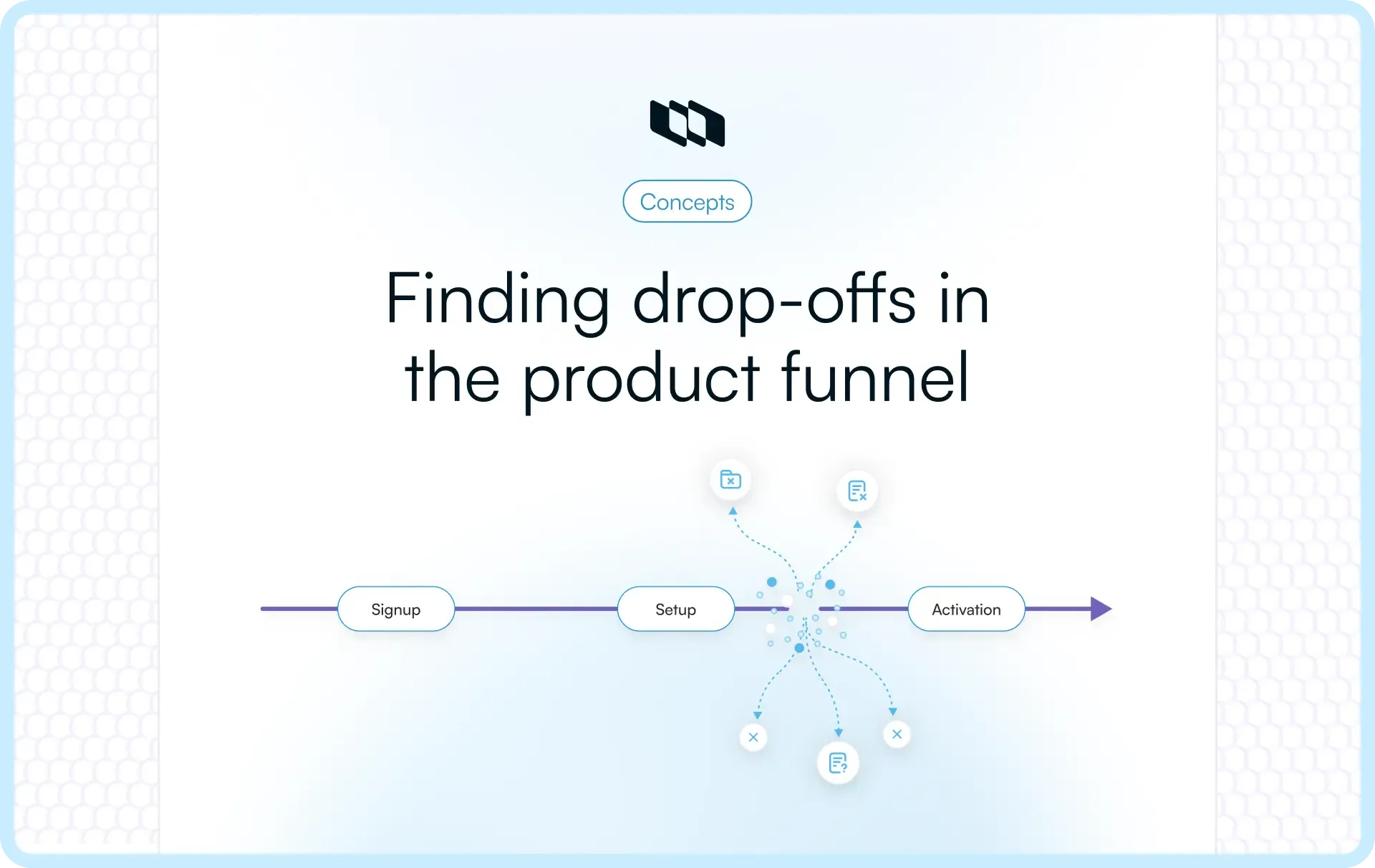
Introduction
Every product has a moment where users pause, hesitate, or leave. Conversion funnels capture these moments as drop-offs, yet product teams often struggle to act on them. Conversion funnel analysis for product managers treats drop-offs as signals of execution rather than abstract metrics. This guide shows how to perform conversion funnel analysis with clarity and intent. You will learn how to define a product conversion funnel, identify meaningful funnel drop-offs, and translate analysis into product decisions that improve activation, adoption, and outcomes.
What is a conversion funnel in product management?
A conversion funnel in product management describes the sequence of actions a user takes to reach a meaningful product outcome. It helps product managers understand how users progress through the product and where momentum slows or stops. Conversion funnel analysis for product managers focuses on these transitions to improve execution, clarity, and outcomes.
What conversion means for product teams
In a product context, conversion represents progress toward value. It rarely means a sale alone. Product conversion funnels usually track outcomes such as activation, feature adoption, or upgrade decisions.
For example, activation may mean a new user completes setup and reaches the first value moment. Adoption may mean a user consistently returns to a feature. An upgrade may mean a team commits to a paid plan after sustained usage. Each of these outcomes reflects a point where the product successfully supports user intent.
How product conversion funnels differ from marketing funnels
Marketing funnels focus on acquisition stages such as awareness, interest, and lead conversion. Product conversion funnels begin after the user enters the product. They measure behavior inside the product rather than traffic or campaigns.
A product funnel tracks actions like account creation, onboarding completion, feature usage, and commitment steps. Funnel drop-off analysis in this context highlights friction in workflows, unclear value, or execution gaps that product teams can address directly.
When to use funnel analysis vs. journey mapping or cohort analysis
- Conversion funnel analysis works best when the goal is clear and the sequence of actions is defined. It answers where users drop off and how many reach each step.
- Journey mapping helps by recognizing that a broader user experience across touchpoints matters more than a step-by-step conversion.
- Cohort analysis helps track behavior over time across the user groups that matter most.
Product managers often combine these methods. Funnel analysis identifies where progress slows. Journey mapping explains the experience around that moment. Cohort analysis shows whether changes improve outcomes over time.
Why analyzing conversion funnel drop-offs matters for product managers
Conversion funnel drop-offs show where users stop making progress toward a desired outcome. For product managers, these moments highlight gaps in execution, clarity, or sequencing. Funnel drop-off analysis turns scattered product signals into focused insights that guide better decisions.
1. Drop-offs reveal product friction and unclear value
A drop-off occurs when users reach a step and do not proceed to the next step. This usually points to friction in the product flow or uncertainty about the next step. The issue may involve a confusing setup, missing guidance, excessive effort, or a value that appears too late. Analyzing conversion-funnel drop-offs helps product managers identify where the product stops supporting user intent and where small improvements can drive progress.
2. Funnel drop-offs shape prioritization and roadmap decisions
Product teams face more opportunities than they have capacity for. Product funnel metrics help focus attention on the areas with the greatest impact. An early drop-off in the funnel affects every downstream outcome, while a late drop-off affects fewer users. Conversion funnel analysis for product managers supports prioritization by showing which problems most directly influence activation, adoption, or upgrade outcomes.
3. Ignoring drop-offs leads to low-impact product work
Teams that overlook funnel drop-offs often rely on opinions, feature requests, or surface-level feedback. This approach spreads effort across many changes without improving outcomes. Product funnel drop-off analysis anchors decisions in observed behavior. It helps teams focus execution on changes that move users forward and create measurable improvements across the product.
What are the key stages of a product conversion funnel?
A product conversion funnel breaks the user journey into clear stages that reflect progress toward value. Each stage represents a decision or action that signals deeper engagement. Conversion funnel analysis for product managers uses these stages to understand where users move forward and where momentum slows.
1. Onboarding and activation
Onboarding introduces users to the product and sets expectations. Activation occurs when users reach the first meaningful outcome. This outcome varies by product and may include completing setup, creating the first item, or finishing an initial workflow.
Product managers usually optimize for time-to-first-value, onboarding completion rate, and early engagement signals. Funnel drop-offs at this stage often point to unclear setup steps or a value that appears too late.
2. Feature discovery and adoption
After activation, users explore features that support their goals. Discovery happens when users find relevant capabilities. Adoption occurs when they consistently return to those features. Product funnel metrics at this stage focus on feature usage frequency, repeat engagement, and progression to advanced workflows. Drop-offs here often indicate poor guidance, weak positioning, or features that do not match user intent.
3. Trial to paid conversion
In products with trials, this stage reflects a commitment decision. Users evaluate whether ongoing value justifies payment. Conversion funnel drop-off analysis here highlights pricing clarity, perceived value, and trust factors. Product managers often optimize for trial engagement depth, conversion rate, and time to upgrade. Improvements usually involve clarifying outcomes rather than adding features.
3. Request a demo or setup completion
Some products rely on demos or assisted setup. This stage measures whether interested users complete the request or finish initial configuration. Outcomes include qualified demo requests or fully configured accounts. Drop-offs at this stage often reflect form friction, unclear expectations, or delays in follow-up.
Why product conversion funnels are rarely linear
Real users move forward, pause, revisit steps, or explore side paths. Product conversion funnels simplify this behavior, highlighting progress and friction. Funnel analysis remains useful because it focuses on outcomes rather than every possible path. Product managers treat funnels as diagnostic tools rather than exact representations of user behavior.
Outcomes product managers optimize at each stage
At each stage, product managers track outcomes tied to user value. Activation focuses on the first success. Adoption focuses on repeated use. Conversion focuses on commitment. Setup completion focuses on readiness to proceed. Clear outcomes help teams align analysis, prioritization, and execution around the same goals.
How to define the right conversion funnel before analysis
Strong conversion funnel analysis for product managers begins with a well-defined funnel. When the funnel reflects real user intent, the analysis yields clear, actionable insights. When it does not, even accurate data leads to poor decisions.
1. Start with one user goal and one success outcome
Every product conversion funnel should represent a single user goal. This goal describes what the user wants to achieve, not what the team wants to measure. Examples include completing onboarding, adopting a core feature, or upgrading after a trial.
The success outcome marks the moment where the product delivers clear value. Defining this outcome keeps the funnel focused. Funnels that combine multiple goals create confusion and dilute insights. Product managers use this clarity to align teams around one shared definition of success.
2. Decide how many steps the funnel should have
A useful conversion funnel contains a small number of meaningful steps. Most product funnels work best with three to seven steps. Fewer steps improve clarity and reduce noise in product funnel metrics.
Each step should represent a decision or commitment by the user. Tracking every click or screen adds complexity without improving understanding. Funnel drop-off analysis becomes more reliable when each step signals a clear transition in user intent.
3. Choose meaningful events for each step
Each step in the funnel needs a precise event that reflects real behavior. Events should capture actions users intentionally take, such as completing setup, using a feature, or confirming an upgrade.
Meaningful events connect directly to user value. For example, creating a project may matter more than opening a screen. Choosing the right events ensures conversion funnel drop-offs reflect product friction rather than tracking noise.
4. Set the right time window for conversion
Time plays a critical role in conversion funnel analysis. Some outcomes occur in minutes, while others unfold over days or weeks. Setting a realistic time window helps distinguish slow progress from true drop-offs.
A short window suits onboarding and setup flows, a longer window fits feature adoption or trial-to-paid conversion. Product managers select time windows based on user behavior and product complexity, then apply them consistently to track changes over time.
How to perform a conversion funnel analysis
Conversion funnel analysis for product managers works best when it follows a repeatable method. The goal stays simple: find where users lose momentum, understand why, and turn that insight into product decisions the team can execute. The steps below keep the analysis grounded in user intent and connected to outcomes.
Step 1: Define the funnel and success criteria
A good funnel begins with a single successful action that signals real value. This successful action should reflect user intent, not a metric that looks good in a report.
Start by writing the outcome in simple language.
- The user completes onboarding and creates their first project
- The user invites a teammate and assigns the first task
- The trial user upgrades after using the core workflow twice
Then define funnel steps that match how users naturally reach that outcome.
Key considerations to verify this step:
- Each step should represent a meaningful commitment, not a page view
- Steps should follow a user’s mental model, not the product’s navigation structure
- Steps should feel stable across weeks, so you can compare performance over time
Example: If the goal is activation for a self-serve product, a clean product conversion funnel could look like: sign up → create workspace → create first project → create first task → invite teammate. Each step signals progress toward value. A funnel-like sign-up → click dashboard → open settings often measures curiosity rather than activation.
Step 2: Measure conversion and drop-off rates at each step
Once the steps are clear, measure how many users move from one step to the next. Step-by-step conversion helps you locate friction precisely. Overall conversion helps you understand the final impact.
Tips for analyzing product funnel metrics:
- Step-by-step conversion tells you where users slow down
- The drop-off rate shows where the flow stops supporting intent
- A steep early drop usually affects everything downstream
To calculate step-by-step conversion simply: if 1,000 users complete step one and 600 complete step two, the step-to-step conversion from step one to step two is 600/1,000. The drop-off equals the remaining 400 users.
Example: Imagine 1,000 trial users sign up.
- 700 create a workspace
- 350 create a project
- 140 invite a teammate
The biggest drop-off appears between workspace creation and project creation. That tells a PM where to investigate first. The question shifts from “how do we increase conversions” to “why does project creation feel hard right after setup?”
Step 3: Compare funnel performance over time
A funnel snapshot can mislead. A strong conversion funnel analysis compares performance across time windows to clarify patterns.
Key aspects that enhance the usefulness of comparisons:
- Compare the same funnel definition, same time window, same segments
- Use your own historical baseline, since products differ widely
- Look for direction and consistency, not perfect stability
What to look for,
- Sudden changes often follow releases, pricing edits, onboarding changes, or bugs
- Gradual declines often reflect growing complexity, slower performance, or misaligned expectations
Example: If the drop-off between project creation and first task assignment rises sharply right after a new editor launch, that suggests workflow confusion or performance issues introduced by the change. If the same drop-off rises slowly over two months, the product may have accumulated friction through small additions that made the flow feel heavier.
Step 4: Segment users to understand who is dropping off
Aggregate funnel numbers hide the real story. Segmentation turns funnel drop-offs into specific and actionable diagnoses.
Start with segments that commonly affect intent and effort.
- New vs returning users
- Device or platform
- Role or team size
- Plan type or trial vs. paid
- Acquisition source when it reflects intent, such as docs traffic vs ads
Tips for analyzing drop-offs in the conversion funnel
- Segment only when you have a clear reason, so analysis stays focused
- Look for one segment that behaves differently, then investigate why
- Use segmentation to narrow the root cause, not to create more charts
Example: A funnel drop-off may look moderate overall, yet segmentation reveals a clear problem. Desktop users progress smoothly while mobile users drop off heavily at the same step. That points to input friction, layout issues, or slow load times on mobile. Another common pattern involves roles. Individual users may activate quickly while team admins drop off at invite and permission setup, because the product expects them to define structure before value appears.
Step 5: Identify patterns and prioritize drop-offs to investigate
After measurement and segmentation, decide what deserves attention now. A conversion funnel will always have drop-offs. The aim is to prioritize the ones that block value for the largest group of users.
Tips for addressing funnel drop-offs:
- Focus on steps closest to the first value, since early-stage leaks compound
- Prioritize drops that affect high-intent users, such as trial users who already activated
- Pick the smallest change that can remove friction and validate the impact
A simple way to choose
- Step impact: How many users reach the step
- Severity: How steep the drop-off is
- Effort: How hard is the fix is
- Confidence: How clear the root cause appears
Example: If your largest drop-off happens at onboarding completion, small improvements may create large downstream gains. A clearer next step, a shorter setup flow, or a better default template can move a large portion of users forward. A later-stage drop in an advanced feature may still matter, but it usually affects fewer users and may be better suited as a follow-up iteration.
At the end of these five steps, you should have more than a chart. You should have a short list of high-impact drop-offs, a clear hypothesis for why they happen, and an execution plan that connects funnel insights to product work.
How to analyze why users drop off in a conversion funnel
Once conversion funnel analysis highlights where users drop off, the real work begins. Product managers need to understand why progress stops. This step turns funnel data into insight that teams can act on with confidence.
1. Unclear value or next step
Users move forward when the product clearly signals what to do and why it matters. Drop-offs often appear when value feels distant or the next step feels ambiguous.
Indicators highlighting this issue:
- Users complete the setup but pause before the first meaningful action
- Help content or onboarding tips receive repeated views at the same step
- Support questions cluster around “what should I do next?”
In product funnel drop-off analysis, these patterns suggest that the product introduces too many options too early or fails to guide users toward a clear outcome.
2. Too much effort or complexity
Effort accumulates quickly in product flows. Each additional field, choice, or configuration step increases cognitive load. Users often exit when progress feels slow or demanding.
Indicators highlighting this issue:
- Sharp drop-offs after long forms or multi-step configurations
- High completion time for a single step
- Repeated back-and-forth actions within the same step
Breaking down the step into smaller actions helps isolate where effort peaks. Product managers then decide whether to simplify the flow, reduce required input, or defer complexity until later.
3. Trust, pricing, or permission concerns
Some drop-offs occur when users evaluate risk. Pricing clarity, data access, and permission requests influence whether users feel comfortable proceeding.
Indicators highlighting this issue:
- Drop-offs at upgrade, invite, or integration steps
- Pauses after pricing screens or permission prompts
- Higher exit rates for team admins compared to individual users
These signals suggest that users need clearer expectations. Product changes often involve better framing, transparent outcomes, or staged commitment rather than new functionality.
4. Performance issues or bugs
Technical friction often hides inside funnel steps. Slow load times, failed actions, or inconsistent behavior disrupt momentum.
Indicators highlighting this issue:
- Sudden drop-offs following a release
- Higher exits on specific devices or browsers
- Increased retries or repeated actions
In conversion funnel analysis for product managers, these signals warrant collaboration with engineering to confirm and address the root cause.
5. When to break funnel steps into smaller actions
High-level funnels reveal where momentum stops. Breaking a step into smaller actions helps identify why. Product managers apply this selectively.
Ideal time to divide steps includes,
- Complex flows with multiple required inputs
- Steps that combine configuration and value delivery
- Steps where qualitative feedback conflicts with quantitative data
For example, a single “complete onboarding” step may hide multiple sources of friction. Splitting it into setup, configuration, and first action often clarifies where users struggle.
6. Combining quantitative signals with qualitative context
Funnel data shows patterns at scale. Qualitative context explains behavior. Combining both creates a complete picture.
Useful qualitative inputs include,
- User interviews focused on recent funnel steps
- Support tickets linked to specific actions
- Session recordings or feedback tied to drop-off points
Product managers use quantitative signals to focus attention and qualitative context to shape solutions. Together, they turn funnel drop-off analysis into informed product decisions that improve user progress and outcomes.
How to segment conversion funnel drop-offs for better insights
An aggregate conversion funnel analysis often appears stable on the surface. The real issues appear when product managers break the funnel into meaningful segments. Segmentation reveals who struggles, where friction concentrates, and why a single fix rarely works for every user.
Why aggregate conversion funnel data can be misleading
Aggregate conversion rates combine very different user behaviors into a single number. High-intent users often progress easily and improve overall performance, while other users encounter friction at the same step. This creates the impression that a funnel performs well enough, even when meaningful groups struggle.
Segmenting product funnel metrics separates these experiences. It clarifies whether a drop-off reflects a broad product issue or a context-specific problem that requires a targeted fix.
Key user segments product managers should analyze
Effective segmentation focuses on dimensions that shape user intent, effort, and expectations. Product managers prioritize segments that influence how users approach the product.
Common segmentation dimensions include:
- New users vs. returning users to evaluate onboarding clarity
- A device or platform to identify interaction or performance constraints
- Role or team size to surface setup and permission complexity
- Trial vs paid users to understand commitment and value perception
- Entry path to distinguish exploratory behavior from high-intent usage
These segments keep conversion-funnel analysis for product managers focused on real behavior rather than surface-level averages.
How segmented funnel analysis reveals the real cause of drop-offs
Segmentation often changes the interpretation of a funnel drop-off. A drop after project creation may appear moderate at first. When segmented by role, individual users may continue smoothly while team admins pause during permissions or structure setup. The problem shifts from feature usability to role-specific guidance.
In another case, the trial-to-paid conversion may look stable overall. Segmenting by device reveals higher drop-offs on mobile during pricing review. This points to layout clarity and the effort of comparison rather than to pricing itself.
By isolating these patterns, product managers gain sharper insight into why users drop off. Segmented funnel analysis enables focused improvements that address the actual source of friction and move users forward more effectively.
How product managers should act on funnel drop-off insights
Conversion funnel analysis becomes valuable only when it leads to better execution. Product managers translate funnel drop-offs into decisions the team can plan, build, and validate. This step connects insight with delivery.
1. Turn funnel insights into clear problem statements
A funnel drop-off point is a specific moment when users stop progressing. Product managers frame this moment as a behavior-based problem statement. A strong problem statement answers three questions in simple terms.
- Who is affected?
- Where progress stops.
- What outcome fails to occur?
For example, instead of saying “activation is low,” a clearer statement reads: trial users who create a workspace often fail to create their first project within the same session. This clarity guides discussion and aligns teams around the same issue.
2. Write strong hypotheses for funnel improvements
Once the problem is clear, product managers form hypotheses that connect a change to an expected outcome. A good hypothesis explains what will change, for whom, and why it should improve conversion.
Effective hypotheses remain narrow and testable; they focus on one funnel step and one type of friction. This keeps experiments clean and learning reliable.
For example, simplifying the project-creation flow for new users may reduce early drop-offs and increase activation by helping them reach their first value faster.
3. Choose the right type of intervention
Different drop-offs call for different responses. Product managers select interventions based on the nature of friction rather than defaulting to feature work.
- UX or flow changes help when users struggle to move through a sequence. Reordering steps, reducing inputs, or improving defaults often improves progress.
- Onboarding improvements support users who need guidance. Tooltips, checklists, or examples help users understand how to proceed and why it matters.
- Copy and clarity fixes address uncertainty. Clear labels, better explanations, and stronger outcome framing often reduce hesitation without changing functionality.
- Technical or performance work resolves friction caused by slow load times, errors, or inconsistent behavior. These fixes restore momentum and trust.
4. Avoid over-optimizing low-impact funnel steps
Not every drop-off deserves immediate attention. Product managers focus on steps that influence large portions of users or block early value. Optimizing a late-stage step may improve a metric without changing overall outcomes.
A simple rule helps. Prioritize drop-offs that appear before activation or adoption milestones. These steps compound impact across the funnel and create stronger downstream results. By focusing effort where it matters most, product teams turn funnel insights into meaningful progress rather than incremental noise.
How to track and validate improvements after funnel changes
Improving a conversion funnel does not end with shipping a change. Product managers need to confirm whether the adjustment actually helped users move forward and whether the improvement holds over time. This step closes the loop between analysis, execution, and learning.
1. Measure success beyond a single conversion rate
A higher conversion rate alone rarely tells the full story. Product managers track supporting signals that reflect real progress toward value. These may include time to complete a step, depth of engagement after conversion, or consistency of usage across sessions.
For example, a change that increases onboarding completion but leads to shallow usage later suggests that users moved faster without understanding the value. Measuring additional product funnel metrics helps ensure improvements reflect healthier behavior rather than surface gains.
2. Compare funnel performance before and after the change
Validating funnel improvements requires a clear baseline. Product managers compare the same funnel definition, time window, and segments before and after a change. This consistency prevents false conclusions.
Short-term improvements may appear after release due to curiosity or novelty. Sustained improvement over multiple periods signals real progress. Comparing step-to-step conversion rates reveals whether the change removed friction at the intended point or simply shifted it elsewhere.
3. Treat funnel analysis as an ongoing system
Products evolve continuously. New features, design updates, and performance changes alter user behavior over time. Conversion funnel analysis remains useful only when teams revisit it regularly.
Product managers review key funnels at steady intervals, especially after major releases or onboarding changes. This habit helps teams catch emerging friction early and maintain alignment between product intent and user experience. Over time, ongoing funnel analysis builds a reliable feedback system that supports better execution and decision-making.
Common mistakes in conversion funnel analysis for product teams
Conversion funnel analysis offers clarity when applied carefully. Product teams often reduce their value through a few predictable mistakes. Recognizing these patterns helps product managers keep analysis practical and connected to outcomes.
1. Tracking too many steps in the funnel
Funnels lose usefulness when every click becomes a step. Excessive granularity creates noise and makes drop-offs harder to interpret. Product managers aim for a small set of steps that reflect meaningful decisions or commitments. Clear steps produce clearer insights and support stronger prioritization.
2. Ignoring time to convert between steps
Progress through a product takes time. Ignoring time-to-convert leads teams to label slow progress as abandonment. Product managers define realistic time windows based on user behavior and product complexity. This approach separates genuine drop-offs from delayed completion and improves the accuracy of funnel analysis.
3. Focusing only on the final conversion step
Final-step conversion rates show outcomes but hide where momentum weakens earlier. Product funnel drop-off analysis works best when teams examine the entire flow. Early-stage friction often compounds and affects every downstream metric. Product managers prioritize steps that block access to the first value or sustained use.
4. Treating funnel data as the absolute truth
Funnel data shows what happens, not why. Treating it as definitive leads to incorrect conclusions. Product managers pair quantitative signals with qualitative context, such as user feedback, support conversations, or session insights. This balance leads to better diagnosis and better decisions.
5. Failing to connect insights to delivery work
Analysis without action stalls progress. Funnel insights create value only when they inform problem statements, hypotheses, and execution plans. Product managers ensure each insight maps to clear ownership and delivery work. This connection turns conversion funnel analysis into a system that drives continuous improvement rather than passive reporting.
Final thoughts
Conversion funnel analysis for product managers works best when treated as a decision system rather than a reporting exercise. Funnels highlight where users struggle to reach value and where product execution needs attention. The real impact comes from how teams interpret these signals and act on them.
Strong product teams define clear funnels, analyze drop-offs with context, and prioritize fixes that improve early progress and sustained use. They track changes over time and connect insights directly to delivery work. When applied consistently, product conversion funnels help teams move from reactive fixes to intentional execution that supports user goals and long-term outcomes.
Frequently asked questions
Q1. What are the 7 stages of a conversion funnel?
A typical conversion funnel includes awareness, interest, sign-up, activation, engagement, commitment, and retention. In product-focused funnels, teams often track activation, feature adoption, upgrade, and long-term usage as key stages.
Q2. How do you perform a conversion funnel analysis?
Start by defining one clear user outcome and mapping the steps required to reach it. Measure conversion and drop-offs at each step, compare performance over time, segment users by context, and prioritize the largest friction points. Use these insights to guide product improvements and track impact after release.
Q3. What is a good conversion rate for a product funnel?
A good conversion rate depends on the product type, user intent, and funnel stage. Instead of relying on generic benchmarks, product managers compare current performance with historical baselines and segment-level trends to evaluate improvement.
Q4. What is the funnel analysis method?
The funnel analysis method examines how users move through defined steps toward a goal and where they drop off. It helps product teams identify friction points, understand user behavior, and prioritize changes that improve activation, adoption, and conversion outcomes.
Q5. What are the 7 C’s of change?
The 7 C’s of change commonly refer to clarity, communication, collaboration, commitment, consistency, capability, and continuous improvement. These principles help teams manage change effectively and ensure that improvements align with long-term product goals.
Recommended for you



 Download for Mac
 Download for Android