Output vs. outcome in project management: Key differences
Introduction
Projects often deliver exactly what was planned, yet teams still struggle to explain whether the work created value. This confusion comes from mixing outputs with outcomes in project management. Outputs describe what a project delivers, such as features, documents, or training. Outcomes describe the change that follows delivery, such as faster workflows, higher adoption, or fewer errors. Understanding the difference between output and outcome in project management helps teams evaluate success more clearly.
What is an output in project management?
In project management, an output is what a project produces or delivers as a direct result of planned work. Outputs represent completed items that teams create during execution.
They show visible progress and confirm that specific tasks, activities, or milestones have been completed. When teams discuss output vs outcome in project management, outputs describe delivery, not impact.
Key characteristics of project outputs
Project outputs share a consistent set of characteristics that make them easy to identify and track.
- Tangible or observable: Outputs exist in a form that teams and stakeholders can see, review, or experience.
- Immediate results of work: Outputs appear as soon as a task, sprint, or phase finishes.
- Easy to confirm: Teams validate outputs through approvals, checklists, sign-offs, or delivery records.
- Task and activity focused: Outputs connect directly to what the team did, not to the change that follows.
- Used for progress tracking: Project outputs often power status updates, delivery reports, and milestone reviews.
These traits explain why project outputs vs outcomes often surface in reporting discussions.
Common examples of project outputs
Outputs vary by project type, yet the pattern stays consistent.
- A feature release delivered by a product or engineering team
- A completed project plan approved by stakeholders
- A training session delivered to a team or department
- A new process document has been published for internal use
These examples of outputs and outcomes in projects show that outputs reflect what teams deliver at the end of a project.
How outputs function in project execution
Outputs help teams structure execution. They break work into manageable pieces, clarify expectations, and support coordination across roles. In outcome-based project management, outputs still matter because they act as building blocks that lead toward broader project outcomes and measurable results.
What is an outcome in project management?
In project management, an outcome is the change or impact created by project outputs. Outcomes describe what improves, shifts, or behaves differently as a result of work reaching users, customers, or internal teams.
While outputs show delivery, outcomes show results. In outcome-based project management, teams use outcomes to understand whether project outputs actually moved the needle.
How outcomes show up in real projects
Outcomes usually appear over time. They emerge after outputs get used in real conditions and influence behavior, performance, or decisions. A released feature begins shaping user actions. A documented process starts guiding daily work. A training session improves how teams operate weeks later. This time gap explains why outcomes vs outputs in projects require different tracking approaches.
Key characteristics of project outcomes
Project outcomes share distinct traits that separate them from project outputs.
- Value-focused: Outcomes reflect benefits for users, teams, or the business.
- Behavior or performance driven: Outcomes appear through changes in usage, efficiency, quality, or speed.
- Observed over time: Outcomes develop after outputs enter real workflows.
- Measured through signals: Teams assess outcomes using metrics, feedback, and trends rather than completion checks.
Everyday examples of project outcomes
Outcomes show up as meaningful improvements across projects.
- Faster onboarding for new users or employees
- Fewer errors in recurring workflows
- Higher adoption of a product feature or process
- Reduced delays across handoffs or dependencies
These examples of outputs and outcomes in projects clarify how outcomes capture impact rather than activity.
Output vs. outcome: Key differences
Most confusion happens because outputs and outcomes feel connected, and they are. Yet they answer two different questions.
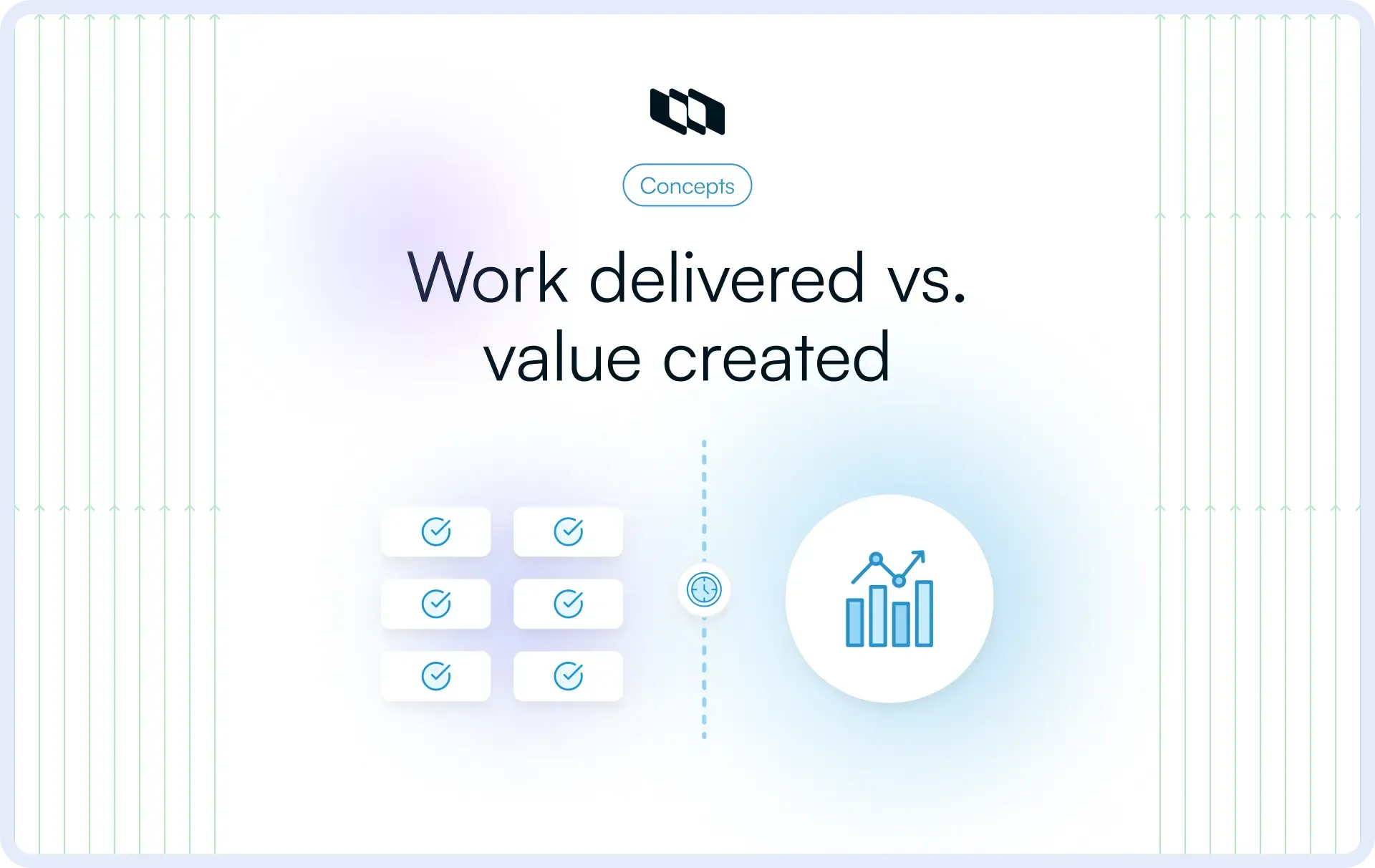
Output = what you deliver.
Outcome = what changes because of it.
A project output is the thing you ship or hand over. A project outcome is the improvement that shows up after people use what you shipped. This distinction helps teams talk about success with clarity, especially during status updates and at project closure.
Output vs outcome in project management at a glance
What you compare | Output | Outcome |
Focus | Delivery of a defined deliverable | Change in performance, behavior, or results |
Timing | Shows up at a milestone or handover | Shows up after rollout and usage over time |
Measurability | Verified through review, approval, or completion criteria | Verified through evidence such as trends, usage, and performance data |
Ownership | Usually owned by the delivery team or project owner | Often shared across teams that influence adoption and operations |
This table is a practical way to explain the difference between output and outcome in project management. Outputs sit inside scope and execution tracking. Outcomes sit inside value and impact tracking.
A quick self-check rule
When you feel unsure, use this simple check.
- Can I tick it off a checklist today?
That points to a project output because it is deliverable and reviewable.
- Do I need time or data to see it?
That points to a project outcome because it depends on usage and real conditions.
A simple example to make it stick
A team delivers a new onboarding checklist for new hires.
- The output is the checklist delivered, reviewed, and shared with the team.
- The outcome is faster onboarding over the next few weeks, with fewer follow-up questions and fewer missed steps.
Both matter. The output proves delivery. The outcome proves impact. Keeping output vs outcome in project management separate helps teams plan work better, report progress clearly, and learn whether the delivery created real improvement.
A simple example: Output vs. outcome in one project
Imagine a team running an internal project to improve employee onboarding. New hires often take too long to get set up, miss important steps, and ask the same questions repeatedly. The goal of the project is simple and practical: help new hires become productive faster.
Project goal
The team wants new hires to complete setup and start meaningful work sooner, without relying heavily on managers or support teams. The goal is to improve the onboarding experience, not just deliver new materials.
Outputs delivered
To support this goal, the project team delivers several clear outputs:
- A standardized onboarding checklist covering access, tools, and first-week tasks
- A short internal guide explaining team workflows and ownership
- Recorded onboarding sessions that new hires can revisit
- A shared folder with all onboarding resources in one place
Each of these outputs is reviewed, approved, and shared with new hires.
Outcomes expected
Once these outputs are used in day-to-day work, the team expects to see clear outcomes:
- Faster onboarding, with new hires completing setup earlier
- Fewer errors, such as missed access or incomplete steps
- Higher adoption, as teams rely on the checklist and guides
- Reduced delays, because less time goes into basic support
These outcomes depend on consistent usage over time.
How success would actually be judged
Success is judged after delivery, using real signals:
- Average time for new hires to complete onboarding
- Number of support questions during the first few weeks
- Usage of the onboarding checklist and guides
The outputs confirm delivery, and the outcomes confirm impact.
This example shows how output vs. outcome in project management separates completed work from meaningful change.
How outputs and outcomes are connected
Outputs and outcomes work together. One does not replace the other. Each plays a distinct role in how projects create value. Let us understand this connection.
Outputs are the means, outcomes are the reason
Outputs describe what a team delivers. Outcomes describe why that delivery matters. A project exists to create change, yet that change reaches people only through concrete deliverables. Outputs give shape to intent. Outcomes give meaning to delivery.
Teams plan, execute, and coordinate work through outputs. Leaders and stakeholders evaluate success through outcomes. When both stay visible, projects stay grounded in both execution and impact.
Outcomes depend on outputs to take shape
Outcomes take form only after outputs enter real use. A faster onboarding experience comes from an onboarding flow, guides, and training materials. Higher adoption comes from tools, workflows, and documentation that teams can actually use. Reduced delays come from planning artifacts, dependency tracking, and shared visibility.
Each outcome grows from one or more outputs that support it. Without delivery, impact has no path to appear.
The simple chain that connects work to value
A practical way to think about output vs outcome in project management is as a clear chain:
- Desired outcome: The improvement the project aims to create, such as faster onboarding or fewer errors
- Supporting outputs: The deliverables that enable that improvement, such as checklists, tools, or workflows
- Day-to-day work: The tasks and activities teams perform to produce those outputs
This chain helps teams plan with intent. Work stays connected to delivery. Delivery stays connected to impact. When teams understand this connection, outputs stop feeling like busy work and become the bridge to outcomes.
Why teams often focus only on outputs
Most teams focus on outputs because outputs fit naturally into how projects run day to day. This focus usually comes from practical constraints rather than poor intent.
Outputs are easier to plan and report
Project planning starts with scope, tasks, and milestones. Outputs align closely with these elements. Teams can define what will be delivered, assign owners, and attach timelines. Reporting also becomes straightforward because outputs offer clear proof of progress through completed deliverables and approvals.
Status updates sound concrete when they reference outputs. Teams can point to what shipped, what reached review, and what moved to handover. This clarity makes the default signal for progress.
Outcomes take time and coordination
Outcomes depend on adoption, usage, and behavior over time. They often involve multiple teams beyond the project group, including operations, support, and leadership. This coordination adds complexity and delays the delivery of visible results.
Because outcomes appear later, they feel harder to include in short project updates. Teams may deliver outputs today while outcomes surface weeks or months later, after the project already moved on.
Workplace pressures reinforce output focus
Many everyday pressures push teams toward delivery-first thinking:
- Deadlines that tie success to shipping on time
- Delivery commitments made to stakeholders early in the project
- Short project cycles that prioritize quick execution and closure
These pressures reward completion signals, whose outputs are provided easily.
What happens when outcomes fade from view
When outcomes receive less attention, teams still deliver work, yet learning weakens. Projects may close successfully on paper while questions about impact remain unanswered. Over time, teams lose insight into which outputs actually drive improvement and which ones simply reach completion.
Keeping outcomes visible alongside outputs helps teams connect delivery to value. This balance supports better decisions in future projects and clearer conversations about what success truly means.
Common mistakes teams make with outputs and outcomes
Even teams that understand the difference between outputs and outcomes often slip into patterns that blur the two. These mistakes usually come from habit and time pressure rather than intent.
1. Treating outputs as success
A common mistake is equating delivery with success. Teams deliver all planned outputs, close the project, and move on. The assumption is that delivery itself proves value. In practice, delivery only confirms that the work is finished. It does not confirm whether anything improved. When outputs stand in for success, teams miss the chance to learn which work actually created impact.
2. Defining outcomes too vaguely
Outcomes often get written in broad terms, such as a better experience or improved efficiency. These phrases sound positive but lack direction. Without clarity, teams struggle to observe change or agree on progress. Clear outcomes describe a specific improvement and a timeframe, which makes them easier to evaluate after delivery.
3. Expecting outcomes immediately after delivery
Outcomes rely on usage, repetition, and real conditions. Expecting instant change right after delivery leads to confusion and frustration. Teams may assume the project failed when the outcome simply has not had time to surface. Understanding that outcomes emerge gradually helps teams set realistic expectations and review impact at the right moment.
4. Not assigning ownership for outcomes
Outputs usually have clear owners. Outcomes often do not. Without ownership, outcomes drift out of focus once delivery ends. Assigning responsibility for observing and reviewing outcomes keeps impact visible and encourages teams to close the loop between delivery and results.
Wrapping up
Projects succeed through delivery and through impact. Outputs show what a team ships. Outcomes show what improves because that work exists. Treating these ideas as separate yet connected helps teams plan more intentionally, report progress more clearly, and learn from each project they run.
When teams define outcomes early and choose outputs that support them, delivery stays purposeful. Status updates move beyond task completion, and project reviews turn into learning moments rather than checklists. Understanding the difference between output and outcome in project management gives teams a clearer way to judge success and a stronger foundation for better projects ahead.
Frequently asked questions
Q1. Which comes first, output or outcome?
The outcome comes first at the planning stage, because it defines the improvement the project aims to create. During execution, outputs come first because teams must deliver something before any change can occur. In practice, teams plan with outcomes in mind and execute through outputs.
Q2. What are the 3 P’s in project management?
The three P’s in project management commonly refer to people, process, and product. People focus on roles and collaboration. The process focuses on how work is planned and executed. The product focuses on what the project delivers. Outputs usually sit under product, while outcomes relate to how people and processes improve after delivery.
Q3. What is an example of output in project management?
Examples of outputs in project management include released features, completed project plans, documented workflows, and delivered training sessions. Each of these represents a tangible deliverable that can be reviewed and approved at the end of the project work.
Q4. What is the main difference between a program’s outputs and outcomes?
A program’s outputs are the individual deliverables produced by its projects. A program’s outcomes describe the broader change resulting from coordinating those projects. Outputs show what each project delivered. Outcomes show the combined impact across teams, systems, or business goals.
Q5. What is an example of output vs outcome?
A simple example of output vs outcome in project management is onboarding improvement. The output is an onboarding checklist and training materials delivered to new hires. The outcome is faster onboarding, fewer setup errors, and higher confidence during the first weeks. The output confirms delivery. The outcome confirms impact.
Recommended for you




 Download for Mac
 Download for Android