Combining project management and knowledge management
Introduction
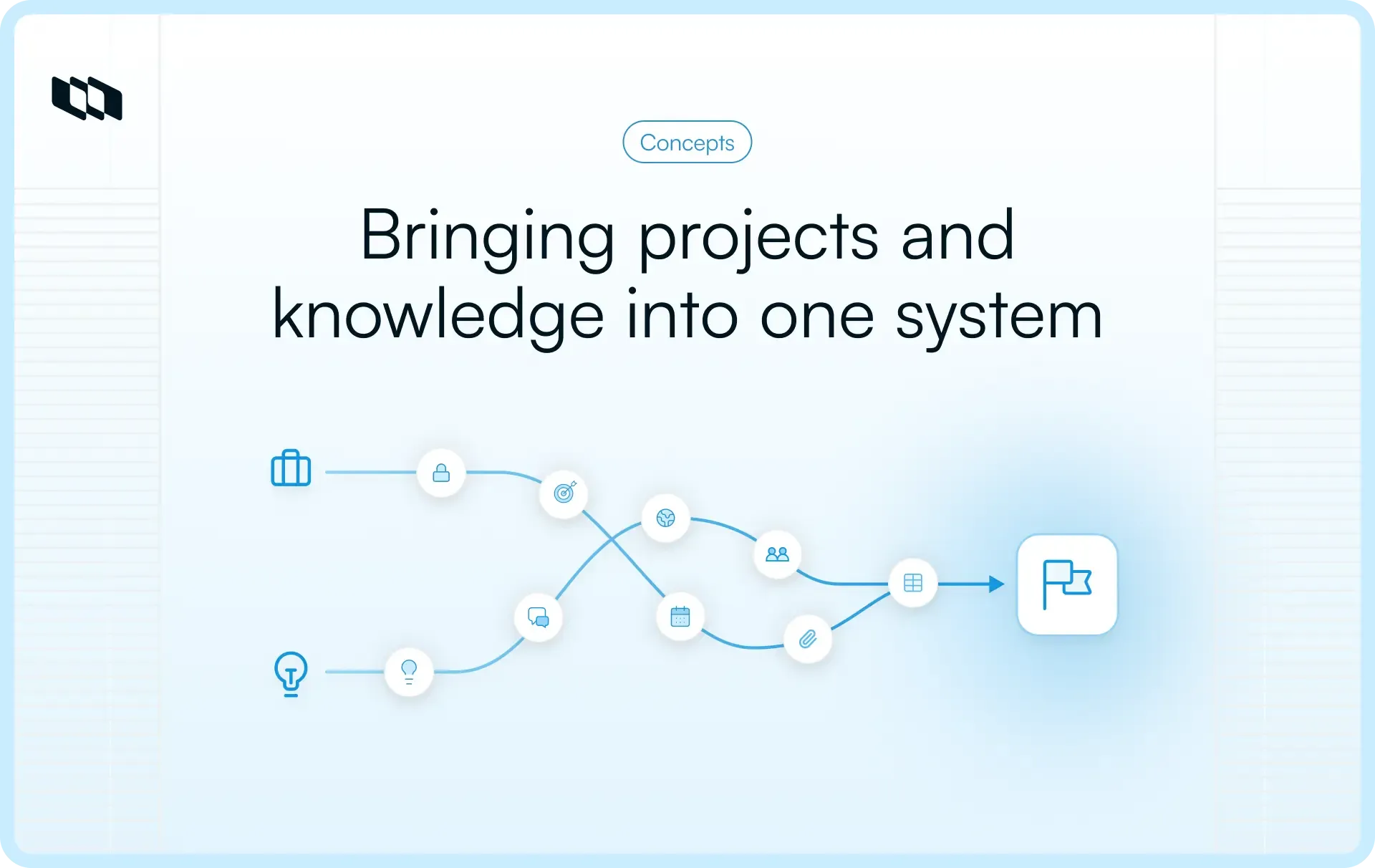
Project generates constant decisions, context, and lessons, yet most teams struggle to retain and reuse this knowledge. Project knowledge management connects everyday execution with the information teams create as they deliver work, ensuring that insights remain accessible and useful across initiatives. Modern teams that treat knowledge as a core project asset build stronger delivery practices and more consistent results across projects. In this guide, you will learn how to integrate execution and knowledge into a single continuous system, rather than treating documentation as an afterthought.
What it means to combine project management and knowledge management
Modern teams generate large volumes of decisions, insights, and documentation while delivering work. Without a structured way to retain and reuse this information, valuable context fades between projects and slows future execution.
Project knowledge management connects delivery workflows with a system that preserves and applies what teams learn. Knowledge management in project management ensures that knowledge evolves alongside execution and supports better outcomes across every initiative.
Combining project management and knowledge management means:
- Project management focuses on planning, coordinating, and delivering work within defined timelines, with resources and goals.
- Knowledge management focuses on capturing, organizing, and reusing the information, decisions, and lessons teams generate while working
- Combining both means running projects while continuously capturing, organizing, and reusing the information, decisions, and lessons teams generate as they work.
- The shift for modern teams involves moving from documentation created after project completion toward knowledge captured and used throughout the project lifecycle.
The role of knowledge in successful project delivery
Project knowledge management ensures that decisions, lessons learned, and processes remain available to the entire team rather than remaining isolated within individual contributors.
Let's have a look at the role that knowledge plays in successful project delivery:
1. Knowledge as a project asset
Projects produce more than deliverables; they create decisions, workflows, technical solutions, and lessons that guide future work. Treating these insights as reusable assets helps teams build consistency and maturity across projects. Project knowledge management allows teams to store decision records, process documentation, and lessons learned in a way that supports ongoing execution.
When knowledge is treated as a structured project asset, teams avoid rebuilding context from scratch and improve their ability to plan and deliver with clarity.
2. How knowledge improves delivery speed and quality
Knowledge management for projects directly influences execution outcomes by making reliable information available when teams need it.
- Faster decision-making: Accessible project context helps teams evaluate options quickly and move forward with confidence. Decision logs and documented trade-offs provide clarity without requiring repeated discussions.
- Fewer repeated mistakes: Lessons learned from previous projects guide future execution. Teams avoid known risks and apply proven solutions, improving delivery consistency.
- Better cross-team alignment: Shared documentation and structured project knowledge keep stakeholders aligned on goals, priorities, and expectations. Teams operate with a common understanding of project direction.
- Stronger continuity across projects: Project knowledge management allows teams to carry forward insights from completed work into new initiatives. This continuity strengthens planning accuracy and improves long-term outcomes.
3. From individual knowledge to shared team knowledge
In many teams, critical knowledge remains with individuals who worked closely on specific tasks or decisions. When this information stays undocumented, teams depend on memory and repeated explanations. Knowledge management in project management focuses on capturing insights from individuals and storing them in shared systems that remain accessible to everyone.
By capturing decisions, solutions, and workflows in a structured way, teams build a shared knowledge base that supports collaboration and reduces dependency on individual contributors. Combining project management and knowledge management ensures that valuable expertise becomes part of the team’s collective capability and continues to support delivery across projects.
Types of knowledge teams generate during projects
Project knowledge management works best when teams understand what knowledge exists during execution and what should be preserved for future work. Knowledge management in project management focuses on capturing information to improve clarity, accelerate delivery, and prevent duplicate effort.
Let's have a look at the types of knowledge teams generate during projects:
1. Explicit knowledge
Explicit knowledge includes everything teams intentionally document while running a project. This forms the visible structure of execution and keeps work aligned across stakeholders. Well-structured explicit knowledge keeps teams aligned and reduces time spent rediscovering information.
For example, when a product team creates a detailed feature brief before development begins, it becomes a reference point for design, engineering, and marketing. Months later, similar projects can reuse that structure instead of starting from scratch. This is where project knowledge management creates long-term value.
2. Tacit knowledge
Tacit knowledge lives in experience and judgment. It develops as teams solve problems, navigate trade-offs, and refine workflows during execution. This knowledge rarely appears in formal documentation unless teams actively capture it.
An engineer may discover a faster way to debug recurring issues; a project manager may learn which approval workflows slow delivery; and a designer may identify patterns that improve stakeholder alignment. These insights shape better decisions, yet they often remain with individuals. When teams document these learnings through retrospectives, decision logs, or shared notes, individual experience becomes shared team capability.
3. Operational knowledge created during execution
Operational knowledge develops as projects progress and plans adapt to real-world conditions. This includes decisions, risks, changes, and outcomes that shape delivery.
During execution, teams adjust timelines, resolve blockers, and refine processes. Capturing these updates helps future teams understand what influenced outcomes. For example, documenting why a deadline shifted or how a risk was resolved provides practical context for similar projects.
Operational knowledge connects planning with real execution. Strong project knowledge management ensures that this context stays available and reusable. Teams that consistently capture decisions and outcomes build a reliable knowledge base that improves future project planning and execution.
Where knowledge gets lost in most projects
Most teams understand the value of project knowledge management, yet knowledge still disappears during execution. Knowledge management in project management often breaks down due to simple workflow gaps. When knowledge remains scattered or unused, teams lose context that could improve future delivery. The following are the reasons why knowledge gets lost in projects:
1. Scattered tools and documentation
Project information lives across multiple tools, including documents, chats, dashboards, and task trackers. Teams struggle to maintain a single source of truth, and important context becomes difficult to trace. When project knowledge management remains disconnected from execution tools, teams spend time searching for information instead of using it.
2. Conversations happening outside project tools
Key decisions often happen in chat threads, quick calls, or informal discussions. These decisions influence timelines, scope, and priorities, yet they are rarely captured in project systems. Over time, teams lose visibility into why certain choices were made. Combining project management and knowledge management helps teams record decisions where work actually happens.
3. No ownership for documentation
Documentation frequently lacks clear ownership. Teams assume updates will happen naturally, which leads to incomplete or outdated information. Without a defined responsibility for maintaining project knowledge, documentation loses reliability and no longer supports execution effectively.
4. Lessons learned are stored but rarely reused
Retrospectives and post-project reviews generate valuable insights, yet they are often stored in folders or separate tools. Teams rarely revisit them in new projects, leading to repeated mistakes and missed opportunities for improvement. Knowledge management in project management focuses on making lessons accessible and reusable.
5. Knowledge is trapped with individuals
Critical insights often stay with experienced team members rather than being shared across systems. Teams depend on individuals for context, which slows onboarding and creates risk when roles change. Strong project knowledge management ensures that insights move from individual memory into accessible team knowledge that supports consistent delivery.
The operating model: People, process, and tools
Effective project knowledge management requires more than good intentions. Teams need a clear operating model that defines who manages knowledge, how it moves through projects, and where it lives. Knowledge management in project management works best when people, process, and tools function together as a connected system. Let’s explore further:
1. People
Knowledge remains useful when teams actively capture and maintain it. Assigning clear ownership ensures that project knowledge remains accurate, relevant, and easily accessible during execution.
Project managers, product leads, and team contributors all play a role in documenting decisions, updating project context, and sharing lessons. Some teams assign knowledge champions or documentation owners to maintain consistency. Others integrate knowledge capture into existing responsibilities, such as sprint reviews or project updates.
Strong project knowledge management depends on shared participation supported by clear accountability. When ownership stays defined, knowledge remains reliable and useful for everyone involved.
2. Process
Knowledge should move alongside project execution rather than appearing only at the end. A defined process ensures that teams capture information at the right moments during the project lifecycle.
During planning, teams document goals, scope, and assumptions. During execution, they record decisions, risks, and changes. During reviews and retrospectives, they capture lessons and improvements. This continuous flow keeps knowledge aligned with real progress.
3. Tools
Tools determine whether project knowledge remains accessible or becomes fragmented. When documentation, decisions, and tasks live in separate systems, teams struggle to connect context with execution.
Connected systems allow teams to link project plans, discussions, and documentation in one place. Searchable knowledge bases, shared workspaces, and integrated project tools make it easier to locate and reuse information.
Combining project management and knowledge management within connected tools reduces fragmentation and ensures that knowledge stays close to the work it supports. Teams gain faster access to context and maintain stronger alignment across projects.
How to combine project management and knowledge management across the project lifecycle
Project knowledge management works best when it becomes part of the delivery lifecycle rather than a separate activity. Knowledge management in project management should evolve alongside planning, execution, and review so that teams retain context at every stage. When teams combine project and knowledge management throughout the lifecycle, every project strengthens the next.
1. Project kickoff and planning
The planning stage sets the foundation for both execution and knowledge. Capturing the right context early prevents confusion and the need to discover it later.
During kickoff and planning, teams should capture:
- Project goals and success metrics to ensure alignment on outcomes
- Scope and assumptions that shape timelines and priorities
- Stakeholders and ownership for clear accountability
- Dependencies and risks that may influence delivery
- Key decisions from early discussions that define direction
For example, when a product team documents why certain features were prioritized during planning, future teams gain clarity on the decision logic rather than revisiting the same debates. Project knowledge management at this stage creates a reliable reference point that guides execution and reduces ambiguity.
2. Execution phase
Most project knowledge is created during execution, yet it is also where it is often lost. Teams solve problems, adjust plans, and make critical decisions while moving quickly. Capturing these insights in real time ensures they remain useful.
During execution, teams should document:
- Key decisions and trade-offs that influence direction
- Status updates and progress insights for visibility
- Blockers and how they were resolved for future reference
- Scope or timeline changes and the reasoning behind them
- Process improvements discovered during work
For instance, if an engineering team finds a faster approach to resolve a recurring issue, capturing that solution helps future projects avoid the same delay. Knowledge management for projects becomes practical when documentation happens alongside work rather than after completion.
3. Delivery and handoff
As projects move toward completion, teams generate insights that help others operate, maintain, or build on the delivered work. Capturing this knowledge ensures smooth transitions and long-term usability.
At delivery and handoff, teams should store:
- Release notes and final outcomes to summarize what was delivered
- Operational context that supports ongoing use or maintenance
- Key learnings from delivery challenges
- Documentation for future teams or stakeholders
- References to related resources or decisions
For example, a successful product launch often includes release notes, support documentation, and internal summaries. When stored in a structured way, this knowledge supports marketing, support, and future product teams without requiring repeated explanations.
4. Project closure and retrospectives
Project closure offers a structured opportunity to convert experience into reusable knowledge. Many teams conduct retrospectives, yet their insights often remain underused. Project knowledge management ensures that lessons learned remain actionable and accessible.
During closure and retrospectives, teams should capture:
- What worked well and should be repeated
- What created delays or confusion
- Solutions that improved outcomes
- Recommendations for similar future projects
- Reusable templates or workflows
For example, if a team identifies that weekly cross-functional check-ins improved coordination, documenting this insight allows future projects to adopt the same practice. Knowledge management in project management turns retrospectives into a practical source of improvement rather than a one-time discussion.
Bringing it all together
Combining project management and knowledge management across the lifecycle ensures that knowledge grows alongside execution. Each phase contributes context that supports future planning and delivery. Teams that capture and reuse knowledge at every stage build stronger continuity, reduce repeated effort, and improve project outcomes over time.
What effective project knowledge management looks like in practice
Project knowledge management becomes valuable when it supports everyday execution rather than adding extra work. Knowledge management in project management should help teams move faster, make informed decisions, and maintain continuity across projects. Effective systems focus on accessibility, relevance, and ease of use.
1. Knowledge connected directly to work
Knowledge remains useful when it stays linked to active projects. Teams should connect documentation, decisions, and updates directly to tasks and project workflows. When project briefs, meeting notes, and decision logs are linked to execution, teams can reference context without switching tools. This approach ensures that project knowledge management supports real-time work rather than becoming a separate documentation exercise.
2. Searchable and accessible information
Teams should be able to find project information quickly without relying on individuals for answers. Searchable documentation and structured storage allow contributors to access decisions, processes, and lessons when needed. Accessible knowledge reduces repeated questions and speeds up onboarding. Knowledge management in project management works best when information remains easy to locate and understand across teams.
3. Lightweight and continuous documentation
Effective project knowledge management avoids excessive documentation. Instead of creating large reports at the end of projects, teams capture small but important updates throughout execution. Short decision notes, quick summaries, and structured updates keep knowledge current without slowing delivery. Continuous documentation ensures that information remains accurate and useful without creating additional workload.
4. A culture of sharing and improvement
Tools and processes alone cannot sustain knowledge management. Teams need a culture where sharing insights and documenting decisions support better work. When contributors see that captured knowledge helps them avoid repeated effort and improve outcomes, participation becomes natural. Combining project management and knowledge management works best when teams treat shared knowledge as a practical resource that strengthens delivery across projects.
How to measure the impact of combining project management and knowledge management
Knowledge management in project management must be measured by its operational impact rather than by the volume of documentation created. The following indicators help teams evaluate whether combining project management and knowledge management is working.
- Time spent searching for information: Track how long teams take to find project briefs, decisions, or past documentation. A consistent reduction in search time signals that knowledge remains accessible and well organized.
- Onboarding speed: Measure how quickly new team members become productive within a project. Faster onboarding indicates that project knowledge is structured and easy to understand, with minimal reliance on verbal context.
- Rework and repeated mistakes: Monitor how often teams repeat previously solved issues or redo discovery work. Fewer repeated mistakes indicate that lessons and insights are being reused across projects.
- Decision turnaround time: Observe how quickly teams make and finalize decisions. Accessible context and documented trade-offs help teams evaluate options faster and move forward with clarity.
- Project delivery consistency: Assess whether projects consistently meet timelines, scope expectations, and quality standards. Strong project knowledge management improves planning accuracy and reduces delivery variability.
Focus on these outcome-driven signals to determine whether combining project and knowledge management strengthens execution and improves overall project performance.
How modern tools bring project and knowledge management together
Modern teams require systems in which execution and knowledge coexist in the same environment. When project work and documentation remain connected, teams maintain context, reduce repeated effort, and improve delivery consistency. Project knowledge management becomes practical when knowledge lives alongside tasks, timelines, and decisions rather than in separate tools.
- Projects and documentation in one place: Teams work more efficiently when project plans, briefs, meeting notes, and updates remain connected to ongoing tasks. Keeping documentation close to execution ensures that context stays visible and accessible throughout the project lifecycle. Knowledge management in project management works best when contributors can reference information without leaving their workflow.
- Decision tracking that supports execution: Every project involves decisions that shape timelines, scope, and outcomes. Capturing these decisions within the project workspace creates clarity for current and future contributors. Decision tracking helps teams understand why changes occurred and how priorities evolved, supporting better planning and alignment across projects.
- Searchable knowledge bases for quick access: Accessible knowledge helps teams move faster. Searchable documentation and structured knowledge bases allow contributors to locate information without repeated discussions. Strong project knowledge management ensures that requirements, lessons, and updates remain easy to find and apply during new initiatives.
- Templates and reusable workflows: Reusable templates and workflows help teams apply proven approaches to new projects. When teams capture successful processes and structures, they reduce setup time and improve consistency across initiatives. Knowledge management for projects becomes sustainable when teams reuse existing knowledge rather than starting from scratch.
Bringing it together with a connected system
Modern project management platforms now support both execution and knowledge in a single workspace. Teams can manage tasks, document decisions, and maintain shared knowledge without fragmentation.
With Plane, teams can structure project work while maintaining a connected knowledge layer through pages. Project briefs, decision logs, and process notes, etc., remain linked to active work, making knowledge accessible throughout the lifecycle. This approach supports continuous learning and helps teams build a reliable knowledge base alongside everyday project execution.
Final thoughts
Projects create valuable knowledge every day through decisions, execution, and outcomes. When this knowledge remains scattered or unused, teams lose opportunities to improve future delivery. Project knowledge management ensures that insights generated during execution remain accessible, structured, and reusable across initiatives.
Combining project management and knowledge management helps teams move beyond task completion and build a reliable system of shared understanding. Teams that capture context, document decisions, and reuse proven approaches deliver with greater consistency and clarity. Over time, this connected approach strengthens alignment, improves delivery speed, and supports continuous improvement across every project.
Frequently asked questions
Q1. What is knowledge management in project management?
Knowledge management in project management is the practice of capturing, organizing, and reusing knowledge created during projects. It includes decisions, lessons learned, documentation, and processes that help teams improve future project delivery.
Q2. What are the 4 phases of PMBOK?
The four main phases of the PMBOK project lifecycle are:
- Initiating: Defining goals, scope, and stakeholders
- Planning: Creating timelines, resources, and strategies
- Executing and monitoring: Delivering work and tracking progress
- Closing: Completing the project and capturing lessons learned
These phases help teams manage projects in a structured and consistent way.
Q3. What are the 5 P's of knowledge management?
The 5 P’s of knowledge management are:
- People: Who create and use knowledge
- Process: How knowledge is captured and shared
- Purpose: Why knowledge is managed
- Platform: Where knowledge is stored
- Performance: How knowledge impact is measured
Together, they ensure knowledge supports effective decision-making and project execution.
Q4. What are the 5 C's of project management?
The 5 C’s of project management are:
- Clarity: Clear goals and scope
- Communication: Consistent information sharing
- Collaboration: Teamwork across stakeholders
- Control: Tracking progress and risks
- Completion: Delivering successful outcomes
These principles help teams stay aligned and deliver projects effectively.
Q5. What are the 4 types of knowledge management?
The four main types of knowledge management are:
- Explicit knowledge: Documented information such as guides and reports
- Tacit knowledge: Experience and insights from individuals
- Embedded knowledge: Knowledge built into processes and workflows
- Collaborative knowledge: Shared knowledge across teams and systems
These types help organizations capture and reuse knowledge to improve project outcomes.
Recommended for you



 Download for Mac
 Download for Android