What is Agile project management? Definition, methods, types and examples
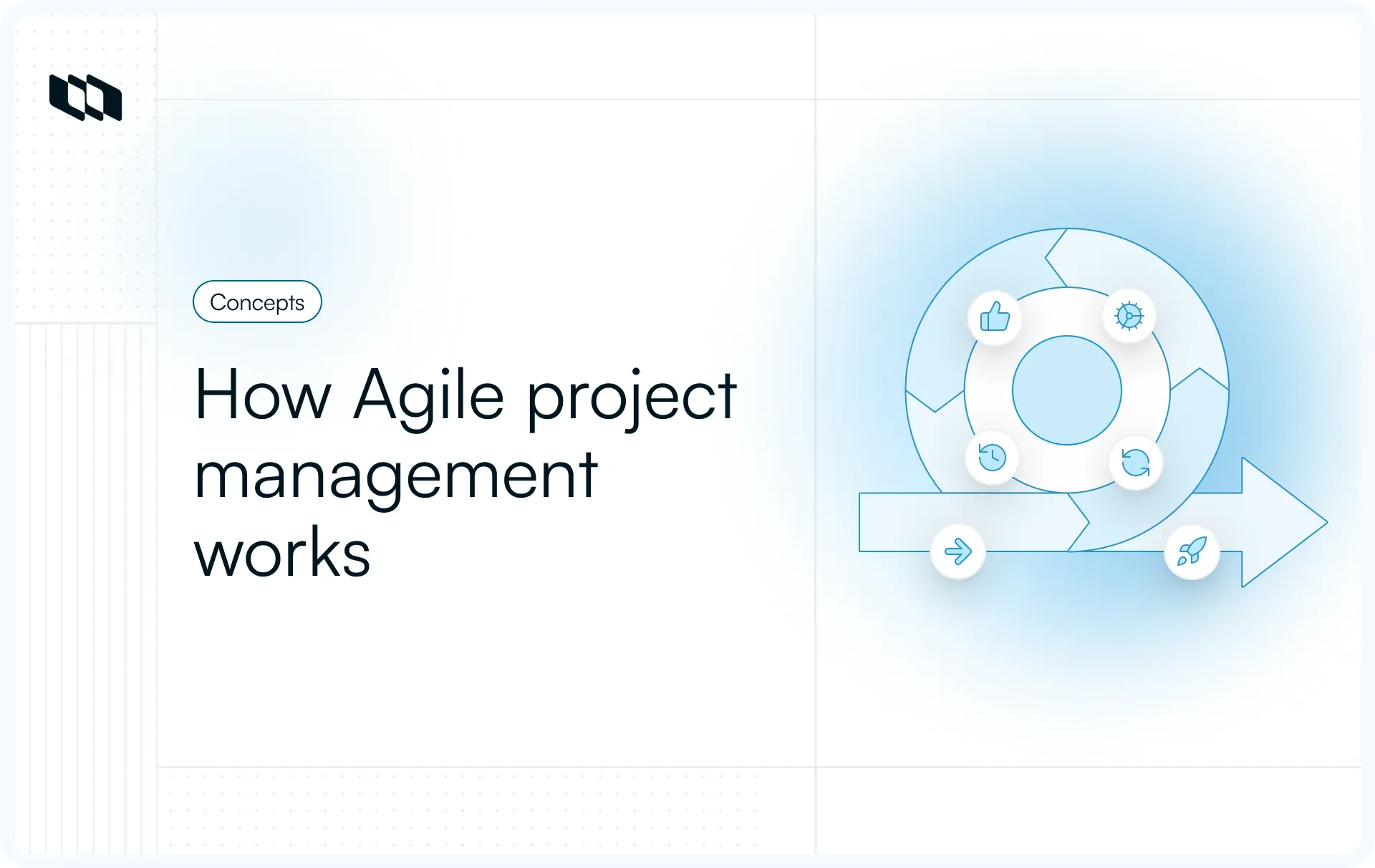
Agile project management is defined as an iterative approach to managing projects that focuses on delivering value through collaboration, flexibility, and continuous improvement.
Agile project management is defined as an iterative approach to managing projects that focuses on delivering value through collaboration, flexibility, and continuous improvement.
Introduction
If your projects ever feel like they are changing faster than you can plan for them, Agile project management might be exactly what you have been missing. Instead of treating change as a setback, the Agile methodology uses it to push teams forward.
In this guide, we will break down what Agile project management is, how the Agile project management process works, and the ideas behind the Agile project management framework. You will also get a simple overview of agile methods, understand when to use them, and understand their biggest advantages and disadvantages.
What is Agile project management?
Agile project management is defined as an iterative approach to managing projects that focuses on delivering value through collaboration, flexibility, and continuous improvement.
Unlike traditional project management methods that rely on detailed upfront planning and sequential phases, agile emphasizes adaptability and responsiveness to changing requirements. This approach is especially popular in software development but has been increasingly adopted across various industries.
Agile project management breaks projects into small, manageable units called iterations or sprints, typically lasting two to four weeks. Each sprint results in a potentially deliverable product increment, allowing teams to gather feedback early and often. This cycle of planning, executing, reviewing, and adjusting helps ensure that the project stays aligned with customer needs and business goals throughout the project's life cycle.
Agile promotes strong collaboration among cross-functional teams, including developers, testers, business stakeholders, and customers. Daily stand-up meetings, sprint reviews, and retrospectives are key ceremonies that support transparency and continuous communication. By involving stakeholders regularly, agile reduces risks related to misunderstandings and late changes, enabling faster decision-making and problem-solving.
Finally, agile project management values working solutions over extensive documentation and embraces change even late in the project. This mindset encourages innovation and flexibility, helping teams adapt to evolving market demands or user feedback. Agile frameworks such as Scrum, Kanban, and Lean provide structured ways to implement these principles, making agile a versatile and effective approach to managing complex and dynamic projects.
Related: What is Kanban project management?
Why Agile project management matters for modern teams
Modern projects rarely move in a straight line. Priorities shift, feedback arrives mid-execution, and teams are often expected to adapt without losing speed or clarity. Agile project management helps teams stay flexible while consistently delivering value.
1. Keeping up with constant change
Markets, customer needs, and internal priorities change faster than ever. Agile allows teams to respond to new information without reworking an entire plan. By working in short iterations, teams can adjust direction quickly and focus on what matters most at any given time.
2. Building faster feedback loops
Agile project management encourages teams to share progress early and often. Regular reviews and incremental releases make it easier to gather feedback, validate assumptions, and improve outcomes while work is still in progress. This reduces the risk of delivering something that no longer meets user expectations.
3. Supporting cross-functional collaboration and continuous delivery
Modern teams are rarely siloed. Agile brings together cross-functional roles and promotes continuous collaboration throughout the project. Instead of waiting for large handoffs or final deliveries, teams work together to deliver small, usable improvements continuously, keeping momentum high and alignment strong.
Agile values and principles
Agile project management is rooted in the Agile Manifesto, which outlines the values and principles that guide how teams plan, collaborate, and deliver work. These ideas shape the mindset behind every agile practice, from sprint planning to retrospectives.
The four Agile values
The Agile Manifesto defines four core values that set agile apart from traditional project management methods:
- Individuals and interactions over processes and tools: Agile emphasizes people working together, communicating openly, and making decisions collaboratively.
- Working solutions over comprehensive documentation: Teams focus on delivering usable outcomes rather than spending excessive time producing documentation that may become outdated.
- Customer collaboration over contract negotiation: Stakeholders and customers stay involved throughout the project, ensuring the team builds what users actually need.
- Responding to change over following a plan: Agile teams adapt as priorities evolve, making room for new insights rather than sticking to rigid plans.
Key Agile principles
Beyond the values, Agile includes guiding principles that influence daily work. While there are 12 principles in the full manifesto, here are the ones most essential for modern teams:
- Iterative delivery: Work is delivered in small increments, allowing teams to learn, adjust, and improve continuously.
- Continuous feedback: Teams collect frequent feedback from stakeholders and users, reducing the risk of building the wrong solution.
- Sustainable pace: Agile encourages a balanced workflow that teams can maintain long-term without burnout.
- Collaboration and transparency: Open communication, shared ownership, and full visibility into progress help teams stay aligned and resolve issues quickly.
How Agile project management works
Agile project management works through short, repeating cycles that allow teams to plan, deliver, and adapt continuously. Instead of creating a fixed plan upfront, agile focuses on steady progress and regular learning.
1. Iterative cycles and continuous planning
Work is organized into small cycles, often called iterations or sprints. At the start of each cycle, teams plan only what can be realistically completed next. Plans are revisited and adjusted frequently, ensuring priorities stay aligned with current goals and changing requirements.
2. Frequent delivery and feedback
Rather than waiting until the end of the project, agile teams deliver small, usable outcomes regularly. Each delivery creates an opportunity to gather feedback from stakeholders or users. This helps teams validate assumptions early and make improvements before investing more time or effort.
3. Ongoing improvement through reflection
At regular intervals, teams reflect on how the work is progressing and how they collaborate. These reflections help identify what’s working well and what could improve. By applying these learnings in the next cycle, teams continuously refine both their process and their outcomes.
Key components of Agile project management framework
The key components of the agile project management framework provide the structure and practices that enable teams to work iteratively, collaborate effectively, and deliver value continuously. These components help guide the execution of agile projects and ensure alignment with agile principles.
Here are the main components:
- Iterative development:
Agile breaks the project into short cycles called iterations or sprints, usually lasting between one and four weeks. Each iteration focuses on completing a small set of features or tasks that result in a usable product increment. This approach allows teams to deliver value early and often, gather real user feedback, and adjust priorities or designs based on what they learn. Rather than waiting until the end, the product evolves continuously with each iteration, reducing risks and increasing responsiveness to change.
- Cross-functional teams:
Agile teams consist of members with different skills needed to complete the work, such as developers, testers, designers, and sometimes business analysts or subject matter experts. These teams collaborate closely and are typically self-organizing, meaning they decide internally how best to accomplish their tasks. This reduces handoffs and delays, encourages knowledge sharing, and improves overall team accountability and ownership of the project outcome.
- Product backlog:
The product backlog is a living document that lists all features, enhancements, bug fixes, and technical work required to develop the product. It is prioritized by the product owner based on business value, customer needs, and technical dependencies. The backlog is continually refined and reprioritized as new information becomes available, ensuring the team always works on the most valuable tasks. Items in the backlog are often written as user stories, which describe the desired functionality from the user’s perspective.
- Sprint planning:
Before each sprint begins, the team and product owner hold a sprint planning meeting to select which backlog items will be tackled in the upcoming sprint. The team assesses their capacity and breaks down selected items into detailed tasks. Clear sprint goals are set to guide the team’s work. This planning ensures everyone understands what needs to be done, the definition of done, and how progress will be measured during the sprint.
- Daily stand-ups:
Also called daily scrums, these brief meetings (usually 15 minutes) are held every day to foster communication and coordination. Team members share what they accomplished since the last meeting, what they plan to work on next, and any obstacles blocking progress. This transparency helps identify issues early and encourages team members to support each other in overcoming challenges.
- Sprint review:
At the end of each sprint, the team presents the completed work to stakeholders, demonstrating the product increment. This review provides an opportunity for feedback, validation, and discussion about the product’s direction. Stakeholders can request changes, clarify requirements, or suggest new features, which then feed back into the product backlog for future sprints.
- Sprint retrospective:
Following the sprint review, the team holds a retrospective meeting to reflect on their processes and teamwork. They discuss what went well, what didn’t, and agree on specific actions to improve performance in the next sprint. This continuous improvement practice helps the team become more effective, adapt to challenges, and maintain a positive working environment.
- Agile roles:
Product owner: Represents the customer and stakeholders, prioritizes the backlog, and ensures the team works on high-value items.
Scrum master or agile coach: Facilitates the agile process, removes impediments, and supports the team in following agile principles.
Development team: A self-organizing group responsible for delivering the product increment. They decide how best to accomplish the work and maintain quality standards.
These roles provide clear accountability while encouraging collaboration and flexibility.
Related: What is Scrum project management?
Agile project management methodology: Key phases
Here are the key phases of the agile project management methodology, explained with sentence casing and detailed for clarity:
Phase 1. Project initiation:
Project initiation phase establishes the project’s foundation. It includes identifying the product vision, defining key goals, outlining high-level requirements, and assembling the agile team. Roles such as product owner, scrum master, and development team members are assigned. An initial product backlog is created, listing prioritized features or user stories. The objective of this phase is to provide clear direction and prepare for iterative execution.
Phase 2. Sprint planning:
Sprint planning occurs at the start of each iteration. The team, along with the product owner, selects user stories from the product backlog that they commit to completing in the sprint. These stories are broken down into actionable tasks, and the team estimates the time and effort required. A sprint goal is defined to align the team’s focus. This phase ensures clarity and commitment before work begins.
Phase 3. Sprint execution:
During this phase, the team works on the selected tasks to develop a usable product increment. Daily stand-up meetings are held to discuss progress, share updates, and resolve blockers. The team collaborates continuously, maintains quality, and adapts to new information as needed. Sprint execution emphasizes teamwork, transparency, and delivering value.
Phase 4. Sprint review:
At the end of the sprint, the team conducts a review with stakeholders to showcase the completed work. This meeting focuses on demonstrating the product increment and gathering feedback. Stakeholders assess whether the delivered work meets expectations and may suggest changes or new requirements. This feedback loops back into the product backlog.
Phase 5. Sprint retrospective:
After the sprint review, the team holds a retrospective to reflect on how the sprint went. They discuss what went well, what challenges they faced, and what can be improved. The team identifies actionable steps to enhance future sprints. This phase supports continuous learning and process improvement.
Phase 6. Release planning and deployment:
Once a product increment or collection of increments is ready for delivery, the team plans the release. This phase includes final testing, integration, deployment, and documentation. Agile favors frequent, smaller releases over large, infrequent launches, enabling quicker delivery of value and better user feedback.
Related: Agile versus Scrum project management
Popular Agile project management frameworks
Agile project management can be implemented through different frameworks, each designed to support Agile principles in slightly different ways. Teams often choose a framework based on their workflows, team structure, and the type of work they manage.
1. Scrum
Scrum is one of the most widely used Agile frameworks. It focuses on fixed-length sprints, clearly defined roles, and regular review and improvement cycles. Scrum works well for teams building complex products that benefit from frequent planning and feedback.
2. Kanban
Kanban is a visual framework that emphasizes continuous flow rather than fixed iterations. Work is represented on a board and progresses through stages as capacity allows. Kanban is commonly used by teams that need flexibility and want to optimize work in progress.
3. Lean
Lean focuses on maximizing value while minimizing waste. It encourages teams to streamline processes, remove unnecessary steps, and deliver what truly matters to customers. Lean principles are often applied alongside other Agile frameworks.
4. Extreme Programming (XP)
Extreme Programming, or XP, is an Agile framework centered on engineering best practices. It promotes frequent releases, continuous testing, and close collaboration between developers and customers, making it especially useful for high-quality software development.
5. Scaled Agile frameworks
For larger organizations, scaled Agile frameworks help apply Agile practices across multiple teams and departments. These approaches extend Agile principles to support coordination, alignment, and delivery at scale.
When should you use Agile project management?
Agile project management works best in environments where flexibility, feedback, and collaboration are essential. While it’s a strong fit for many modern teams, it’s not the right approach for every project.
1. Projects with evolving requirements
Agile is ideal when requirements are likely to change as the project progresses. Instead of locking everything up front, teams can adapt priorities based on new information, user feedback, or shifting business goals.
2. Products that need frequent feedback
If a product benefits from regular input from users or stakeholders, agile provides a structured way to gather feedback early and often. This helps teams validate ideas quickly and adjust direction before investing too much effort.
3. Cross-functional teams working closely together
Agile works well for teams made up of multiple disciplines, such as product, design, engineering, and marketing. Continuous collaboration helps reduce handoffs and keeps everyone aligned around shared goals.
When agile may not be ideal
Agile may be less effective for projects with fixed scope, strict regulatory requirements, or minimal stakeholder involvement. In these cases, a more predictive or traditional project management approach may provide better control and clarity.
Advantages and disadvantages of Agile method of project management
Here is a detailed explanation of the advantages and disadvantages of the agile method of project management, with more elaboration for each point using sentence casing:
Advantages of agile project management
1. Flexibility and adaptability
Agile allows teams to embrace changes in project scope, customer requirements, or market conditions, even late in the development cycle. Unlike traditional models, which resist changes after planning, agile welcomes them, making it ideal for dynamic environments. Teams can adjust priorities, swap features in or out of the backlog, and quickly pivot without disrupting the entire project structure.
2. Faster delivery of value
Agile focuses on delivering a minimum viable product (MVP) early and improving it through iterations. Each sprint results in a working product increment, allowing stakeholders to see tangible progress. This leads to early value delivery and faster realization of benefits, especially critical in time-sensitive projects or competitive industries.
3. Enhanced collaboration and communication
Daily stand-ups, sprint reviews, and continuous stakeholder involvement keep everyone aligned. Agile encourages open communication between team members, product owners, and stakeholders, which helps in surfacing issues early and resolving them quickly. This transparency also builds trust and improves team morale and accountability.
4. Continuous improvement
After every sprint, teams conduct retrospectives to analyze what worked well and what didn’t. These lessons are applied in the next sprint, leading to gradual and continuous improvement in both team performance and product quality. This built-in feedback loop ensures that the process evolves along with the team’s experience and challenges.
5. Higher customer satisfaction
Frequent releases and regular stakeholder involvement ensure that customer feedback is captured and implemented quickly. Because customers get to see and test the product at multiple stages, they have confidence in the project direction and feel heard. This close collaboration leads to a final product that better matches their expectations.
6. Reduced project risk
By breaking the project into manageable sprints and reviewing progress regularly, risks are identified and addressed early. Delivering smaller, functional parts of the product helps avoid the “big bang” failure common in traditional approaches, where major issues may only become visible near the end of the project.
Disadvantages of agile project management
1. Less predictability
Agile's openness to change can make it difficult to forecast timelines, budgets, and scope with high accuracy. In fixed-scope or fixed-budget projects, this unpredictability may pose challenges for stakeholders or sponsors who expect precise planning and milestones.
2. Requires experienced and committed teams
Agile teams need to be self-directed, disciplined, and collaborative. If team members lack experience with agile or do not fully embrace the methodology, then process can become ineffective. A weak team may struggle to manage priorities, estimate tasks, or maintain momentum over multiple sprints.
3. Limited documentation
Agile values working software over comprehensive documentation, which can lead to insufficient records if not managed carefully. This may pose problems for new team members, handovers, compliance audits, or projects that require detailed specifications and traceability.
4. Scope creep risk
Since changes are welcomed throughout the project, there’s a higher risk of uncontrolled scope expansion if the backlog is not managed strictly. Without clear boundaries or prioritization, the project may drift away from original goals or exceed resource limits.
5. Less suited for fixed contracts or rigid environments
In highly regulated industries or government projects that require fixed deliverables and detailed contracts, agile may face limitations. These environments often demand upfront scope and documentation that agile doesn’t naturally provide.
6. Stakeholder availability is essential
Agile depends on continuous input from stakeholders and product owners. If stakeholders are unavailable or disengaged, the team may lack critical guidance or validation, which can hinder progress and reduce product relevance.
Related: What is Scope Creep?
Best practices for implementing and managing Agile project management process
Here are the best practices for implementing and managing the agile project management process, with clear and detailed explanations:
1. Start with proper agile training and mindset shift
Before adopting agile, ensure that the team and stakeholders understand agile principles and frameworks like Scrum or Kanban. Agile requires a cultural shift that values adaptability, collaboration, and customer focus. Providing training and coaching helps align expectations and prepares teams for a successful transition.
2. Define clear roles and responsibilities
Clearly assign roles such as product owner, scrum master (or agile coach), and development team members. Each role should understand its unique responsibilities to avoid confusion. Role clarity enhances accountability, streamlines decision-making, and ensures efficient collaboration throughout the project.
3. Maintain a well-prioritized and groomed product backlog
A well-maintained backlog is essential for agile success. It should contain clearly defined, prioritized items that reflect current customer needs and business goals. Regular grooming sessions help ensure that items are ready for development and aligned with sprint goals.
4. Embrace iterative planning and incremental delivery
Agile works best when teams plan in short cycles and deliver usable features in small increments. This allows for frequent reassessment of direction based on stakeholder feedback and market conditions. It reduces the risk of waste and ensures that the product evolves based on actual needs.
5. Conduct daily stand-up meetings
Short, focused daily meetings help the team stay aligned and identify roadblocks early. Team members share updates on their progress and highlight any issues affecting their work. This daily cadence encourages collaboration and quick resolution of challenges.
6. Foster open and ongoing communication
Effective communication is essential in agile environments. Teams should use visual boards, messaging platforms, and shared dashboards to maintain visibility. Frequent conversations with stakeholders and within the team help ensure everyone is informed and engaged.
7. Use retrospectives to drive continuous improvement
At the end of each sprint, teams should reflect on what worked well and what didn’t. Retrospectives create a space for honest discussion and lead to actionable steps for improvement. This consistent reflection helps teams mature and deliver more effectively over time.
8. Leverage agile tools and technology
Tools like Plane help manage tasks, track progress, and maintain transparency. These platforms support agile workflows and provide a central location for backlog management, sprint planning, and communication, making it easier to collaborate across distributed teams.
9. Measure performance and value delivery
Tracking metrics like team velocity, sprint, and cycle time helps assess performance and identify areas for improvement. However, metrics should be balanced with a focus on customer satisfaction and the value being delivered to users.
10. Engage stakeholders early and often
Frequent stakeholder engagement is critical to agile success. Stakeholders should be involved in sprint reviews, planning, and backlog prioritization. Their input helps ensure that the team is building the right product and allows for timely adjustments based on real feedback.
Conclusion
Agile project management offers teams a flexible way to plan, deliver, and improve work in environments where change is constant. By focusing on short iterations, continuous feedback, and close collaboration, agile helps teams stay aligned with real needs instead of rigid plans. From core values and principles to frameworks, processes, and best practices, agile provides structure without limiting adaptability.
That said, agile isn’t a one-size-fits-all solution. Its success depends on team maturity, stakeholder involvement, and the type of project being managed. When applied in the right context, agile project management enables teams to respond faster, deliver value sooner, and continuously improve how they work. Understanding how and when to use agile is the first step toward building more resilient, outcome-driven project teams.
Frequently asked questions
Q1. What is project management Agile?
Agile project management is an approach that manages projects through short, iterative cycles. It focuses on flexibility, collaboration, and continuous delivery of value rather than following a fixed, upfront plan.
Q2. What are the 5 phases of Agile project management?
Agile does not follow fixed phases like traditional project management. However, many teams describe an agile flow using these repeating stages: initiation, planning, execution, review, and improvement. These stages cycle continuously throughout the project.
Q3. What is Agile vs Scrum?
Agile is a broad mindset and set of principles for managing work, while Scrum is a specific framework built on those principles. Scrum defines roles, events, and artifacts that help teams apply agile practices in a structured way.
Q4. Which is better, PMP or Agile?
Neither is inherently better. PMP focuses on traditional, predictive project management, while agile emphasizes adaptability and iterative delivery. The right choice depends on project complexity, industry requirements, and the expected level of change during execution.
Q5. What are the 5 C’s of Agile?
The five C’s of agile commonly refer to collaboration, communication, customer focus, continuous improvement, and change readiness. Together, they highlight the behaviors and mindset teams need to succeed in agile environments.
Recommended for you



 Download for Mac
 Download for Android