What is Critical Path Method? Definition, Methodology, Examples and Best Practices
The Critical Path Method is defined as a project management technique used to identify and prioritize the sequence of activities that determine the minimum time required to complete a project.
The Critical Path Method is defined as a project management technique used to identify and prioritize the sequence of activities that determine the minimum time required to complete a project.
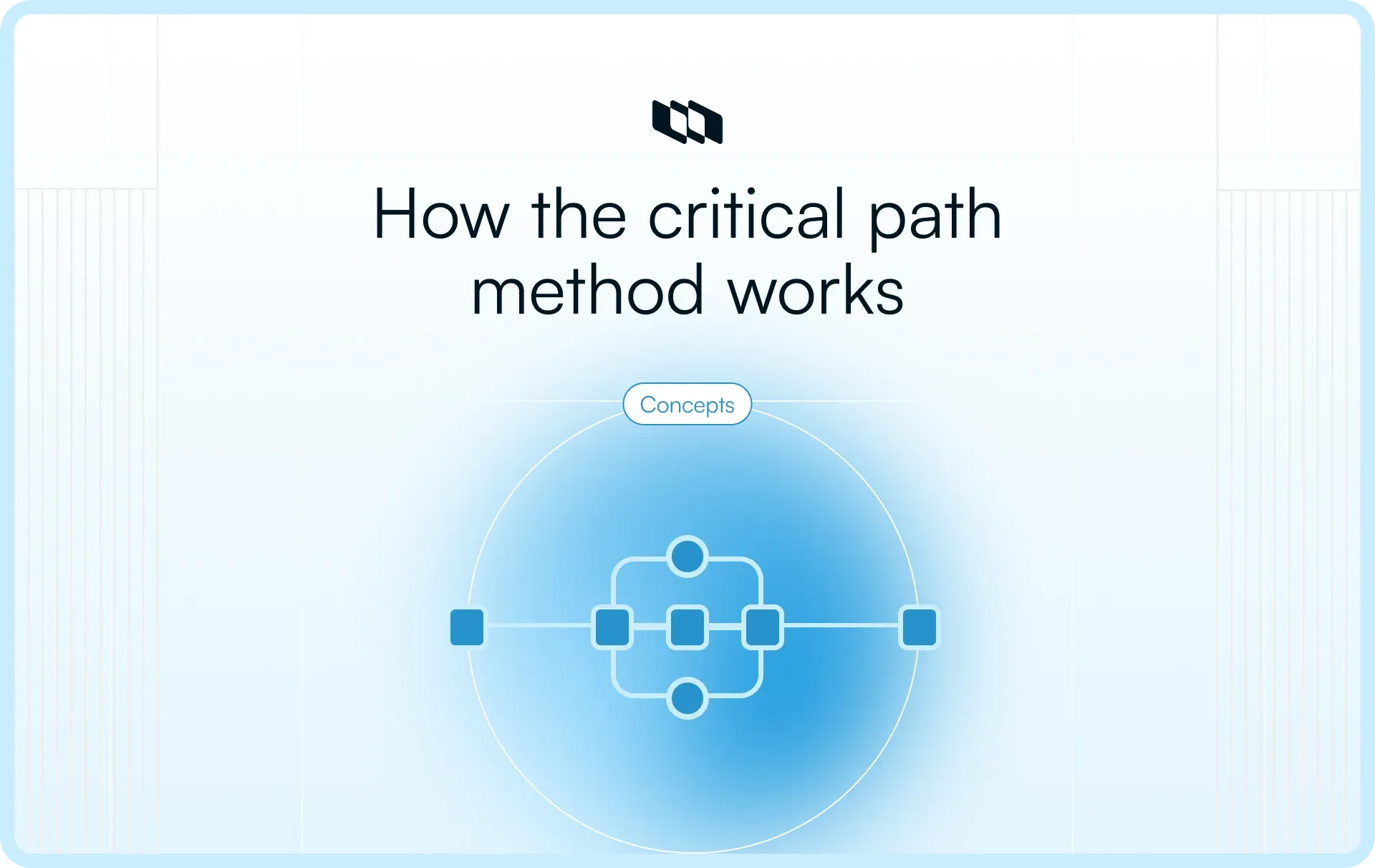
Introduction
Every project plan looks manageable on paper. In reality, a few key tasks quietly control the entire timeline. The critical path method helps teams uncover those tasks. It shows which activities determine the project's finish date and which ones offer flexibility. In this guide, we break down how the critical path method works, how to calculate it, and how project teams use it to keep schedules on track.
What is Critical Path Method?
The Critical Path Method is defined as a project management technique used to identify and prioritize the sequence of activities that determine the minimum time required to complete a project.
This approach focuses on mapping out all the tasks involved, identifying dependencies between them, and determining the longest path of dependent tasks, known as the critical path. The critical path is the sequence of tasks that must be completed on time for the entire project to meet its deadline. Delays in any tasks on the critical path directly affect the project's completion time, as there is no slack or buffer time for these activities.
In practice, the Critical Path Method requires project managers to assign a duration to each activity and map out the dependencies between tasks. Once the tasks are ordered in a sequence, the longest chain of dependent tasks, which is the critical path, can be identified. These tasks are considered "critical" because they dictate the project's overall timeline. Tasks that are not on the critical path have some flexibility, known as float or slack, which allows them to be delayed without impacting the overall project schedule. However, any delay in activities on the critical path will result in a delay in the project's completion date.
The Critical Path Method is valuable because it allows project managers to focus on the activities that are most crucial to keeping the project on track. By identifying the critical path, they can prioritize their resources and attention on tasks that could cause delays. Additionally, this method helps with the efficient allocation of resources, as it highlights where to concentrate efforts to ensure the timely completion of critical activities. It also provides a clear, visual representation of the project's schedule, making it easier to communicate deadlines and dependencies to team members and stakeholders.
For example, consider a project to organize a corporate event. Activities might include booking a venue, arranging catering, sending invitations, and setting up audiovisual equipment. The Critical Path Method would help identify which tasks are dependent on others. For instance, the venue must be booked before the invitations can be sent, and the catering arrangements can only be confirmed once the number of attendees is known. The critical path in this scenario might involve booking the venue, sending invitations, and finalizing the guest list, as any delay in these activities would postpone the entire event. Other tasks, such as setting up the audiovisual equipment, might not be on the critical path and could be adjusted without affecting the overall event schedule.
Related: What is Scrum project management?
Why the Critical Path method matters in project management
This section explains why the critical path method is important in project scheduling. It covers how the method helps teams understand project duration, identify time-sensitive tasks, improve planning accuracy, and manage complex timelines with more clarity and control.
1. It reveals the true project duration
Every project has multiple paths of work running in parallel. The critical path method helps teams identify the longest sequence of dependent tasks that determines the minimum time required to complete the project. This gives project managers a realistic view of how long the work will actually take.
2. It highlights the tasks that need the most attention
Not all tasks carry the same risk. The critical path method clearly shows which activities have zero flexibility and must stay on schedule. This helps teams focus their time, effort, and monitoring on tasks that directly impact the project finish date.
3. It improves planning confidence and predictability
By mapping dependencies and task durations, the critical path method reduces guesswork in planning. Teams can anticipate delays earlier, adjust schedules proactively, and make informed decisions when changes arise during execution.
4. It supports better decision-making in complex projects
As projects grow in size and complexity, managing timelines becomes harder. The critical path method provides a structured way to understand task relationships, making it easier to prioritize work, allocate resources, and communicate timelines with stakeholders.
Key components of Critical Path Method in project management
The Critical Path Method consists of several key components that are essential for effectively managing a project's timeline and identifying the most critical activities. These components help project managers plan, schedule, and monitor tasks to ensure timely completion of the project. Below are the key components of the Critical Path Method in project management:
- Work Breakdown Structure (WBS)
A Work Breakdown Structure is a hierarchical decomposition of all the tasks and activities required to complete the project. The WBS organizes the project into smaller, manageable sections by breaking down the overall project scope into individual tasks. Each task or activity is assigned a specific duration, making it easier to track progress and dependencies. Creating a clear WBS is the foundation for identifying the critical path, as it allows project managers to see all the required activities in detail. - Activities and Durations
Once the Work Breakdown Structure is established, each task or activity is assigned a specific duration. These durations are critical because they help determine the overall timeline of the project and the time needed to complete the activities on the critical path. Accurate estimates are essential to ensure that the project schedule reflects reality and allows for effective resource planning. - Dependencies (Task Sequencing)
Dependencies represent the logical relationships between tasks, showing which activities must be completed before others can begin. There are four key types of dependencies:
1\. **Finish-to-Start (FS):** One task needs to be finished before starting another one.2.Start-to-Start (SS):Two tasks can start simultaneously but are dependent on each other.3.Finish-to-Finish (FF):Two tasks need to be finished simultaneously.4.Start-to-Finish (SF):A rare case where one task cannot finish until another starts.
Properly identifying dependencies is crucial for determining the sequence of activities and finding the critical path. The sequence of dependent tasks forms the basis for identifying the longest path, which determines the project's overall timeline. - Critical Path
The critical path is the longest sequence of dependent activities that must be completed on time to ensure the project finishes by its due date. It is the series of tasks with zero slack or float, meaning that any delay in these activities will directly impact the project’s completion time. The critical path is the backbone of the project timeline, and identifying it helps project managers prioritize and allocate resources efficiently to avoid delays. - Float (Slack)
Float, also known as slack, is the amount of time that a task can be delayed without affecting the overall project schedule. There are two types of float:
Tasks that are not on the critical path often have float, allowing some flexibility in their scheduling. This helps project managers focus on critical activities while providing some leeway for less critical ones. - Total Float: The maximum delay an activity can experience without delaying the entire project.
- Free Float: The maximum delay an activity can experience without delaying the start of any subsequent activity.
- Early Start (ES) and Late Start (LS)
The Early Start is the earliest time an activity can begin based on the project schedule and its dependencies. The Late Start is the latest time an activity can start without delaying the project's overall completion. Calculating both helps project managers understand how much scheduling flexibility exists for each task and ensures that critical activities start on time. - Early Finish (EF) and Late Finish (LF)
Early Finish is the earliest time an activity can be completed, given its early start and duration. The Late Finish is the latest time an activity can be completed without delaying the project. These two components, along with the early and late start times, help project managers identify tasks that must be monitored closely to avoid delays. - Network Diagram
A network diagram is a visual representation of the project’s tasks and dependencies, often used in the Critical Path Method. It shows the sequence of tasks and highlights the critical path, making it easier for project managers to see which activities are critical and which have float. The network diagram helps visualize the project schedule, dependencies, and the flow of activities from start to finish.
Critical Path Method: Key process steps with examples
The Critical Path Method (CPM) is a step-by-step process that helps project managers plan, schedule, and control tasks to ensure timely project completion. Each step in the process is essential for identifying the critical path, which represents the sequence of tasks that determine the minimum project duration. Below are the key process steps of the Critical Path Method, along with examples:
1. Define the Project Scope and Tasks
The first step in the Critical Path Method is to break down the project into its individual tasks or activities. This involves creating a comprehensive list of all the tasks that must be completed to deliver the project successfully. Each task should be clearly defined and specific in scope.
Example: In a website development project, tasks might include: - Design the website layout
- Develop the front-end interface
- Set up the back-end infrastructure
- Create content
- Test the website
- Launch the website
2. Determine Task Durations
Once the tasks are defined, the next step is to estimate the duration of each task. This is crucial for creating an accurate project timeline. The duration is the amount of time required to complete each task, and it should be based on realistic estimates, taking into account any potential constraints.
Example: In the website development project:
- Design the website layout: 5 days
- Develop the front-end interface: 10 days
- Set up the back-end infrastructure: 8 days
- Create content: 7 days
- Test the website: 4 days
- Launch the website: 1 day
3. Identify Task Dependencies
Dependencies between tasks must be established to understand the order in which tasks should be completed. Dependencies define which tasks need to be completed before others can start. Some tasks may be independent and can be performed simultaneously, while others must be completed in sequence.
Example: In the website development project:
- The website layout must be designed before the front-end interface can be developed.
- The back-end infrastructure must be set up before the website can be tested.
- Content creation can occur simultaneously with the front-end development but must be completed before testing.
4. Create a Network Diagram
A network diagram (or project schedule diagram) visually maps out the tasks and their dependencies. It represents the sequence of tasks and highlights which tasks must be completed sequentially and which can overlap. This step helps project managers visualize the flow of work and identify the critical path.
**Example:** The network diagram for the website project might show the following sequence:
- Start → Design layout → Develop front-end → Create content → Test website → Launch website → Finish
In this diagram, "Set up back-end infrastructure" would be linked to "Test website" as a prerequisite.
5. Identify the Critical Path
To identify the critical path, add up the durations of dependent tasks and identify which sequence has the longest total time. The tasks on this path are critical because any delay in them will delay the overall project.
Example: In the website project:
Design layout (5 days) → Develop front-end (10 days) → Create content (7 days) → Test website (4 days) → Launch website (1 day)
The total duration of this critical path is 27 days. This means the project cannot be completed in less than 27 days, and any delay in the tasks on this path will delay the project’s completion.
6. Calculate Float (Slack)
Calculating float, or slack, helps project managers identify tasks that have scheduling flexibility and can be delayed without impacting the critical path.
Example: In the website development project, if "Set up back-end infrastructure" (8 days) is not on the critical path and is independent of other tasks, it might have a few days of float. This means the team has flexibility in starting or completing this task without delaying the overall project.
7. Update and Monitor the Schedule
After identifying the critical path and calculating the float for non-critical tasks, project managers can create a detailed project schedule. As the project progresses, the schedule should be regularly updated to reflect any changes, delays, or completed tasks. Monitoring the critical path is essential for ensuring that the project stays on track and is completed on time.
Example: During the project, if the "Develop front-end interface" task takes 12 days instead of 10 days, the critical path will be delayed, extending the overall project duration to 29 days unless corrective actions are taken.
8. Optimize the Project Schedule (If Needed)
If the initial analysis shows that the project’s duration is too long, project managers can look for ways to shorten the critical path. This could involve adding resources to critical tasks, adjusting task dependencies, or breaking down tasks into smaller, more manageable pieces.
Example: In the website project, if the team wants to reduce the project duration, they might decide to allocate more developers to the "Develop front-end interface" task to complete it in 7 days instead of 10. This would shorten the critical path and potentially allow the project to finish earlier.
Related: What is project cycle management?
Importance of Lean methodology in project management
The Lean methodology is highly significant in project management due to its focus on efficiency, value, and continuous improvement. By emphasizing the elimination of waste and the optimization of workflows, Lean enables project managers to deliver high-quality results while maximizing the use of resources. Here are the key reasons Lean methodology is important in project management:
- Maximizing Value and Minimizing Waste
Lean methodology centers on delivering maximum value to the customer while eliminating waste, or "muda," in all its forms. Waste in project management can take the form of unnecessary activities, delays, excessive resource use, and more. By identifying and removing non-value-adding activities, Lean helps ensure that all efforts are focused on what truly matters to the customer. This approach not only reduces costs but also improves the speed of project delivery, as team members concentrate only on essential tasks. - Enhanced Efficiency and Productivity
One of the core goals of Lean is to improve the efficiency of processes. In project management, Lean encourages teams to streamline their workflows, avoid bottlenecks, and optimize the use of resources. The methodology promotes the creation of smooth, continuous workflows with minimal interruptions. Tools like Kanban boards and value stream mapping help teams visualize tasks, identify areas of waste, and ensure that the project progresses without unnecessary delays. By improving efficiency, Lean allows teams to deliver faster, often reducing the time-to-market for products or services. - Continuous Improvement (Kaizen)
A significant component of Lean methodology is the principle of continuous improvement, or Kaizen. Lean encourages teams to consistently seek ways to improve their processes and reduce inefficiencies. In project management, this means that teams regularly assess their performance and look for opportunities to optimize how they work. Continuous improvement enables teams to adapt and refine their approach, ensuring that they are always enhancing productivity and value delivery. Over time, these small, incremental improvements can lead to substantial gains in project efficiency and quality. - Focus on Customer Value
Lean project management places a strong emphasis on understanding and delivering what the customer values most. By prioritizing customer needs and preferences, Lean ensures that projects are aligned with the end goals and expectations of the stakeholders. This customer-centric approach reduces the risk of producing outputs that don’t meet requirements or expectations. Instead, Lean encourages teams to continuously engage with customers or stakeholders, incorporate their feedback, and adjust project goals accordingly. This focus on value helps ensure that the final deliverable meets or exceeds customer expectations. - Improved Collaboration and Team Empowerment
Lean methodology fosters a collaborative working environment, where team members from different roles and disciplines work together to optimize processes and solve problems. In Lean project management, all team members are empowered to contribute to process improvement, share ideas, and take ownership of their tasks. This sense of responsibility and shared purpose leads to higher engagement, better teamwork, and improved problem-solving. The Lean principle of respect for people ensures that individuals at all levels are involved in decision-making and feel valued, leading to a more motivated and efficient team. - Better Risk Management
By focusing on eliminating waste and improving efficiency, Lean methodology helps mitigate many risks associated with project delays, cost overruns, and resource shortages. Lean encourages teams to proactively identify inefficiencies or bottlenecks in their processes, allowing them to address potential problems before they escalate. The practice of continuous improvement also helps teams stay agile, adapting quickly to changes or challenges that arise during the project lifecycle. As a result, Lean methodology helps reduce the risk of project failure or budget and schedule overruns. - Effective Resource Management
Lean methodology promotes the efficient use of resources, ensuring that teams are not overcommitted or working on unnecessary tasks. The principle of just-in-time (JIT) production, which is central to Lean, ensures that tasks are completed only when needed and that resources are allocated optimally. In project management, this results in reduced waste of time, effort, and materials, as teams focus only on tasks that contribute directly to project goals. This more efficient use of resources helps reduce project costs and ensures that teams remain focused on the most critical aspects of the project. - Faster Project Delivery
Lean methodology helps speed up project delivery by streamlining processes and eliminating unnecessary steps or delays. By focusing on value-adding activities and removing waste, Lean projects are often completed faster without sacrificing quality. Additionally, the use of pull-based workflows ensures that work progresses efficiently, with tasks being initiated only when they are needed. This results in shorter lead times and more predictable project schedules, making Lean ideal for projects where time-to-market is critical.
Related: What is Scrum project management?
Best Practices for using Critical Path Method in project management in 2024
Here are the best practices for using the Critical Path Method (CPM) in project management, ensuring efficient scheduling, resource allocation, and timely project completion:
1. Develop a Detailed Work Breakdown Structure (WBS)
Creating a comprehensive Work Breakdown Structure is crucial for identifying all tasks and activities required to complete the project. Breaking the project into smaller, manageable components provides clarity on the tasks that need to be sequenced and helps ensure that all aspects of the project are covered. A detailed WBS is essential for an accurate critical path analysis.
2. Estimate Task Durations Accurately
The accuracy of task duration estimates plays a significant role in determining the critical path. Precise estimation ensures that project timelines are realistic and manageable. If durations are not well estimated, the project schedule could be either overly optimistic or too conservative, both of which can negatively impact the project.
3. Identify and Analyze Task Dependencies
Properly identifying task dependencies is crucial for determining the correct sequence of activities. Defining the relationships between tasks, such as which tasks must be completed before others can begin, helps in mapping out the project flow. This step ensures that tasks are scheduled in the correct order and that no important dependencies are overlooked.
4. Regularly Monitor and Update the Critical Path
The critical path can change over the course of the project as new information becomes available or as tasks are completed. It is important to regularly review and update the critical path to account for any changes in task durations, delays, or adjustments to dependencies. This practice ensures that the project stays aligned with its timeline and any emerging risks are identified early.
5. Focus Resources on Critical Path Activities
Since the tasks on the critical path directly influence the overall project duration, allocating sufficient resources to these tasks is essential. By ensuring that critical path activities are given priority in terms of time, budget, and skilled personnel, project managers can prevent delays and ensure that these key tasks are completed as scheduled.
6. Utilize Float for Non-Critical Path Activities
Tasks that are not on the critical path often have some flexibility in their start or finish times, known as float or slack. Understanding and managing float allows project managers to allocate resources efficiently, balancing the focus on critical path tasks while ensuring that non-critical tasks do not unnecessarily consume resources or delay the project.
7. Use Project Management Tools for Visualization
Visualizing the critical path using project management tools, such as Gantt charts or network diagrams, can help project managers track progress, identify bottlenecks, and better communicate timelines to stakeholders. These tools provide a clear view of the sequence of tasks and help monitor which activities are critical for meeting project deadlines.
8. Incorporate Risk Management in Critical Path Analysis
Risk management should be integrated into critical path analysis. Identifying potential risks associated with critical path tasks and planning for contingencies can help avoid delays. By proactively addressing risks, project managers can ensure that the critical path is not disrupted and that any unforeseen issues are managed effectively.
Limitations of the Critical Path method
While the critical path method is useful for planning and scheduling, it also has a few limitations that project teams should be aware of.
1. It does not account for resource availability
The critical path method focuses on task sequences and durations, not on who is available to do the work. This means a schedule may look realistic on paper but still face delays if key resources are overallocated or unavailable.
2. It assumes fixed task durations
CPM relies on estimated task durations. In real projects, timelines often change due to uncertainty, rework, or external dependencies. When durations shift, the critical path may also change.
3. It becomes complex in large projects
As the number of tasks and dependencies increases, critical path calculations can become harder to manage. Large or highly detailed project plans may require specialized tools to keep the analysis accurate and up to date.
4. It requires regular updates to stay accurate
Project schedules evolve as work progresses. Without frequent updates to task durations and dependencies, the critical path method can quickly lose relevance and stop reflecting the actual project timeline.
How to shorten the Critical Path
Shortening the critical path helps teams deliver projects faster when timelines are tight. This usually involves adjusting how critical tasks are planned or executed while carefully managing costs and risks.
1. Fast-tracking activities
Fast-tracking means performing tasks in parallel that were originally planned to run one after the other. This approach can reduce the overall project duration by overlapping work on critical tasks. Fast-tracking works best when tasks can proceed safely in parallel, though it may increase coordination effort and the risk of rework.
2. Crashing the schedule
Crashing involves adding more resources to critical-path activities to complete them sooner. This could mean assigning additional team members, extending work hours, or using specialized tools. While crashing can shorten the project timeline, it often increases costs and requires careful resource planning.
3. Balancing time, cost, and risk
Shortening the critical path always involves trade-offs. Reducing time may raise costs or increase risk, especially when work is rushed or resources are stretched. Project managers need to evaluate these trade-offs carefully and choose the approach that best aligns with project priorities and constraints.
Critical Path method vs other scheduling techniques
Different scheduling techniques serve different planning needs. Understanding how the critical path method compares with other approaches helps teams choose the right tool for their projects.
Critical Path method vs PERT
The critical path method focuses on activities with fixed or known durations. It works well when task timelines and dependencies are clear and predictable. CPM helps teams identify the exact sequence of tasks that determines the project finish date.
PERT, or Program Evaluation and Review Technique, is designed for projects where task durations are uncertain. Instead of using a single time estimate, PERT relies on multiple estimates to account for variability. This makes PERT useful for research-heavy or highly uncertain projects, while CPM suits projects with well-defined schedules.
Critical Path method vs Gantt charts
The critical path method is a scheduling technique used to calculate the project timeline and identify critical tasks. It focuses on logic, dependencies, and task relationships.
A Gantt chart is a visual representation of a project schedule. It shows tasks along a timeline and helps teams track progress. Gantt charts often display the critical path, but they do not calculate it on their own. In practice, teams use the critical path method to determine the schedule and Gantt charts to visualize and communicate it.
Conclusion
The critical path method gives project teams a clear way to understand how work flows through a schedule and which tasks truly shape the project finish date. By identifying dependencies, calculating task timelines, and focusing attention on critical activities, teams gain better control over delivery and decision-making.
When used thoughtfully, the critical path method improves planning clarity, highlights risks early, and supports more confident scheduling in complex projects. Combined with regular updates and the right project management tools, it becomes a practical technique for keeping timelines realistic and teams aligned.
If you want to strengthen your overall project planning approach, understanding how the critical path fits alongside other scheduling techniques can help teams plan work more effectively and deliver with greater predictability.
Frequently asked questions
Q1. What is the critical path method?
The critical path method is a project scheduling technique used to identify the sequence of tasks that determines the minimum time required to complete a project. It highlights which activities must stay on schedule because any delay in them will delay the entire project.
Q2. What is the formula for the critical path method?
The critical path method uses a set of time calculations rather than a single formula. The most common ones include:
- Early finish (EF) = early start (ES) + task duration
- Late start (LS) = late finish (LF) − task duration
- Total float = late start − early start
Tasks with zero total float form the critical path.
Q3. What do you mean by CPM and PERT?
CPM stands for Critical Path Method. It is used when task durations are known and predictable. PERT stands for Program Evaluation and Review Technique. It is used when task durations are uncertain and based on estimates. Both methods help plan and schedule projects, but they suit different types of work.
Q4. What is CPM and its formula?
CPM is a scheduling technique that identifies the longest sequence of dependent tasks in a project. Instead of a single formula, CPM relies on forward- and backward-pass calculations to determine early and late start and finish times. Functions with zero float make up the critical path.
Q5. Why is it called a critical path?
It is called the critical path because the tasks on it are critical to the project timeline. These activities have no flexibility, and any delay in them directly affects the project completion date.
By proactively addressing risks, project managers can ensure that the critical path is not disrupted and that any unforeseen issues are managed effectively.
Recommended for you



 Download for Mac
 Download for Android