What is project cycle management? Definition, process and best practices
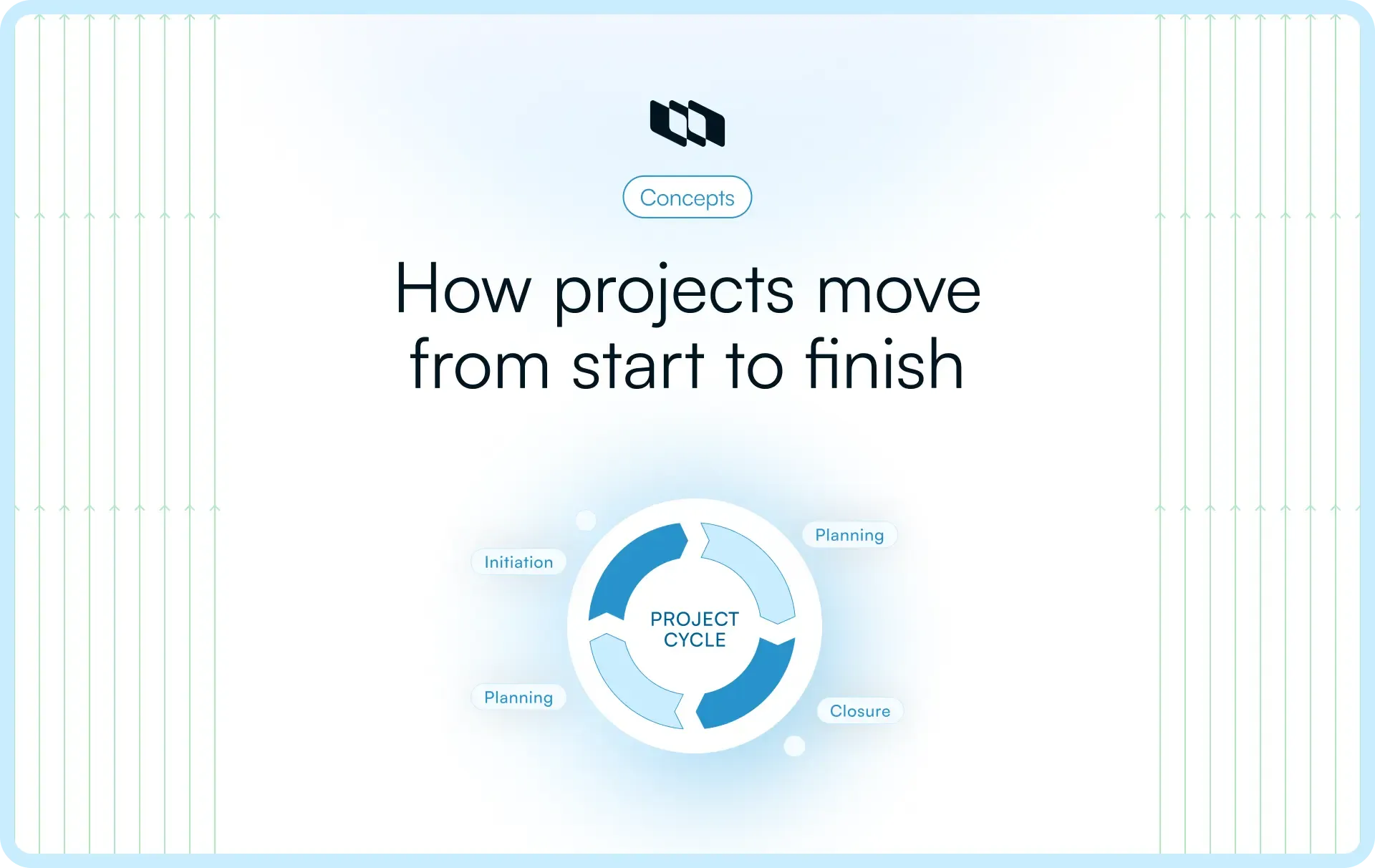
Project cycle management is defined as the structured process of managing a project from its initiation to its completion, ensuring that all stages are integrated and aligned with the project’s goals.
Project cycle management is defined as the structured process of managing a project from its initiation to its completion, ensuring that all stages are integrated and aligned with the project’s goals.
Introduction
Delivery is only part of a project’s value. Learning, accountability, and closure matter just as much. Project cycle management is designed around this idea. It ensures projects move through clear stages with defined decisions, ownership, and evaluation at each point. Rather than focusing solely on execution, the project cycle management framework helps teams connect planning, delivery, and learning into a single continuous cycle. This guide breaks down the project cycle management stages, explains how they differ from the project life cycle, and shares practical best practices teams can apply immediately.
What is project cycle management?
Project cycle management is defined as the structured process of managing a project from its initiation to its completion, ensuring that all stages are integrated and aligned with the project’s goals.
This method emphasizes the cyclical nature of project phases, where the outcomes of one phase inform the next. By using a structured approach, project cycle management helps teams achieve objectives efficiently, avoid common pitfalls, and ensure that projects meet their intended impact.
The project cycle typically includes several key stages: identification, design (or formulation), implementation, monitoring, and evaluation.
In the identification stage, potential projects are assessed to determine whether they align with organizational goals and provide feasible solutions to a particular problem.
The design phase focuses on developing a detailed plan, including scope, resources, timelines, and risks, to guide the project.
In the implementation stage, the project team works toward delivering the project’s outputs. Throughout this stage, monitoring ensures that progress stays on track and adjustments are made as necessary.
Project monitoring is a continuous process that tracks progress and performance during the implementation phase, allowing for real-time adjustments to meet objectives.
Project evaluation typically occurs after the project is completed and assesses whether the project achieved its goals, the efficiency of processes, and the overall impact.
Example: Consider a government project to improve rural healthcare access. In the identification stage, project managers would assess the healthcare needs of rural communities and identify gaps in current services. During the design phase, they would plan how to deploy mobile clinics, allocate resources, and define timelines. During implementation, the mobile clinics would be set up and monitored to ensure they meet targets for reaching underserved populations. Evaluation would take place after the project to assess the improvement in healthcare access and determine the effectiveness of the clinics, using insights to refine future healthcare projects.
Key Phases of project cycle management
Here is a detailed breakdown of the key phases of project cycle management:
1. Project identification
In the project identification phase, the foundation for the entire project is set. This phase focuses on recognizing a need or an opportunity that can be addressed through a project.
Key activities and considerations during the project identification phase are:
- Needs assessment and problem identification: The core issue or opportunity is identified through research, consultations, and data collection. This might involve studying market trends, conducting surveys, or gathering feedback from stakeholders to understand the needs or challenges that the project intends to solve.
- Initial stakeholder consultations: Engaging stakeholders (including beneficiaries, team members, funders, and partners) at the beginning ensures that the project idea aligns with the real needs of those involved. Their input helps clarify expectations and strengthens buy-in, reducing resistance later on.
- Preliminary feasibility assessment: At this stage, it is crucial to conduct a high-level analysis of whether the proposed project is feasible in terms of resources, timing, and potential impact. This may include a basic financial assessment, resource availability, and examining legal or environmental factors that might influence the project.
- Strategic alignment: The project idea is also evaluated in terms of its alignment with organizational goals, regional or national development plans, or strategic priorities.
The outcome of this phase is typically a project concept or idea that is considered feasible and worth developing further.
2. Project formulation
In the project formulation phase, the identified project is shaped into a detailed plan. This phase is highly strategic, as it outlines how the project will be carried out from start to finish. The key steps include:
- Objective and scope definition: Here, the project’s objectives are clearly defined. SMART (Specific, Measurable, Achievable, Relevant, and Time-bound) objectives are essential for ensuring clarity and measurability. The project scope outlines what the project will cover, and what is outside its boundaries, helping to prevent scope creep later on.
- Developing a detailed project plan: This includes timelines, key milestones, and a breakdown of the tasks and activities necessary to achieve the project’s objectives. The timeline should consider dependencies between tasks, deadlines, and deliverables to ensure that activities are sequenced logically.
- Resource allocation: A key component of the project plan is determining the resources (financial, human, material, etc.) needed for successful execution. Budgeting is critical here, and it should be as detailed as possible to ensure proper financial planning and management throughout the project.
- Risk assessment and mitigation strategies: Potential risks that could affect the project (such as financial shortfalls, time delays, or unforeseen events) are identified, and strategies to mitigate or manage these risks are developed. This step ensures that the project team is prepared to handle obstacles that may arise during implementation.
- Stakeholder engagement and communication plan: During this phase, a communication plan is developed to ensure ongoing engagement with stakeholders. It outlines who will be communicated with, how often, and the channels that will be used to maintain transparency and address stakeholder concerns.
The formulation phase culminates in a comprehensive project document or proposal, often used to secure approval or funding for the project.
3. Project implementation
In this phase, the plans developed during the formulation stage are put into action. Implementation focuses on executing the project activities to achieve the set objectives. Key aspects of this phase include:
- Resource mobilization and task execution: Resources (human, financial, material, and technical) are mobilized according to the project plan. The project team carries out the activities and tasks defined in the project plan, aiming to meet the objectives and deadlines.
- Coordination and team management: Effective project coordination ensures that all team members understand their roles and responsibilities, and that activities are carried out in the proper sequence. Regular team meetings, status updates, and management of resources help keep the project on track.
- Monitoring and progress tracking: Continuous monitoring of progress is essential for ensuring that the project stays on course. This involves tracking key performance indicators (KPIs), assessing whether timelines are being met, and comparing expenditures against the budget. Monitoring tools such as Gantt charts, dashboards, or project management software can assist in this process.
- Addressing risks and issues: As risks and unforeseen issues arise, project managers need to implement pre-identified mitigation strategies or adapt the plan to resolve these issues. Flexibility and problem-solving skills are crucial at this stage to keep the project moving forward.
The implementation phase is dynamic, and effective communication between team members and stakeholders is vital for overcoming challenges and maintaining momentum.
4. Project monitoring and evaluation
Monitoring and evaluation (M&E) is an ongoing process that happens throughout the project cycle but is formally assessed during the mid-project and after the project is completed. The goal of this phase is to assess the project’s performance, learn lessons, and determine the impact. Key activities include:
- Monitoring throughout the project cycle: Monitoring is a continuous process that tracks project activities and progress. It involves collecting data to determine if the project is proceeding as planned and whether it is meeting its objectives. Monitoring tools include progress reports, KPI tracking, budget reviews, and regular meetings.
- Mid-project evaluation (if applicable): Some long-term projects may require a mid-project evaluation to assess progress and make necessary adjustments. This evaluation can help determine if the project is on track and if any changes to the plan are required to improve outcomes or address emerging challenges.
- End-of-project evaluation: This includes assessing project outputs, outcomes, and impacts on stakeholders. Both qualitative and quantitative data are often used to measure success.
- Lessons learned and feedback loops: The evaluation phase should also capture lessons learned throughout the project cycle. These insights can be invaluable for improving future projects. Documenting what worked well and what did not helps organizations build a body of knowledge and refine their project cycle management processes.
- Sustainability and long-term impact assessment: In this final stage, the long-term sustainability of the project’s results is also considered. The evaluation determines whether the benefits of the project will endure after its completion and how they can be maintained over time. It may involve handing over responsibilities to local stakeholders or ensuring that systems are in place to sustain the project's impact.
Example: Water Supply Project in a Rural Area
A rural water supply project might go through the following stages:
- Identification: Local authorities recognize that villagers lack access to clean drinking water. A needs assessment shows high rates of waterborne diseases.
- Design: The project team plans to build a water treatment plant and distribution system, outlining a timeline, budget, and risk mitigation strategies, such as delays due to weather.
- Implementation: The construction of the water treatment plant and installation of pipelines begins. The project team monitors construction progress and addresses supply chain delays.
- Monitoring: Project managers regularly review progress, track spending against the budget, and collect data on construction milestones.
- Evaluation: After completion, the project is evaluated to assess its effectiveness, such as whether water access improved and if waterborne diseases declined. Lessons learned are documented for future infrastructure projects.
Project cycle management ensures that projects like these are completed effectively, on time, and within budget, while also meeting the needs of stakeholders and making a lasting impact.
Importance of project cycle management
Project cycle management is essential for ensuring the successful planning, implementation, monitoring, and evaluation of projects across various sectors, from development to business. It provides a structured framework that helps teams and organizations navigate each phase of a project, ensuring that objectives are met and resources are efficiently utilized. Its importance can be discussed in several ways:
1. Improves clarity and focus: Project cycle management breaks a project into distinct phases—such as identification, formulation, implementation, and evaluation—ensuring that the team understands the purpose and goals at each stage. This clarity helps project managers and teams stay focused on achieving the objectives. By identifying key milestones and deliverables, project cycle management provides a roadmap that keeps the project on track, reducing the risk of scope creep or losing sight of the project's intended outcomes.
2. Enhances planning and resource management: One of the primary benefits of project cycle management is its emphasis on detailed planning. Effective project cycle management involves comprehensive needs assessments, feasibility studies, and stakeholder consultations, allowing for informed decision-making. It ensures that resources (financial, human, and material) are allocated optimally. This phase-by-phase planning mitigates risks and uncertainties, helping managers anticipate challenges and adjust strategies before they become critical issues.
3. Promotes accountability and monitoring: Project cycle management inherently integrates monitoring and evaluation mechanisms at every stage, making it easier to track progress, assess performance, and measure outcomes against predetermined objectives. Regular monitoring provides a feedback loop, allowing for course corrections if a project starts to veer off track. The evaluation phase not only assesses the final outcomes but also provides lessons learned, which can be applied to future projects. This continuous evaluation fosters a culture of accountability and learning.
4. Supports stakeholder engagement and ownership: In project cycle management, stakeholder participation is crucial at every phase, particularly in the identification and formulation stages. By involving stakeholders, including beneficiaries, team members, and sponsors, project cycle management ensures that the project addresses real needs and that there is a shared sense of ownership. This engagement promotes collaboration, improves communication, and increases the likelihood of project sustainability, as stakeholders are more likely to support a project they helped shape.
Related: What is project life cycle?
Project cycle management vs. project life cycle
The terms project cycle management and project life cycle often appear together in project discussions, documentation, and tooling. While they are closely related, they serve different purposes and answer different questions about how projects are run.
What the project life cycle refers to
The project life cycle describes the structural path a project follows from start to finish. It defines the sequence of phases a project moves through, such as initiation, planning, execution, monitoring, and closure. Its primary role is to provide a shared structure so teams understand where a project stands at any given point and what type of work typically happens next. The project life cycle focuses on order and progression, helping teams organize work over time.
What project cycle management adds on top of the life cycle
Project cycle management builds a management layer around that structure. Instead of only defining phases, it focuses on how decisions are made, how progress is reviewed, and how learning is carried forward across each stage. The project cycle management framework introduces clear decision points, stakeholder involvement, monitoring practices, and evaluation mechanisms throughout the cycle. This ensures that each phase is not just completed, but actively managed with intent, accountability, and context from previous stages.
Why are these terms often confused
The confusion comes from overlap in language and stages. Both concepts reference similar phases and often appear side by side in project documentation. The difference lies in emphasis. The project life cycle explains what phases exist, while project cycle management explains how those phases are governed and connected. One provides structure, the other provides discipline.
When teams use both together
In practice, effective teams use both simultaneously. The project life cycle offers a clear roadmap of stages, while project cycle management guides how teams plan, execute, monitor, evaluate, and close work within that roadmap. Together, they help teams deliver projects with greater clarity, stronger decision-making, and better learning across projects rather than treating each delivery as an isolated effort.
Project cycle management vs project life cycle: A quick comparison
Aspect | Project life cycle | Project cycle management |
What it describes | The sequence of phases a project moves through from start to finish | The management approach applied across those phases |
Primary focus | Structure and progression of work | Decision-making, accountability, and learning |
The core question it answers | What stages does a project go through? | How should each stage be planned, governed, and evaluated? |
Typical scope | Defines phases like initiation, planning, execution, monitoring, and closure | Adds governance, monitoring, evaluation, and feedback loops across phases |
Role of decisions | Implied within phases | Explicit decision points between and within phases |
Emphasis on learning | Limited or implicit | Strong focus on evaluation and lessons learned |
How teams use it | As a roadmap for organizing project work | As a framework to manage projects more deliberately |
Governance, approvals, and decision points in project cycle management
Strong governance is what turns the project cycle management process from a set of phases into a disciplined way of working. It ensures that teams pause at the right moments, review progress objectively, and make informed decisions before moving forward.
The role of approvals and decision gates between phases
In project cycle management, each phase acts as a decision gate rather than a simple handoff. Before moving from identification to formulation, or from planning to implementation, teams review whether objectives are clear, assumptions are valid, and resources are available. These approval points help confirm that the project is still aligned with its goals and worth continuing in its current form.
Why formal sign-offs matter before moving forward
Formal sign-offs create shared accountability. They make expectations explicit and reduce ambiguity around ownership, scope, and success criteria. When teams document approvals, they avoid re-litigating earlier decisions later in the project. This clarity is especially important in complex or cross-functional work, where unclear approvals often lead to delays, scope drift, or rework.
How governance reduces risk and rework
Governance introduces structured reviews that surface risks early. By evaluating progress, costs, and assumptions at defined checkpoints, teams can adjust plans before issues escalate. This proactive approach reduces late-stage surprises and prevents teams from investing heavily in work that no longer delivers value. Over time, consistent governance improves decision quality across the entire project cycle management framework.
Who is typically involved in approvals
Approval responsibilities vary by organization and project size, but they usually involve a combination of project sponsors, senior stakeholders, project managers, and functional leads. In some cases, finance, legal, or compliance teams also participate. A clear definition of who approves what, and at which stage, keeps the project cycle management stages moving forward with confidence and alignment.
What deliverables are created across the project cycle
Rather than mapping deliverables to individual phases, it is more useful to think of them as outputs that support decisions and continuity across the project cycle. These artifacts help teams align, review progress, and close work cleanly.
1. Early-stage clarity artifacts
These deliverables establish direction before significant work begins. They include a concise problem statement, defined success criteria, and high-level objectives. Together, they ensure that the project starts with shared intent and measurable outcomes.
2. Planning and baseline artifacts
Once direction is clear, teams create planning artifacts that guide execution. This typically includes a project plan, budget, timeline, and risk register. These outputs form the baseline for tracking progress, managing change, and evaluating performance later.
3. Execution visibility artifacts
As work progresses, teams rely on deliverables that maintain visibility rather than redefine scope. Status updates, progress summaries, and issue logs help teams communicate clearly, surface risks early, and stay aligned without revisiting earlier decisions.
4. Performance and health artifacts
To support informed decisions, teams produce artifacts that reflect project health. Performance metrics, review summaries, and variance reports help stakeholders understand whether the project remains on track and where adjustments are needed.
5. Closure and learning artifacts
At the end of the project cycle, deliverables focus on closure and continuity. Final reports, handover documentation, and lessons learned capture outcomes and insights to inform future projects.
Best practices to follow for project cycle management in 2026
The following are essential best practices to follow for project cycle management:
1. Detailed project planning and stakeholder engagement: A well-defined plan is fundamental to successful project cycle management. This includes setting clear objectives, timelines, and deliverables while ensuring that stakeholder expectations are addressed. Engaging stakeholders early on—during the identification and formulation phases—allows for their input, which can shape project priorities and increase buy-in. Continuous communication with stakeholders throughout the project cycle builds trust and ensures that their needs are met, reducing the risk of conflicts or misalignment.
2. Adaptive and flexible project management: Projects are often subject to changing conditions, whether due to market shifts, technological advances, or evolving stakeholder needs. While adhering to the core phases of project cycle management, adopting agile methodologies can help teams make iterative adjustments, handle uncertainties, and respond more effectively to change while maintaining the overall project framework.
3. Continuous monitoring, evaluation, and risk management: Monitoring progress and evaluating performance throughout the project cycle is essential for ensuring that projects remain on track. This involves tracking key performance indicators (KPIs), timelines, and budgets. Continuous risk management is equally important, as it allows teams to identify potential issues early and implement mitigation strategies. Having a well-defined monitoring and evaluation system in place also ensures that lessons learned can be applied to future projects, improving overall effectiveness and efficiency.
4. Focus on sustainability and long-term impact: Increasingly, projects are being evaluated not only on their immediate outcomes but also on their long-term sustainability and impact. In project cycle management, this means considering the social, environmental, and economic effects of a project during the planning phase. Ensuring that projects are designed with sustainability in mind leads to more resilient outcomes, and projects are more likely to have lasting benefits. Incorporating sustainability metrics and engaging stakeholders in discussions about long-term impacts is becoming a critical aspect of project cycle management.
When should teams use project cycle management?
While many projects benefit from basic planning and execution, project cycle management becomes especially valuable in situations where structure, accountability, and learning are critical.
1. Long-term or complex projects
Projects that span months or years often involve changing conditions, evolving requirements, and multiple decision points. The project cycle management process helps teams manage this complexity by breaking work into clear stages with regular reviews, making it easier to stay aligned and adjust deliberately over time.
2. Multi-stakeholder initiatives
When a project involves multiple teams, partners, or external stakeholders, alignment becomes harder to maintain. Project cycle management provides a shared framework for planning, approvals, and monitoring that helps align expectations and reduce misunderstandings across groups.
3. Projects with funding, compliance, or audit requirements
Projects tied to external funding, regulatory oversight, or formal audits require clear documentation and traceability. The project cycle management stages support this by defining what decisions are made, when approvals occur, and how progress is tracked and reported throughout the project.
4. Programs where learning and evaluation matter
Some projects are designed not only to deliver outputs but also to generate insights for future work. In these cases, project cycle management ensures that evaluation and lessons learned are built into the process, rather than treated as an afterthought.
Final thoughts
Project delivery is only one part of a project’s real value. Project cycle management treats projects as systems that evolve through decisions, outcomes, and learning over time. As a discipline, it brings consistency to how teams plan, execute, review, and close work, regardless of project size or complexity. By embedding accountability and evaluation into each stage, the project cycle management framework helps teams learn from experience rather than repeating the same mistakes. Clear approvals, documented outcomes, and thoughtful closure create continuity between projects, even as teams and priorities change.
Over time, teams that apply project cycle management build stronger decision-making habits, deliver with greater confidence, and improve the quality of future projects. The result is not just better execution, but a more reliable and mature approach to managing work.
Frequently asked questions
Q1. What are the 5 cycles of project management?
The five cycles of project management typically refer to initiation, planning, execution, monitoring, and closure. In a project cycle management framework, these cycles are treated as connected stages, where decisions and outcomes from one cycle inform the next, rather than isolated handoffs.
Q2. What are the 7 steps of project management?
The seven steps commonly expand on the core cycles to add more operational detail. They usually include initiation, requirement definition, planning, resource allocation, execution, monitoring, and closure. Teams using project cycle management often group these steps into broader stages while still applying governance and evaluation throughout.
Q3. What are the 4 project life cycles?
The four commonly referenced project life cycle models are predictive (waterfall), iterative, incremental, and agile. Each life cycle defines how work progresses, while project cycle management focuses on how projects are governed, reviewed, and evaluated across whichever life cycle model a team uses.
Q4. What are the 4 P’s of project management?
The 4 P’s of project management are typically purpose, plan, people, and process. Together, they help teams align goals, execution, and ownership. Within the project cycle management process, these elements are revisited at each stage to maintain clarity and alignment.
Q5. What are the 5 C’s of project management?
The 5 C’s are often defined as clarity, communication, collaboration, control, and continuity. These principles closely align with project cycle management, which emphasizes clear objectives, structured decision-making, ongoing monitoring, and learning across the project cycle.
Recommended for you



 Download for Mac
 Download for Android