What is a project roadmap? Definition, examples and best practices
A project roadmap is defined as a document that outlines the main objectives, key milestones, and deliverables for a project. It is a strategic conerstone of project management, as the big-picture guide, that shows where the project is headed and the major steps needed to get there.
A project roadmap is defined as a document that outlines the main objectives, key milestones, and deliverables for a project. It is a strategic conerstone of project management, as the big-picture guide, that shows where the project is headed and the major steps needed to get there.
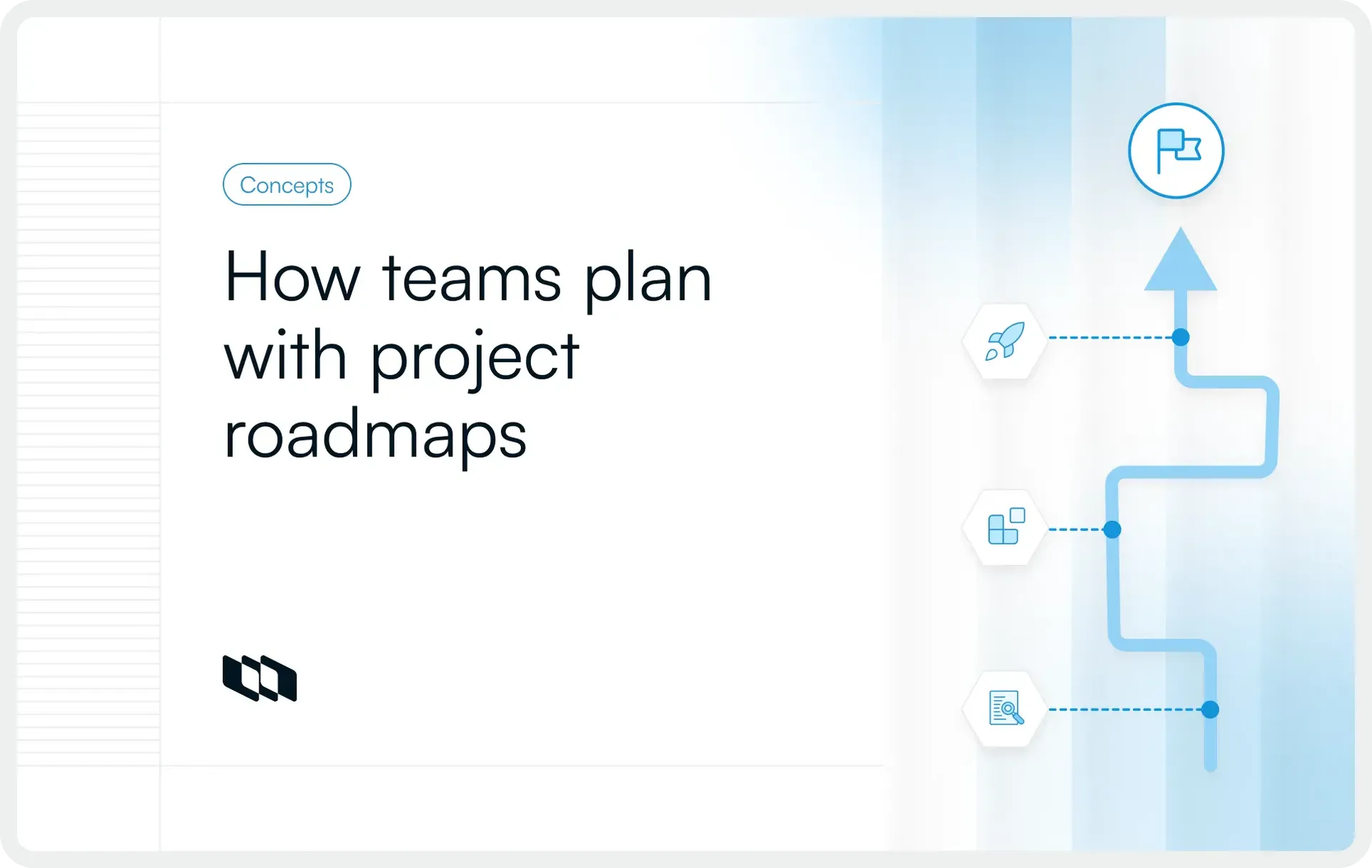
Introduction
Every solid structure begins with a blueprint that shows what comes first, what comes next, and what the final outcome should look like. Projects need the same level of clarity. A project roadmap provides that early structure by outlining goals, milestones, and timelines in a way teams can align around. It helps project management teams plan work, communicate direction, and guide decisions as complexity increases. This article breaks down what a project roadmap is, how it works in practice, and the best practices teams rely on to stay focused.
What is a project roadmap?
A project roadmap is defined as a document that outlines the main objectives, key milestones, and deliverables for a project. It is a strategic cornerstone of project management, as the big-picture guide, that shows where the project is headed and the major steps needed to get there.
cornerstone
A project roadmap is like your project’s North Star—a guide that shows where you’re headed and the major steps to get there. It’s all about keeping things clear and strategic, focusing on the “what” and “why” rather than the nitty-gritty “how.”
Think of it as the high-level view of your project. Unlike a detailed project plan, which dives into the weeds of tasks, schedules, and resources, the roadmap paints a broader picture. It highlights your main objectives, key milestones, and critical deliverables without overwhelming you with too much detail. In short, it’s the story of your project told simply and clearly.
What makes the roadmap so handy is its ability to get everyone on the same page. Whether you’re talking to a tech-savvy developer or a big-picture executive, the roadmap gives a quick, clear snapshot of the project’s goals and timeline. It’s designed to be straightforward and accessible, no matter how complex or simple the project is.
One of its biggest roles is bringing people together around a shared vision. Early on, it helps set expectations and gets buy-in by showing where the project is headed and when key milestones will be hit. It’s especially valuable in those initial stages when clarity is key, and everyone needs to pull in the same direction.
The project roadmap can evolves with your project, as things change (because they always do), you update it to reflect new priorities or timelines. Throughout the project’s lifecycle, it serves as a go-to communication tool, keeping stakeholders informed and engaged. They can quickly see where things stand and understand any shifts in the plan without wading through pages of details.
When you create a roadmap, it’s typically during the initiation phase. You’ll include things like major goals, milestones, and deliverables, often laid out in a timeline format. Depending on the project, it might also show dependencies between milestones or flag critical phases where input from stakeholders is needed. For example, in a product development project, your roadmap might outline key phases like research, prototyping, testing, and launch, with milestones like “concept approved,” “prototype complete,” and “market release.”
In the end, the roadmap is all about clarity, alignment, and keeping everyone focused on what matters most. It’s your trusty guide to navigating the journey from start to finish.
Key components of a project roadmap
A project roadmap is all about giving a clear, big-picture view of your project. It lays out the key details—like goals, milestones, and timelines—in a way that everyone can easily understand. Here’s a breakdown of its main components:
- Project goals and objectives:
These are the “why” behind your project. They set the purpose and direction, helping everyone stay focused on what you’re trying to achieve. For example, if your project is about creating a new product, goals might include increasing market reach or hitting a specific revenue target within a set timeframe. Clear and measurable goals ensure all activities on the roadmap contribute to achieving these results. - Major milestones:
Milestones act as markers of progress—think of them as checkpoints that show you’re on the right track. These might include completing research, finalizing designs, or wrapping up testing phases. They’re great for keeping the team motivated and ensuring stakeholders can see how far along the project is. - Timeline:
The timeline gives a high-level overview of the project’s schedule. It shows when phases and milestones are expected to happen, helping everyone visualize the flow of work. Timelines should be realistic and flexible enough to adapt to any changes, but they also set clear expectations about deadlines. - Phases or stages:
Breaking the project into manageable chunks, like planning, design, execution, and closing, makes it easier to tackle. For example, a construction project might have phases like site preparation, laying foundations, and finishing touches. Including these phases in the roadmap shows how each step builds on the next. - Key deliverables:
These are the tangible results of the project—whether it’s a prototype, a report, or completed software features. Highlighting deliverables helps everyone understand what to expect at different stages and keeps the team focused on producing valuable outcomes. - Dependencies and risks:
Dependencies show how tasks rely on each other, and risks highlight potential challenges that could affect the project. For instance, waiting for regulatory approval might delay progress, or supply chain issues could pose risks. Including these on the roadmap ensures everyone is prepared for possible roadblocks.
Examples of project roadmap
Here are a few examples of project roadmaps to give you a sense of what they look like:
1. Product development roadmap
Think about a company creating a new smartphone. The roadmap for this project would map out all the key stages, from brainstorming to getting the product into customers’ hands. It might kick off with the Concept and Research phase, where teams explore market needs and check if the idea is feasible. Then comes Design and Prototyping, where user experience is tested and features are finalized. After that, the Development phase focuses on building the actual hardware and software. The roadmap would also include Testing and Quality Assurance, making sure the phone performs as expected. Finally, there’s the Launch phase, which involves marketing, distribution, and setting up customer support. By outlining these phases and their milestones, everyone involved stays in sync on the timeline and goals for getting the product to market.
2. IT infrastructure upgrade roadmap
Now imagine an organization upgrading its data storage and network systems. The roadmap for this project might start with a Planning and Assessment phase, where the team evaluates the current setup and identifies pain points. Next, the Design phase focuses on planning the upgraded system, ensuring it’s compatible with existing tools. In the Implementation phase, the new hardware is installed, and data is migrated. The Testing phase would then ensure everything runs smoothly, addressing any performance issues. Finally, the Deployment and Training phase gets staff ready to use the new system confidently. This roadmap is especially useful for keeping technical teams, project managers, and stakeholders aligned while minimizing disruptions to day-to-day operations.
3. Marketing campaign roadmap
For a marketing campaign, the roadmap lays out all the critical steps, from brainstorming to analyzing results. Let’s say a company is launching a new product and wants to create buzz around it. The roadmap could start with Strategy and Planning, where the team defines the target audience and key campaign goals. Next comes Content Creation, where ad copy, visuals, and videos are developed. Then, during the Launch phase, the campaign is rolled out across channels like social media, TV, and email. Once live, the team moves into the Monitoring and Engagement phase, tracking metrics like engagement and conversions. Finally, in the Analysis and Reporting phase, they review what worked, what didn’t, and how to improve for next time. This kind of roadmap helps ensure everyone—from content creators to analytics teams—works toward the same goals.
4. Software development roadmap
Let’s say a company is building a new project management tool. Their roadmap might begin with Requirements Gathering, where they identify what users need. The Design phase could focus on creating user-friendly interfaces and planning intuitive workflows. After that, the Development phase brings the tool’s core features—like task tracking and collaboration—to life. Then, in the Testing and Quality Assurance phase, the team makes sure the software performs well under different conditions. The project wraps up with the Launch phase, where the tool is released to users, and a Post-Launch Maintenance phase to roll out updates and provide support. A roadmap like this helps align teams from engineering to marketing, ensuring smooth development and a successful release.
Importance of project roadmaps in project management
Project roadmaps are an essential part of project management because they give teams a strategic overview, help keep stakeholders on the same page, set realistic expectations, and guide everyone through the big milestones. Here’s why they’re so important:
- Establishing a clear vision and direction
A roadmap gives everyone a clear picture of where the project is headed. It lays out the main goals, phases, and what success looks like, so both the team and stakeholders know what to aim for. For example, it highlights key milestones and anticipated achievements, ensuring that even in complex projects involving multiple teams, there’s no confusion about the project’s trajectory. When everyone understands the big picture, it’s easier to work toward shared objectives and maintain focus on what matters most. - Aligning stakeholders and securing buy-in
Roadmaps are a great way to align stakeholders because they present the project’s plan in a simple, visual format. By showcasing milestones, deliverables, and timelines, they make it easy for everyone—whether they’re project sponsors or team members—to see their roles and responsibilities. This transparency fosters buy-in, especially in projects involving several departments that need to work together. When everyone has the same understanding of the goals and timelines, collaboration improves, and the risk of miscommunication or conflicting priorities goes down. - Setting realistic expectations and managing scope
A good roadmap helps set expectations by laying out a realistic timeline and defining the scope of work. It shows what resources are needed and when, helping project managers allocate effectively without overburdening the team. Roadmaps also prevent scope creep by keeping everyone focused on the big milestones instead of getting sidetracked by non-essential tasks. With this clear structure, teams can stay efficient and on track, avoiding overpromising or missing deadlines. - Monitoring progress and adjusting plans
Roadmaps aren’t just for planning—they’re also great tools for tracking progress. By breaking the project into phases and milestones, they help project managers see if things are on schedule or slipping behind. If something unexpected comes up, the roadmap acts as a guide to recalibrate timelines or shift priorities while keeping stakeholders in the loop. This makes them especially useful in agile environments, where flexibility and adaptability are crucial for addressing changes without losing sight of the overall goals.
Best practices to follow while creating a project roadmap
Creating a project roadmap that truly works isn’t just about ticking boxes—it’s about building something clear, practical, and genuinely helpful for everyone involved. The roadmap should feel like a guiding star for the project, not just a document that gets buried in a folder. Let’s talk about the best practices that can help to make that happen:
1. Start with clear objectives and big-picture goals
Think of your roadmap as a bird’s-eye view of your project. What’s the endgame? Tie those key objectives to your organization’s broader goals and resist the urge to cram in every little detail. Focus on the major phases and milestones that show real progress. This keeps the roadmap clean, easy to understand, and super relevant to both your team and stakeholders. Less is definitely more here.
2. Get stakeholders involved early (and often!)
Don’t wait until you’ve finished the roadmap to bring others into the loop. Engaging your stakeholders early—whether they’re project sponsors, team members, or other decision-makers—helps ensure everyone is on the same page. Ask for input, listen to their concerns, and make adjustments as needed. It’s not just about making them feel heard; early collaboration builds trust and avoids “surprises” down the line. Plus, let’s be real: nobody likes a roadmap that feels like it came out of nowhere.
3. Make it visual and easy to grasp
A great roadmap should be a “wow, I get it!” moment for anyone who looks at it. Use visuals—timelines, color-coded sections, or even icons—to lay out phases, milestones, and deadlines. Keep it simple and uncluttered. Remember, this isn’t just for the project geeks; it’s for everyone, from your most technical team members to the big-picture folks. A clear visual layout helps everyone stay aligned without digging through pages of text.
4. Spotlight key milestones and task dependencies
Milestones are your “big deal” moments—the points where you can pause and say, “Hey, we’ve accomplished something meaningful.” Highlight these on your roadmap so they stand out. At the same time, show how different tasks depend on one another. This helps everyone see the domino effect if something gets delayed (and trust me, it will at some point). Transparency here means better planning and fewer last-minute scrambles.
5. Stay flexible and keep it fresh
Let’s face it: no project ever goes exactly as planned. That’s why your roadmap needs to be a living document. Update it regularly to reflect changes in priorities, timelines, or scope. And if something big shifts, don’t keep it to yourself—let stakeholders know what’s up. A flexible, regularly updated roadmap keeps everyone aligned and ready to roll with the punches.
6. Be realistic about timelines
Sure, it’s tempting to promise quick wins, but nothing derails trust faster than missing deadlines because they were overly optimistic. Build your timelines with some breathing room for unexpected challenges. Realistic projections not only keep stakeholders happy but also reduce stress on your team. And let’s be honest, nobody does their best work under unnecessary pressure.
7. Call out risks and plan for the “what-ifs”
No project is without its risks. Whether it’s supply chain hiccups, tight resources, or shifting regulations, call these out on your roadmap. Pair them with contingency plans so everyone knows you’re thinking ahead. This isn’t about scaring people; it’s about showing you’re prepared. A little risk awareness goes a long way in building confidence.
Project roadmap vs. project plan
Teams often use the terms project roadmap and project plan together, yet they serve different purposes in project management. Understanding the difference helps teams choose the right tool at the right stage of a project.
How a project roadmap differs from a project plan
A project roadmap presents the strategic direction of a project. It shows where the project is going and what outcomes matter most. The focus stays on goals, milestones, and timelines.
A project plan translates that direction into action. It breaks work into tasks, assigns ownership, estimates effort, and defines schedules. The focus stays on execution and day-to-day delivery.
In simple terms, a project roadmap explains the path, while a project plan explains the steps along that path.
Level of detail: Strategic overview vs execution detail
A project roadmap keeps information high level. It highlights major phases, key milestones, and important dependencies without diving into task-level detail. This makes it easy to scan and discuss during planning or review conversations.
A project plan contains detailed information. It includes task lists, timelines, resources, dependencies, and deadlines. Teams use it to track progress and manage work as it happens.
Both artifacts work together. The roadmap sets direction, and the plan supports execution.
Intended audience and use cases
A project roadmap is designed for a broad audience. Project managers, product leaders, engineering managers, and stakeholders use it to understand priorities and timing at a glance. It supports alignment and communication across teams.
A project plan serves the delivery team. Engineers, designers, and project managers rely on it to coordinate tasks, manage workloads, and track progress during execution.
When teams should use a project roadmap vs. project plan
Teams typically create a project roadmap early in the project lifecycle. It helps define scope, align stakeholders, and guide planning decisions.
A project plan follows once direction is clear. It helps teams organize work, allocate resources, and deliver milestones on time.
In effective project management, teams use both. The roadmap guides the journey, and the project plan supports the work required to reach each milestone.
Project roadmap vs. project plan at a glance
The table shows that a project roadmap and a project plan answer different questions in project management. One focuses on direction, while the other focuses on execution.
Aspect | Project roadmap | Project plan |
Purpose | Shows the strategic direction of a project | Defines how work will be executed |
Focus | Goals, milestones, and timelines | Tasks, schedules, and resources |
Level of detail | High-level and outcome-oriented | Detailed and execution-focused |
Time horizon | Medium to long term | Short to medium term |
Primary audience | Stakeholders, leadership, cross-functional teams | Project managers and delivery teams |
Usage stage | Early planning and ongoing alignment | Day-to-day execution and tracking |
Update frequency | Updated as priorities or timelines change | Updated frequently as work progresses |
Key question it answers | Where is the project headed? | How will the work get done? |
Used together, project roadmaps and project plans create clarity at both strategic and execution levels. The roadmap guides decision-making, while the plan keeps work moving forward in a structured way.
Project roadmap vs. product roadmap
Teams often use the word roadmap across projects and products, which creates confusion in planning discussions. While both roadmaps help with alignment and direction, they serve very different purposes in practice.
What a project roadmap represents
A project roadmap represents a specific, time-bound initiative with a defined objective and endpoint. It focuses on delivering outcomes such as feature launches, system migrations, or operational improvements. The roadmap highlights goals, milestones, and timelines that guide teams through execution. In project management, a project roadmap helps teams align on priorities, communicate progress at a high level, and keep stakeholders informed throughout the project lifecycle.
What a product roadmap represents
A product roadmap outlines a product's long-term direction. It focuses on how a product evolves over time in response to customer needs, business goals, and market opportunities. Instead of fixed milestones, product roadmaps often emphasize themes, outcomes, and strategic initiatives. Product teams use product roadmaps to guide discovery, prioritization, and investment decisions across quarters or years.
When teams should use project roadmap vs. product roadmap
Teams should use a project roadmap when work has a clear goal, delivery window, and completion point. Teams should use a product roadmap when shaping product strategy, planning feature evolution, and aligning around long-term outcomes.
Many organizations use both together. Product roadmaps set strategic direction, while project roadmaps support focused delivery within that strategy.
Project roadmap vs. product roadmap at a glance
The table below highlights how project roadmaps and product roadmaps differ in purpose, scope, and usage within teams.
Aspect | Project roadmap | Product roadmap |
Purpose | Guides the delivery of a specific project | Guides long-term product direction |
Scope | Narrow and well-defined | Broad and evolving |
Timeline | Fixed start and end | Ongoing and continuous |
Focus | Milestones, timelines, and outcomes | Themes, initiatives, and product goals |
Ownership | Project manager or delivery lead | Product manager or product leadership |
Primary audience | Delivery teams and stakeholders | Product, engineering, and business teams |
Update frequency | Updated as project progress changes | Updated as strategy and priorities evolve |
End state | Concludes when the project is delivered | Continues as the product evolves |
Used together, product roadmaps and project roadmaps help teams balance long-term direction with short-term delivery. The product roadmap defines where the product is headed, while project roadmaps translate that direction into focused execution.
Final thoughts
A project roadmap gives teams a shared sense of direction before execution begins. It helps align goals, milestones, and timelines so work moves with purpose instead of guesswork. When used well, it supports clearer decisions, better stakeholder conversations, and stronger coordination across teams. In project management, roadmaps work best alongside detailed plans. The roadmap sets priorities and expectations, while the plan drives delivery. Together, they help teams balance strategy and execution as projects evolve.
Whether you are leading a short-term initiative or managing complex cross-functional work, a clear project roadmap keeps focus on outcomes and helps teams move forward with confidence.
Frequently asked questions
Q1. What are the 5 stages of project planning?
The five stages of project planning usually include initiation, planning, execution, monitoring and controlling, and closure. During planning, teams define scope, goals, timelines, resources, and risks so execution can move forward with clarity and alignment.
Q2. What are the 7 steps of a project plan?
A typical project plan follows seven steps. These include defining project goals, identifying scope and deliverables, breaking work into tasks, estimating timelines, assigning resources, identifying risks and dependencies, and setting up tracking and reporting methods.
Q3. What is the purpose of a roadmap?
The purpose of a roadmap is to provide a high-level view of direction and priorities. In project management, a project roadmap helps teams align around goals, milestones, and timelines so stakeholders understand where the project is heading and how progress unfolds over time.
Q4. Is a roadmap the same as a Gantt chart?
A roadmap and a Gantt chart serve different purposes. A roadmap focuses on strategic direction, major milestones, and timing at a high level. A Gantt chart focuses on detailed task scheduling, dependencies, and timelines used during execution.
Q5. What are the 5 C’s of project management?
The five C’s of project management often refer to clarity, communication, collaboration, coordination, and control. Together, they help teams plan work effectively, align stakeholders, and manage delivery as projects progress.
Recommended for you



 Download for Mac
 Download for Android