What is task management? Definition, benefits and examples
Introduction
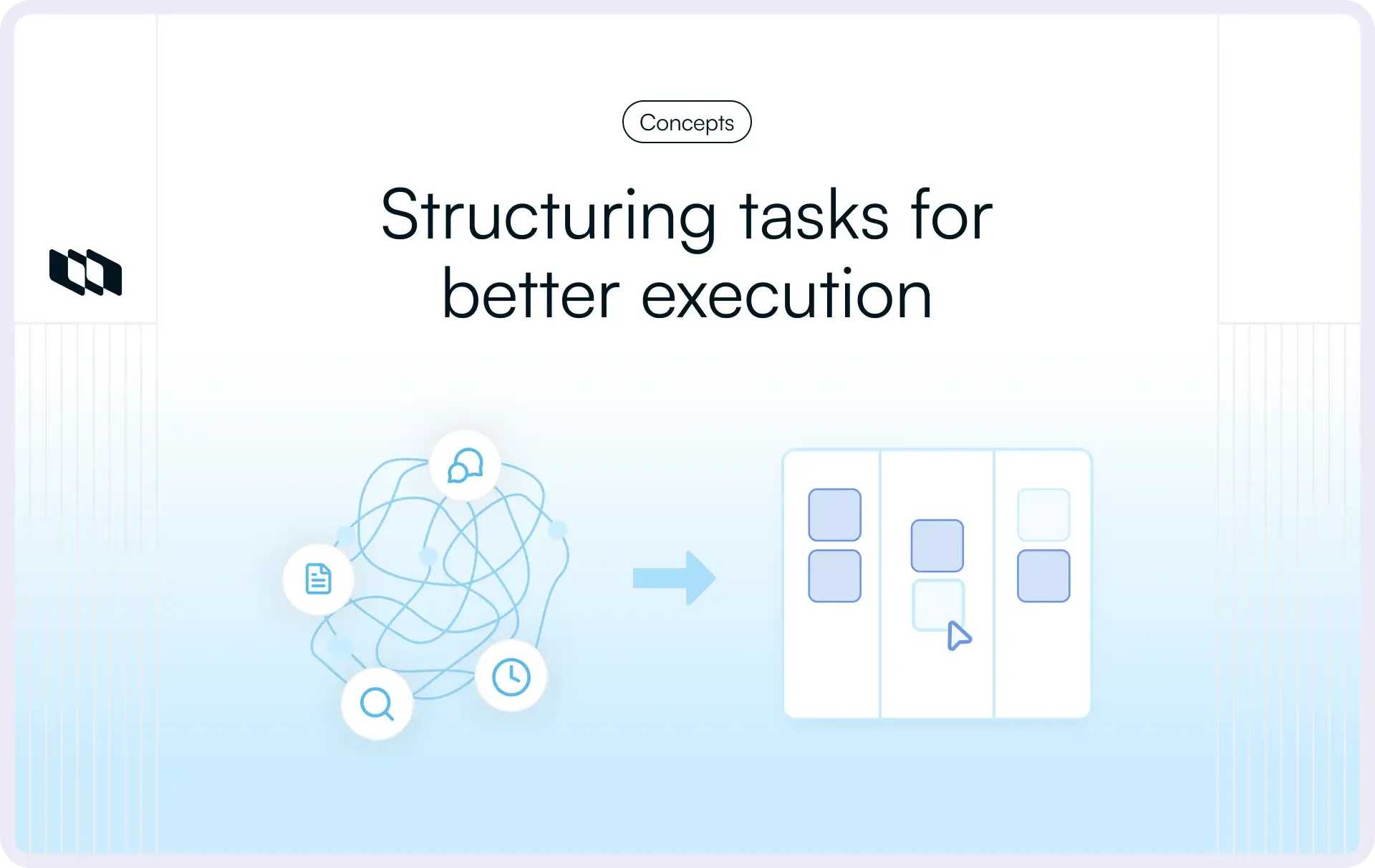
A team can have a strong roadmap, clear strategy, and talented people, yet still struggle to deliver on time when everyday tasks lack structure. Most execution challenges surface in the gap between planning and action, where priorities shift and ownership blurs. Task management closes that gap by bringing clarity to what needs to be done, who owns it, and when it must be completed. This guide explains the definition of task management, outlines its benefits, and shares real-world examples that help teams manage tasks effectively.
What is task management?
Task management is the process of planning, organizing, prioritizing, and tracking tasks to ensure work moves from idea to completion with clarity and accountability. It provides a structured way to manage tasks across individuals and teams, keeping priorities visible, responsibilities clear, and deadlines predictable. In modern teams, task management connects everyday execution with larger project and business goals by ensuring each task has context, ownership, and a defined outcome.
Task management refers to the systematic process of capturing, prioritizing, assigning, and tracking tasks from creation to completion. It helps teams manage tasks effectively by creating visibility into what needs to be done, who owns it, and when it must be delivered. Strong task management ensures that work progresses in a structured manner and that dependencies, timelines, and outcomes remain aligned with team goals.
What task management actually covers
Effective task management extends beyond maintaining a simple to-do list. It covers the full lifecycle of a task, ensuring work moves forward with clarity and accountability.
- Creating tasks with clear context, expected outcomes, and relevant details
- Prioritizing tasks based on impact, urgency, and dependencies
- Assigning ownership so every task has a responsible owner
- Setting timelines and due dates aligned with team capacity
- Tracking progress through defined statuses and updates
- Identifying blockers early and resolving them quickly
- Closing tasks once defined outcomes are achieved and validated
When these elements are managed consistently, teams gain better visibility into execution and can manage tasks effectively across projects and functions.
Task management for individuals vs. teams
- Task management for individuals focuses on organizing personal workload, maintaining focus, and meeting deadlines. Individuals manage tasks to structure their day, track progress, and ensure priorities receive the right attention. The system often remains simple, centered around personal planning and execution.
- Task management for teams introduces shared ownership, dependencies, and cross-role coordination. Once multiple people contribute to the same outcome, tasks require clear assignment, visible priorities, and structured updates. Teams must manage tasks in a shared system that supports collaboration, accountability, and real-time visibility into progress. As responsibilities expand across functions, task management becomes essential to maintain alignment and ensure consistent delivery.
Why task management matters
Task management shapes how work actually gets delivered. Teams rarely struggle because of poor ideas or weak strategy; execution slows when tasks move without clear ownership, priority, or visibility. In the section ahead, we break down how task management improves clarity, accountability, coordination, and visibility across everyday work.
1. Reduces dropped work and last-minute surprises
When tasks sit across emails, chats, and personal notes, important work slips through the cracks. Teams often realize something was missed only when deadlines approach or dependencies break. Task management reduces this risk by creating a single place to capture, prioritize, and track tasks from start to finish.
Clear task tracking ensures that nothing stays hidden or forgotten. Each task moves through defined stages, and updates remain visible to everyone involved. This structured approach to task management helps teams manage tasks effectively, spot delays early, and prevent last-minute surprises that disrupt delivery.
2. Creates clarity on ownership and deadlines
Execution becomes smoother when every task has a clear owner and timeline. Without defined ownership, tasks move slowly because multiple people assume someone else will handle them. Without deadlines, priorities remain unclear, and work drifts.
Task management addresses this by assigning a single responsible owner to each task and setting realistic timelines. When teams manage tasks with defined ownership and due dates, accountability improves across the board. Team members know what they own, what comes next, and how their work contributes to shared goals. This clarity supports consistent delivery and stronger coordination across projects.
3. Improves team coordination without extra meetings
Many teams rely on frequent status meetings to stay aligned because tasks lack visibility. The time that should support execution shifts toward asking for updates and clarifying priorities. Task management reduces this dependency on meetings by keeping task status, ownership, and progress visible in real time.
When tasks are tracked in a shared system, team members can see what is in progress, what is blocked, and what is complete. Updates happen within tasks rather than across scattered conversations. This allows teams to manage tasks effectively while staying aligned without adding more meetings to the calendar. Coordination improves because everyone works from the same source of truth.
4. Makes progress visible to stakeholders
Stakeholders need visibility into progress, risks, and timelines to make informed decisions. Without structured task tracking, teams spend time preparing manual updates or responding to repeated status requests. Task management provides continuous visibility into how work is progressing and where attention is needed.
With clear task management practices, stakeholders can understand priorities, timelines, and blockers without interrupting teams. Progress becomes measurable through task completion, status updates, and visibility into workload. This transparency builds trust and helps teams manage tasks in ways that support both execution and strategic alignment.
Key benefits of task management
Task management brings structure to how work moves across teams. When tasks are clearly defined, prioritized, and tracked, execution becomes more predictable and focused. Strong task management systems help teams manage tasks effectively while maintaining clarity on priorities, timelines, and responsibilities.
The benefits below show how structured task management improves everyday execution across modern teams.
1. Better prioritization and faster execution
Teams often manage multiple tasks across projects, stakeholders, and timelines. Without clear prioritization, work with lower impact can consume time while critical tasks get delayed. Task management introduces a structured approach to prioritization based on urgency, impact, and dependencies.
When teams manage tasks with visible priorities, decision-making becomes faster and execution stays aligned with goals. Team members focus on high-impact work first and move tasks forward without confusion. This leads to faster execution and more consistent progress across projects.
2. Higher productivity and focus
Scattered tasks and unclear expectations reduce focus and create constant context switching. Task management provides a clear view of what needs attention, what is in progress, and what can wait. This clarity helps individuals and teams manage tasks effectively without wasting time searching for information or updates.
With structured task tracking, teams spend more time on meaningful work and less time coordinating. Clear priorities and defined ownership allow individuals to focus on execution while maintaining alignment with team goals.
3. More predictable timelines and delivery
Unclear task dependencies and shifting priorities often cause delays. Task management improves predictability by aligning tasks with timelines, owners, and dependencies from the start. Each task moves through defined stages, making progress easier to track and delays easier to address.
When teams manage tasks with structured timelines and regular updates, delivery becomes more consistent. Stakeholders gain confidence in timelines because progress remains visible and risks surface early. Predictable delivery supports better planning across teams and projects.
4. Stronger collaboration and fewer handoff issues
Most work today involves cross-functional collaboration. Tasks move across product, engineering, design, and operations, and each handoff requires clarity. Without structured task management, handoffs create confusion and slow momentum.
Task management improves collaboration by keeping task context, updates, and ownership in one place. Team members understand when their input is needed and what outcomes are expected. Clear task tracking reduces repeated questions and ensures smoother handoffs across teams.
5. Improved resource planning and workload balance
Balancing workload across teams requires visibility into who is working on what and how much capacity remains. Without structured task management, some team members become overloaded while others remain underutilized. This imbalance affects delivery and team morale.
Task management provides a clear view of workload distribution across tasks and timelines. Teams can plan resources more effectively, adjust priorities when needed, and prevent burnout. With better visibility into capacity and commitments, teams manage tasks to support sustainable execution and consistent output.
Task management vs. project management vs. workflows
Teams often use task management, project management, and workflows interchangeably, yet each serves a distinct role in execution. Understanding how they connect helps teams choose the right structure for planning, coordination, and delivery. Clear distinctions ensure that tasks stay organized within projects and workflows remain consistent across repeatable work.
This section clarifies how task management fits within broader execution systems and when each approach becomes essential.
Task management vs. project management
- Task management focuses on planning, assigning, and tracking individual units of work. It ensures that each task has a clear owner, priority, and timeline. Teams use task management to manage tasks effectively at a granular level, whether for daily work or ongoing initiatives.
- Project management operates at a broader level. It brings together multiple tasks, timelines, stakeholders, and outcomes under a defined objective. While task management handles execution at the task level, project management aligns those tasks with milestones, deliverables, and strategic goals. Project timelines often span weeks or months and require coordination across teams.
In simple terms, task management ensures that work gets done, while project management ensures that the right work gets delivered in alignment with larger objectives. As projects grow in complexity, strong task management becomes the foundation that supports successful project delivery.
Tasks vs. workflows vs. processes
- Tasks represent individual units of work that move toward completion. Each task has a defined outcome, owner, and timeline. Teams rely on task management to ensure these tasks progress smoothly from creation to closure.
- Workflows connect tasks into a structured sequence. They define how work moves from one stage to another and how different roles contribute along the way. For example, a product release workflow may include tasks for design, development, testing, and deployment, each connected through defined steps.
- Processes operate at a higher level. They standardize how workflows repeat across teams or projects. A process outlines the consistent approach used to manage recurring work, such as onboarding, sprint planning, or incident response. Tasks sit inside workflows, and workflows sit inside processes, creating a structured system that supports consistent execution.
Quick guide: Which one do you need?
The approach depends on work complexity and scale. Task management suits individuals or small teams, offering clarity on ownership, priorities, and timelines. Project management is vital for coordinating tasks, meeting deadlines, managing dependencies, and engaging stakeholders. Workflows ensure consistency for repetitive tasks across teams. Modern teams combine all three: task management drives execution, workflows standardize processes, and project management aligns efforts with broader goals.
The task management lifecycle
Every task goes through a lifecycle from creation to completion. Teams that manage tasks effectively follow a structured flow that keeps work clear, visible, and accountable at every stage. When this lifecycle remains consistent, teams reduce confusion, improve coordination, and deliver work with greater predictability. The steps below outline a practical task management process that teams can apply across projects and day-to-day work.
1. Capture tasks
Tasks originate from multiple sources, such as sprint planning, stakeholder requests, customer feedback, and internal reviews. When tasks remain scattered across chats or personal notes, teams lose visibility and priorities drift.
Effective task capture ensures that every task enters a shared system quickly and with enough context to act on it.
- Capture tasks as soon as they appear instead of relying on memory
- Log tasks in a shared task management system where everyone can access them
- Add a short description so others understand why the task exists
- Link related documents, tickets, or discussions for context
For example, a product manager reviewing user feedback may identify a usability issue that needs engineering attention. Logging this as a task with a brief description and supporting details ensures the issue stays visible and actionable rather than getting lost in conversation.
2. Define the task clearly
A captured task becomes actionable only when it is clearly defined. Vague tasks create repeated questions and delays, while well-defined tasks move forward smoothly.
Teams should define each task with clarity so execution begins without confusion.
- State the expected outcome of the task in clear terms
- Add context explaining why the task matters
- Include acceptance criteria that define completion
- Attach relevant files, links, or specifications
Consider a task that simply says “improve onboarding flow.” A clearer version would specify updating the onboarding checklist, revising copy, and validating changes through testing. A clear definition helps teams manage tasks effectively and prevents unnecessary back-and-forth.
3. Prioritize
Once tasks are defined, teams need to determine what deserves attention first. Prioritization ensures that high-impact work moves forward while less critical tasks wait.
Strong task management uses structured prioritization to guide execution.
- Evaluate tasks based on impact and urgency
- Identify dependencies that affect sequencing
- Align priorities with sprint or project goals
- Revisit priorities regularly as new tasks emerge
For instance, fixing a production bug that affects users takes priority over internal improvements. When priorities remain visible and consistent, teams focus on work that drives meaningful outcomes.
4. Assign ownership
Every task requires a clear owner responsible for driving it to completion. When ownership remains unclear, tasks stall because multiple people assume someone else will handle them.
Assigning ownership creates accountability and momentum.
- Assign one primary owner for each task
- Add collaborators who contribute or review
- Clarify responsibilities when multiple teams are involved
- Ensure the owner understands expectations and timelines
In a feature release, a design update may involve product, design, and engineering. Assigning a primary owner ensures that coordination happens smoothly and progress stays consistent.
5. Set timelines
Timelines provide structure and help teams manage tasks within realistic schedules. Without clear due dates or estimates, work expands, and deadlines become unpredictable.
Effective task management aligns tasks with achievable timelines.
- Set due dates based on priority and capacity
- Estimate the effort to plan workloads realistically
- Add buffers for complex or dependent tasks
- Align timelines with project or sprint schedules
For example, if a marketing launch depends on a feature release, aligning timelines across teams ensures that both tasks progress together. Clear timelines support predictable delivery and better planning.
6. Track progress
Tracking progress keeps tasks visible and ensures issues surface early. Without structured tracking, teams rely on manual updates and repeated follow-ups.
A strong task tracking system provides real-time visibility into execution.
- Update task status as work progresses
- Share quick updates within the task itself
- Flag blockers or risks early
- Monitor dependencies that affect timelines
During a sprint, engineers may update tasks as they move from development to testing. This visibility helps product managers and stakeholders understand progress without requesting separate updates. Consistent tracking allows teams to manage tasks effectively and maintain alignment.
7. Close tasks properly
Closing a task marks the completion of work and confirms that expected outcomes are achieved. Proper closure ensures that nothing remains partially done and that teams capture useful insights for future work.
Closing tasks with clarity strengthens accountability and continuous improvement.
- Verify that acceptance criteria are met
- Confirm completion with stakeholders when needed
- Document quick learnings if relevant
- Mark the task complete and update related work
For example, after deploying a new feature, teams may confirm functionality, update documentation, and close related tasks. Clear closure ensures that work transitions smoothly into the next stage and that progress remains measurable.
Following this lifecycle helps teams manage tasks effectively across projects and functions. Each step adds structure and visibility, allowing teams to move from scattered work to consistent, reliable execution.
Task management methods and methodologies
Teams use different task management methods depending on the type of work, team size, and required execution speed. The right method brings structure without adding unnecessary complexity. Choosing the right approach helps teams manage tasks effectively, maintain visibility, and keep priorities aligned with goals.
The following task management methods cover the most widely used approaches across individuals and modern product and engineering teams.
1. To-do lists (best for simple personal work)
To-do lists remain one of the most common task management methods for individuals handling straightforward responsibilities. They work best when tasks stay independent, and dependencies remain minimal.
A structured to-do list helps individuals stay organized and focused on daily priorities.
- Capture all tasks in one place to maintain visibility
- Rank tasks by importance or urgency
- Break larger tasks into smaller, actionable steps
- Review and update the list at the start or end of each day
For example, a product manager preparing for a sprint review may track tasks such as finalizing release notes, reviewing metrics, and aligning with design. A clear to-do list ensures nothing important gets missed during the day.
To-do lists work well for personal productivity, yet as work becomes collaborative and complex, teams often need more structured task management systems.
2. Kanban boards (best for ongoing flow and visibility)
Kanban boards provide a visual way to manage tasks as they move through stages such as planned, in progress, and completed. This method helps teams track progress continuously and identify bottlenecks early.
Kanban-style task management supports teams handling continuous workflows such as product development, support, or operations.
- Visualize tasks across defined workflow stages
- Limit work in progress to maintain focus
- Track task movement from start to completion
- Identify bottlenecks and delays quickly
For instance, an engineering team managing bug fixes can use a Kanban board to track tasks through stages such as backlog, development, testing, and deployment. This visibility helps teams manage tasks effectively and maintain steady delivery.
3. Agile task management (best for sprint-based team execution)
Agile task management structures work into short, time-bound cycles such as sprints. Tasks align with sprint goals, and teams review progress regularly to maintain momentum and alignment.
This method works well for product and engineering teams delivering incremental improvements.
- Break work into sprint-sized tasks
- Align tasks with sprint goals and priorities
- Review progress in daily standups or check-ins
- Reflect on outcomes during sprint reviews and retrospectives
For example, during a two-week sprint, a product team may manage tasks related to feature development, testing, and release preparation. Agile task management ensures that tasks remain aligned with sprint objectives and timelines.
4. Timeboxing (best for protecting focus)
Timeboxing allocates fixed time slots to specific tasks or work categories. This approach helps individuals and teams maintain focus and prevent tasks from expanding beyond available time.
Timeboxing works particularly well for deep work, planning sessions, and review cycles.
- Assign fixed time blocks to important tasks
- Limit multitasking during focused work periods
- Schedule review and planning sessions
- Adjust time allocations based on actual effort
An engineering lead may reserve dedicated time for code reviews or architecture planning. Timeboxing ensures that critical tasks receive focused attention without constant interruptions.
When to switch methods (signals your current approach is failing)
A task management method should evolve as work becomes more complex. When teams rely on a method that no longer supports collaboration or visibility, execution slows and confusion increases.
Common signals that a shift is needed include:
- Tasks are spread across multiple tools and conversations
- Unclear ownership or missed deadlines
- Frequent status meetings to gather updates
- Limited visibility into progress or workload
- Growing dependencies across teams
For example, a team using basic to-do lists may struggle once multiple contributors join a project. Moving to a shared task management system with visual tracking and structured workflows can restore clarity and coordination.
Selecting the right task management method helps teams manage tasks effectively while maintaining visibility, accountability, and consistent delivery.
Task management examples
Understanding the task management definition becomes easier when viewed through real scenarios. Teams manage tasks differently depending on the nature of work, dependencies, and timelines. The following task management examples show how structured systems improve clarity, coordination, and delivery across different environments.
These examples illustrate how effective task management turns scattered work into organized execution.
1. Team example: Cross-functional product launch tasks
A product launch involves coordinated work across product, engineering, design, and marketing. Each function owns a set of tasks that must align with shared timelines and release goals. Without structured task management, teams struggle to track progress and dependencies.
In a well-managed launch, task management creates clarity across every stage.
- The product team defines the feature scope and the release checklist
- Design team completes UI updates and asset delivery
- The engineering team builds, tests, and deploys features
- Marketing team prepares announcements, landing pages, and campaigns
- QA validates functionality before release
Each task is managed in a shared task management system with clear owners and due dates. Teams track progress in real time, flag blockers early, and align timelines across functions. When dependencies remain visible, teams manage tasks effectively and keep the launch on schedule.
2. Operations or support example: Ticket-based task management
Operations and support teams handle a continuous stream of requests, including bug reports, customer issues, and internal service requests. Task management in this environment relies on structured ticket-based workflows.
A ticket-based task management system helps teams manage high-volume work efficiently.
- Incoming requests convert into structured tasks or tickets
- Each ticket receives priority based on urgency and impact
- Tasks move through defined stages such as open, in progress, and resolved
- Owners update status and resolution details within the system
- Teams monitor workload and response timelines
For example, a customer-reported bug is entered into the system as a task. It moves from triage to development and then to resolution. Clear task tracking ensures that requests stay visible and progress remains measurable. This form of task management supports consistent response times and better customer experience.
3. Example of good vs. bad task management
Consider a scenario where a team prepares for a feature release.
In a poorly managed environment, tasks remain scattered across chats and emails. Ownership stays unclear, deadlines shift frequently, and teams spend time asking for updates. As the release date approaches, several tasks remain incomplete because dependencies were never tracked properly. Delivery gets delayed, and confidence drops.
Now consider the same scenario with structured task management in place.
- All release tasksare captured in a shared system
- Clear owners assigned to each task
- Dependencies mapped across teams
- Status updates are visible in real time
- Blockers flagged early and resolved quickly
With structured task management, teams manage tasks effectively and maintain alignment throughout execution. Visibility improves, coordination becomes smoother, and the release moves forward with fewer surprises. This shift from scattered tracking to structured task management often marks the difference between reactive execution and predictable delivery.
Roles and skills that make task management work
Strong task management comes from clear ownership, disciplined prioritization, and habits that keep work visible and aligned. When the right roles and skills support task management, teams manage tasks effectively and maintain steady progress across projects.
The following roles, skills, and habits ensure that task management delivers real value rather than becoming another tracking exercise.
Common roles that rely on task management
Task management supports nearly every function within modern product and engineering teams. Certain roles depend more heavily on structured task management because they coordinate work across people, timelines, and outcomes.
- Product managers manage tasks across discovery, development, and release cycles
- Engineering leads track development tasks, dependencies, and delivery timelines
- Project or program managers align tasks with milestones and stakeholder expectations
- Operations and support teams manage ongoing requests and service tasks
- Marketing and growth teams coordinate campaign execution and launches
For example, a product manager preparing for a feature release may manage tasks across design reviews, development updates, and marketing alignment. Clear task tracking ensures that each function understands priorities and timelines. Across roles, structured task management supports clarity, accountability, and consistent execution.
Core skills that make task management effective
Effective task management depends on a set of core skills that help teams prioritize, coordinate, and follow through on work. Without these skills, even the best task management software fails to improve execution.
- Prioritization helps teams focus on tasks that deliver the highest impact
- Delegation ensures that tasks move forward with the right ownership
- Communication keeps updates, context, and expectations clear
- Follow-through ensures tasks progress from start to completion
- Attention to detail keeps dependencies and timelines aligned
For instance, during a sprint, teams must prioritize critical bug fixes over lower-impact improvements. Clear delegation assigns each task to the right owner, while consistent updates maintain alignment. These skills allow teams to manage tasks effectively and maintain steady momentum.
Task management habits that reduce chaos
Consistent habits strengthen task management and prevent work from becoming reactive. When teams follow simple routines, visibility improves, and execution stays predictable.
- Review tasks at the start or end of each day to stay aligned
- Update task status regularly to maintain visibility
- Flag blockers early so they can be resolved quickly
- Keep task descriptions and context clear for collaborators
- Use weekly reviews to realign priorities and timelines
For example, a weekly planning review helps teams adjust priorities in response to new requirements. Daily updates keep progress visible and reduce the need for repeated follow-ups. These habits create a reliable task management system that supports clarity, coordination, and continuous progress across teams.
How to use task management software effectively
Many teams adopt task management software expecting immediate improvements in visibility and coordination. Real impact comes from how teams use the system in daily execution. Clear conventions, consistent updates, and simple review habits ensure that task management software supports real work instead of becoming a passive tracker.
The following practices help teams manage tasks effectively and turn task management software into a reliable execution system.
1. Set simple conventions
A shared system works best when everyone follows the same structure. Clear conventions ensure that tasks remain understandable and actionable across teams.
- Use clear and outcome-focused task titles
- Define standard task statuses such as planned, in progress, and completed
- Assign one primary owner to each task
- Add collaborators or reviewers where needed
- Include context and links within the task description
For example, a task titled “Update onboarding checklist for new release” provides clarity compared to a vague title. When naming, status updates, and ownership follow consistent rules, teams can manage tasks effectively without confusion.
2. Keep tasks updated
Task management software remains useful only when information stays current. Outdated tasks reduce trust in the system and push teams back to manual follow-ups.
Consistent updates maintain visibility and accountability.
- Update task status as work progresses
- Add quick notes or comments for important changes
- Mark tasks complete once outcomes are achieved
- Flag delays or blockers early
During a sprint, developers updating task status from in progress to testing helps everyone understand where the work stands. Regular updates make the system reliable and reduce the need for repeated status checks.
3. Run lightweight reviews
Regular reviews keep task management aligned with priorities and timelines. Reviews ensure that tasks remain relevant and that teams focus on the right work.
- Daily quick checks to confirm priorities and progress
- Weekly planning reviews to realign timelines and workloads
- Identify blocked tasks and resolve dependencies
- Remove or rescope outdated tasks
For example, a weekly planning session allows teams to review upcoming work and adjust timelines based on capacity. These lightweight reviews keep task management connected to real execution.
4. Balance visibility with focus
Task management software provides visibility into progress, yet excessive monitoring can disrupt focus. Teams need transparency without constant interruptions.
Balancing visibility and autonomy supports effective execution.
- Use shared dashboards for progress visibility
- Avoid excessive check-ins when status is visible
- Trust task owners to update progress regularly
- Focus discussions on blockers and priorities
When teams maintain visibility through structured task management, stakeholders stay informed without adding unnecessary oversight. This balance helps teams manage tasks effectively while maintaining focus and momentum.
How to use task management software effectively
Adopting task management software improves execution only when teams build consistent habits for creating, updating, and reviewing tasks. The following practices help teams manage tasks effectively and derive real value from task management software.
1. Set simple conventions
A shared task management system works best when everyone follows consistent rules. Simple conventions ensure that tasks remain easy to understand and act on across teams.
- Write task titles that clearly describe the expected outcome
- Use consistent status stages such as planned, in progress, and completed
- Assign one primary owner responsible for moving the task forward
- Add collaborators or reviewers when multiple people contribute
- Include relevant context, links, and files within the task
For example, a clearly written task such as “Prepare release notes for version update” provides direction and avoids the need for repeated clarification. When naming, ownership, and status conventions remain consistent, teams manage tasks with greater clarity and speed.
2. Keep tasks updated
Task management software stays reliable only when tasks reflect real progress. When updates remain incomplete or outdated, teams lose trust in the system and revert to manual follow-ups.
Regular updates keep task tracking accurate and actionable.
- Update task status as work progresses
- Add short updates when priorities or timelines change
- Flag blockers early to prevent delays
- Mark tasks complete once outcomes are achieved
For instance, updating a task from development to testing helps everyone understand progress without scheduling additional check-ins. Consistent updates ensure that task management software remains a trustworthy source of truth.
3. Run lightweight reviews
Regular reviews keep task management aligned with current priorities and timelines. Without reviews, tasks can drift or remain open longer than necessary.
Simple review routines maintain alignment without adding overhead.
- Start the day with a quick review of active tasks and priorities
- Use weekly planning sessions to adjust timelines and workload
- Identify blocked tasks and resolve dependencies
- Remove or update tasks that are no longer relevant
A weekly planning review helps teams rebalance workload and keep delivery timelines realistic. These lightweight reviews keep task management connected to real execution and evolving priorities.
4. Balance visibility with focus
Task management software increases visibility across teams, yet excessive oversight can reduce focus. Effective teams maintain transparency while allowing individuals to execute independently.
Balancing visibility and autonomy supports better outcomes.
- Use shared dashboards to keep progress visible
- Rely on task updates instead of constant status meetings
- Trust owners to manage and update their tasks
- Focus discussions on priorities, risks, and blockers
When visibility stays high and interruptions stay low, teams manage tasks effectively and maintain momentum. Task management software then becomes a system that supports both transparency and focused execution.
Final thoughts
Task management brings structure to how work moves from planning to delivery. When tasks are clearly defined, prioritized, and tracked, teams gain visibility into progress, ownership, and timelines without relying on constant follow-ups. This clarity reduces friction across projects and helps teams manage tasks effectively even as complexity grows.
Strong task management supports consistent execution by aligning daily work with broader goals. It ensures that priorities remain visible, responsibilities stay clear, and progress stays measurable. As teams scale and collaborate across functions, structured task management becomes essential for maintaining focus, coordination, and predictable delivery.
Frequently asked questions
Q1. What do you mean by task management?
Task management is the structured process of planning, organizing, prioritizing, assigning, and tracking tasks from creation to completion. It helps individuals and teams manage tasks effectively by ensuring clarity on ownership, timelines, priorities, and progress. Strong task management connects daily execution with broader project and business goals.
Q2. What is the 3-3-3 rule for tasks?
The 3-3-3 rule for tasks is a simple prioritization method that improves focus and productivity. It suggests completing three high-priority tasks, three medium-effort tasks, and three small tasks within a day. This approach helps individuals manage tasks effectively by balancing deep work, routine responsibilities, and quick wins without overwhelming their schedule.
Q3. What are the 4 main tasks of management?
The four main tasks of management are planning, organizing, leading, and controlling. Planning sets goals and priorities, organizing allocates resources and responsibilities, leading guides teams toward outcomes, and controlling tracks progress and performance. Effective task management supports all four by ensuring tasks align with goals and move forward with clarity.
Q4. Why is task management important?
Task management is important because it creates clarity on what needs to be done, who owns each task, and when work must be completed. It reduces missed deadlines, improves coordination, and increases productivity across teams. Effective task management also provides visibility into progress, helping teams deliver work consistently and with fewer delays.
Q5. What are 5 management tasks?
Five common management tasks include setting goals, planning work, assigning responsibilities, tracking progress, and reviewing outcomes. These tasks ensure that work aligns with organizational objectives and moves forward efficiently. Strong task management supports each of these activities by keeping priorities, ownership, and timelines visible across teams.
Recommended for you



 Download for Mac
 Download for Android