How to choose the right risk assessment framework for your enterprise projects
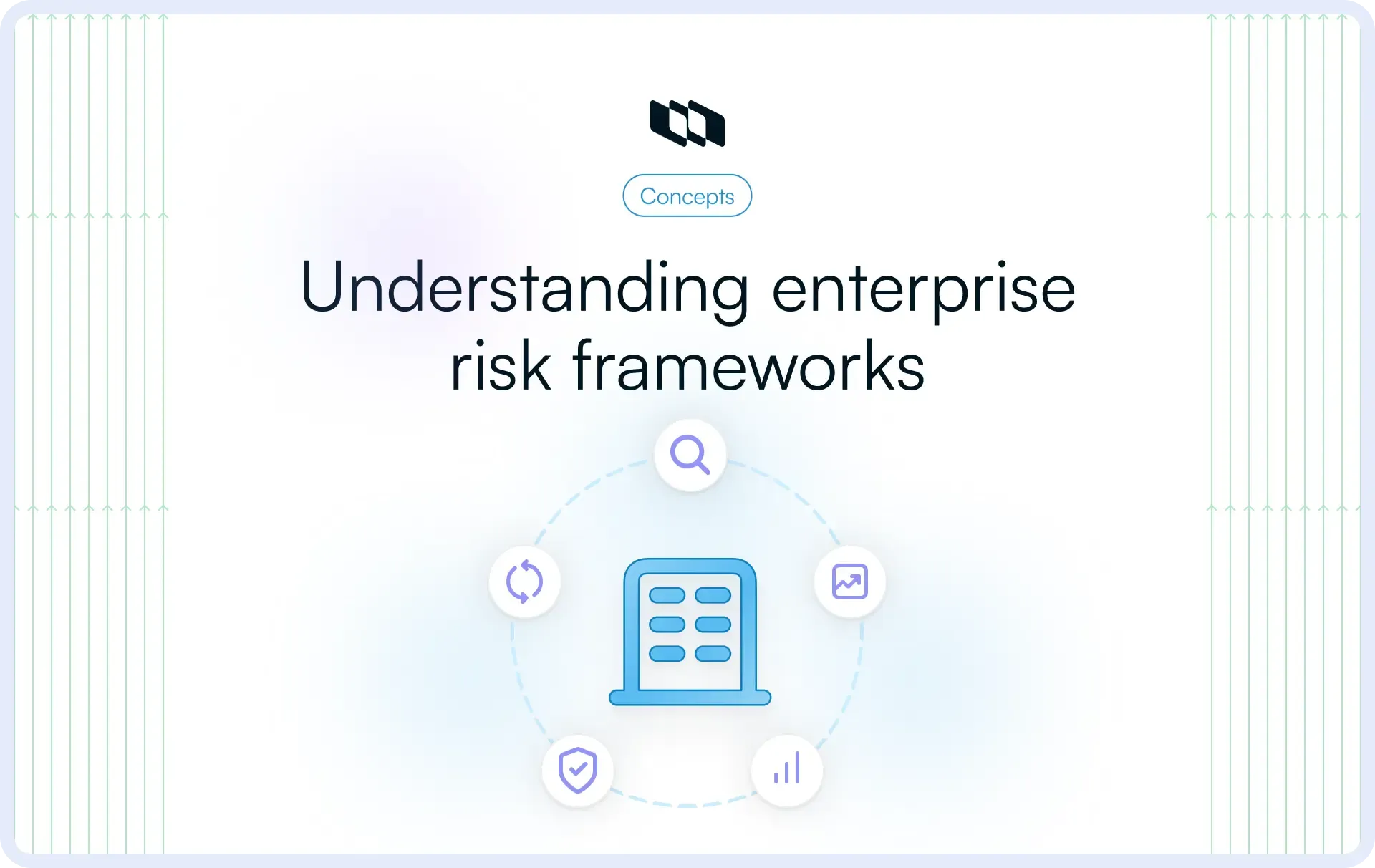
Introduction
Enterprise projects move swiftly, and so do the risks associated with them. It could be just a one-day delay, a tech snag, or a compliance gap, which, under the radar, can become bigger issues that affect timelines and cause financial losses. Such reasons make it impossible for people to rely solely on instinct or on scattered methods when managing uncertainty.
A risk assessment framework is a systematic yet straightforward way for an enterprise to identify risks early, analyze them, and respond before they become bigger. It adds value to project and enterprise risk management as a much-needed add-in for large initiatives involving multiple teams.
This guide explains how enterprises break down risk assessment frameworks and existing standards, and what steps teams should follow to develop a credible model for risk identification, analysis, and mitigation.
What is a risk assessment framework for enterprise projects?
A risk assessment framework is a structured, repeatable way to identify, analyse, prioritise, and respond to risks across enterprise projects. It turns risk management from an ad-hoc activity into a consistent process that teams can follow throughout the project lifecycle.
Looking to strengthen early project clarity? Explore how structured refinement keeps teams aligned from day one.
How it differs from a project-level risk plan
A project-level risk plan focuses on risks for a single initiative. A framework sits above individual projects, defining the principles, steps, and tools every team should use. This ensures that risk is handled the same way across product, engineering, operations, compliance, and vendor-facing teams.
Why enterprises need a consistent, repeatable approach
Enterprise environments are complex: multiple teams, long timelines, and interconnected dependencies. Without shared standards, teams interpret risks differently and escalate them inconsistently, creating blind spots.
A framework prevents this by:
- Giving everyone a common language
- Making risk comparisons possible across projects
- Helping leaders understand real exposure at any moment
How it connects to enterprise risk management (ERM)
A strong framework ensures that project-level risks align with broader enterprise risk management (ERM) objectives. It helps leaders see how individual project risks contribute to organizational risk, enabling better prioritization, planning, and governance.
Why enterprise teams need standardized risk frameworks
Enterprise projects move quickly, involve many teams, and carry high stakes. Without a shared approach to risk identification, risk analysis, and risk mitigation, each project ends up managing risk differently, creating blind spots and inconsistent decisions. A standardized framework brings clarity, comparability, and accountability across the entire portfolio.
1. Consistency and comparability across projects
Enterprise projects often run in parallel, with different teams assessing risks in their own way. A standardized risk assessment framework creates a common language for risk identification, risk analysis, and risk mitigation. This makes risks comparable across projects, helping leaders understand where the organization is most exposed.
2. Better, more objective strategic decisions
Without a shared process, decisions rely too heavily on instinct or incomplete data. A consistent framework supports more objective project risk management by showing the true likelihood and impact of risks. This helps enterprise leaders choose the right initiatives, allocate resources wisely, and evaluate trade-offs with more confidence.
3. Meeting compliance and governance expectations
Enterprises must comply with industry regulations, internal controls, and audit requirements. A unified approach ensures that risk documentation, reporting, and escalation follow the same structure across the organization. Frameworks like ISO 31000, COSO ERM, and NIST RMF also strengthen the organization’s overall enterprise risk management (ERM) posture.
4. Improving transparency and stakeholder confidence
Executives, boards, investors, and customers want visibility into how risks are being managed. Standardized frameworks make this easy by enabling clear reporting, predictable processes, and timely updates. With shared methods and common thresholds, teams can communicate risk early, building trust and improving accountability across the enterprise.
Core components of an enterprise risk assessment framework
A solid risk assessment framework gives enterprises a structured way to manage uncertainty across large, multi-team initiatives. These components help teams move from reactive problem-solving to proactive, predictable project risk management, ensuring that risk identification, analysis, and mitigation are consistent across the organization.
1. Risk identification
The first step is bringing all potential risks to the surface, not just the obvious ones.
Enterprise projects rely on multiple inputs, such as:
- Cross-functional workshops to capture risks from different perspectives
- Expert interviews with teams who’ve executed similar projects
- Historical incident logs to identify patterns or recurring issues
- Scenario planning to uncover regulatory, vendor, or technology risks
The goal is to build a wide, comprehensive view of what could impact timelines, budgets, compliance, or delivery. Early identification reduces surprises later in the project.
2. Risk analysis
Once risks are identified, they need to be understood. This phase examines the likelihood of each risk and the impact it could have.
- Qualitative analysis: Uses simple scales (low/medium/high) to sort risks quickly. It works best when information is limited or when teams need an immediate sense of priority.
- Quantitative analysis: Assigns numbers to risks, such as potential cost overruns or time delays. This method is essential for high-stakes decisions, financial planning, or executive reporting.
Most enterprises use both, starting with qualitative for speed and moving to quantitative when accuracy matters.
3. Risk evaluation and prioritization
Not every risk deserves the same level of attention. Evaluation helps teams separate high-impact risks from low-impact ones so resources are used effectively.
A probability–impact matrix makes prioritization visual and easy to interpret. By mapping likelihood against severity, teams can clearly define:
- Which risks require immediate action
- Which should be monitored
- Which can be safely accepted
Setting thresholds for action also ensures that high-impact risks are escalated consistently across projects.
4. Risk treatment
This is where strategy turns into action. Once priorities are clear, teams choose how to respond using the four T’s of risk mitigation:
- Avoid: change the plan to eliminate the risk entirely
- Mitigate: reduce the probability or the impact (e.g., add safeguards, tighten controls)
- Transfer: shift responsibility to another party (insurance, vendors, contracts)
- Accept: acknowledge the risk when the cost of mitigation outweighs the benefit
A strong framework assigns risk owners so actions are tracked, reviewed, and completed, rather than being lost in documentation.
5. Risk monitoring and review
Risks evolve as enterprise projects progress. New risks emerge, and older risks can become more or less severe. Continuous monitoring ensures the framework stays relevant through:
- Scheduled review cadences (weekly, monthly, or milestone-based)
- Updated risk registers with current status and trends
- Dashboards and ERM tools that highlight emerging patterns
- Alerts or thresholds that flag risks crossing critical limits
Monitoring keeps risks visible and prevents teams from slipping into “set it and forget it.”
6. Risk communication and reporting
Clear communication is what turns risk insights into informed decisions. A strong framework establishes:
- How and when risks are escalated to leadership
- Reporting formats that teams use across projects
- Channels for cross-functional visibility, so teams don’t work in silos
- Executive summaries or dashboards that highlight top risks and their impact
Transparent communication ensures that stakeholders have a shared view of exposure and can act quickly when risks intensify.
Common risk categories in enterprise projects
Enterprise projects face many types of uncertainty, and a strong risk assessment framework helps teams recognise these risks early. These categories offer a simple way to structure risk identification and improve consistency across projects.
1. Strategic risks
Risks that affect the organization’s long-term direction, such as shifting customer needs, market changes, competitive pressure, or misaligned project goals. These risks influence whether the project supports the overall strategy.
2. Operational risks
Risks tied to day-to-day execution, including process failures, vendor delays, resource shortages, or workflow breakdowns. These often have the biggest impact on timelines and delivery confidence.
3. Financial risks
Risks related to budgets, cost overruns, funding delays, currency fluctuations, or inaccurate estimates. Financial exposure is a major factor in enterprise risk management (ERM) and executive decision-making.
4. Compliance and regulatory risks
Risks that arise from changing laws, data protection rules, industry regulations, or audit requirements. Non-compliance can lead to penalties, project stoppages, and reputational damage.
5. Technology and cybersecurity risks
Risks linked to system failures, integration issues, outages, or cyber threats. As enterprises grow more digital, managing cybersecurity becomes a core part of modern project risk management.
Common risk assessment frameworks enterprises use
Enterprises rarely manage risk from scratch. Instead, they lean on established standards that offer proven structures, shared language, and clear expectations. These frameworks help teams apply consistent risk identification, analysis, and mitigation practices while aligning project work with broader enterprise risk management (ERM) goals.
Below are the four most widely used frameworks and what makes each one valuable for enterprise projects.
1. COSO ERM
COSO Enterprise Risk Management is one of the most comprehensive frameworks for organizational risk. It emphasizes how risk ties directly to strategy, governance, performance, and decision-making, not just individual projects.
COSO helps leadership understand the full picture: how risks across different initiatives affect long-term goals, financial stability, and enterprise value. For large enterprises, or those operating in regulated markets, COSO provides the rigor and transparency boards expect.
2. ISO 31000
ISO 31000 is a flexible, principle-based standard designed to fit any organization, regardless of size or industry. Instead of prescribing specific steps, it outlines guidelines for building a repeatable, customizable risk assessment framework.
Enterprises often choose ISO 31000 because it encourages continuous improvement and can be scaled across global teams. It supports consistency without forcing a rigid process, making it ideal for companies with diverse project portfolios.
3. PMI/PMBOK risk framework
The PMI/PMBOK risk framework focuses squarely on project execution. It offers practical, step-by-step guidance for managing risk throughout a project’s lifecycle, covering everything from risk identification to quantitative analysis and response planning.
This framework is especially useful for project managers who need clear tools, templates, and processes. Many enterprises pair PMI’s project-level rigor with a broader enterprise framework, such as COSO or ISO 31000, for complete coverage.
4. NIST RMF
NIST’s Risk Management Framework (RMF) is a structured approach for managing cybersecurity and information security risks. It is widely used in government, defence, fintech, healthcare, and other environments that handle sensitive data.
NIST RMF provides detailed guidance on categorizing systems, selecting and implementing security controls, conducting assessments, and monitoring risks over time. For enterprises where cyber and privacy threats pose major operational or regulatory exposure, NIST RMF is a cornerstone of their overall risk mitigation strategy.
How to choose the right framework for your organization
There is no single “best” risk assessment framework. The right choice depends on your organization’s goals, regulatory environment, and how mature your existing project risk management and enterprise risk management (ERM) practices are.
When to choose COSO, ISO, PMI, or NIST
- Choose COSO ERM: If your board and executives need a strategic, governance-first view of risk. COSO works well for large, often publicly listed enterprises that want to link project risks directly to strategy, performance, and reporting.
- Choose ISO 31000: If you want a flexible, principle-based model that can be adapted across regions, business units, and functions. ISO 31000 is useful when you need a common language but don’t want rigid, prescriptive steps.
- Choose PMI/PMBOK: If your immediate need is to strengthen project risk management on the ground. PMI’s processes give project managers clear methods for risk identification, risk analysis, and risk mitigation at the project level.
- Choose NIST RMF: If technology and cybersecurity risks are among your highest priorities. NIST RMF is particularly suited to organizations in regulated sectors or those handling sensitive data and critical systems.
How maturity, regulation, and complexity influence the choice
- Risk maturity: If you are early in your risk journey, ISO 31000 or PMI can provide a practical starting point. More mature organizations often bring in COSO ERM to connect risk with strategy and performance.
- Regulatory pressure: Highly regulated industries (finance, healthcare, public sector, defence) may be guided toward COSO, ISO, or NIST because regulators and auditors are already familiar with these frameworks.
- Project complexity: The more complex and cross-functional your enterprise projects are, the more important it becomes to combine enterprise risk management (e.g., COSO or ISO) with strong project-level practices (e.g., PMI).
Why most enterprises combine elements
In practice, many organizations do not adopt a single framework in isolation. Instead, they:
- Use COSO ERM or ISO 31000 to set the overall direction and principles
- Apply PMI/PMBOK to manage risk within individual projects or programmes
- Layer NIST RMF on top when cyber or information security risks are critical
This blended approach allows enterprises to maintain a consistent top-level risk assessment framework across enterprise projects, while tailoring methods to different teams, systems, and risk types.
Scaling risk maturity goes hand-in-hand with scaling knowledge practices. Learn how growing teams build shared context without slowing down.
How to implement a risk assessment framework in enterprise projects
Initiating a risk assessment framework is not merely a selection of methods; it ensures that risk management becomes integral to how teams plan, communicate, and deliver work daily. An implementation in enterprise settings, where projects are large, interlinked, and swiftly changing, should be pragmatic, consistent, and easy to internalize.
1. Leadership alignment, scope, and risk appetite
Kicking off the implementation with leadership should establish what the framework is for, which projects it will cover, and how much risk the organization will tolerate. This gives direction over the entire methodology. With a shared understanding of risk appetite, the teams will know which risks require immediate attention and which ones can be tolerated. Without this, every team would regard risk differently, creating the inconsistency that the framework should resolve.
2. Choose and enhance the proper framework
A single model cannot be applied universally to any organization. Most enterprises evaluate COSO ERM, ISO 31000, PMI, or NIST RMF, choosing the one that best aligns with their objectives, regulatory environment, and project complexity. After selecting the appropriate framework, it should now be customized; terminology, scoring methods, templates, and reporting formats should align with the organization's culture and workflows. This renders the framework usable and not merely theoretical.
3. Establish a team for risk identification
A framework works well if the risks surface early. That means it must establish a transparent, repeatable risk identification process across all projects. A multitude of companies utilize cross-functional workshops, expert interviews, historical lessons learned, or scenario analysis. This is meant to develop a common habit: teams should regularly ask, "What can impede our outcomes?" and consistently document identified risks in an agreed-upon format.
4. Set tools, analysis, and prioritization methods
To avoid subjective risk analysis, organizations commonly use scales of likelihood and impact in clear definitions of qualitative versus quantitative use, and of a standard probability impact matrix. Every team must evaluate the risks uniformly for comparisons between projects to be meaningful. When this is the case, leadership can easily understand the significance of each risk as assessed rather than struggle with different scoring formats.
5. Define plans for response and for owners and review cycles
Each significant risk must have a response defined. However, the teams decide to treat a risk, namely: avoid, mitigate, transfer, or accept, the actions should be assigned to an identified owner for a clear and measurable plan. It also necessitates setting review cycles, weekly, monthly, or per milestone, to ensure that risks do not remain inactive on the register. So ownership transforms risk management from just paperwork to meaningful actions.
6. Use tools and dashboards to operationalize the framework
Technology brings the framework to life. Centralised risk registers, dashboards, alerts, and integrations with project or portfolio management tools help teams continuously monitor risks. These tools support both project-level visibility and enterprise risk management (ERM) reporting, giving leaders a real-time view of where exposure is increasing or decreasing.
7. Train teams and build a risk-aware culture
The framework succeeds only when people use it consistently. Training helps teams understand scoring, documentation, and escalation processes. More importantly, leaders need to create a culture where raising risks early is encouraged rather than seen as pessimism. When risk conversations become a regular part of planning and review meetings, teams stop hiding issues and start treating risk as a regular part of delivering enterprise projects.
Conclusion
Enterprise projects always deal with uncertainty; the end goal is not the elimination of risk but proper management with clarity and confidence. A strong risk-assessment framework provides the team with the structure they need to identify issues early on, make objective decisions, and ultimately deliver projects with greater predictability.
By establishing a standard process for identifying, analyzing, prioritizing, and communicating risk, enterprises instill enhanced governance, increased strategic alignment, and an improved ability to avoid costly surprises. Ultimately, that consistency pays off in improved visibility for leaders, easier execution for teams, and more predictable outcomes for the organization as a whole.
Frequently asked questions
Q1. What are the four types of risk assessment?
The four common types of risk assessment are:
- Qualitative assessment: Uses simple ratings (low/medium/high).
- Quantitative assessment: Uses numerical values (cost, time, probability).
- Generic assessment: Applies general risk categories across similar projects.
- Dynamic or continuous assessment: Updates risks in real time as conditions change.
Q2. What is the difference between ISO 31000 and NIST RMF?
ISO 31000 is a broad, principle-based risk management guideline that can be used by any organization in any industry. It focuses on culture, continuous improvement, and flexibility.
NIST RMF is a detailed, prescriptive framework specifically for managing cybersecurity and information security risks. It outlines clear steps for classifying systems, selecting controls, and monitoring security.
Q3. Is ISO 27001 a risk management framework?
ISO 27001 is primarily an information security management standard, not a standalone risk management framework. However, it includes strong risk assessment and risk treatment requirements, making it highly relevant for organizations seeking structured security controls alongside a broader framework such as ISO 31000 or COSO ERM.
Q4. What are the frameworks, like ISO 31000?
Frameworks similar to ISO 31000, broad, scalable, and organization-wide, include:
- COSO ERM (enterprise risk governance)
- PMI/PMBOK risk framework (project-level processes)
- COBIT (IT governance and controls)
- FAIR (cyber and information risk quantification)
These frameworks complement ISO 31000 by focusing on specific domains or adding more detailed guidance.
Q5. What are the 5 P’s of risk assessment?
The 5 P’s commonly used in risk assessment are:
- Probability: How likely a risk is to occur
- Predictability: How early can it be detected
- Prevention: How it can be controlled or reduced
- Preparedness: How ready the team is to respond
- Performance impact: How much it affects outcomes
These P’s help teams evaluate risks in a structured, consistent way.
Recommended for you



 Download for Mac
 Download for Android