What is Lean Six Sigma? Definition, Methodology and Best Practices
Lean Six Sigma is defined as a methodology that combines principles of Lean and Six Sigma to improve business processes by eliminating waste and reducing variability.
Lean Six Sigma is defined as a methodology that combines principles of Lean and Six Sigma to improve business processes by eliminating waste and reducing variability.
Introduction
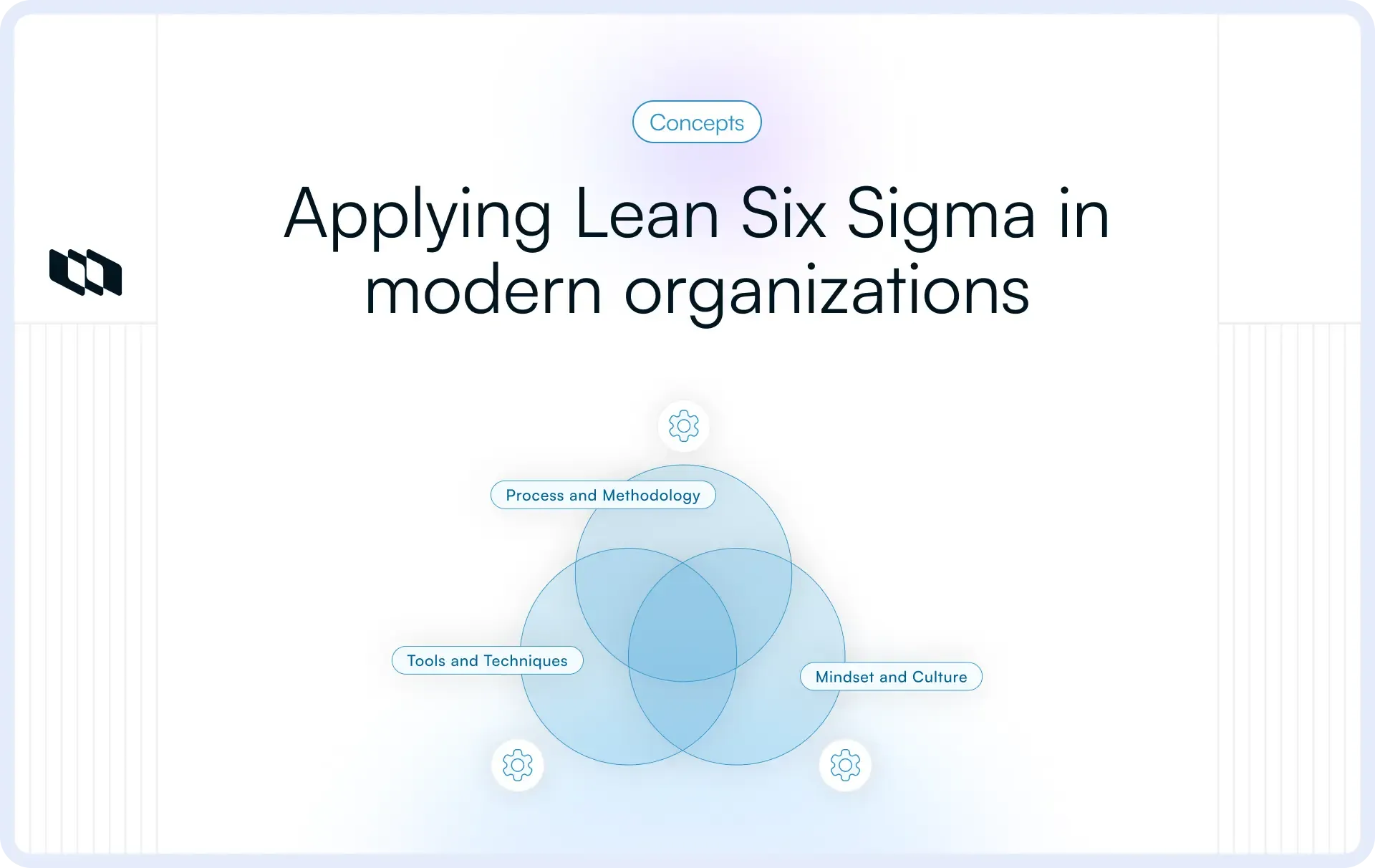
Every growing team reaches a point where working harder stops delivering better results. That is where Lean Six Sigma comes in. Lean Six Sigma is a process improvement methodology that combines speed, quality, and consistency into one structured approach. It helps teams remove waste, reduce variation, and improve outcomes that actually matter to customers. In this guide, you will learn what Lean Six Sigma is, how the Lean Six Sigma methodology works, and how the DMAIC process drives continuous improvement.
What is Lean Six Sigma?
Lean Six Sigma is defined as a methodology that combines principles of Lean and Six Sigma to improve business processes by eliminating waste and reducing variability. Lean focuses on optimizing efficiency by eliminating non-value-added activities, while Six Sigma emphasizes reducing defects and achieving consistent, high-quality outcomes through data-driven decision-making. Together, these approaches aim to enhance operational performance, customer satisfaction, and profitability.
Lean principles originated from the Toyota Production System and aim to streamline processes by identifying and removing waste—such as excess inventory, delays, or unnecessary steps—that do not contribute value to the customer. On the other hand, Six Sigma was developed by Motorola and focuses on minimizing variation in processes to achieve near-perfect quality. It uses statistical tools and a structured framework, such as the DMAIC (Define, Measure, Analyze, Improve, Control) cycle, to solve complex problems systematically.
By integrating Lean and Six Sigma, organizations gain a comprehensive toolkit to address inefficiencies and improve quality. This synergy ensures that processes are not only fast but also reliable. For instance, Lean helps identify bottlenecks, while Six Sigma addresses the root causes of defects within those bottlenecks. The result is a streamlined operation that consistently delivers value to customers while reducing costs.
Example
Consider a manufacturing company facing delays in delivering products to customers due to defects and inefficiencies in its assembly line. By applying Lean Six Sigma, the company first maps out the production process to identify areas where waste occurs, such as excessive rework or waiting time. Then, using Six Sigma tools like root cause analysis and statistical process control, they pinpoint why defects occur in specific production steps. After addressing these root causes and redesigning workflows to eliminate waste, the company achieves faster delivery times, higher-quality products, and improved customer satisfaction.
Lean Six Sigma is not limited to manufacturing; it has broad applications across industries, including healthcare, finance, and IT. For example, in healthcare, it can streamline patient care processes, reduce medical errors, and improve service delivery. The methodology fosters a culture of continuous improvement, encouraging employees to regularly evaluate and enhance their workflows. This culture ultimately benefits organizations by enabling sustained operational excellence and adapting to changing customer needs effectively.
Lean vs. Six Sigma vs. Lean Six Sigma
Lean, Six Sigma, and Lean Six Sigma are often mentioned together, but they do not mean the same thing. Each approach solves a different kind of process problem. Understanding how they differ makes it easier to choose the right methodology.
What Lean focuses on
- Lean is a methodology focused on efficiency and flow. Its goal is to help teams do more value-creating work with less effort.
- Lean looks closely at how work moves through a process and asks one simple question: Does this step add value for the customer?
If the answer is no, Lean works to remove or simplify that step. Common Lean improvements include reducing waiting time, cutting unnecessary handoffs, and eliminating excess work. Lean methodology is especially useful when processes feel slow, cluttered, or overloaded.
What Six Sigma focuses on
- Six Sigma is a methodology focused on quality and consistency. It helps teams reduce variation and defects in their processes.
- Instead of speed, Six Sigma looks at accuracy and predictability. It uses data and analysis to understand why errors happen and how often they occur. The goal is to make processes more stable and reliable over time.
- Six Sigma works best when teams address recurring issues, such as defects, rework, or inconsistent outcomes, that affect customer satisfaction.
How Lean Six Sigma combines both
- Lean Six Sigma combines these two approaches into a single process improvement methodology.
- Lean improves how fast work moves. Six Sigma improves the quality of work. Lean Six Sigma focuses on improving both speed and quality simultaneously.
By combining Lean principles with Six Sigma tools, teams can eliminate waste and reduce defects. The Lean Six Sigma methodology uses the DMAIC process to guide improvements in a structured and data-driven way.
When to use Lean vs Six Sigma vs Lean Six Sigma
- Use Lean when processes are slow, inefficient, or overloaded
- Use Six Sigma when quality issues and variation affect outcomes
- Use Lean Six Sigma when processes need to be faster, more efficient, and more consistent
Lean Six Sigma is often the preferred choice for organizations seeking a balanced, long-term, continuous improvement approach.
Lean Six Sigma process: Key steps
The Lean Six Sigma process is built around structured steps that combine Lean's efficiency-driven principles and Six Sigma's focus on reducing defects. The primary framework used to guide this process is the DMAIC methodology, which consists of five key steps:
1. Define
In this phase, the problem or opportunity for improvement is clearly identified. The team outlines the project scope, goals, and key deliverables while considering customer needs. Key tasks include developing a project charter, identifying stakeholders, and defining critical-to-quality (CTQ) metrics. For example, a healthcare facility might define its goal as reducing patient wait times in the emergency department to improve satisfaction.
2. Measure
This step focuses on collecting data to understand the current performance of the process. The aim is to establish a baseline against which improvements will be measured. Activities include mapping the process to identify bottlenecks, selecting metrics, and validating data for accuracy. For instance, the healthcare facility may measure average wait times, patient feedback, and process cycle times to identify inefficiencies.
3. Analyze
In the analysis phase, the collected data is studied to identify the root causes of the problem. Tools like cause-and-effect diagrams and Pareto charts are used to determine underlying issues. For the healthcare example, analysis might reveal that delays are caused by inadequate staffing during peak hours and inefficiencies in triage procedures.
4. Improve
This phase involves designing and implementing solutions to address the root causes identified during analysis. Potential solutions are tested, refined, and then rolled out organization-wide. The healthcare facility might implement new triage protocols and optimize staff scheduling to reduce patient wait times.
5. Control
In the final step, the improvements are standardized and monitored to ensure sustainability. Control mechanisms, such as dashboards and training, are put in place to prevent regression. For example, the healthcare facility could use a real-time dashboard to monitor wait times and make ongoing adjustments as needed.
Benefits of Lean Six Sigma
Lean Six Sigma creates meaningful improvements by strengthening how processes run, how teams work, and how customers experience outcomes. By combining Lean’s focus on efficiency with Six Sigma’s emphasis on consistency, Lean Six Sigma helps organizations improve performance in a sustainable, measurable way.
Business benefits
- Reduced costs
Lean Six Sigma helps organizations uncover hidden costs caused by waste, rework, delays, and process inefficiencies. By improving process flow and reducing defects, teams spend fewer resources correcting errors and more on delivering value, directly improving operational and financial performance. - Improved efficiency
The Lean Six Sigma process focuses on removing unnecessary steps and improving how work moves from start to finish. As processes become simpler and better structured, teams complete work faster, use resources more effectively, and maintain quality even as workloads increase. - Better process predictability
Six Sigma principles reduce variation in how work is performed, leading to more stable and predictable outcomes. This consistency makes it easier for organizations to plan capacity, forecast results, and scale operations with confidence.
Customer benefits
- Higher quality outputs
Lean Six Sigma improves quality by addressing the root causes of errors rather than treating symptoms. As defects decrease and processes stabilize, customers receive outcomes that meet expectations more reliably. - Faster delivery
By eliminating delays, rework, and unnecessary handoffs, Lean Six Sigma shortens cycle times across processes. This allows organizations to respond to customer needs more quickly while maintaining consistent standards. - More consistent experiences
Standardized and well-controlled processes lead to repeatable results. Lean Six Sigma ensures customers experience the same level of quality, reliability, and service each time they interact with a product or service.
Team and employee benefits
- Clearer processes
Lean Six Sigma brings transparency to how work is performed, helping teams understand each step of a process and how their work contributes to the final outcome. This clarity reduces confusion and improves collaboration across roles and teams. - Better problem-solving skills
The Lean Six Sigma methodology equips teams with structured, data-driven problem-solving techniques. Over time, employees develop stronger analytical thinking and become more confident in identifying and addressing process issues. - Stronger continuous improvement culture
Lean Six Sigma encourages teams to regularly review performance, identify improvement opportunities, and apply learnings across the organization. This mindset supports continuous improvement and helps teams adapt as business needs evolve.
Core principles of Lean Six Sigma
The Lean Six Sigma methodology is guided by a small set of principles that shape how teams approach process improvement. These principles help organizations improve efficiency, quality, and consistency while keeping customer needs at the center of every decision.
1. Focus on customer value
Lean Six Sigma begins by clearly understanding what customers value and which outcomes matter most to them. Processes are evaluated based on how well they support those outcomes, helping teams prioritize improvements that directly enhance customer satisfaction and business impact.
2. Eliminate waste
A core principle of Lean methodology is identifying and removing activities that do not add value. Lean Six Sigma helps teams identify unnecessary steps, delays, rework, and handoffs that slow processes, allowing work to flow more smoothly and efficiently.
3. Reduce variation
Six Sigma principles focus on minimizing inconsistencies in process performance. By reducing variation and defects, Lean Six Sigma creates more reliable outcomes and ensures consistent quality across teams, projects, and time periods.
4. Use data for decisions
Lean Six Sigma relies on data rather than assumptions to guide improvements. Teams measure performance, analyze root causes, and validate solutions using facts, which leads to more informed decisions and more sustainable results.
5. Improve continuously
Continuous improvement is central to the Lean Six Sigma process. Teams are encouraged to regularly review outcomes, learn from results, and refine processes over time, creating a culture where improvement becomes an ongoing part of everyday work.
Importance of Lean Six Sigma for project management
Lean Six Sigma plays a significant role in enhancing project management by integrating Lean's focus on eliminating waste and Six Sigma's emphasis on reducing process variation. This methodology provides a structured framework for improving efficiency, quality, and effectiveness in project execution. Its importance in project management lies in several key aspects:
- Improved efficiency and reduced waste
Lean Six Sigma helps project managers identify and eliminate non-value-adding activities, streamlining workflows and optimizing resource use. By minimizing waste, such as unnecessary processes or excessive delays, teams can focus on tasks that directly contribute to project goals. This improves timelines and ensures resources are used effectively.
- Enhanced quality and customer satisfaction
Six Sigma emphasizes reducing defects and achieving consistent quality. In project management, this translates to delivering outcomes that meet or exceed stakeholder expectations. By systematically addressing process variability and errors, Lean Six Sigma ensures project deliverables align with quality standards, enhancing customer satisfaction and trust.
- Data-driven decision-making
Lean Six Sigma's data-driven approach equips project managers with tools like DMAIC (Define, Measure, Analyze, Improve, Control) to make informed decisions, mitigate risks, and continuously improve project processes. It reduces guesswork and fosters evidence-based strategies.
- Fostering a culture of continuous improvement
Incorporating Lean Six Sigma into project management promotes a mindset of ongoing improvement. Teams are encouraged to assess processes regularly, identify opportunities for enhancement, and adapt to changing conditions. This culture ensures that projects evolve alongside organizational and market needs, maintaining relevance and competitiveness.
Common Lean Six Sigma tools and techniques
The Lean Six Sigma methodology uses a practical set of tools and techniques to identify inefficiencies, reduce variation, and improve process performance. These tools help teams understand how work flows, where problems occur, and which improvements create the most impact.
- Value stream mapping: It helps teams visualize the entire process from start to finish. It highlights each step involved in delivering value, making it easier to spot delays, bottlenecks, and activities that do not add value to the customer.
- Kaizen: Kaizen focuses on continuous, incremental improvement. Rather than large, one-time changes, Kaizen encourages teams to make small improvements regularly, which over time lead to meaningful gains in efficiency and quality.
- 5S: 5S is a Lean tool used to organize workspaces and standardize work processes. By keeping environments clean, structured, and easy to navigate, teams reduce wasted time and improve overall process efficiency.
- Root cause analysis: Root cause analysis helps teams move beyond surface-level problems and understand why issues occur. Lean Six Sigma teams often use techniques such as the 5 Whys or cause-and-effect diagrams to identify the underlying causes of defects or delays.
- Pareto analysis: Pareto analysis is based on the idea that a small number of causes often create most of the problems. This technique helps teams focus their improvement efforts on the issues that have the greatest impact on process performance.
- Control charts: Control charts are used to monitor process performance over time. They help teams understand normal process variation and quickly identify when a process is moving out of control, enabling corrective action early.
- Process mapping: Process mapping provides a clear visual representation of how work flows between steps and teams. It helps Lean Six Sigma teams identify redundancies, unclear handoffs, and improvement opportunities within complex processes.
Key levels of expertise in Lean Six Sigma methodology
Lean Six Sigma methodology is structured around key levels, often referred to as belts, which signify the expertise and responsibility of individuals within the framework. These levels are modeled after martial arts belt rankings and include:
1. White Belt
White Belt is the introductory level, focusing on foundational knowledge of Lean Six Sigma principles. Individuals at this level learn basic concepts, such as the importance of reducing waste and variability in processes, but they do not actively lead projects. Instead, they support improvement initiatives within their teams and help identify opportunities for process optimization. White Belts play a vital role in fostering awareness and engagement across the organization.
2. Yellow Belt
Yellow Belts possess a more detailed understanding of Lean Six Sigma tools and techniques. They actively participate as team members in improvement projects and contribute to identifying problem areas and gathering data. They are familiar with basic problem-solving methodologies, such as process mapping and root cause analysis, and work under the guidance of higher-level belts to implement improvements.
3. Green Belt
Green Belts are practitioners who lead smaller Lean Six Sigma projects or assist Black Belts with larger initiatives. They are proficient in using data analysis tools and methodologies, including the DMAIC framework (Define, Measure, Analyze, Improve, Control). Green Belts dedicate a portion of their time to driving process improvements while balancing other professional responsibilities. Their role is pivotal in executing changes and delivering measurable results.
4. Black Belt
Black Belts are advanced professionals responsible for managing large-scale improvement projects. They possess deep expertise in Lean Six Sigma tools, statistical analysis, and project management. Black Belts mentor Green and Yellow Belts, lead cross-functional teams, and focus on achieving strategic goals aligned with organizational priorities. Their role extends to facilitating cultural change and fostering a continuous improvement mindset.
5. Master Black Belt
Master Black Belts are the highest level of Lean Six Sigma expertise, serving as coaches and advisors to Black Belts and leadership teams. They guide the strategic implementation of Lean Six Sigma initiatives across the organization and ensure alignment with business objectives. Master Black Belts oversee training, provide expert analysis, and drive the adoption of best practices to sustain long-term success.
Where is Lean Six Sigma used?
Lean Six Sigma is used across industries where improving efficiency, quality, and consistency is critical. Because the Lean Six Sigma methodology focuses on process improvement rather than a specific domain, it adapts well to both operational and knowledge-based work.
1. Manufacturing
Lean Six Sigma is widely used in manufacturing to streamline production processes, reduce defects, and improve throughput. Teams apply Lean principles to eliminate waste on the shop floor while using Six Sigma tools to maintain consistent product quality.
2. Healthcare
In healthcare, Lean Six Sigma helps improve patient flow, reduce errors, and optimize clinical and administrative processes. Hospitals and care providers use the Lean Six Sigma process to improve service delivery while maintaining safety and compliance standards.
3. Finance
Financial teams use Lean Six Sigma to improve accuracy, reduce processing time, and standardize workflows. Common use cases include improving reporting cycles, reducing transaction errors, and increasing transparency across financial processes.
4. IT and software teams
Lean Six Sigma supports IT and software teams by improving delivery processes, reducing rework, and increasing reliability. Teams apply Lean Six Sigma principles to optimize workflows, manage incidents, and improve consistency across development and support operations.
5. Operations and project-based work
Lean Six Sigma is also applied to operations and project-based environments where coordination, timelines, and quality matter. By improving process flow and reducing variation, teams deliver projects more efficiently and with more predictable outcomes.
Best Practices for using Lean Six Sigma method in 2026
Using Lean Six Sigma effectively requires adherence to key principles and practices that optimize its problem-solving and process improvement capabilities. This method combines Lean's focus on eliminating waste with Six Sigma's emphasis on reducing variation, making it a powerful framework for achieving operational excellence. Here are the best practices for using the Lean Six Sigma method:
1. Define clear goals and align with organizational strategy
- Establish specific, measurable objectives that align with the organization’s strategic priorities.
- Use the Define phase of the DMAIC (Define, Measure, Analyze, Improve, Control) methodology to clearly articulate the problem, scope, and expected outcomes.
- Engage leadership early to ensure support, secure resources, and demonstrate commitment to the initiative’s success.
2. Involve cross-functional teams
- Assemble diverse teams with expertise from various functional areas to gain a holistic understanding of the processes being improved.
- Foster collaboration by providing training in Lean Six Sigma tools and techniques, ensuring all team members can contribute effectively.
- Encourage a culture of open communication and regular feedback to leverage collective insights and address potential roadblocks.
3. Focus on data-driven decision-making
- Collect accurate, relevant data to assess current performance and identify root causes of inefficiencies or defects.
- Use statistical tools like control charts, process capability analysis, and hypothesis testing to analyze data and validate improvement opportunities.
- Ensure data is continuously monitored during and after implementation to measure results and sustain gains.
4. Adopt a customer-centric approach
- Prioritize the customer feedback to ensure improvements align with addressing customer pain-points, needs and expectations.
- Map customer journeys and identify value-added and non-value-added activities using tools like value stream mapping.
- Use the Improve phase to redesign processes that enhance customer satisfaction while eliminating waste and reducing variation.
5. Standardize and sustain improvements
- Develop standardized processes and documentation to maintain consistency in operations and prevent regression.
- Implement controls such as visual management systems, dashboards, and updated Standard Operating Procedures (SOPs) to sustain improvements.
- Train employees on the new processes and encourage continuous improvement through regular audits and performance reviews.
6. Leverage technology and tools
- Use Lean Six Sigma software tools (e.g., Minitab, SigmaXL) to streamline data analysis and project tracking.
- Incorporate automation and digital technologies to further eliminate waste and improve efficiency where applicable.
- Regularly evaluate technological advancements to enhance processes and methodologies.
7. Promote a continuous improvement mindset
- Encourage employees at all levels to identify improvement opportunities and apply Lean Six Sigma principles in their daily work.
- Recognize and reward contributions to process improvements to build morale and sustain engagement.
- Share lessons learned from projects to build institutional knowledge and drive organization-wide adoption.
Final thoughts
Lean Six Sigma offers a practical way to improve how work gets done by combining efficiency with consistency. By bringing together Lean’s focus on eliminating waste and Six Sigma’s focus on reducing variation, Lean Six Sigma helps organizations build faster, more reliable, and easier-to-improve processes.
Whether it is applied in manufacturing, healthcare, finance, IT, or project-based work, Lean Six Sigma provides a clear framework for identifying problems, making data-driven decisions, and sustaining improvements. Teams that adopt Lean Six Sigma develop stronger problem-solving skills, gain better process visibility, and create a culture of continuous improvement that supports long-term business performance.
Frequently asked questions
Q1. What is Lean Six Sigma?
Lean Six Sigma is a process improvement methodology that combines Lean and Six Sigma. Lean focuses on eliminating waste and improving flow, while Six Sigma focuses on reducing variation and defects. Together, Lean Six Sigma helps organizations improve efficiency, quality, and consistency in their processes.
Q2. What are the 5 principles of Lean Six Sigma?
The five core principles of Lean Six Sigma are:
- Focus on customer value
- Eliminate waste
- Reduce variation
- Use data for decision-making
- Improve continuously
These principles guide how teams identify problems and implement sustainable process improvements.
Q3. What are the 6 points of Six Sigma?
The six key points of Six Sigma are:
- Focus on customer requirements
- Define processes clearly
- Measure current performance
- Analyze root causes of variation
- Improve processes using data
- Control processes to sustain results
These points form the foundation of the Six Sigma approach.
Q4. Is Six Sigma certification worth it?
Six Sigma certification can be valuable for professionals involved in process improvement, operations, quality, or project work. It helps build structured problem-solving skills and a strong understanding of data-driven improvement methods. Its value depends on how often these skills are applied in real work environments.
Q5. What are the 7 rules of Six Sigma?
The seven commonly referenced rules of Six Sigma are:
- Focus on the customer
- Use data and facts
- Improve processes, not people
- Reduce variation
- Prevent defects rather than fix them
- Standardize successful processes
- Sustain improvements over time
These rules support consistent and long-term process improvement.
Recommended for you




 Download for Mac
 Download for Android