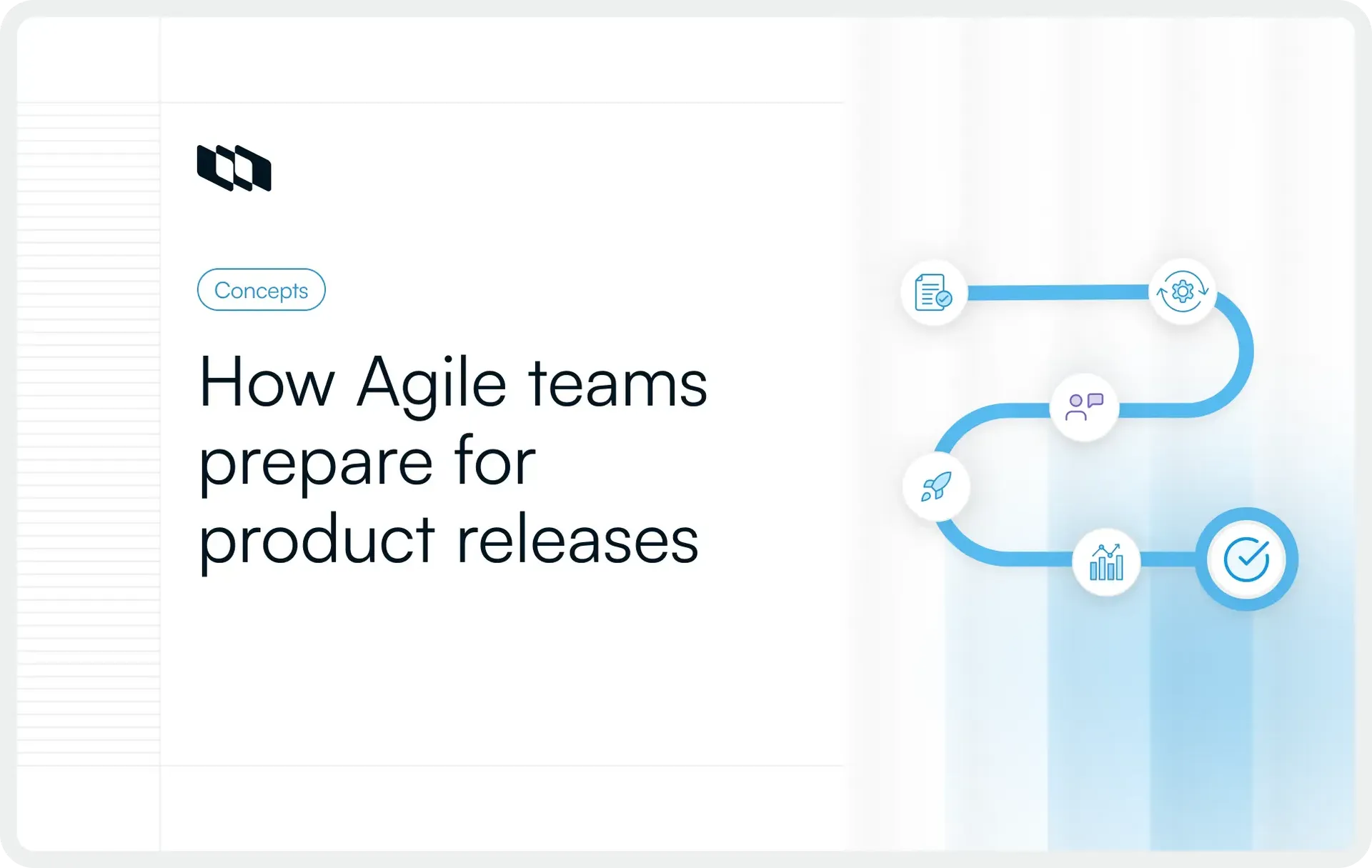
Product release process checklist for Agile teams
Introduction
Release day often begins with confidence and ends with last-minute scrambles across Slack threads, dashboards, and deployment windows. Teams ship valuable work every sprint, yet a structured product release process remains the difference between controlled delivery and avoidable chaos. A clear product release process checklist for Agile teams brings every task, dependency, and decision into a single shared flow, so engineering, product, and operations move in sync from planning through rollout. This guide breaks down a practical agile release process and a complete product release management checklist that helps teams track readiness, protect quality, and deliver software with clarity and control.
What is a product release process in Agile teams?
Agile teams ship work in small increments, yet every release still requires a structured path from completed development to real user impact. A product release process brings together planning, testing, documentation, deployment, and communication so teams can move from “ready to ship” to “live for users” with clarity and control. A well-defined agile release process helps teams track readiness, reduce risk, and deliver updates that perform reliably in production.
What is product release?
A product release is the moment when completed work reaches users in a usable form. This includes new features, improvements, performance updates, and bug fixes that move from internal environments to production. The product release process ensures that every change meets quality standards, aligns with release goals, and delivers value without disrupting existing workflows.
In practical terms, a release means:
- Features have passed the required quality checks
- Documentation and support materials are ready
- Deployment steps are planned and validated
- Teams are prepared to monitor and support the update
A clear product release management checklist helps teams confirm that each element is ready before deployment begins. Instead of relying on memory or scattered updates, teams follow a repeatable system that ensures consistency across every release cycle.
Product release vs. product launch
Many teams use “release” and “launch” interchangeably, yet they serve different purposes in the product lifecycle.
- A product release focuses on the technical delivery of updates. It involves preparing code, validating quality, deploying safely, and ensuring systems remain stable. The primary goal of the release process is reliability and readiness.
- A product launch focuses on market communication and adoption. It includes announcements, marketing campaigns, customer education, and enablement for sales or support teams. The goal of a launch is awareness and engagement.
A single release can exist without a major launch. For example, performance improvements or small feature updates may go live quietly. Large feature sets or strategic updates often include both a release and a coordinated launch. Understanding this difference helps Agile teams plan communication, resources, and timelines more effectively.
Why releases still need structure in Agile environments
Agile delivery promotes progress through sprints, but successful releases require cross-functional coordination across testing, documentation, deployment, monitoring, and customer communication. Without a structured product release process checklist, teams often face:
- Unclear ownership across release tasks
- Missing documentation or support preparation
- Incomplete testing or validation
- Last-minute deployment issues
- Limited visibility into release readiness
A defined agile release process brings structure without slowing down the pace. It creates a shared workflow where every team knows what needs to happen before, during, and after deployment. This clarity allows Agile teams to ship frequently while maintaining reliability, quality, and confidence in every release.
Why Agile teams need a release process checklist
Agile teams deliver continuously, but releases often face challenges like tool misalignment, unclear ownership, or late readiness checks. A structured release checklist ensures aligned planning, testing, deployment, and communication, enabling confident, controlled production releases.
Let’s look at why a structured release process checklist helps Agile teams stay aligned, reduce risk, and deliver reliable releases with greater confidence.
What usually breaks during releases
Teams often discover missing dependencies, incomplete testing coverage, outdated documentation, or unclear ownership only when the deployment window approaches. Communication across engineering, product, support, and stakeholders may also remain fragmented, which creates confusion about readiness and timelines.
Common release issues include:
- Dependencies identified late in the cycle
- Testing coverage that does not match the release risk
- Documentation and release notes were prepared too close to deployment
- Unclear decision-making during go or no-go moments
- Limited visibility into release status across teams
Without a defined Agile release process, teams rely on memory and informal coordination, which makes release outcomes unpredictable.
How a checklist improves release reliability
A structured product release management checklist turns scattered release activities into a repeatable workflow. Each stage of the product release process gains clear tasks, owners, and readiness signals so teams can track progress without confusion. Consistency across releases improves because every release follows the same core steps, even when scope changes.
A checklist improves release reliability through:
- Consistent quality and readiness checks across releases
- Shared visibility into progress and blockers
- Clear accountability for each release task
- Faster identification of risks and gaps
- Faster recovery when issues appear after deployment
Teams that follow a defined software release management checklist build confidence in their release cycle. Each completed checklist strengthens the next release because lessons and improvements feed back into the process.
When to use a release checklist
Every release benefits from structure, yet some require deeper coordination and stricter validation. A product release checklist before deployment helps teams confirm readiness across both small updates and major releases.
Use a product release process checklist for:
- Major feature releases that impact user workflows
- Multi-feature releases across teams
- Performance or infrastructure updates
- Security or compliance updates
- Bug-fix releases with production impact
- High-risk deployments with system dependencies
Applying a consistent Agile product release process ensures that each release meets quality standards, reaches users smoothly, and supports long-term product stability while maintaining delivery speed.
Before you start: Define release readiness
A strong product release process starts well before deployment. Release readiness ensures teams know what’s shipping, who owns it, the timing, and the risk management. Clear criteria make the Agile release checklist a reliable tool, fostering shared expectations and visibility. Let’s have a look at the key elements that define release readiness and help teams move from planning to deployment with clarity and confidence:
1. Define release scope and success criteria
Every release needs a clear definition of what moves to production and why it matters. Teams should confirm the exact features, improvements, and fixes included in the release, along with the expected user impact. This clarity prevents scope creep and helps teams validate their readiness against agreed-upon goals.
Define success using measurable outcomes such as:
- User experience improvements or feature adoption targets
- Performance or stability benchmarks
- Completion of required documentation and enablement
- Absence of critical defects at release time
A well-scoped release allows teams to focus on delivering value instead of managing last-minute changes.
2. Assign clear ownership
A release touches multiple functions, so ownership must stay explicit across the product release management checklist. Each team needs defined responsibilities and decision authority to keep the release moving smoothly.
Typical ownership structure includes:
- Product team for scope, priorities, and stakeholder alignment
- Engineering for build readiness and deployment execution
- Quality assurance for testing coverage and validation
- DevOps or platform teams for infrastructure and monitoring
- Support teams for customer readiness and issue handling
- Marketing or communication teams for announcements when required
Clear ownership reduces confusion and enables faster decisions during critical release stages.
3. Set timelines and release windows
A defined timeline helps teams coordinate tasks across the release lifecycle. Establish the target release date along with supporting milestones such as code freeze, final testing, documentation completion, and communication preparation. A clear deployment window ensures that all teams prepare for rollout and monitoring at the right time.
Key timeline elements include:
- Code freeze or final merge deadline
- Testing and validation window
- Deployment schedule
- Communication timing for internal and external updates
- Post-release monitoring period
When timelines remain visible and agreed upon, teams can align their work without last-minute pressure.
4. Identify risks and rollback strategy
Every release carries risk, even with strong preparation. Identifying potential issues early allows teams to plan responses rather than react under pressure. Risk planning should include dependency checks, system constraints, and possible failure scenarios that could affect the release.
A reliable product release checklist before deployment includes:
- Known technical or operational risks
- External dependencies or integrations
- Monitoring and alert readiness
- Defined rollback or recovery plan
- Decision path if deployment issues appear
Planning for recovery builds confidence across the team and ensures that the agile product release process supports both speed and stability.
The complete product release process checklist for Agile teams
A structured product release process checklist for Agile teams turns release readiness into a repeatable system. Instead of scattered updates across tools and conversations, teams move through a clear sequence of planning, validation, deployment, and learning. This section outlines a practical software release management checklist that teams can use before every deployment to ensure clarity, quality, and stability across the entire agile release process.
1. Planning and scope checklist
Goal: Ensure clarity before execution
Every successful product release process begins with clarity around scope and expectations. Teams should confirm what is included in the release, what will be excluded, and how success will be measured once the update reaches users. Early alignment prevents scope confusion and ensures all teams move toward the same outcome.
Planning checklist:
- Define release goals and expected user impact
- Confirm features, fixes, and improvements included in scope
- Identify exclusions to avoid last-minute additions
- Map dependencies across teams, systems, or integrations
- Validate acceptance criteria and definition of done
- Align stakeholders on the release timeline and readiness milestones
A strong planning foundation ensures the rest of the product release management checklist proceeds smoothly without confusion or rework.
2. Build and development readiness checklist
Goal: Confirm implementation readiness
Before testing and deployment begin, teams must confirm that development work meets release standards. This stage of the agile product release process focuses on build completeness, integration readiness, and technical documentation.
Development readiness checklist:
- Code complete and peer reviewed
- Feature flags or configuration settings are prepared
- Integrations and external dependencies validated
- Technical documentation updated for new changes
- Outstanding development dependencies resolved
Clear development readiness reduces last-minute fixes and creates a stable base for testing and deployment.
3. Testing and quality assurance checklist
Goal: Protect release quality
Testing determines whether a release performs reliably in real-world conditions. A thorough product release checklist before deployment includes validation across functionality, performance, and system behavior. Quality assurance should match the complexity and risk level of the release.
Testing checklist:
- Test plan aligned with release scope
- Unit and integration testing completed
- Regression testing ensures existing functionality remains stable
- Performance and security checks were completed where required
- Critical bugs fixed and validated
- Final quality sign-off confirmed
Strong testing practices ensure that the software release management checklist supports consistent product performance after deployment.
4. Documentation and internal enablement checklist
Goal: Ensure teams can support the release
Internal readiness plays a major role in release success. Teams across support, success, and operations need clear visibility into what changes and how to respond to questions or issues. Documentation and enablement should be completed before deployment.
Enablement checklist:
- Internal release notes prepared with clear change summaries
- Support and customer-facing teams briefed
- Known issues and limitations documented
- Runbooks and troubleshooting guides updated
- Internal walkthroughs or demos are shared when required
Prepared teams can respond quickly to user feedback and ensure a smooth post-release experience.
5. Customer communication and launch readiness checklist
Goal: Align release with user communication
Not every release requires a major announcement, yet communication readiness remains essential. Teams should prepare user-facing updates that clearly explain new capabilities, improvements, or changes.
Communication checklist:
- External release notes drafted and reviewed
- Help documentation or knowledge base updated
- Announcement plan prepared if needed
- Website or interface updates scheduled
- Customer-facing teams informed about release details
Clear communication helps users understand value and reduces confusion after the release goes live.
6. Systems and analytics readiness checklist
Goal: Ensure systems can track and support release impact
A product release process also includes technical readiness across monitoring and analytics systems. Teams should confirm that tracking and alerts remain active so any issues can be detected quickly.
Systems readiness checklist:
- Monitoring dashboards and alerts are configured
- Analytics or event tracking verified
- Billing or packaging changes are validated if applicable
- Infrastructure and environment readiness confirmed
This stage ensures that teams can observe release performance and respond quickly if issues arise.
7. Release deployment checklist
Goal: Execute safely
Deployment requires coordination and careful validation. Teams should follow a defined sequence to ensure systems remain stable throughout the rollout. A clear agile release process ensures that each deployment step remains visible and controlled.
Deployment checklist:
- Final go or no-go decision confirmed
- Pre-deployment system health checks completed
- Deployment steps executed according to plan
- Initial production validation completed
- Rollback plan ready and accessible
Controlled deployment reduces risk and ensures that teams can respond quickly if unexpected issues appear.
8. Post-release validation checklist
Goal: Confirm stability and capture learning
Release success continues beyond deployment. Post-release validation ensures that the update performs as expected and delivers intended value. Teams should monitor performance, gather feedback, and document lessons for future releases.
Post-release checklist:
- Monitor system performance and error rates
- Track adoption and usage of new features
- Address immediate bugs or incidents
- Collect feedback from internal teams and users
- Validate release success against defined metrics
Consistent post-release reviews strengthen future releases and help teams refine their product release process checklists for continuous improvement.
Roles and responsibilities in an Agile release
When responsibilities are transparent across teams, planning, testing, and deployment progress seamlessly. This transparency enables teams to make quicker decisions, address issues efficiently, and sustain release momentum. Let’s explore how well-defined roles and collaborative ownership ensure alignment throughout every stage of the release.
1. Product team responsibilities
The product team sets direction and ensures alignment across stakeholders. Product managers define what is included in the release, why it matters, and how success will be measured after deployment. They also keep stakeholders informed about timelines, risks, and expected outcomes.
Product team responsibilities include:
- Defining release scope and priorities
- Confirming user impact and success metrics
- Aligning stakeholders on timelines and expectations
- Preparing release notes and feature context
- Coordinating cross-team communication
Clear product ownership ensures that every release supports broader product goals and delivers meaningful user value.
2. Engineering and QA responsibilities
Engineering and quality assurance teams manage build readiness, validation, and deployment execution. Their work ensures that the product release process delivers stable and reliable updates. Close collaboration between development and QA helps teams maintain quality while moving quickly.
Engineering and QA responsibilities include:
- Completing development tasks and code reviews
- Validating integrations and dependencies
- Executing test plans and resolving defects
- Confirming build readiness for deployment
- Supporting deployment and production validation
Strong coordination across engineering and QA keeps the software release management checklist aligned with quality standards.
3. Operations and support responsibilities
Operations and support teams prepare systems and customer-facing workflows for the release. Their readiness ensures that monitoring, incident response, and customer assistance remain effective once the release goes live.
Operations and support responsibilities include:
- Configuring monitoring and alerts
- Preparing infrastructure and environment readiness
- Tracking system performance after deployment
- Managing incidents or escalations
- Supporting customers and internal teams
These teams play a critical role in maintaining stability and ensuring a smooth transition for users after release.
4. Marketing or GTM responsibilities
Some releases require coordinated communication and enablement across marketing and go-to-market teams. When a release introduces visible product changes or new capabilities, these teams help ensure that users understand and adopt the update.
Marketing or GTM responsibilities include:
- Preparing announcements and messaging
- Updating website or product pages
- Creating enablement material for sales or success teams
- Supporting adoption through clear communication
When each team understands its role within the product release management checklist, Agile teams can move through the release cycle with shared accountability and confidence.
Common product release challenges for Agile teams
Experienced Agile teams often encounter release friction due to isolated coordination, validation, and communication. A structured release checklist ensures clarity from planning to post-release, fostering smoother, more confident releases with fewer surprises.
Let's have a look at the common challenges teams face during product release:
1. Misaligned teams and unclear ownership
Release work often spans product, engineering, QA, operations, and support. Without defined ownership, tasks remain incomplete or duplicated. Teams may assume that someone else owns documentation updates, monitoring setup, or stakeholder communication, which leads to confusion as release day approaches.
A structured product release management checklist assigns clear owners to each stage of the release. Scope definition, testing validation, deployment readiness, and communication tasks all sit within a shared workflow. This visibility ensures that every team understands its responsibilities and can track progress in real time, thereby improving alignment throughout the entire agile release process.
2. Rushed testing and last-minute changes
Testing delays and late feature additions create pressure near the deployment window. When teams rush validation or introduce changes near release time, quality risks increase and rollback scenarios become more likely.
A well-defined product release checklist, completed before deployment, establishes testing milestones and freeze timelines early in the process. Test plans, regression checks, and quality sign-offs become required steps before deployment readiness. This structure protects release quality and ensures that changes move through validation before reaching production.
3. Poor communication during release
Releases require continuous communication across teams and stakeholders. Without a clear communication plan, updates remain scattered across messages and meetings. Stakeholders may lack visibility into release timing, readiness status, or potential risks.
A structured software release management checklist includes communication checkpoints at every stage. Internal updates, stakeholder alignment, and customer-facing messaging follow a defined timeline. This approach keeps everyone informed and reduces confusion during deployment and rollout.
4. Weak post-release monitoring
Release success depends on what happens after deployment. Without active monitoring and feedback tracking, teams may miss early warning signs such as performance issues, errors, or low adoption. Delayed detection often leads to prolonged recovery time and reduced user confidence.
A complete agile product release process includes post-release validation as a required phase. Monitoring dashboards, analytics tracking, and feedback loops become part of the checklist rather than optional tasks. Teams can detect issues early, respond quickly, and capture insights that improve future releases.
Final thoughts
A consistent product release process brings clarity to one of the most critical moments in the product lifecycle. When planning, testing, deployment, and communication follow a structured process, Agile teams can ship updates with confidence while maintaining product stability. A well-defined product release process checklist for Agile teams ensures that every release adheres to the same quality and readiness standards, regardless of size or complexity.
Over time, a disciplined agile release process strengthens team coordination, improves visibility into release readiness, and supports faster recovery when issues appear. Teams that treat release management as a repeatable system rather than a one-time effort build stronger delivery confidence and create a smoother experience for both internal teams and end users.
Frequently asked questions
Q1. What is a product release?
A product release is the process of delivering completed features, improvements, or fixes to users in a production environment. It includes planning, testing, documentation, deployment, and post-release monitoring to ensure that updates reach users safely and perform reliably. A structured product release process helps teams move from development completion to real user impact with clarity and control.
Q2. What are the stages of product release?
The typical stages of a product release process include planning and scope definition, development readiness, testing and quality assurance, documentation and communication preparation, deployment, and post-release validation. Each stage ensures that the release meets quality standards, aligns teams, and delivers value to users without disruption.
Q3. What are the 7 steps of product launch?
A product launch usually focuses on market readiness and user communication rather than technical deployment. Common steps include defining launch goals, preparing messaging and positioning, updating documentation and assets, aligning internal teams, announcing the release, tracking adoption, and gathering feedback. While a launch supports awareness and adoption, the product release process ensures that the update is technically ready for users.
Q4. How to write a product release?
Writing a product release involves documenting what is changing, why it matters, and how it affects users. Teams typically prepare clear release notes that summarize new features, improvements, fixes, and any required user actions. Effective release documentation also includes known issues, support guidance, and links to relevant help resources so users and internal teams understand the update.
Q5. What is a release process?
A release process is a structured workflow that guides the movement of product updates from development to production. It includes planning, validation, deployment, and monitoring steps that ensure each update meets quality and reliability standards. A defined release process allows Agile teams to ship consistently, reduce risk, and maintain visibility across the entire delivery cycle.
Recommended for you



 Download for Mac
 Download for Android