How to build trust in remote teams
Introduction
Trust has always mattered in teams. In remote teams, it becomes the difference between smooth execution and constant friction.
When teams don’t share the same physical space, many everyday trust signals disappear. There’s no quick desk check-in, no hallway clarification, no easy way to see progress unfold. In that gap, assumptions grow. Silence is misread. Visibility gets confused with productivity. This article breaks down how to build trust in remote teams through practical habits that scale, without micromanaging.
What trust actually means in a remote team
Trust in remote teams is often misunderstood. It is not about everyone liking each other or having great virtual chemistry. Teams can get along well and still struggle to deliver if trust is missing. In a remote setup, trust shows up in very practical ways. It affects how work moves, how decisions are made, and how comfortable people feel doing their jobs.
1. Trust is about confidence, not closeness
At its core, trust in remote teams means confidence.
- Confidence that work will move forward even when no one is watching.
- Confidence that teammates will follow through on what they commit to.
- Confidence that if something goes wrong, it will be surfaced early instead of hidden.
When this confidence exists, managers do not feel the need to check progress constantly. Team members do not feel pressure to prove they are “online” or busy. Work speaks for itself.
2. Trust makes it safe to speak up
The second side of trust in distributed teams is psychological safety.
This is the comfort people feel when asking questions, raising concerns, or disagreeing with a decision. In remote teams, silence can easily be mistaken for alignment. Without trust, people hesitate to ask “obvious” questions or flag risks because they worry about how it will be perceived. Teams with strong trust encourage early conversations. They treat questions as signals of ownership, not as signs of incompetence. This reduces surprises later in delivery.
The two building blocks of trust in remote teams
Most remote team trust is built on two simple foundations.
- Reliability-based trust comes from consistent follow-through. People do what they say they will do. Ownership is clear. Deadlines and handoffs are respected. Over time, this creates confidence without constant supervision.
- Psychological safety comes from how teams respond when things are unclear or go wrong. Mistakes are discussed openly. Feedback is handled with respect. Disagreement is allowed without fear.
When both are present, building trust in remote teams becomes sustainable. Teams move faster, communicate more clearly, and rely less on control and more on shared accountability.
If you are trying to improve psychological safety in a remote setup, our guide on project dependencies in project management explains how unclear handoffs and ownership can quietly erode trust.
Why trust breaks faster in remote teams
Remote work does not automatically reduce trust. What breaks trust is the lack of shared context that teams rely on without realizing it. When people are co-located, many gaps are filled informally. In remote teams, those gaps stay open unless teams design for them.
1. Limited visibility turns uncertainty into assumptions
In distributed teams, progress is not always visible in real time. When updates are unclear or delayed, people start filling in the blanks. A missed message can feel like avoidance. A late deliverable can be read as a sign of disengagement.
Without clear signals of progress, managers may assume work is not moving. Team members may assume their efforts go unseen. Over time, these assumptions weaken trust in remote teams.
2. Async communication creates context gaps
Async work is essential for managing remote teams effectively, but it also increases the risk of missing context. Decisions may be shared without the reasoning behind them. Updates may arrive after others have already moved forward.
When context is fragmented across messages and tools, people lose confidence in what is decided, what is still open, and who owns what. That uncertainty quickly turns into friction.
3. Written communication makes tone easy to misread
Most remote communication happens in writing. Without voice, facial cues, or immediate clarification, short messages can sound abrupt or critical even when they are not intended that way. Over time, repeated misreads of tone can make people defensive or hesitant to engage. This slows collaboration and makes building trust in remote teams harder than it needs to be.
4. Tool sprawl hides decisions and ownership
Remote teams rely on many tools to collaborate. When updates, decisions, and tasks are scattered across chats, documents, and trackers, it becomes unclear where the source of truth lives. This lack of clarity forces people to double-check, follow up, or recreate context. Trust in distributed teams weakens when no one is sure which information is current or reliable.
5. Time zones and work styles amplify small issues
Differences in time zones and working hours can turn small delays into long waits. A simple clarification might take a full day. By the time responses arrive, frustration may already have set in.
Different work styles also become more visible remotely. Some people communicate frequently, others only when necessary. Without shared norms, these differences can be misinterpreted as a lack of effort or commitment.
All of these factors point to the same conclusion. Trust in remote teams does not break because people are unreliable. It breaks because systems for clarity, visibility, and communication are missing. This is why trust must be built through structure, not surveillance.
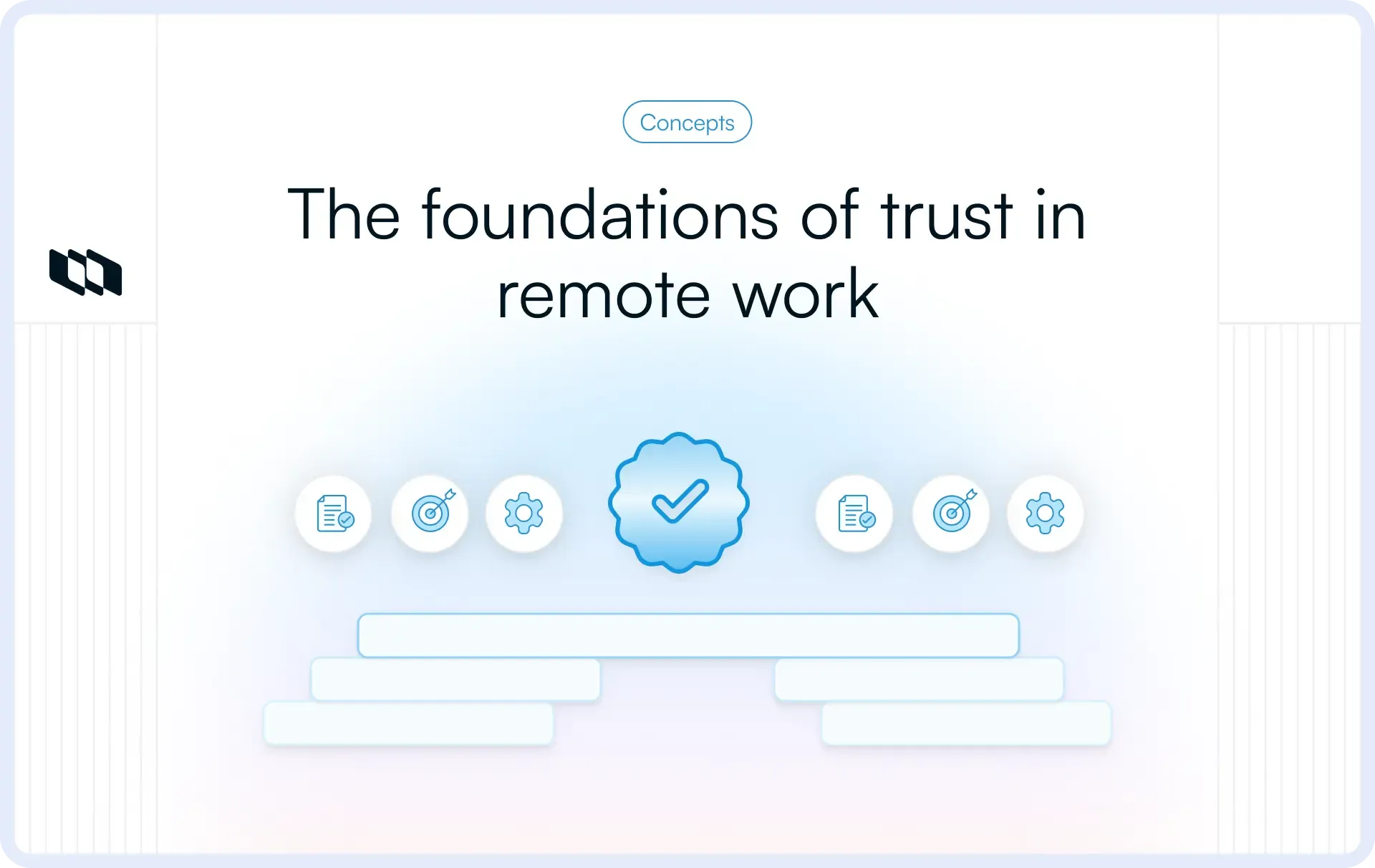
The foundations of trust in remote teams
Before adopting new rituals or trust-building activities, remote teams need a solid foundation. Without it, even the best intentions fall apart. Trust in remote teams grows when people know what is expected, where to find information, and how to communicate without friction.
These foundations reduce uncertainty. And reducing uncertainty is the fastest way to build trust in distributed teams.
1. Clear expectations and ownership
Trust starts with clarity around work. Every team member should know what success looks like for their role and their work. This includes clear outcomes, priorities, and quality standards. When expectations are vague, people fill the gaps differently, which leads to misalignment and frustration.
Ownership matters just as much. Teams need to be explicit about who owns which tasks, decisions, and deliverables. When ownership is unclear, work stalls or gets duplicated, and accountability starts to feel personal instead of structural.
Decision clarity is the final piece. Teams should know where decisions are made, who is involved, and when something is open for discussion versus already decided. This prevents second-guessing and builds confidence in how the team operates.
2. Written clarity over verbal memory
Remote teams cannot rely on hallway conversations or meeting memory. Trust in remote teams improves when information is written down and easy to find.
Key decisions, updates, and context should be documented in a shared place. This allows everyone to work from the same understanding, even across time zones. It also reduces repeated questions and follow-ups that often signal a lack of trust in the system.
A single source of truth is especially important. When work information lives in too many places, people stop trusting what they see. Clear documentation creates reliability and helps teams move forward without constant confirmation.
3. Communication norms everyone understands
Strong remote team trust depends on predictable communication.
Teams should be clear about when to use async communication and when real-time conversations are necessary. Not every issue needs a meeting, but some discussions benefit from quick alignment. Response time expectations also matter. Knowing when to expect a reply prevents unnecessary worry and over-communication. It allows people to focus on work rather than waiting.
Finally, teams need clear escalation paths. When something is blocked or unclear, everyone should know how and where to raise it. This removes hesitation and reinforces that asking for help is part of doing good work, not a sign of failure.
How to build trust in remote teams: Practices that actually work
Once the foundations are in place, trust in remote teams is built through everyday execution. Not through grand initiatives, but through small, repeatable practices that reduce uncertainty and reinforce confidence over time. The practices below focus on how work actually happens in distributed teams.
1. Start with relationships
Building trust in remote teams starts with understanding how people work, not with mandatory socializing.
Working-style introductions help teams align early. This includes preferences around communication, focus time, feedback, and decision-making. When people know how others operate, collaboration becomes smoother, and misunderstandings are reduced.
Consistent one-on-ones are another critical practice. These should focus on support, clarity, and blockers rather than status updates. Status belongs in shared updates. One-on-ones are for understanding challenges, priorities, and growth.
It also helps to acknowledge constraints outside work. Remote teams span time zones, home environments, and personal responsibilities. Recognizing these realities builds empathy and makes planning more realistic.
2. Make reliability visible
Remote team trust grows when reliability is easy to see. This starts with small commitments kept consistently. Delivering on what was promised, even in small ways, builds confidence faster than occasional big wins. Clear handoffs matter just as much. Teams should agree on what “done” means before work begins. Ambiguity around completion leads to rework and frustration, which quietly erodes trust.
Predictable delivery rhythms tie everything together. Regular planning, updates, and reviews create a sense of momentum. When teams know when and how progress will be shared, they rely less on constant follow-ups.
3. Replace micromanagement with accountability
Micromanagement is often a symptom of low trust, not its solution. Instead of tracking activity, effective remote team management focuses on outcomes. Clear goals, visible progress, and defined ownership provide reassurance without constant oversight.
Visibility into work should come from shared systems, not personal check-ins. When progress is transparent, managers do not need to ask for updates, and team members do not feel watched.
Trusting the process is key. When teams agree on how work flows and how success is measured, leaders can step back without losing control. This balance is essential for building trust in distributed teams at scale.
4. Build psychological safety deliberately
Psychological safety does not emerge on its own in remote teams. It needs to be designed and reinforced. Teams should make it explicit that asking basic questions is encouraged. Many remote failures happen because people hesitate to clarify assumptions early.
Early risk-sharing should be rewarded, not penalized. When issues are raised early, teams have more options. When they are raised late, trust is already damaged.
Leadership behavior sets the tone. Leaders who admit mistakes, ask for feedback, and remain open to disagreement signal that honesty is valued over perfection. This creates space for healthier collaboration.
5. Use recognition to reinforce trust
Recognition is not just about morale. It is a trust-building mechanism. Acknowledging contributions publicly shows that work is seen and valued, even when it happens asynchronously. This visibility matters in remote teams.
Calling out what went well and why reinforces good practices and sets clear examples for others. Celebrating follow-through, not just large outcomes, reinforces reliability. It signals that consistency and ownership are as important as major wins.
6. Keep connection lightweight but consistent
Human connection still matters in remote teams, but it should not feel forced. Optional social rituals give people space to connect without pressure. Informal check-ins create moments of context that formal updates cannot capture.
The key is consistency over intensity. Small, regular moments of connection build familiarity over time. When combined with strong work systems, they support trust without distracting from execution.
Trust-building routines that remote teams can run weekly
Trust in remote teams becomes sustainable when it is built into the weekly rhythm of work. Not as a separate initiative, but as part of how teams plan, communicate, and reflect.
These routines are simple by design. Their value comes from consistency.
1. Async weekly updates for shared clarity
A short, structured weekly update helps everyone stay aligned without adding meetings. These updates should clearly cover priorities for the week, progress made, and any risks or blockers.
When updates are predictable and visible, teams rely less on follow-ups. Managers gain confidence that work is on track, and team members know their efforts are seen. This reduces the need for constant checking and strengthens trust within the remote team.
2. Regular one-on-ones with a clear purpose
Weekly or biweekly one-on-ones work best when they follow a simple structure. The focus should be on support, clarity, and growth, not on repeating status that already exists elsewhere.
These conversations give space to surface concerns early, align on priorities, and remove blockers. Over time, they become a safe channel for honest communication, which is critical for building trust in remote teams.
3. A recurring reflection on friction
Remote teams benefit from regularly reflecting on what is slowing them down. This can be a short written prompt or a lightweight discussion that asks what felt unclear, blocked, or frustrating during the week. Addressing friction openly prevents small issues from turning into larger trust problems. It also signals that feedback leads to action, not defensiveness.
4. A shared moment of recognition
Ending the week with a moment of recognition reinforces positive behavior. This does not need to be formal or time-consuming. A simple callout for follow-through, collaboration, or initiative is enough.
Consistent recognition builds confidence and reinforces reliability. Over time, these small moments contribute to stronger trust in distributed teams by making good work visible and appreciated.
Common mistakes that quietly destroy trust in remote teams
Bad intentions do not cause most breakdowns in trust within remote teams. They come from patterns that seem helpful in the moment but create long-term damage.
Recognizing these mistakes early helps teams protect trust before it erodes.
1. Equating visibility with productivity
When leaders assume that visible activity equals progress, trust starts to suffer. Frequent check-ins, constant pings, and expectations to stay “online” signal doubt rather than support.
This mindset pushes people to optimize for the appearance of being busy rather than delivering outcomes. Over time, it weakens trust in remote teams and encourages defensive behavior.
2. Moving important decisions to private DMs
Private messages can feel faster, but they remove shared context. When key decisions happen in DMs, others are left guessing about the why and the next steps. This creates confusion and follow-up work. It also reduces confidence in where decisions live, which is critical for building trust in distributed teams.
3. Overloading calendars instead of improving clarity
Meetings are often used to compensate for unclear goals or ownership. In remote teams, this quickly leads to calendar overload without solving the root problem. More meetings do not automatically create alignment. Clear priorities, written context, and visible ownership are far more effective at building trust.
4. Focusing on team bonding while ignoring work friction
Team bonding activities can be valuable, but they cannot replace operational clarity. When work friction is ignored, no amount of social interaction will fix trust issues. Trust grows when teams can rely on each other during execution, not just when they interact socially.
5. Inconsistent leadership behavior
Trust in remote teams is highly sensitive to leadership consistency. When expectations, decisions, or responses change unpredictably, people become cautious. Consistent behavior builds confidence. Inconsistency forces people to second-guess, which slowly erodes trust even when intentions are good.
How to tell if trust is improving in your remote team
Trust can feel intangible, but its impact on how remote teams work is visible. As trust improves, teams rely less on control and more on shared understanding.
These signals help validate whether trust in remote teams is actually growing.
1. Fewer escalations caused by confusion
When trust improves, fewer issues escalate simply because something was unclear. Teams align earlier, clarify assumptions, and resolve questions before they become problems. Escalations shift from reactive firefighting to thoughtful decision-making.
2. Smoother handoffs and less rework
Strong trust in distributed teams shows up in cleaner handoffs. Work moves between people and functions with fewer gaps, fewer surprises, and less rework. Clear ownership and reliable follow-through reduce the need to revisit completed work.
3. More questions raised early
As psychological safety increases, people speak up sooner. Questions are asked when something feels unclear, not after a deadline is missed. Early questions are a sign of engagement and ownership, not weakness. Teams that trust each other treat each other that way.
4. Healthy disagreement without defensiveness
Trust allows teams to disagree productively. Different viewpoints can be shared without turning discussions into personal conflicts. When debate stays focused on the work rather than the people, it indicates a strong foundation of trust.
5. Less need for supervision over time
One of the clearest signals of trust is reduced dependence on oversight. Managers feel comfortable stepping back because systems provide visibility. Teams take ownership of progress and outcomes. This shift from supervision to autonomy is a strong indicator that trust within remote teams is improving.
Conclusion
Trust in remote teams is not a byproduct of location or time spent together. It is the result of consistent behavior, clear systems, and predictable ways of working.
When expectations are clear, ownership is visible, and communication is reliable, teams do not need constant monitoring. They operate with confidence. Reliability builds momentum. Psychological safety allows issues to surface early, when they are easier to solve. Remote teams do not need more control to function well. They need better systems that replace uncertainty with clarity and replace surveillance with accountability.
The most effective way to build trust in remote teams is to start small. Introduce a few habits that improve visibility and communication, keep them consistent, and allow trust to compound over time.
Frequently asked questions
Q1. How to build trust with a remote team?
To build trust with a remote team, focus on clarity, consistency, and follow-through. Set clear expectations, make ownership visible, and document decisions so everyone works from the same context. Replace constant check-ins with shared visibility into progress, and create space for questions and early risk-sharing. Trust grows when teams feel confident about how work moves forward without being watched.
Q2. What are the 5 C’s of building trust?
The five C’s of building trust in teams are commonly understood as:
- Clarity around goals, roles, and decisions
- Consistency in behavior and communication
- Commitment to follow through on promises
- Competence in delivering quality work
- Care for people’s time, input, and constraints
In remote teams, clarity and consistency tend to matter the most because they reduce uncertainty.
Q3. How do we develop trust on teams?
Trust develops when teams repeatedly experience reliable outcomes and respectful interactions. This means doing what was agreed, raising issues early, and responding to feedback constructively. Over time, these repeated behaviors create confidence in both the work and the people behind it.
Q4. How to build relationships with remote teams?
Building relationships in remote teams starts with understanding how people work. Use working-style introductions, regular one-on-ones, and lightweight check-ins to create context. Keep social interactions optional and consistent, and avoid forcing connections. Strong relationships grow naturally when teams collaborate effectively and feel supported.
Q5. What are the 3 C’s of trust?
The three C’s of trust are often described as:
- Competence – the ability to do the work well
- Consistency – predictable and reliable behavior
- Communication – openness, clarity, and honesty
In distributed teams, consistent communication and visible competence are especially important for maintaining trust over time.
Recommended for you


 Download for Mac
 Download for Android