Agile versus Lean project management: Key Comparisons
Agile and Lean project management methodologies are often compared for their focus on flexibility, efficiency, and value delivery, but they stem from different origins and emphasize distinct principles.
Agile and Lean project management methodologies are often compared for their focus on flexibility, efficiency, and value delivery, but they stem from different origins and emphasize distinct principles.
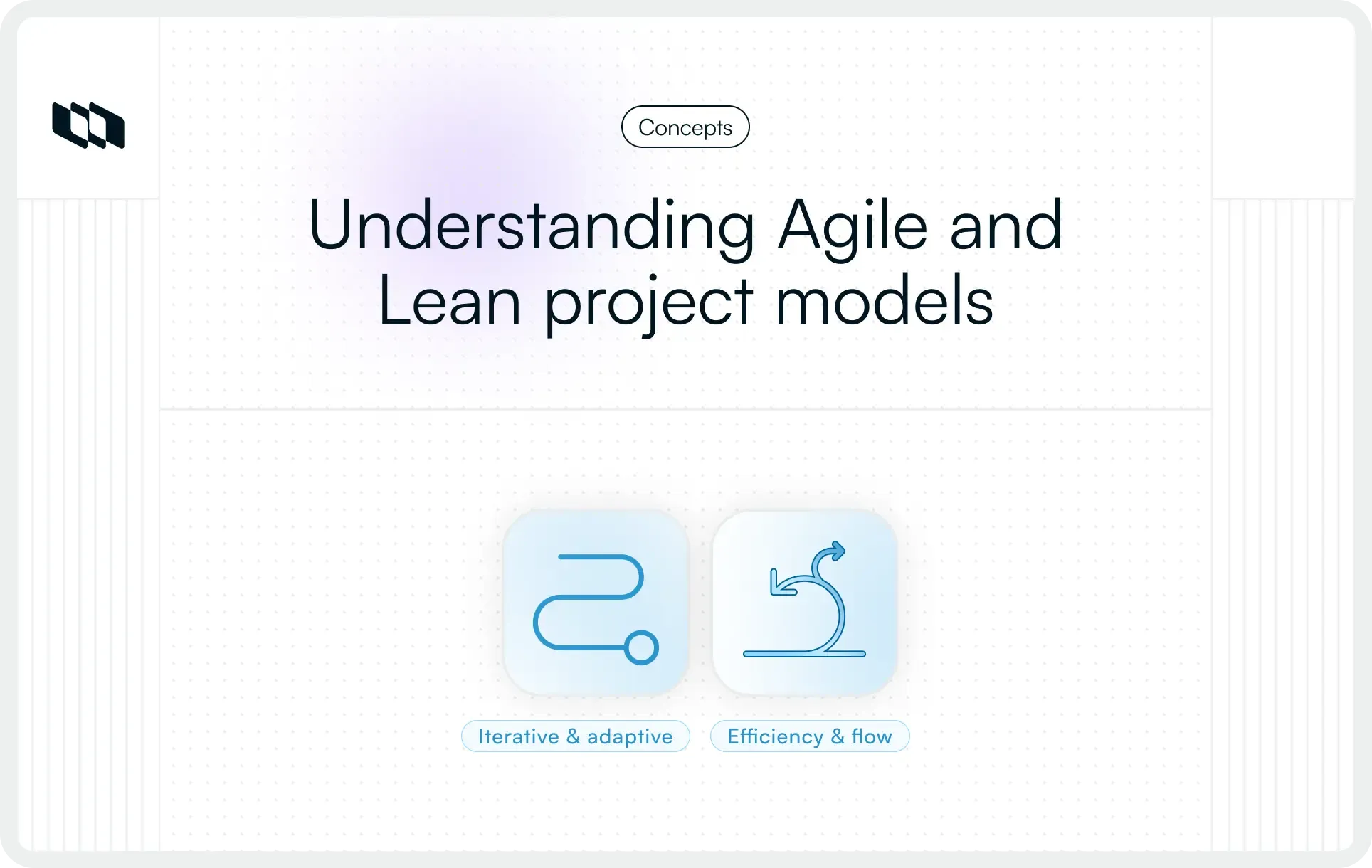
Agile versus Lean project management: Key Differences
Agile and Lean project management methodologies are often compared due to their focus on flexibility, efficiency, and value delivery. However, they stem from different origins and emphasize distinct principles. Here are the key differences between Agile and Lean project management:
1. Origin and focus - Agile: Agile originated in the software development industry with the Agile Manifesto, focusing on delivering working software in small, iterative cycles. Its primary goal is to be flexible and responsive to changing customer requirements, ensuring that the product evolves based on continuous feedback. Agile emphasizes adaptability, collaboration, and delivering customer value in frequent iterations.
- **Lean:** Lean, on the other hand, originated from manufacturing, particularly the Toyota Production System, and focuses on reducing waste (non-value-adding activities) to optimize efficiency. The core idea of Lean is maximizing value by eliminating waste, improving workflow, and continuously refining processes to deliver the product more efficiently.
2. Process approach - Agile: Agile follows an iterative approach, meaning that project development is broken down into small, manageable increments (often called sprints or iterations). These iterations last for a set period (usually 1–4 weeks), and at the end of each sprint, a potentially shippable product increment is delivered, allowing for quick feedback and adaptations.
- **Lean:** Lean uses a **continuous flow** approach where work is delivered in a streamlined manner, ensuring that only necessary tasks are executed and that they are completed as efficiently as possible. Lean focuses on creating a smooth, uninterrupted workflow, with an emphasis on delivering the entire project in the most efficient manner by eliminating waste and continuously improving processes.
3. Focus on waste vs. adaptability - Agile: Agile is primarily concerned with adaptability to change. It assumes that requirements will evolve over time and promotes flexibility in responding to new insights or customer needs. Agile welcomes changing requirements, even late in development, allowing for constant refinement of the product.
- **Lean:** Lean focuses heavily on the **elimination of waste** (known as "muda") in all forms—such as excess inventory, overproduction, waiting times, or unnecessary processes. The goal is to improve efficiency by reducing anything that does not add value to the customer. Lean prioritizes streamlining processes and reducing waste over responding to frequent requirement changes.
4. Team structure and collaboration - Agile: Agile promotes cross-functional teams that work closely together throughout the project lifecycle. Team members collaborate extensively during each iteration, with roles like Scrum Masters, Product Owners, and developers working together in self-organizing teams. Agile emphasizes close collaboration with customers, including regular reviews and feedback loops to ensure the project stays aligned with customer needs.
- **Lean:** Lean also encourages **collaborative teams**, but its focus is more on efficiency, workflow optimization, and continuous improvement. While cross-functional teams are valued in Lean, there is a stronger emphasis on process improvement and minimizing inefficiencies throughout the team’s operations. Lean teams work to improve processes, remove bottlenecks, and reduce unnecessary work to improve overall performance.
5. Customer involvement - Agile: Agile methodologies involve the customer extensively throughout the project, with feedback loops built into each iteration. Regular meetings such as sprint reviews or demos allow customers to review the product incrementally and provide feedback, ensuring that changes are incorporated in future iterations.
- **Lean:** Lean also values customer feedback but does not involve the customer as frequently as Agile. The primary focus in Lean is on delivering value by improving internal processes and eliminating waste, with customer needs defined upfront. While customer satisfaction is critical, the involvement is more in defining the value at the start rather than being constantly engaged throughout.
6. Time management and delivery - Agile: Agile breaks the project into time-boxed iterations, with each sprint having a fixed timeline. The goal is to deliver working increments at the end of each sprint, which keeps the project moving forward in short, predictable cycles.
- **Lean:** Lean does not typically use time-boxed iterations. Instead, it focuses on creating a continuous flow of work, ensuring that processes are optimized to deliver results as efficiently as possible. Lean strives to eliminate bottlenecks and reduce delays, delivering the project in the most efficient manner without necessarily adhering to fixed time periods.
7. Documentation and planning
- **Agile:** Agile prefers minimal documentation and values working software over comprehensive documentation. The emphasis is on flexible, evolving plans that can change based on new information or feedback. Planning is done at the beginning of each iteration, allowing for regular adjustments as the project evolves.
- Lean: Lean promotes just-in-time documentation and planning, ensuring that only the necessary amount of documentation is produced to keep the project moving efficiently. While Lean also favors minimal documentation, it focuses on efficiency and ensuring that documentation does not become a source of waste.
8. Continuous improvement and retrospectives
- **Agile:** Agile teams conduct **retrospectives** at the end of each sprint to reflect on what went well and what can be improved. These meetings allow the team to make quick adjustments to improve performance in the next iteration.
- Lean: Lean focuses on continuous improvement (Kaizen) throughout the entire project lifecycle. Every team member is encouraged to look for ways to improve processes and eliminate waste, with a strong emphasis on small, incremental improvements over time.
9. Work prioritization
- **Agile:** Agile teams use techniques like **backlog prioritization** and sprint planning to prioritize work that delivers the most value to the customer in the short term. Prioritization is frequently revisited at the beginning of each sprint, allowing for dynamic adjustments based on evolving needs.
- Lean: Lean focuses on flow optimization, ensuring that tasks are completed in the most efficient order based on the value stream. The focus is not just on short-term gains but on overall efficiency and reducing delays or interruptions to keep work moving smoothly.
10. Industry application
- **Agile:** Agile is predominantly used in **software development**, though it has expanded into other industries like marketing, product development, and IT. Agile is ideal for projects where flexibility, customer involvement, and frequent changes are required.
- Lean: Lean is widely used in manufacturing but has been adapted for use in other industries like healthcare, logistics, and service-based sectors. Lean is ideal for environments where efficiency, cost reduction, and waste elimination are crucial, and where requirements are relatively stable.
In summary, Agile and Lean both aim to improve project delivery, but Agile focuses on flexibility and adaptability to changing requirements, while Lean emphasizes efficiency, waste reduction, and optimizing workflow processes. Both can be valuable depending on the project's needs and the industry context.
Agile and Lean project management: Similarities
Agile and Lean project management methodologies share several similarities, particularly in their focus on improving efficiency, delivering value, and fostering a collaborative work environment. Despite their different origins and emphasis, Agile and Lean align in many areas of project management. Below are the key similarities between Agile and Lean project management:
1. Customer-centric focus
While Agile emphasizes customer collaboration and continuous feedback throughout the project, Lean focuses on identifying and delivering value by eliminating waste in the processes. In both methodologies, customer satisfaction is a central goal, and teams are encouraged to align their work with customer needs and expectations.
2. Focus on efficiency
Agile and Lean share a commitment to improving efficiency in project execution. Agile achieves this through iterative cycles, allowing teams to deliver small increments of the project in a fast and efficient manner. Lean focuses on optimizing workflows by eliminating waste, improving flow, and ensuring that resources are used effectively. Both methodologies aim to streamline the process to enhance productivity and reduce unnecessary work.
3. Continuous improvement
Both methodologies emphasize **continuous improvement** as a core principle. In Agile, this is done through regular retrospectives at the end of each sprint, where teams reflect on their processes and make adjustments for future iterations. In Lean, continuous improvement, known as **Kaizen**, encourages teams to regularly assess workflows, identify inefficiencies, and make incremental changes to improve processes. Both approaches cultivate a mindset of learning and adapting throughout the project lifecycle.
4. Collaboration and team empowerment
Agile and Lean both value collaboration and teamwork. In Agile, cross-functional teams work closely together throughout the project, with frequent communication and collaboration between developers, testers, and other stakeholders. Lean also encourages a collaborative work environment where all team members, regardless of their role, are empowered to contribute to the improvement of processes and the overall success of the project. Both methodologies recognize that strong collaboration and empowerment lead to better problem-solving and higher-quality outcomes.
5. Elimination of waste
Though Lean is more explicitly focused on eliminating waste (non-value-adding activities), Agile also seeks to avoid unnecessary work. Agile practices such as prioritizing high-value features and minimizing extensive documentation help avoid waste. Similarly, Lean focuses on reducing inefficiencies like overproduction, waiting, and redundant processes. Both methodologies aim to eliminate activities that don’t directly contribute to delivering value to the customer.
6. Iterative and incremental delivery
While Agile follows a formal iterative process through sprints, Lean also supports delivering work in smaller increments, especially through the concept of **just-in-time** production. Both methodologies emphasize breaking down the project into smaller, manageable pieces, allowing teams to focus on delivering value continuously. Agile delivers working software at the end of each sprint, while Lean ensures that work is completed only when needed, avoiding overproduction and optimizing workflow.
7. Adaptability to change
Agile and Lean are both adaptable methodologies that respond to changing project needs. Agile embraces change by incorporating customer feedback after each iteration, making it easy to pivot based on new information. Lean, while more focused on efficiency and reducing waste, also encourages flexibility by continuously improving processes and adjusting workflows as needed to meet customer demands more effectively. Both methodologies are designed to be responsive and flexible, ensuring that project goals align with evolving customer or market needs.
8. Transparency and visualization of work
Both Agile and Lean emphasize transparency and the clear visualization of work. In Agile, teams use tools like Kanban boards, Scrum boards, or burndown charts to track progress and ensure that tasks are visible to all team members. Lean similarly relies on visual management tools, such as value stream mapping or Kanban boards, to track the flow of work, identify bottlenecks, and highlight areas for improvement. In both methodologies, transparency helps teams monitor progress, identify issues early, and ensure everyone stays aligned on project goals.
9. Short feedback loops
Agile and Lean both rely on short feedback loops to ensure continuous improvement and value delivery. In Agile, feedback comes in the form of customer reviews after each sprint, allowing for quick iterations. Lean achieves short feedback loops through continuous process monitoring, focusing on improving workflows and responding to inefficiencies in real-time. These frequent feedback mechanisms help both methodologies maintain a focus on delivering quality while adapting to any necessary changes.
10. Respect for people
Both methodologies emphasize the importance of respecting and empowering individuals within the team. Agile promotes self-organizing teams, where members are trusted to make decisions and work collaboratively. Lean, rooted in principles of respect for people, encourages a culture where team members are involved in decision-making and are empowered to identify and solve problems. Both Agile and Lean recognize that fostering an environment of respect and collaboration leads to better outcomes and higher levels of team engagement.
11. Minimizing risk
Both Agile and Lean help minimize risk in project management by breaking work into smaller increments and maintaining a continuous focus on improvement. Agile reduces risk by delivering working software in short sprints, allowing teams to address issues as they arise and make adjustments based on customer feedback. Lean mitigates risk by identifying and eliminating waste early, ensuring that resources are used efficiently and that processes are continuously refined to prevent costly delays or errors.
Recommended for you


 Download for Mac
 Download for Android