What is Work Breakdown Structure (WBS)? Definition, examples and best practices
A work breakdown structure (WBS) is defined as a hierarchical decomposition of a project into smaller, manageable components.
A work breakdown structure (WBS) is defined as a hierarchical decomposition of a project into smaller, manageable components.
What is a work breakdown structure (WBS)?
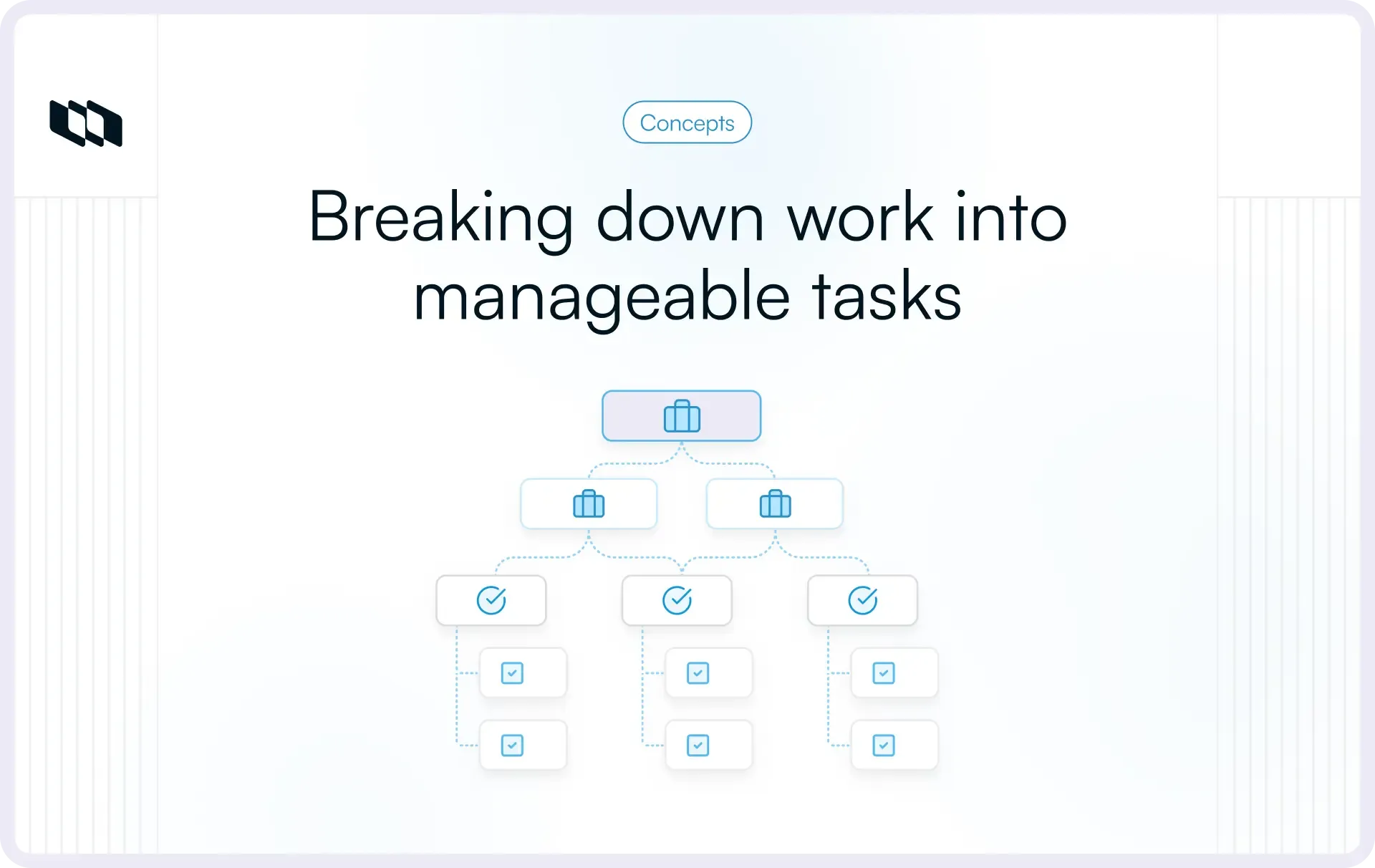
A work breakdown structure (WBS) is defined as a hierarchical decomposition of a project into smaller, manageable components. It organizes the project’s total scope into deliverables and work packages, making complex projects more understandable.
Each level of the WBS provides increasing detail, from broader project objectives to specific tasks or activities. It serves as a foundation for planning, scheduling, resource allocation, and tracking progress, ensuring that nothing important is overlooked.
The WBS is designed to clarify the project’s scope and provide a visual framework for project execution. At the highest level, it typically includes major deliverables or phases, which are broken down into sub-deliverables, and finally into work packages. These work packages are small enough to be assigned to individuals or teams, making it easier to monitor and control their completion. By defining clear deliverables, the WBS helps stakeholders understand the project structure and their responsibilities.
One of the key benefits of a WBS is its role in improving communication and collaboration among team members. By providing a shared understanding of the project scope and deliverables, it ensures that everyone is aligned with project goals. Additionally, the WBS facilitates accurate cost estimation and risk assessment, as it allows project managers to analyze specific components of the project rather than estimating at a higher, less accurate level.
For example, in a project to build a house, the WBS might start with major deliverables like design, construction, and finishing. Under construction, sub-deliverables might include foundation, framing, and roofing. Each of these could be further divided into specific tasks, such as digging and pouring concrete for the foundation or installing trusses for the roof. This breakdown not only helps in resource planning but also ensures accountability for each part of the project, ultimately improving project management efficiency.
Key components of a WBS
A work breakdown structure (WBS) consists of several key components that help define, organize, and manage the project scope. These components ensure that the WBS is comprehensive and provides a clear framework for project planning and execution.
1. Project objective
The project objective provides a summary of what the project aims to achieve and serves as the foundation for breaking down the work into smaller, manageable pieces.
2. Major deliverables
Below the project objective are the major deliverables, which are the key outcomes or phases required to achieve the project’s goal. These could include categories like design, construction, or testing, depending on the project type. They define the broad areas of work that need to be completed.
3. Sub-deliverables
Each major deliverable is further broken down into sub-deliverables, which provide more detail about specific outputs or results. Sub-deliverables clarify the intermediate steps or components needed to complete the major deliverables, ensuring that every aspect of the project is accounted for.
4. Work packages
At the lowest level of the WBS are work packages, which are actionable tasks or activities that can be assigned to individuals or teams. Work packages include specific information about the effort, resources, and time required, making them crucial for tracking progress and managing accountability.
Examples of work breakdown structure (WBS)
Examples of a work breakdown structure (WBS) vary depending on the type of project and industry but always aim to decompose the project into smaller, manageable components. Here are some examples:
1. Software development project
For a software application development project, the WBS could include:
- Level 1: Software application
- Level 2: Requirements analysis
- User interviews
- Documentation of user requirements
- Level 2: Development
- Front-end development
- Back-end development
- Level 2: Testing
- Unit testing
- Integration testing
2. Event planning project
For a corporate event, the WBS may be structured as:
- Level 1: Corporate event
- Level 2: Venue management
- Venue booking
- Seating arrangements
- Level 2: Catering
- Menu selection
- Food preparation
- Level 2: Entertainment
- Speaker arrangement
- Audio-visual setup
3. Marketing campaign project
For a digital marketing campaign, the WBS might include:
- Level 1: Marketing campaign
- Level 2: Content creation
- Blog posts
- Video production
- Level 2: Social media management
- Scheduling posts
- Monitoring engagement
- Level 2: Performance analysis
- Metrics tracking
- Reporting results
Benefits of WBS
A work breakdown structure (WBS) provides numerous benefits in project management by offering a clear and structured approach to organizing and managing work. Here are some key advantages:
1. Improved clarity and scope definition
A WBS breaks down a project into manageable components, ensuring that every part of the project is clearly defined. This prevents scope creep by explicitly identifying deliverables and tasks, allowing all stakeholders to have a shared understanding of the project’s objectives. With each component detailed, it becomes easier to ensure nothing important is overlooked.
2. Enhanced planning and scheduling
By decomposing a project into smaller tasks, the WBS allows for better planning and sequencing of activities. Project managers can identify dependencies, allocate resources effectively, and establish realistic timelines. It forms the foundation for creating schedules and timelines, such as Gantt charts or network diagrams, making the overall plan more actionable.
3. Improved resource allocation and accountability
The detailed structure of a WBS ensures that work packages can be assigned to specific individuals or teams, promoting accountability. This clarity in task ownership helps in resource allocation, as project managers can assess the personnel, tools, and time required for each task. This also facilitates effective monitoring and control of project progress.
4. Facilitates cost estimation and risk management
The WBS enables accurate cost estimation by detailing the individual components of the project. Additionally, by breaking down tasks, the WBS helps in identifying potential risks associated with specific activities, making it easier to develop mitigation plans.
5. Improved communication and collaboration
A WBS serves as a communication tool, providing a visual representation of the project’s structure. By aligning everyone’s expectations and responsibilities, it fosters collaboration and reduces misunderstandings.
6. Simplifies progress tracking and control
Since the WBS organizes tasks hierarchically, it allows project managers to track progress at various levels. By monitoring the completion of work packages and deliverables, they can assess whether the project is on schedule and within budget. This simplifies reporting and ensures timely adjustments if deviations occur.
How to create a Work Breakdown Structure: 6 Key steps
Creating a work breakdown structure (WBS) is a fundamental step in project planning and management. A WBS divides a project into smaller, manageable components, ensuring clarity and facilitating effective resource allocation and progress tracking. Here are the key steps to create a WBS:
1. Define the project scope and objectives
Begin by clearly understanding and documenting the project's scope, goals, and deliverables. This step ensures alignment among stakeholders on what needs to be accomplished and sets boundaries for the project. Use tools like a project charter or scope statement to guide this process.
- Identify the project's primary deliverables or outcomes.
- Highlight exclusions, assumptions, and constraints to ensure a focused WBS.
2. Break the project into major deliverables or phases
Divide the overall project into large, logical segments that represent significant deliverables or project phases. These segments should align with the project's milestones or objectives.
- Use project documentation and stakeholder input to identify these categories.
- For example, in a software development project, major deliverables might include "requirements gathering," "design," "development," and "testing."
3. Subdivide deliverables into smaller components
Within each major deliverable, break down tasks into smaller, actionable work packages. A work package is the smallest unit in the WBS and defines tasks that are manageable and can be assigned to a team or individual.
- Aim for clarity and detail without making tasks too granular.
- For example, under "development," create work packages such as "frontend coding," "backend coding," and "API integration."
4. Organize tasks hierarchically
Arrange the tasks in a hierarchical structure that visually represents the relationships between levels. The top level is the project goal, followed by major deliverables, sub-deliverables, and work packages.
- Use a tree diagram, numbered list, or software like Microsoft Project or Trello to structure the WBS.
- Ensure every element has a unique identifier for easy reference and tracking.
5. Verify completeness and correctness
Review the WBS with stakeholders and team members to ensure it includes all required tasks and aligns with the project’s scope. Ensure that there is no overlap between work packages and that each deliverable has a clear owner.
- Check against the scope statement to confirm nothing is missing.
- Incorporate feedback to refine the structure as needed.
6. Use the WBS to guide project management
Once the WBS is finalized, use it to plan resources, assign tasks, estimate costs, and track progress. A well-constructed WBS serves as a foundation for scheduling and risk management throughout the project lifecycle.
Best practices to follow while planning and implementing WBS
Planning and implementing a work breakdown structure (WBS) effectively ensures project success by organizing tasks and deliverables into manageable components. Following best practices helps avoid common pitfalls and enhances clarity, accuracy, and usability. Below are the key best practices:
1. Start with a clear project scope
A well-defined project scope ensures the WBS accurately reflects the intended deliverables, preventing scope creep and misaligned efforts. Begin by using the project’s scope statement or charter as a foundation, ensuring all deliverables, constraints, and assumptions are included. Make sure to involve stakeholders early to confirm understanding and expectations.
2. Focus on deliverables, not tasks
Structuring the WBS around deliverables ensures alignment with project outcomes and maintains a results-oriented focus. Define each element as a tangible output rather than a task; for example, use "functional software module" instead of "writing code." Keep deliverables realistic by sticking to the 80-hour rule, it’s a great way to make big goals feel manageable.
3. Maintain a consistent level of detail
Consistency in detailing each WBS element ensures clarity and prevents gaps or overlaps in project work. Break down deliverables to a level where they are actionable but not overly granular. Think of it as finding the sweet spot—too little detail creates confusion, while too much can overwhelm and slow progress.
4. Use a hierarchical structure for clarity
A WBS should visually represent the project's scope in a structured hierarchy to show relationships between components. Start at the top with the project goal, then work your way down to phases, deliverables, and work packages. This structure isn’t just functional—it’s like giving your project a clear map that everyone can follow at a glance.
5. Engage stakeholders throughout the process
Involving stakeholders ensures the WBS aligns with expectations and captures all critical deliverables. Host collaborative sessions where everyone can review and contribute to the structure, ensuring nothing gets missed. Plus, this collaboration isn’t just helpful—it builds a sense of ownership that pays off later when challenges arise.
6. Review and refine for accuracy
A WBS isn’t set in stone—it’s a living document that should evolve as the project progresses. Regularly review it to ensure it reflects the current scope and correct any inconsistencies. Think of it like maintaining a car—regular check-ups keep everything running smoothly and prevent surprises down the road.
7. Assign unique identifiers to every work package
Every work package should have a unique code or number to simplify tracking and reporting. Use a consistent numbering system that flows naturally through the WBS hierarchy. It’s like giving every piece of your puzzle a label—makes it so much easier to spot what’s missing or out of place.
Recommended for you




 Download for Mac
 Download for Android