What is resource leveling? Definition, techniques and best practices
Introduction
Every project runs on two things: time and people. When either gets stretched thin, schedules slip, and teams burn out. Resource leveling is a project management technique that keeps both in check by redistributing work across available capacity, ensuring no team member is overloaded while keeping project timelines realistic. This post covers when teams should use it, how it actually works in practice, and the benefits that make it a non-negotiable discipline for engineering and product teams.
What is resource leveling in project management?
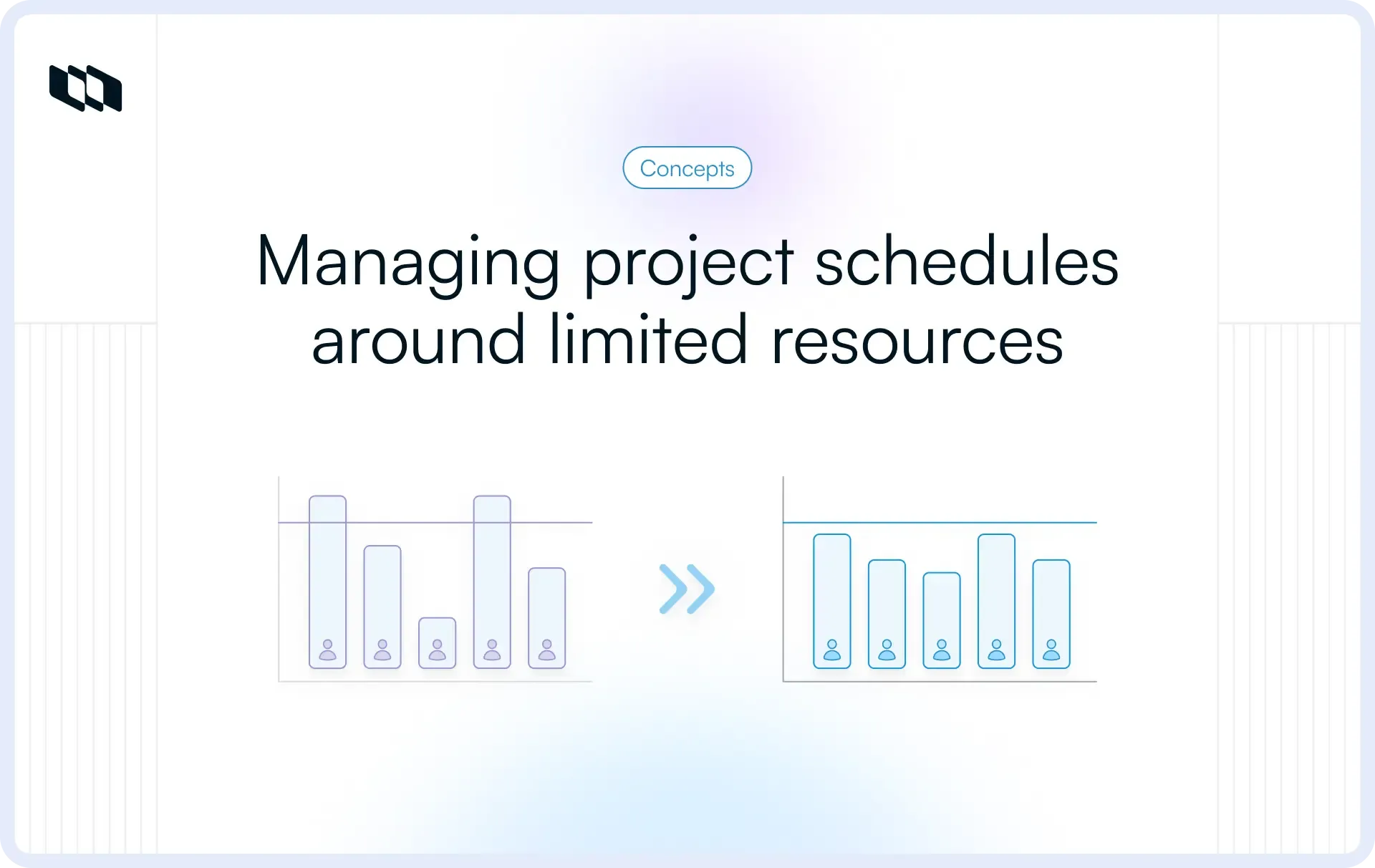
Resource leveling is a scheduling technique used to resolve resource over-allocation by adjusting task timing, sequencing, or assignments within a project plan. Instead of adding more people or unrealistically compressing timelines, it works within existing capacity constraints to redistribute work more evenly.
In practical terms, if two high-priority tasks are assigned to the same engineer in the same week, resource leveling identifies the conflict and resolves it by shifting one task forward, reassigning it to another engineer, or resequencing dependencies to keep the workload manageable.
What resource leveling tries to achieve
The primary goal of resource leveling is to balance planned work with available team capacity so schedules reflect how projects can actually progress in practice. This helps teams coordinate shared resources across parallel initiatives, improve workload distribution, and maintain delivery plans that remain achievable throughout the project lifecycle.
How resource leveling affects project schedules
Resource leveling can change task start dates, adjust activity sequencing, or extend overall timelines when resource availability creates scheduling constraints. These adjustments help teams align dependencies with actual execution conditions, improving schedule reliability and supporting coordinated progress across interconnected tasks.
Why resource leveling matters in project management
Project schedules often depend on shared engineers, designers, and specialists whose availability shapes delivery outcomes across multiple workstreams. Resource leveling helps teams align execution plans with real capacity so timelines reflect how work actually progresses across dependencies, priorities, and cross-functional coordination.
1. Prevents resource overloading
Resource leveling reduces instances in which the same individual supports multiple parallel tasks within the same time window. By adjusting sequencing and ownership early, teams create balanced workloads across projects and maintain a steady execution flow rather than fragmented multitasking amid competing priorities.
2. Improves schedule reliability
When project timelines reflect actual resource availability, milestone planning becomes more stable, and coordination across teams becomes easier to manage. Resource leveling techniques help align task timing with realistic capacity, strengthening confidence in delivery forecasts in complex project environments.
3. Supports sustainable team workloads
Balanced allocation of effort across tasks helps teams maintain consistent delivery quality throughout the project lifecycle. Resource leveling in project management encourages a structured distribution of workload so specialists can contribute effectively without excessive context switching between overlapping responsibilities.
4. Makes trade-offs visible earlier
Resource constraints influence sequencing decisions long before delivery dates approach. Resource leveling helps teams surface these constraints during the planning stages, supporting earlier stakeholder alignment on timeline adjustments, dependency sequencing, and shared resource priorities.
When should teams use resource leveling?
Resource leveling becomes essential when project schedules depend on shared people, specialized skills, or constrained availability across parallel workstreams. Teams apply resource leveling techniques to adjust sequencing and timelines so delivery plans reflect actual execution capacity rather than optimistic assumptions.
1. When resources are overallocated
Resource leveling in project management helps resolve situations in which the same specialist is assigned to multiple overlapping tasks within the same timeframe. Adjusting task sequencing or shifting ownership allows teams to maintain steady progress while keeping workloads aligned with realistic availability.
2. When resource availability is limited
Projects often rely on a small number of engineers, designers, analysts, or shared infrastructure resources that support several initiatives simultaneously. Resource leveling helps teams reorganize schedules around these constraints so critical activities progress without creating bottlenecks across dependent workstreams.
3. When project priorities shift mid-execution
Scope updates, roadmap adjustments, or stakeholder-driven changes can quickly redistribute effort across teams and create uneven workload patterns. Resource leveling helps rebalance task timing and assignments so new priorities integrate smoothly into the existing project structure.
4. When deadlines conflict with actual team capacity
Delivery timelines sometimes assume higher availability than teams can realistically support across concurrent commitments. Resource leveling helps resolve these schedule feasibility gaps by aligning milestones with actual resource capacity and improving coordination across interconnected dependencies.
How resource leveling works
Resource leveling works by reviewing the schedule through the lens of actual capacity, then adjusting work so task timing matches the people, skills, and availability required to complete it. The goal is to create a resource schedule that supports steady execution throughout the project, rather than forcing overlapping work by the same team members.
1. Review the project schedule and dependencies
The first step is to examine the full project schedule, including task durations, sequencing, and dependencies between activities. This helps teams understand which tasks must occur in a fixed order, which tasks can be moved, and where shared resources support multiple parts of the plan. Clear visibility into dependencies is essential because resource leveling decisions affect timing across connected work.
2. Identify overloaded resources
Once the schedule is mapped, teams look for capacity conflicts across roles, individuals, or shared assets. These conflicts usually arise when a single engineer, designer, analyst, or specialist is assigned to multiple tasks within the same window. Resource leveling in project management starts with identifying these bottlenecks early so teams can address workload imbalances before they affect delivery.
3. Evaluate task flexibility and sequencing options
After identifying overloaded resources, the next step is to assess which tasks have room to move. Some activities sit on the critical path and need tighter control, while others have schedule flexibility that creates better sequencing options. This is where teams decide which work can shift without creating unnecessary delivery risk and which tasks should stay fixed.
4. Adjust task timing or assignments
Teams then rebalance the project plan by shifting start dates, resequencing tasks, splitting work into smaller phases, or reassigning activities where there is skill overlap. These resource leveling techniques help distribute workload more evenly across the timeline so project capacity supports progress in a manageable and coordinated way.
5. Reassess timeline impact after adjustments
Once the schedule is updated, teams review the broader impact on milestones, dependencies, and delivery expectations. Resource leveling often changes the timeline, yet it improves schedule realism by aligning the plan with actual resource availability. This makes project timelines more dependable and gives stakeholders a clearer view of what the team can deliver within current constraints.
Common resource leveling techniques
Teams apply resource leveling techniques to align task timing with actual availability across shared specialists, dependencies, and milestone constraints. These techniques help reshape the resource schedule so workloads stay balanced while delivery progress continues across interconnected activities.
1. Delaying task start or finish dates
Delaying task timing is one of the most widely used resource leveling techniques when flexible activities overlap with work that depends on the same people or skills. Teams shift non-critical tasks to later windows so shared resources can complete higher-priority work first, which reduces simultaneous workload pressure across the schedule.
2. Adjusting task dependencies
Task dependencies often determine how work flows across a project timeline, yet some sequencing decisions can be adjusted without affecting key milestones. Resource leveling in project management uses changes to dependencies to reorder activities so that resources support work in a more structured progression across teams and phases.
3. Reassigning work across available team members
When multiple team members share similar skills, reassigning ownership helps distribute effort more evenly across the timeline. This technique strengthens coordination across parallel workstreams and allows teams to maintain progress even when certain specialists support multiple initiatives simultaneously.
4. Splitting large tasks into smaller phases
Large tasks often create concentrated demand on specific roles during short time windows. Dividing these activities into smaller phases helps teams spread the workload over longer periods, so resources contribute consistently rather than handling multiple intensive responsibilities simultaneously.
5. Extending project timelines when capacity is fixed
Some projects depend on a limited number of specialists whose availability shapes the sequencing of deliveries across the entire schedule. Extending timelines allows teams to align execution with realistic capacity, rather than forcing compressed delivery expectations that create bottlenecks across dependent workstreams.
6. Using critical path awareness to protect delivery milestones
Critical path activities determine how quickly a project can progress toward completion, which makes them central to resource scheduling decisions. Resource leveling techniques prioritize these activities when adjusting timelines, so milestone-sensitive work continues moving forward while flexible tasks shift to support balanced execution.
7. Applying fast-tracking or crashing when timelines cannot move
Projects with fixed delivery commitments sometimes require schedule compression alongside resource leveling adjustments. Fast-tracking allows selected activities to progress in parallel, with coordination supporting the overlap, while crashing introduces additional resources to accelerate the completion of time-sensitive tasks that affect milestone readiness.
Resource leveling vs. resource smoothing
Resource leveling and resource smoothing both help teams balance workloads across a project schedule, yet they solve different planning constraints. Understanding how they differ helps teams choose the right technique when timelines, dependencies, and resource availability interact in complex delivery environments.
What is resource smoothing?
Resource smoothing is a resource scheduling technique used to balance workload distribution while keeping the project end date unchanged. Teams adjust task sequencing within available flexibility to make resource utilization more consistent across the timeline without affecting milestone commitments or delivery targets. This approach works best when deadlines remain fixed, and schedule adjustments must stay within the existing float.
Key differences between resource leveling and smoothing
The primary difference between resource leveling and resource smoothing lies in how each technique treats the project timeline. Resource leveling adjusts task timing when resource constraints affect execution capacity, potentially extending the project duration if required. Resource smoothing reorganizes work only within available scheduling flexibility so milestone dates remain stable. In practice, resource leveling focuses on aligning plans with capacity, while resource smoothing focuses on optimizing workload distribution within an existing schedule structure.
The table below captures the core distinction:
Factor | Resource leveling | Resource smoothing |
Primary goal | Align the schedule with the available resource capacity | Balance workloads within an existing schedule |
Impact on deadlines | Project timelines may shift | Project deadlines remain unchanged |
When used | Resource constraints affect execution feasibility | Deadlines remain fixed, but workloads feel uneven |
Dependency flexibility | Task sequencing can change significantly | Adjustments stay within the available float |
Critical path impact | Critical path may change after adjustments | Critical path remains stable |
Scheduling approach | Capacity-driven planning | Deadline-driven planning |
Typical use case | Shared specialists across overlapping tasks | Stable milestone commitments with uneven workloads |
When to use leveling vs. smoothing
Teams use resource leveling when resource availability shapes how work can realistically progress across dependencies and shared roles. This approach supports projects in which specialist capacity, access to equipment, or cross-team coordination affects schedule feasibility. Resource smoothing works better when delivery timelines remain fixed, and teams want to improve workload balance without shifting milestones. Selecting the right technique depends on whether resource constraints or deadline commitments carry greater priority in the project plan.
Resource leveling vs. resource allocation vs. resource loading
Resource allocation, resource loading, and resource leveling describe different stages of how teams plan and manage capacity across a project schedule. These terms often appear together in project resource management discussions, yet each supports a distinct planning decision. Understanding how they connect helps teams move from assigning work to maintaining balanced execution across timelines.
Resource allocation
Resource allocation refers to assigning people, skills, or equipment to specific tasks based on project requirements and availability. During this stage, teams decide who will complete each activity and how responsibilities will be distributed across the schedule. Clear resource allocation helps establish ownership early and ensures that critical workstreams receive appropriate support as the project progresses.
Resource loading
Resource loading measures the amount of work assigned to each resource over a defined timeframe. This helps teams understand whether workloads remain balanced or concentrated around certain roles or specialists. High resource loading often signals pressure points in the schedule where shared contributors support multiple parallel activities, and coordination becomes more complex.
Resource leveling
Resource leveling adjusts task timing, sequencing, or ownership after allocation and loading reveal workload conflicts across the schedule. This step helps resolve resource over-allocation by aligning execution plans with actual availability. Teams use resource leveling techniques to create schedules that support steady progress across dependencies while maintaining realistic delivery expectations.
The table below captures the core distinction:
Factor | Resource allocation | Resource loading | Resource leveling |
Primary purpose | Assign resources to tasks | Measure workload across resources | Adjust schedules to balance workloads |
Planning stage | Initial planning | Capacity evaluation | Schedule adjustment |
Key question answered | Who will do the work | How much work does each resource carry | How the schedule adapts to capacity |
Impact on timeline | Establishes task ownership | Reveals workload concentration | Changes task timing or sequencing |
Typical outcome | Clear responsibility structure | Visibility into utilization patterns | Realistic and balanced execution plan |
Best practices for effective resource leveling
Resource leveling becomes effective when teams treat it as an ongoing planning discipline rather than a one-time schedule adjustment. Strong capacity visibility, dependency awareness, and stakeholder alignment help teams apply resource leveling techniques consistently across changing priorities and multi-project environments.
1. Start with accurate capacity visibility
Resource leveling in project management depends on a clear understanding of who is available, when they are available, and how their time is distributed across initiatives. Teams that maintain accurate capacity visibility can adjust schedules with confidence and coordinate shared contributors across parallel workstreams more effectively.
2. Identify critical path activities early
Critical path activities determine how quickly the project progresses toward completion, which makes them central to resource scheduling decisions. Early identification of milestone-sensitive work helps teams prioritize resource support where sequencing flexibility remains limited and protects delivery stability across the timeline.
3. Monitor workload continuously across projects
Resource conflicts often develop gradually as priorities shift across teams and initiatives. Continuous workload monitoring helps teams detect capacity pressure early and apply resource leveling techniques before dependencies create scheduling bottlenecks across connected tasks.
4. Revisit schedules as priorities evolve
Project environments change as new requirements, timelines, and coordination needs emerge across stakeholders. Revisiting the resource schedule regularly helps teams maintain alignment between execution plans and actual availability throughout the project lifecycle.
5. Communicate trade-offs with stakeholders early
Resource constraints influence sequencing decisions across milestones and delivery expectations, making early communication essential to maintain alignment. Resource leveling helps teams present realistic timelines supported by capacity insights so stakeholders understand how availability shapes project progress.
How project teams can manage resource leveling more effectively
Resource leveling works best when teams manage schedules in environments where task ownership, dependencies, and priorities remain visible across the entire project lifecycle. Clear coordination structures help teams apply resource leveling techniques earlier and maintain alignment between planning decisions and execution progress across multiple workstreams.
1. Keep tasks, owners, and dependencies visible in one workspace
Resource conflicts often emerge when teams track timelines, assignments, and dependencies across disconnected tools. A shared workspace that connects tasks with ownership and sequencing relationships helps teams understand how resource availability shapes scheduling decisions across parallel initiatives.
2. Identify resource conflicts early
Capacity pressure builds gradually as specialists support multiple priorities across projects. Teams that continuously monitor workload distribution can detect over-allocation earlier and apply resource-leveling adjustments before dependencies begin to affect milestone progress.
3. Adjust priorities collaboratively across stakeholders
Resource scheduling decisions influence delivery sequencing across teams, making collaborative planning essential to maintain alignment. Structured visibility into workload changes helps stakeholders coordinate priorities and support timeline adjustments based on actual execution capacity.
4. Connect planning updates directly to execution workflows
Resource leveling becomes more effective when schedule adjustments remain connected to active work rather than existing as static planning artifacts. Teams that integrate planning updates with execution workflows maintain stronger coordination across dependencies and create timelines that reflect how work progresses in practice.
Final thoughts
Resource leveling helps teams turn project schedules into execution-ready plans that reflect actual capacity across people, skills, and dependencies. Instead of relying on ideal timelines, teams use resource leveling techniques to coordinate shared specialists, sequence work realistically, and maintain steady delivery across complex initiatives. As projects grow more cross-functional and resource constraints more directly shape planning decisions, resource leveling becomes a practical foundation for predictable timelines, balanced workloads, and stronger alignment between stakeholders and delivery teams.
Frequently asked questions
Q1. What is the meaning of resource leveling?
Resource leveling is a resource scheduling technique used to adjust task timing, sequencing, or ownership so workloads match actual resource availability across a project timeline. Teams apply resource leveling in project management when shared specialists support multiple activities at the same time, and the schedule requires restructuring to maintain realistic delivery expectations.
Q2. What is the difference between resource leveling and smoothing?
Resource leveling adjusts task schedules when resource constraints affect execution capacity, and project timelines may shift as a result. Resource smoothing balances workloads within existing scheduling flexibility to keep milestone dates stable. Teams choose resource leveling when availability shapes feasibility and resource smoothing when deadlines remain fixed.
Q3. What is the difference between resource leveling and crashing?
Resource leveling reorganizes task sequencing or timing to align work with available capacity across the schedule. Crashing adds additional resources to accelerate the completion of milestone-sensitive activities when delivery timelines require faster progress. Resource leveling focuses on balancing workloads, while crashing focuses on compressing timelines.
Q4. What is an example of resource leveling in project management?
A project schedule may assign the same backend engineer to two parallel implementation tasks during the same week. Resource leveling shifts one task to a later window or redistributes responsibilities across the team so both activities progress in a coordinated sequence that reflects actual availability.
Q5. How to use resource leveling?
Teams use resource leveling by reviewing dependencies, identifying overloaded roles, evaluating scheduling flexibility, adjusting task timing or ownership, and reassessing timeline impact after changes. This process helps align project execution with real capacity across shared contributors and improves coordination across connected workstreams.
Recommended for you



 Download for Mac
 Download for Android