What are project deliverables? Definition, types, and how to manage them
Introduction
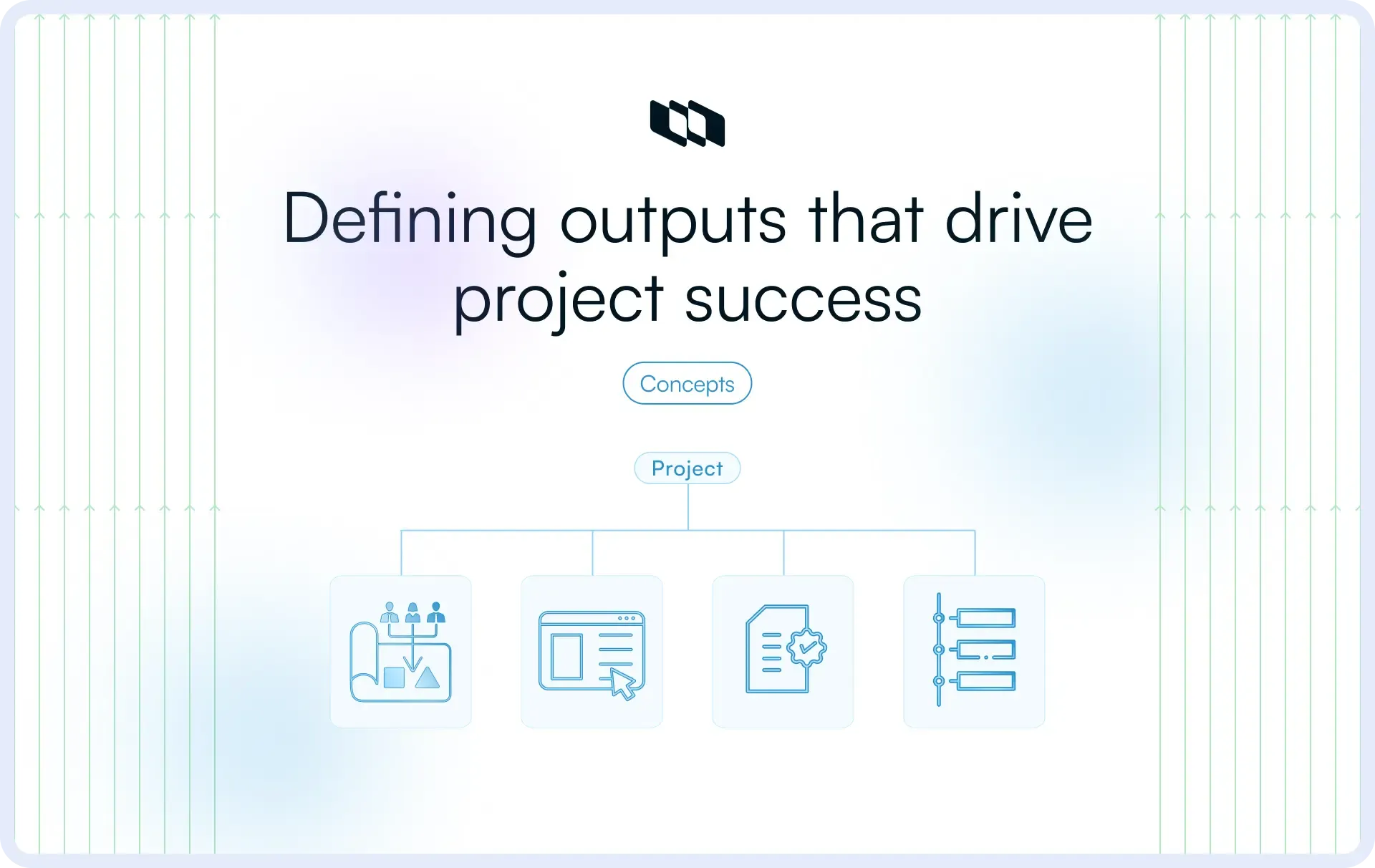
Every project produces outcomes that signal progress and completion. These outcomes are called project deliverables, and they define what teams must create at each stage of execution. Clear deliverables help teams align expectations, track progress across milestones, and evaluate whether project objectives are being met. Without clearly defined deliverables, teams struggle to measure results or communicate status effectively. This guide explains what project deliverables are, the main types, and examples across software, marketing, and operations work.
What are project deliverables?
Project deliverables are the specific outputs, results, or outcomes that a project produces across its lifecycle. They represent the tangible, measurable work a team commits to delivering as part of project execution and to meet stakeholder expectations.
In project management, each deliverable reflects progress toward defined project objectives and signals the completion of meaningful stages of work.
Project deliverables can include:
- Physical outputs such as hardware components or printed materials
- Digital assets such as software features, dashboards, or design files
- Documents such as project plans, requirement specifications, or reports
- Services such as training sessions, onboarding programs, or support rollouts
- Process improvements, such as workflow updates or operational standardization
Teams usually define project deliverables during project planning through scope discussions, requirement documents, and work breakdown structures, then track them throughout execution to ensure alignment with timelines, ownership, and acceptance criteria.
Why project deliverables matter in project management
Project deliverables in project management translate plans into measurable outcomes that teams can execute, review, and communicate. Clear deliverables provide structure throughout the project lifecycle and help teams maintain alignment among scope, timelines, and stakeholder expectations.
1. Clarifying project expectations
Project deliverables define what the team must produce at each stage of execution, which helps transform abstract goals into concrete outputs. Teams gain clarity about responsibilities, scope boundaries, and expected results early in planning. This clarity reduces ambiguity during execution and supports structured decision-making across functions. Well-defined deliverables also help teams prioritize work based on outcomes rather than activity volume.
2. Aligning stakeholders
Deliverables create a shared understanding of expected outputs across project sponsors, clients, and delivery teams. Stakeholders can review planned outcomes early and confirm whether they match business needs and success criteria. This alignment improves communication across leadership, engineering, and operations teams. Clear agreement around deliverables strengthens accountability and reduces confusion during approval stages.
3. Tracking project progress
Teams track progress by monitoring completion of defined deliverables rather than relying only on timelines or task lists. Each completed deliverable represents a measurable step toward the project objectives and helps teams maintain visibility into execution. Project managers can identify risks earlier when deliverables move off schedule. Structured deliverable tracking also improves reporting accuracy across sprint reviews and status updates.
4. Maintaining quality standards
Project deliverables usually include acceptance criteria that define expected quality thresholds before approval. These criteria guide reviews, testing workflows, and stakeholder validation across delivery stages. Teams maintain consistency across outputs when quality expectations remain documented and visible. Clear acceptance standards also support structured handoffs between cross-functional contributors.
5. Measuring project success
Project success is easier to evaluate when teams clearly define deliverables during planning. Completed deliverables provide measurable evidence that project objectives have been achieved. Leaders can assess delivery performance through outcome completion rather than effort estimates. This outcome-based evaluation supports stronger retrospectives and improves planning accuracy for future projects.
Main types of project deliverables
Deliverables are not one-size-fits-all. They vary by audience, purpose, and form — and understanding these categories helps teams plan more precisely, assign ownership clearly, and track completion without ambiguity.
Here is how deliverables break down across the most widely used classifications.
1. Internal deliverables
Internal deliverables are outputs created for the project team and internal stakeholders. They support project execution rather than satisfy an external requirement. Examples include the project plan, risk register, project schedule, and internal documentation. These deliverables rarely get client-facing attention, but without them, projects lose structure fast.
2. External deliverables
External deliverables are outputs handed over to clients, end users, or external stakeholders. They represent the visible, contractual side of project output. A final product, a live website, a client-facing report, or a fully executed marketing campaign all fall into this category. These are the deliverables that stakeholders evaluate when deciding whether the project met its brief.
3. Process deliverables
Process deliverables are intermediate outputs produced during project execution to support ongoing work. They are checkpoints, not final outcomes. Prototypes, design specifications, testing reports, and sprint reviews are classic examples. They exist to validate direction, surface issues early, and keep the project on the right track before the final output is produced.
4. Product deliverables
Product deliverables are the primary output that the project was initiated to produce. This is the end result, the reason the project exists. A shipped mobile app, a released software feature, a manufactured physical product, or a fully completed service engagement all qualify. Every other deliverable in the project typically exists to support this one.
5. Tangible deliverables
Tangible deliverables are physical or directly measurable outputs. They can be handed over, reviewed, and evaluated in concrete terms. Hardware devices, printed materials, formal documentation, and finalized reports sit in this category. Their completion is easy to verify; either the output exists in the agreed form, or it does not.
6. Intangible deliverables
Intangible deliverables are non-physical outcomes that still represent real project value. An improved workflow, a trained employee cohort, an expanded service capability, or a structured knowledge transfer all count. These are harder to measure but equally important to define up front, because without clear acceptance criteria, intangible deliverables are the most likely to be disputed at project close.
Project deliverables examples
Understanding deliverables in the abstract is useful. Seeing them in context is more useful. Here is how deliverables look across three of the most common project types teams run today.
1. Software development projects
Software projects tend to produce the most layered sets of deliverables, spanning documentation, design, code, and deployment. Typical deliverables include:
- Product requirements document (PRD): The foundational document that captures what is being built, for whom, and why. It sets the scope for every deliverable that follows.
- Wireframes and prototypes: Low or high-fidelity representations of the product that validate design direction before engineering effort is committed.
- Tested software feature: A fully built, QA-verified feature that meets the acceptance criteria defined at the start of the sprint or release cycle.
- Deployed application: The production-ready release, handed off to end users or clients, representing the final product deliverable of the project.
2. Marketing projects
Marketing projects are highly output-driven, with deliverables spanning strategy, creative, and performance. Typical deliverables include:
- Campaign brief: The internal document that aligns stakeholders on objectives, audience, messaging, channels, and success metrics before any creative work begins.
- Social media creatives: The designed assets, static posts, motion graphics, and short-form videos are produced for distribution across defined channels.
- Landing page: A conversion-focused web page built specifically for the campaign, with copy, design, and tracking all scoped as part of the deliverable.
- Campaign performance report: The post-campaign analysis that documents results against KPIs, surfacing what worked, what did not, and what informs the next cycle.
3. Operational and internal projects
Internal projects often produce deliverables that improve how the organization runs rather than what it ships externally. Typical deliverables include:
- Onboarding training program: A structured, repeatable program for bringing new employees up to speed, including materials, sessions, and assessment checkpoints.
- Process documentation: Written SOPs, workflow maps, or runbooks that codify how a process works so it can be executed consistently across the team.
- Internal dashboard: A reporting or analytics view built for internal stakeholders to monitor key metrics, team performance, or operational health in real time.
- Updated policy document: A revised or newly created policy that reflects a regulatory change, organizational decision, or operational improvement.
Project deliverables vs. milestones
Understanding the difference between deliverables and milestones helps teams organize timelines clearly and communicate progress with greater precision across stakeholders.
Project deliverables
Project deliverables are the outputs produced during execution that represent measurable progress toward project objectives. These outputs may include documents, software features, prototypes, reports, or completed services that directly contribute to the project's final outcome. Teams define deliverables during planning and track their completion throughout the lifecycle to maintain alignment with scope and expectations.
Milestones
Milestones represent key checkpoints in the project timeline that signal progress across important stages of delivery. They help teams review status, confirm readiness for the next phase, and coordinate approvals across stakeholders. Milestones support planning and reporting by marking transitions between major execution steps rather than producing outputs themselves.
Difference between project deliverables and milestones
Aspect | Project deliverables | Milestones |
Definition | Outputs produced during the project lifecycle | Checkpoints that mark progress across the timeline |
Purpose | Represent work completed and value created | Indicate transitions between execution stages |
Format | Documents, features, reports, services, or products | Events or timeline markers |
Measurement | Evaluated using acceptance criteria and completion status | Evaluated using the schedule progress |
Role in tracking | Help teams measure execution progress through outputs | Help teams monitor timeline movement |
Stakeholder visibility | Shared for validation, approval, and review | Shared for progress communication and coordination |
Example | Product prototype | Prototype completion checkpoint |
Example: A product prototype is a project deliverable, an output created during execution, whereas prototype completion is a milestone, marking a transition point in the delivery timeline that signals readiness for testing or stakeholder review.
Project deliverables vs. project objectives
Understanding the difference between deliverables and project objectives helps teams translate strategy into structured execution steps.
Project objectives
Project objectives describe the broader results the project aims to achieve from a business or operational perspective. These objectives guide decision-making across planning, prioritization, and resource allocation. Teams use objectives to define success criteria at the outcome level and to align delivery work with organizational goals.
Project deliverables
Project deliverables represent the measurable outputs created during execution to support project objectives. These outputs translate goals into concrete artifacts that teams can track, review, and validate across the lifecycle. Deliverables help ensure that progress remains visible and aligned with expectations defined during planning.
Difference between project deliverables and project objectives
Aspect | Project deliverables | Project objectives |
Definition | Outputs produced during execution | Outcomes the project aims to achieve |
Role in planning | Translate goals into actionable outputs | Define the direction and purpose of the project |
Measurement | Evaluated through completion status and acceptance criteria | Evaluated through impact on business or user outcomes |
Scope level | Operational and execution focused | Strategic and outcome-focused |
Timeline position | Created throughout the project lifecycle | Defined at the start of project planning |
Example format | Documents, features, workflows, services | Performance improvements, adoption goals, efficiency gains |
Example:
- Objective: improve customer onboarding
- Deliverable: redesigned onboarding workflow and training guide
Project deliverables vs. project tasks
Project deliverables and project tasks both structure execution, yet they represent different layers of work. Tasks describe the activities teams perform during implementation, while project deliverables represent the outputs produced from those activities. Understanding the difference between deliverables and tasks helps teams define scope clearly and track progress using outcome-based signals rather than activity lists.
Tasks
Tasks represent the individual actions required to move work forward during a project lifecycle. Teams use tasks to organize responsibilities, coordinate execution across contributors, and manage timelines at a granular level. Tasks support progress toward deliverables by breaking complex outputs into manageable steps that teams can plan and complete systematically.
Project deliverables
Project deliverables are the measurable outputs produced after related tasks are completed. These outputs signal progress toward project objectives and help stakeholders evaluate whether expected results have been achieved. Deliverables provide visibility into execution quality and ensure that work contributes directly to defined outcomes rather than remaining activity-focused.
Difference between project deliverables and project tasks
Aspect | Project deliverables | Project tasks |
Definition | Outputs produced during execution | Activities performed to create outputs |
Role in execution | Represent completion of meaningful work stages | Represent the steps required to complete the work |
Measurement | Evaluated using acceptance criteria and review outcomes | Evaluated using the completion status of actions |
Scope level | Outcome focused | Activity focused |
Stakeholder relevance | Shared for validation and approval | Used primarily for internal coordination |
Example format | Reports, features, documents, workflows | Design, testing, reviewing, and implementing steps |
Example:
Task: design interface
Deliverable: finalized UI design document
How to identify project deliverables
Teams usually struggle with project deliverables when outputs remain implied rather than defined. A practical identification process helps translate broad goals into clear, trackable outcomes that teams can plan, assign, and review with confidence.
The steps below help teams define project deliverables early and connect them directly to project objectives, scope, and stakeholder expectations.
1. Start with the project goal
Begin with the core result the project is meant to achieve. This establishes the strategic context for every deliverable that follows and helps teams distinguish meaningful outputs from routine activity. A clearly stated project goal also improves prioritization because every deliverable can be evaluated against the value it is expected to create. When teams skip this step, deliverables often become fragmented and disconnected from the project's actual purpose.
2. Identify the final output
After defining the goal, identify the main output the project must produce by the end of execution. This final output acts as the anchor for deliverable planning and helps teams understand what successful completion looks like in concrete terms. In software projects, the final output may be a released feature or application. In operational initiatives, it may be a new workflow, training system, or internal process change.
3. Break outcomes into smaller deliverables
Most final outputs require several supporting deliverables across planning, execution, review, and release stages. Breaking outcomes into smaller deliverables makes work easier to assign, track, and validate across teams. It also gives stakeholders better visibility into progress because the project moves through clearly defined output stages rather than a single large endpoint. For example, a product launch may include design assets, technical documentation, tested features, training materials, and launch reports as separate deliverables.
4. Use a work breakdown structure (WBS)
A work breakdown structure helps teams organize the relationship between goals, deliverables, and the tasks required to produce them. It creates a structured view of what the project must deliver and shows how large outputs break into manageable components. This makes planning more precise and improves ownership across contributors. A WBS also helps teams avoid confusion between tasks and deliverables by clearly separating outputs and supporting actions.
5. Confirm stakeholder expectations
Once the draft deliverables are identified, review them with stakeholders to confirm scope, priorities, and expected outcomes. This step improves alignment early and reduces revision cycles later in execution. Stakeholders can validate whether the proposed deliverables match business needs, customer expectations, and approval requirements. A clear agreement at this stage strengthens accountability and builds confidence during delivery reviews.
6. Define acceptance criteria
Each deliverable should include clear acceptance criteria so teams understand what completion means in practical terms. Acceptance criteria may include quality standards, technical requirements, review conditions, formatting expectations, or approval checkpoints, depending on the nature of the output. This makes deliverable tracking more reliable because completion is based on defined standards rather than subjective interpretation. Clear acceptance criteria also support stronger handoffs across cross-functional teams.
A simple example of how to identify project deliverables
If the project goal is to improve customer onboarding, the final output may be a redesigned onboarding experience. From there, the team can break that outcome into smaller project deliverables, such as onboarding workflow documentation, updated interface designs, training materials for internal teams, and a launch readiness checklist. Each deliverable can then be assigned to an owner, reviewed with stakeholders, and tracked against clear acceptance criteria.
Key project documents that define deliverables
Project deliverables become actionable when they are documented clearly during planning and execution. Structured documentation helps teams align scope, assign ownership, and track completion against project objectives. These documents also create a shared reference that supports coordination among product, engineering, and operations, as well as stakeholders, throughout the project lifecycle.
Common project documents that define project deliverables include:
- A project charter that establishes the purpose of the project, high-level objectives, and the primary outputs expected from the initiative. It helps stakeholders align early on what the project will produce and why those deliverables matter to the organization.
- A project scope statement that defines the boundaries of delivery by describing what is included within execution and what remains outside scope. This document clarifies expected project deliverables and prevents scope expansion that can affect timelines and resources.
- A work breakdown structure that organizes project deliverables into smaller components and connects them with supporting tasks. It provides a structured hierarchy that helps teams plan execution stages and assign responsibility across contributors.
- Project plan that maps deliverables to timelines, milestones, ownership, and dependencies. It helps teams coordinate delivery schedules and maintain visibility into how each deliverable contributes to overall project progress.
- Requirements documentation that describes functional expectations, technical constraints, and quality standards associated with each deliverable. This ensures that outputs remain aligned with stakeholder needs and acceptance criteria.
- Stakeholder agreements that confirm expectations around deliverable scope, review timelines, approval workflows, and success criteria. These agreements strengthen accountability and support smoother coordination during validation stages.
Together, these documents help teams clearly define project deliverables, maintain alignment among stakeholders, and ensure that execution remains structured from planning through completion.
How to manage project deliverables effectively
Defining deliverables is the first half of the job. Managing them through to completion is where most projects actually succeed or break down. Here is how high-performing teams manage deliverables throughout the full execution cycle.
1. Define deliverables early in planning
Teams should define project deliverables during the planning phase so that expected outputs remain visible from the start of execution. Early definition helps connect deliverables with scope boundaries, timelines, and stakeholder priorities before work begins. This approach strengthens alignment across contributors and reduces uncertainty during later delivery stages. Clearly documented deliverables also support better task sequencing and resource allocation decisions.
2. Assign ownership
Each deliverable should have a clearly identified owner responsible for coordination, completion readiness, and alignment with stakeholder reviews. Defined ownership improves accountability across teams and ensures that deliverables progress without ambiguity around responsibility. Owners also help maintain communication between contributors and stakeholders throughout execution. Clear ownership structures strengthen delivery predictability and reduce coordination delays.
3. Set deadlines and dependencies
Project deliverables should connect directly with timelines and milestone schedules so that teams understand when outputs must reach completion readiness. Dependencies between deliverables should remain visible to prevent sequencing conflicts across parallel workstreams. Structured timeline alignment improves planning accuracy and supports better coordination across cross-functional contributors. This visibility also helps teams anticipate risks before they affect delivery progress.
4. Track deliverable progress
Teams benefit from tracking project deliverables with dashboards, structured workspaces, or delivery-tracking systems that provide visibility into completion status. Progress tracking helps project managers monitor execution health and identify delays early. Clear tracking also improves reporting accuracy during reviews and status updates. Visibility into deliverable progress strengthens decision-making across stakeholders and delivery teams.
5. Review deliverables before approval
Each deliverable should pass through defined review checkpoints before reaching completion readiness. Review workflows help ensure alignment with acceptance criteria, quality expectations, and stakeholder requirements. Structured validation improves confidence in outputs before release or handoff. Review readiness also supports smoother transitions between execution phases.
6. Communicate deliverable status regularly
Regular communication about deliverable status helps stakeholders maintain awareness of progress across execution stages. Consistent updates help align leadership priorities with delivery timelines. Transparent reporting also helps teams resolve issues earlier by keeping progress visible to all contributors. Strong communication practices improve coordination and strengthen trust across project environments.
Common mistakes teams make with project deliverables
Teams often experience delivery friction when project deliverables remain unclear, loosely defined, or disconnected from project objectives. These mistakes affect planning accuracy, stakeholder alignment, and execution visibility across the lifecycle. Recognizing these patterns early helps teams strengthen the definition of deliverables and improve coordination among contributors.
1. Confusing deliverables with tasks
Teams sometimes treat activities as outputs, shifting attention toward effort rather than results. Tasks describe the work performed during execution, while project deliverables represent the outcomes created from that work. This confusion weakens the clarity of scope and makes progress harder to evaluate at the level of outcomes. Clear separation between tasks and deliverables improves planning structure and reporting accuracy.
2. Defining deliverables too vaguely
Vague deliverables create uncertainty about expectations, ownership, and readiness for completion. Teams benefit from defining deliverables with clear scope boundaries, measurable characteristics, and acceptance criteria. Precise definitions strengthen alignment between contributors and stakeholders throughout execution. Well-structured deliverables also support smoother review workflows and approval readiness.
3. Missing stakeholder expectations
Deliverables that evolve without stakeholder validation often drift away from business priorities and approval requirements. Early confirmation ensures that outputs reflect the intended value and align with project objectives. Stakeholder visibility also improves confidence across delivery stages and supports faster decision-making. Strong expectation alignment reduces revision cycles later in execution.
4. Not assigning ownership
Deliverables progress more reliably when a responsible owner coordinates readiness for completion and review alignment. Clear ownership strengthens accountability and improves communication across cross-functional teams. Owners help maintain visibility into dependencies, timelines, and quality expectations. Structured ownership also supports stronger delivery predictability across complex initiatives.
5. Failing to track deliverable progress
Limited visibility into deliverable status reduces clarity of execution and delays the identification of risks across timelines. Teams benefit from tracking progress through structured dashboards, milestone mapping, and workspace-level reporting systems. Consistent tracking improves coordination between contributors and leadership. Progress visibility also strengthens confidence in delivery readiness across stakeholders.
6. Ignoring intermediate deliverables
Intermediate deliverables support validation, feedback, and sequencing across execution stages. These outputs help teams confirm readiness before moving into later phases of delivery. When teams clearly define intermediate deliverables, they improve coordination across planning, implementation, and review workflows. Structured intermediate outputs also strengthen the consistency of quality across the project lifecycle.
Best practices for defining better project deliverables
Well-defined project deliverables improve execution clarity, strengthen stakeholder alignment, and support predictable delivery outcomes across the project lifecycle. Teams that apply structured practices for defining deliverables create stronger connections among project objectives, timelines, and measurable outputs.
The following recommendations help teams define project deliverables in project management with greater precision and consistency.
1. Make deliverables specific and measurable
Specific deliverables improve execution clarity because teams understand exactly what must be produced and how completion will be evaluated. Measurable deliverables also support structured tracking across planning, review, and reporting workflows. A clear definition helps contributors coordinate work more efficiently and strengthens confidence during stakeholder validation stages.
2. Link deliverables to project objectives
Project deliverables should directly support the outcomes defined during project planning. This connection ensures that execution remains aligned with business priorities and prevents effort from shifting toward outputs that provide limited impact. Deliverables that reflect project objectives also improve prioritization decisions across competing workstreams.
3. Define acceptance criteria clearly
Acceptance criteria establish the conditions required for completion readiness and provide teams with a shared quality reference throughout execution. Clearly documented criteria support structured review workflows and reduce ambiguity during approval stages. Acceptance clarity also strengthens coordination between cross-functional contributors responsible for delivery validation.
4. Assign clear ownership
Ownership ensures that each deliverable progresses with accountability across planning, execution, and review stages. A defined owner coordinates dependencies, maintains visibility into progress, and supports communication with stakeholders throughout the delivery. Clear ownership structures improve delivery predictability across complex initiatives involving multiple teams.
5. Document deliverables early
Early documentation helps teams align expectations before execution begins and creates a shared reference for contributors throughout the lifecycle. This approach strengthens scope clarity and supports better sequencing of related workstreams. Documented deliverables also improve coordination between planning artifacts such as project plans, scope statements, and work breakdown structures.
6. Review deliverables throughout the project lifecycle
Regular deliverable reviews help teams maintain alignment with evolving priorities, timelines, and stakeholder expectations. Structured review checkpoints support quality consistency and strengthen readiness before approval stages. Ongoing review practices also improve adaptability across changing project environments while maintaining visibility into delivery progress.
Final thoughts
Project deliverables define what a project produces and provide a clear structure for translating goals into measurable outcomes. When teams identify deliverables early, connect them to project objectives, and track them throughout execution stages, they gain greater visibility into progress and alignment among stakeholders. Clear project deliverables also support better planning decisions, improve review readiness, and strengthen coordination across cross-functional teams.
Teams that treat deliverables as outcome-level checkpoints rather than activity lists create more predictable delivery environments and maintain consistency across planning, execution, and reporting workflows. A structured approach to defining and managing project deliverables helps organizations improve execution clarity and ensures that every stage of work contributes directly to meaningful results.
Frequently asked questions
Q1. What are project deliverables in project management?
Project deliverables in project management are the specific outputs, results, or outcomes produced by a project during its lifecycle. These deliverables represent measurable progress toward project objectives and may include documents, software features, reports, services, or process improvements that stakeholders expect from the project.
Q2. What are examples of project deliverables?
Examples of project deliverables include a product requirements document, wireframes and prototypes, tested software features, deployed applications, campaign briefs, landing pages, onboarding training programs, and internal dashboards. Each example represents a concrete output that supports project execution and completion.
Q3. What are the main types of project deliverables?
The main types of project deliverables include internal, external, process, product, tangible, and intangible. These categories help teams organize outputs by purpose, audience, and role in the project lifecycle.
Q4. What is the difference between project deliverables and milestones?
Project deliverables are the outputs produced during execution, such as reports, prototypes, or released features. Milestones represent timeline checkpoints that signal progress between major stages of delivery and help teams track movement across the project schedule.
Q5. What is the difference between project deliverables and tasks?
Project tasks describe the activities teams perform during execution, while project deliverables are the outputs produced after those activities are completed. Tasks support execution steps, whereas deliverables signal measurable progress toward project objectives.
Recommended for you




 Download for Mac
 Download for Android