What is value stream management? How it differs from value stream mapping
Introduction
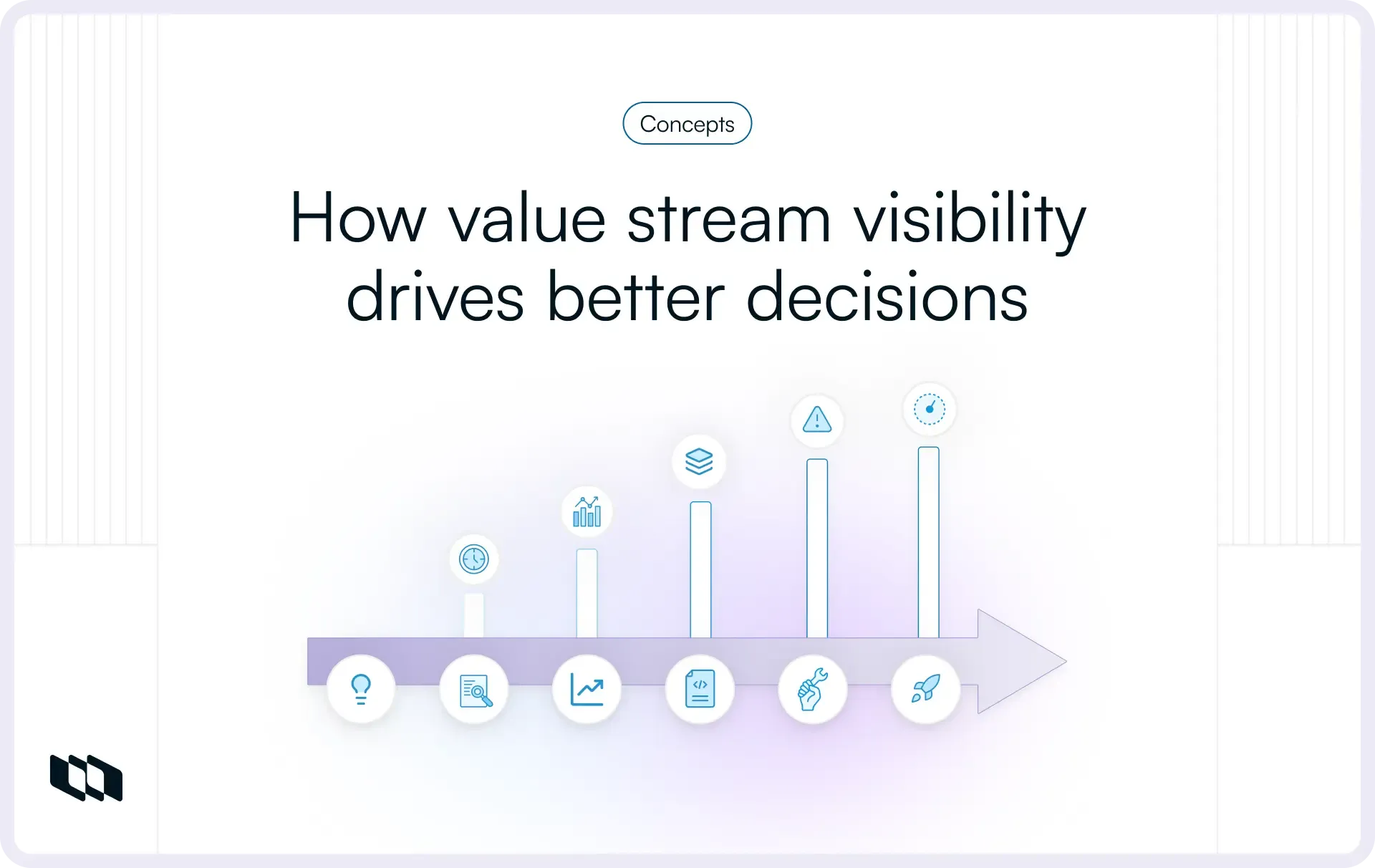
Every product, engineering, and operations team aims to deliver value quickly, yet they often spend more time waiting than moving. Requests pass through planning, development, review, approval, and release, creating delays that affect delivery speed and customer outcomes. Value stream management (VSM) helps teams visualize, measure, and improve the flow of work from idea to delivered value. In this guide, we'll cover what value stream management is, how it differs from value stream mapping, why it matters, and how teams can use it to deliver value more efficiently.
What is value stream management?
Every organization has a process through which ideas become products, services, or customer outcomes. That process includes planning, prioritization, development, reviews, approvals, releases, and feedback. As work moves through these stages, teams often encounter bottlenecks, handoff delays, and visibility gaps that affect delivery performance.
Value stream management (VSM) is a management approach that helps organizations understand, measure, and improve the flow of value through their systems. Instead of looking at individual tasks or team activities in isolation, VSM focuses on the complete journey from an initial request to the delivery of customer value. The goal is to create a faster, more efficient, and more predictable flow of work across the organization.
For example, in a software development environment, a value stream may begin with a customer request and continue through product discovery, planning, design, development, testing, release, and customer feedback. Value stream management helps teams track that entire journey rather than focusing only on individual stages.
This broader view allows organizations to manage work based on outcomes and customer value rather than activity volume alone.
The goals of value stream management
The primary purpose of value stream management is to improve the efficiency of value flow through an organization. By understanding the complete workflow, teams can make better decisions about where to invest time and resources.
Key goals of value stream management include:
- Improve flow efficiency: Help work move through systems with fewer delays, bottlenecks, and interruptions.
- Reduce waste and waiting time: Identify activities, approvals, handoffs, and processes that add time without contributing meaningful value.
- Increase delivery speed: Shorten the time from idea to customer outcome while maintaining quality standards.
- Improve collaboration across teams: Create shared visibility across product, engineering, design, operations, and business teams.
- Align work with business objectives: Ensure delivery efforts directly contribute to strategic goals, customer needs, and measurable outcomes.
When these goals are achieved, organizations gain a clearer understanding of how value is created and delivered across the business.
How VSM differs from traditional project tracking
Traditional project tracking focuses primarily on activities, milestones, deadlines, and task completion. While these measurements provide useful operational insights, they offer a limited view of how effectively value reaches customers.
Value stream management expands the perspective by examining the entire delivery system.
Traditional project tracking | Value stream management |
Tracks tasks and activities | Tracks the flow of value |
Measures completion rates | Measures customer outcomes and delivery performance |
Focuses on individual teams or projects | Focuses on the end-to-end value stream |
Optimizes local processes | Optimizes the entire delivery system |
Emphasizes outputs | Emphasizes outcomes |
For example, a development team may complete every planned task within a sprint, yet customers may still experience long wait times before receiving value. VSM helps organizations understand the full delivery lifecycle, making it easier to identify where improvements will have the greatest impact.
As a result, value stream management has become an important practice for Agile, DevOps, and product-led organizations seeking greater visibility, stronger alignment, and more efficient value delivery.
What is a value stream?
Value stream management is built around one core concept: the value stream. Before exploring how organizations measure and improve value delivery, it helps to understand what a value stream is and how it works. In this section, we'll define a value stream, look at its key components, and walk through a simple software development example.
Definition of a value stream
A value stream is the complete sequence of activities required to deliver value to a customer, user, or stakeholder. It starts with a request, idea, or business need and ends when the intended value is delivered. Rather than focusing on a single team or workflow, a value stream looks at the entire journey. It connects all the people, processes, and systems involved in turning an idea into a real outcome.
Components of a value stream
Every value stream consists of several connected elements that help move work from concept to outcome.
- Inputs: Inputs are the requests, ideas, opportunities, or requirements that initiate work. These may come from customers, stakeholders, support teams, or business goals.
- Activities: Activities are the actions performed to move work forward. Examples include planning, design, development, testing, and deployment.
- Handoffs: Handoffs occur when work moves between individuals or teams. These transitions often influence delivery speed and workflow efficiency.
- Outputs: Outputs are the deliverables created during the process, such as features, updates, reports, or completed services.
- Outcomes: Outcomes represent the value generated from the work. Examples include improved customer experience, increased adoption, higher revenue, or operational improvements.
Together, these components create the flow that value stream management helps teams visualize and improve.
Example of a software development value stream
In software development, value often moves through multiple stages before reaching customers.
A typical software development value stream looks like this:
Customer request → Product discovery → Planning → Design → Development → Testing → Release → Customer feedback
Each stage contributes to delivering customer value. At the same time, each stage creates opportunities for delays, bottlenecks, or inefficiencies. For example, development may take one week while reviews and approvals take two. Without visibility into the entire value stream, teams may struggle to identify where delivery time is actually being spent.
This is why understanding the value stream is the foundation of value stream management. Once teams can see how work flows from idea to outcome, they can begin improving that flow with data, metrics, and continuous optimization.
Types of value streams
Value streams exist across every part of an organization, from customer-facing operations to product and software development. Understanding the different types of value streams helps teams identify where value is created and how work contributes to business outcomes. Most organizations operate with two primary types of value streams: operational and development.
1. Operational value streams
Operational value streams are the activities that directly deliver value to customers. They represent the processes customers interact with when purchasing, using, or receiving a product or service.
These value streams often have a direct impact on customer satisfaction, revenue generation, and business performance.
Common examples include:
- Customer onboarding
- Order fulfillment
- Customer support and issue resolution
- Subscription management
- Service delivery
For example, when a new customer signs up for a software product, the onboarding process becomes an operational value stream. Every step, from account creation to product adoption, contributes to the customer's experience and perceived value.
2. Development value streams
Development value streams focus on creating, improving, and maintaining products or services. They are especially common in software, product, and engineering organizations where teams continuously deliver new capabilities to customers.
These value streams support innovation, product growth, and long-term business success.
Common examples include:
- Feature development
- Product enhancements
- Bug fixes
- Platform improvements
- Infrastructure modernization
For example, a product team's process for designing, building, testing, and releasing a new feature is a development value stream. The goal is to transform customer needs or business requirements into working solutions that deliver value.
Why understanding both matters
Operational and development value streams are closely connected. Development value streams create and improve the products, features, and services that operational value streams deliver to customers.
Consider a new customer onboarding experience. The onboarding workflow itself is an operational value stream. The work required to build, improve, and maintain that onboarding experience belongs to a development value stream.
Organizations gain the greatest value from value stream management when they have visibility into both. Understanding how these streams interact helps teams identify bottlenecks, improve flow efficiency, align work with business goals, and deliver customer value more effectively.
Value stream management vs. value stream mapping
Value stream management and value stream mapping are closely related concepts, which is why they are often used interchangeably. However, they serve different purposes. Understanding the difference helps teams choose the right approach when analyzing and improving how value moves through an organization.
What is value stream mapping?
Value stream mapping is a technique used to visualize how work flows through a process. It creates a visual representation of the steps involved in delivering value, making it easier to understand how work moves from start to finish.
Teams use value stream maps to:
- Visualize workflows
- Identify bottlenecks and delays
- Highlight waste and inefficiencies
- Understand the current state of a process
Think of value stream mapping as a snapshot of how work flows at a specific point in time.
What is value stream management?
Value stream management is the ongoing practice of measuring, managing, and improving the flow of value across the organization. Instead of focusing on a one-time view of the process, VSM continuously tracks performance using metrics, workflow data, and delivery insights. The goal is to improve flow efficiency, delivery speed, and customer outcomes over time. Think of value stream management as the system for continuously optimizing the delivery of value.
Value stream mapping vs. value stream management
A simple way to understand the difference is this: value stream mapping helps teams see the flow of work, while value stream management helps teams improve that flow continuously.
Value stream mapping | Value stream management |
Creates visibility into workflows | Drives continuous improvement across workflows |
Point-in-time activity | Ongoing management discipline |
Focuses on workflow visualization | Focuses on optimization and outcomes |
Identifies bottlenecks and waste | Measures, prioritizes, and improves flow |
Helps understand the current state | Helps improve future performance |
Often conducted during process reviews | Embedded into day-to-day operations |
Provides qualitative insights | Combines qualitative and quantitative insights |
Answers "Where are the problems?" | Answers "How do we improve and measure progress?" |
In practice, the two work best together. A value stream map helps teams understand how work currently flows, while value stream management provides the metrics, visibility, and continuous improvement framework needed to make that flow more efficient over time. Teams often start with value stream mapping and then use value stream management to track progress, optimize delivery, and continuously improve customer value.
Why is value stream management important?
Understanding what value stream management is only tells part of the story. The bigger question is why so many organizations invest in it. Let's look at the key reasons it matters.
1. Reveals bottlenecks and delays
Many delivery challenges remain hidden until teams can see the entire workflow. A feature may move quickly through development but spend days waiting for reviews, approvals, or dependencies.
Value stream management makes these inefficiencies visible by showing how work moves across the value stream. This visibility helps teams identify bottlenecks faster, understand where time is being spent, and focus improvement efforts on the areas that have the greatest impact.
2. Connects teams around customer value
Product, engineering, design, operations, and business teams all contribute to delivering value. Since each team often works with different goals, metrics, and priorities, alignment becomes increasingly important as organizations scale.
Value stream management creates a shared view of how work contributes to customer outcomes. This helps teams collaborate more effectively, prioritize work with greater confidence, and make decisions based on value rather than individual team objectives.
3. Improves delivery predictability
Accurate planning depends on understanding how work flows through the system. When teams can measure lead time, cycle time, throughput, and other value stream metrics, they gain a clearer picture of delivery performance.
This visibility supports:
- More accurate forecasting
- Better capacity planning
- Realistic delivery timelines
- Improved stakeholder communication
As a result, teams can plan with greater confidence and respond to changes more effectively.
4. Supports continuous improvement
One of the core principles of value stream management is continuous improvement. Rather than relying on assumptions, teams use workflow data and delivery metrics to identify opportunities for optimization.
Over time, this approach helps organizations:
- Improve flow efficiency
- Reduce recurring delays
- Streamline processes
- Improve delivery performance
Small, consistent improvements often create significant gains across the entire value stream.
5. Aligns business strategy with execution
Organizations create strategies to achieve specific business outcomes, but those outcomes depend on effective execution. Value stream management helps bridge the gap between high-level objectives and the work teams that deliver every day. By providing visibility into how initiatives move through the value stream, VSM helps leaders prioritize high-impact work, allocate resources effectively, and ensure delivery efforts support broader business goals.
When strategy and execution stay aligned, teams can deliver customer value faster while maintaining focus on the work that matters most.
How value stream management works in software and product teams
The principles of value stream management can be applied across many industries, but they are especially valuable in software and product development. In this section, we'll look at how software and product teams use VSM to manage work, measure delivery performance, and improve collaboration across the organization.
1. Mapping the flow of work
The first step in value stream management is understanding how work moves through the delivery process. This means mapping the journey from an initial request to the release of a product or feature.
A typical software delivery flow may look like this:
Idea intake → Prioritization → Planning → Execution → Release
Each stage plays a role in delivering value. By visualizing the entire flow, teams can see where work accumulates, where delays occur, and how long each stage takes.
For example, a team may discover that planning takes two days while review cycles take two weeks. Without a clear view of the workflow, these bottlenecks can remain hidden.
2. Tracking work across teams
Product delivery is rarely owned by a single team. Most initiatives involve collaboration across multiple functions, each contributing to different stages of the value stream.
Common teams involved include:
- Product teams defining priorities and requirements
- Design teams creating user experiences
- Engineering teams building solutions
- QA teams validating quality
- Operations teams supporting releases and delivery
Value stream management helps connect these workflows into a single view. Rather than tracking work within isolated departments, teams can understand how work progresses across the entire delivery process.
3. Measuring flow across the delivery lifecycle
Once the value stream is visible, teams can begin measuring how efficiently work moves through it.
Key areas of measurement include:
- Lead time
- Cycle time
- Throughput
- Work in progress
- Flow efficiency
These metrics help teams identify delays, understand delivery patterns, and evaluate process performance over time.
For example, a team may consistently complete development work within a week but experience lengthy approval cycles before release. Measuring the entire value stream helps uncover these patterns and prioritize improvements.
4. Creating visibility across the organization
One of the biggest benefits of value stream management is shared visibility. Everyone involved in delivering value can see how work is progressing and where attention is needed.
This visibility helps organizations:
- Create a shared understanding of priorities
- Improve coordination between teams
- Increase accountability
- Make decisions using real delivery data
- Align work with customer and business goals
For product and engineering organizations, value stream management provides a clearer picture of how ideas translate into outcomes. With better visibility, teams can improve flow efficiency, reduce bottlenecks, and deliver value more consistently.
Key metrics used in value stream management
Once a value stream is visible, the next step is measuring how effectively work moves through it. This is where value stream metrics become important. These metrics help teams understand delivery performance, identify bottlenecks, and uncover opportunities for improvement. While organizations may track dozens of metrics, a few core measurements form the foundation of value stream management.
1. Lead time
Lead time measures the total time it takes for work to move from an initial request to final delivery. For example, if a feature request is submitted on January 1 and released on January 20, the lead time is 20 days. Lead time helps teams understand how quickly they deliver value to customers.
2. Cycle time
Cycle time measures the time spent actively working on an item after work begins. Unlike lead time, cycle time focuses on execution rather than the entire delivery journey. A shorter cycle time often indicates a more efficient workflow.
3. Throughput
Throughput measures how much work a team completes within a specific period.
Examples include:
- Features delivered per month
- Issues completed per sprint
- Tasks finished per week
Higher throughput generally indicates a stronger delivery capacity.
4. Work in progress (WIP)
Work in progress refers to the amount of unfinished work currently moving through the system. Tracking WIP helps teams balance workloads, reduce congestion, and maintain a steady flow of delivery.
5. Flow efficiency
Flow efficiency measures how much of the total delivery time is spent actively working versus waiting. A higher flow efficiency indicates that work spends more time progressing and less time waiting in queues, undergoing reviews, or in approval stages.
6. Blocked time
Blocked time tracks how long work remains stalled due to dependencies, approvals, reviews, or other obstacles. This metric helps teams identify where delivery slows down and which bottlenecks have the greatest impact on flow.
7. Defect and rework rates
Defect and rework rates measure the quality of delivered work. High defect rates often lead to additional fixes, retesting, and repeated effort, which can increase delivery time and reduce overall efficiency.
8. DORA metrics and VSM
Many software teams combine value stream management with DORA metrics to evaluate software delivery performance.
The four DORA metrics are:
- Deployment frequency: How often code is released to production.
- Lead time for changes: How quickly changes move from development to production.
- Change failure rate: The percentage of releases that result in incidents or failures.
- Mean time to recovery (MTTR: How quickly teams restore service after an incident.
Together, these metrics provide a clearer picture of delivery speed, quality, and operational performance across the value stream.
How to implement value stream management
Understanding value stream management is one thing. Successfully implementing it is where organizations start seeing measurable improvements in delivery performance. Let’s explore how to implement value stream management:
1. Identify the value stream
Start by defining the value stream you want to improve. Determine where work begins and where customer value is delivered. This helps establish the boundaries of the value stream and creates a shared understanding of what will be measured and optimized.
For example, a software development value stream may start with a feature request and end when the feature is released to customers.
2. Map the current workflow
Once the value stream is defined, document how work currently moves through the system.
Map the key stages involved, including:
- Planning
- Design
- Development
- Testing
- Reviews
- Release
Also identify handoffs, approvals, and dependencies between teams. The goal is to create a clear picture of the current flow before making improvements.
3. Establish baseline metrics
Before optimizing anything, understand current performance.
Measure key value stream metrics such as:
- Lead time
- Cycle time
- Throughput
- Work in progress
- Blocked time
These baseline measurements provide a starting point for evaluating future improvements.
4. Identify bottlenecks and waste
Review the workflow and metrics to uncover areas where work slows down.
Look for patterns such as:
- Long approval cycles
- Excessive work in progress
- Repeated handoffs
- Frequent rework
- Dependency-related delays
These bottlenecks often represent the biggest opportunities for improvement.
5. Prioritize improvements
Trying to fix everything at once can make it difficult to measure progress. Instead, focus on the areas that have the greatest impact on flow efficiency and customer value. Prioritizing high-impact improvements helps teams create meaningful results faster.
6. Implement process changes
Once priorities are clear, begin making targeted improvements.
Examples may include:
- Simplifying approval workflows
- Reducing work in progress
- Improving handoff processes
- Clarifying ownership
- Automating repetitive tasks
Small process improvements often create significant gains across the value stream.
7. Measure results
After implementing changes, track the same metrics used during the baseline stage. Compare current performance against previous measurements to understand the impact of your improvements. This helps teams validate decisions and identify which changes are delivering meaningful results.
8. Continuously optimize
Value stream management is most effective when viewed as an ongoing practice rather than a one-time initiative. As teams grow, products evolve, and customer expectations change, workflows will continue to change as well. Regularly reviewing metrics, identifying new bottlenecks, and refining processes helps organizations maintain a healthy flow of value over the long term.
The goal of VSM is continuous improvement. Each optimization creates opportunities for the next, helping teams deliver value faster, more efficiently, and with greater predictability over time.
Benefits of value stream management
The importance of value stream management becomes clearer when teams start seeing measurable improvements in how work flows through the organization. While the specific outcomes vary across teams, a few benefits consistently stand out. These benefits directly affect delivery performance, customer outcomes, and business growth.
1. Faster delivery
One of the biggest benefits of value stream management is improved delivery speed. By identifying bottlenecks, reducing waiting time, and improving workflow efficiency, teams can move work from idea to customer value more quickly. Faster delivery allows organizations to respond to market opportunities, customer feedback, and business priorities with greater agility.
2. Better visibility across the delivery process
Many organizations have visibility into individual projects or teams. VSM provides visibility into the entire value stream. This end-to-end view helps teams understand where work is progressing, where delays occur, and how different parts of the workflow contribute to delivery outcomes. Better visibility leads to better decisions and more effective prioritization.
3. Improved collaboration across teams
Delivering value often requires coordination between product, design, engineering, QA, and operations teams. Value stream management creates a shared understanding of how work moves through the organization. This improves communication, strengthens alignment, and helps teams work toward common customer and business outcomes.
4. More predictable delivery outcomes
When teams consistently measure lead time, cycle time, throughput, and other value stream metrics, delivery becomes easier to forecast and manage. This predictability supports better planning, more realistic timelines, and stronger stakeholder confidence. Teams gain a clearer understanding of their delivery capacity and can make commitments with greater accuracy.
Common bottlenecks value stream management helps uncover
One of the biggest advantages of value stream management is its ability to reveal issues that slow delivery. Many bottlenecks remain hidden when teams focus only on individual projects or departments. By visualizing and measuring the entire value stream, organizations can identify where work is getting delayed and take action to improve flow.
1. Excessive work in progress
When teams take on too much work at the same time, progress slows across the board. Tasks compete for attention, priorities shift frequently, and delivery timelines become harder to predict. Value stream management helps teams monitor work in progress and identify opportunities to reduce active work to improve overall flow efficiency.
2. Long review and approval cycles
In many organizations, work moves quickly through development but spends significant time waiting for reviews, approvals, or sign-offs. These delays often add days or weeks to delivery timelines. Value stream metrics help teams measure waiting time and identify stages where approvals create unnecessary friction.
3. Team dependencies
Modern product delivery relies on collaboration across multiple teams. A single feature may depend on product managers, designers, engineers, QA specialists, and operations teams. When one team is delayed, the entire value stream can slow down. VSM helps organizations identify dependency-related bottlenecks and improve coordination across teams.
4. Rework caused by poor requirements
Unclear requirements often lead to misunderstandings, scope changes, and additional development effort. Rework increases delivery time and reduces flow efficiency because teams spend time revisiting completed work instead of creating new value. Value stream management helps teams identify patterns that contribute to recurring rework and process inefficiencies.
5. Fragmented tools and disconnected data
Many organizations manage work across multiple systems for planning, development, testing, and reporting. As information becomes scattered across tools, visibility decreases, and decision-making becomes more difficult. Value stream management helps connect workflow data across the delivery process, giving teams a clearer view of how work moves from idea to customer value.
By identifying these bottlenecks early, teams can improve delivery speed, strengthen collaboration, and create a more efficient flow of value across the organization.
Closing thoughts
Value stream management helps organizations understand how work moves from an idea to delivered customer value. Instead of focusing solely on tasks, projects, or team activities, VSM provides visibility into the entire delivery process, making it easier to identify bottlenecks, improve flow efficiency, and align work with business goals.
As software and product development become increasingly cross-functional, understanding the flow of value becomes just as important as managing the work itself. Teams that measure delivery performance, optimize workflows, and continuously improve their value streams are better positioned to deliver faster, collaborate more effectively, and create stronger customer outcomes.
Whether you're leading a product team, managing engineering operations, or scaling delivery across the organization, value stream management provides a practical framework for turning visibility into continuous improvement.
Frequently asked questions
Q1. What is value stream management?
Value stream management (VSM) is the practice of measuring, managing, and improving the flow of work from an initial request or idea to the delivery of customer value. It helps organizations identify bottlenecks, improve workflow efficiency, and align delivery efforts with business objectives.
Q2. Is VSM Lean or Six Sigma?
Value stream management has its roots in Lean thinking, particularly the concept of value streams and waste reduction. However, modern VSM also incorporates practices from Agile, DevOps, and continuous improvement methodologies. While Six Sigma focuses on reducing process variation and improving quality, VSM focuses on improving the flow of value across the entire delivery lifecycle.
Q3. What are the 4 steps of value stream mapping?
The four common steps of value stream mapping are:
- Identify the product, service, or process to map.
- Document the current workflow from start to finish.
- Analyze the map to identify bottlenecks, delays, and waste.
- Design and implement improvements to create a more efficient future-state workflow.
Q4. What is the role of a value stream manager?
A value stream manager is responsible for overseeing and improving the flow of value across a value stream. Their responsibilities often include monitoring performance metrics, identifying bottlenecks, coordinating cross-functional teams, prioritizing improvement initiatives, and ensuring work aligns with customer and business goals.
Q5. What are the three types of VSM?
In practice, value stream management is commonly applied across three areas:
- Operational value streams: Processes that directly deliver value to customers, such as onboarding, fulfillment, or support.
- Development value streams: Processes used to build, improve, and maintain products or services.
- Supporting value streams: Internal processes that enable operational and development activities, such as IT, HR, procurement, and compliance.
Together, these value streams help organizations create, deliver, and sustain customer value.
Recommended for you


 Download for Mac
 Download for Android