Project milestones: Definition, strategies, and how to track them
Introduction
Most teams think they understand project milestones. They add a few dates to a Gantt chart, label them "milestone," and move on. Then the project slips, and nobody saw it coming. A milestone isn't a date on a timeline; it's a signal that something meaningful has been achieved. Get that distinction right, and milestone planning becomes one of the sharpest tools a project manager has. This post covers the definition, real-world examples, and strategies for setting and tracking milestones effectively.
What are project milestones?
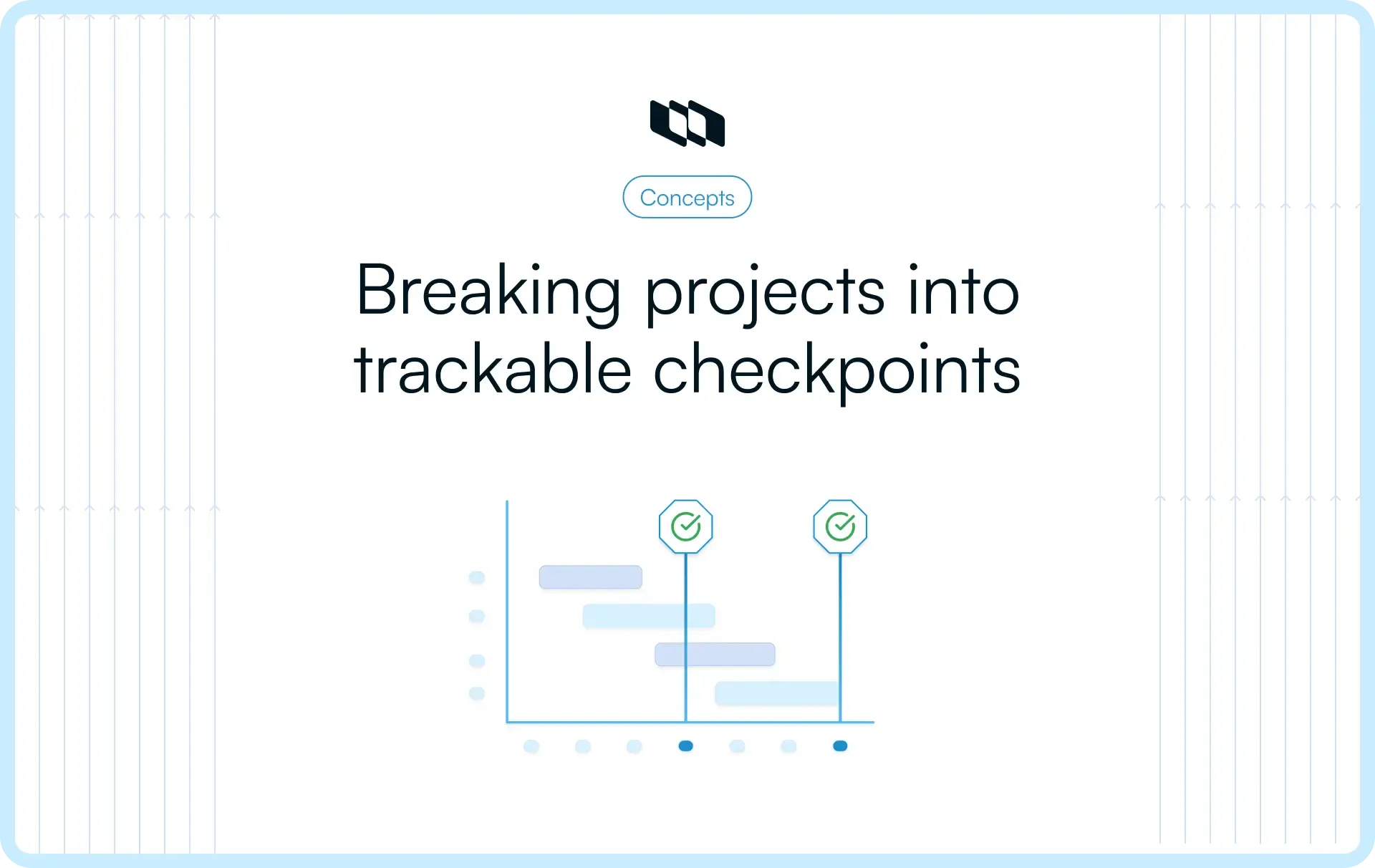
Project milestones are significant checkpoints that mark progress at key moments in a project timeline. Teams use project milestones in project management to represent outcomes such as approvals, phase completions, delivery readiness, and decision points that shape the direction of execution.
Unlike routine activities, milestones highlight meaningful transitions that help teams assess whether work is progressing as planned and whether the project remains aligned with its intended timeline and objectives.
Teams typically define project milestones to:
- Mark the completion of major phases such as planning, development, or testing
- Confirm approvals from stakeholders or leadership groups
- Signal readiness for the next stage of execution
- Track delivery progress at a high level across the project timeline
Clear milestone schedules allow teams to link these checkpoints to dependencies, ownership, and reporting workflows throughout the project lifecycle.
What makes milestones different from regular tasks
Milestones represent completion moments rather than units of work. While tasks describe activities that require effort and time, milestones reflect transitions that indicate progress across delivery stages.
In practice, project milestones:
- Represent outcomes rather than ongoing work
- Indicate transitions between phases or responsibilities
- Support milestone tracking across complex timelines
- Help teams communicate progress clearly to stakeholders
This distinction makes milestone tracking especially valuable in projects that involve cross-functional coordination, external approvals, or structured release timelines.
Why project milestones matter
Good project management isn't just about getting work done; it's about knowing where you stand at every stage. Milestones bring that clarity. They improve visibility, keep teams aligned, and give stakeholders something concrete to track. Here's why they earn a place in every serious project plan.
1. They make progress visible across the project timeline
Project milestones provide structured checkpoints that show whether major delivery stages are advancing as expected. Instead of tracking activity alone, teams can evaluate progress through meaningful completion signals across the timeline.
2. They align teams around key delivery moments
Milestone schedules clarify which transitions matter most at each stage of execution. Teams understand when decisions are made, when approvals are granted, and when readiness for the next phase becomes critical.
3. They improve stakeholder communication and reporting
Milestone tracking simplifies status reporting by providing clear checkpoints that reflect progress toward delivery. Stakeholders can review milestone charts to understand whether projects remain aligned with expected timelines.
4. They help identify risks and delays earlier
Missed or delayed project milestones highlight dependency issues, coordination gaps, or planning risks before they affect later stages of execution. Early signals support faster corrective action across teams.
5. They support structured planning across complex projects
Large initiatives involve multiple transitions between teams, deliverables, and approvals. Project milestones in project management divide these transitions into manageable checkpoints, improving planning clarity and execution predictability.
Project milestones vs. tasks, deliverables, goals, and phases
Project milestones in project management are often confused with tasks, deliverables, goals, and phases because they all describe progress in different ways. Clear distinctions help teams build accurate milestone schedules and improve milestone tracking across timelines, dependencies, and reporting workflows.
Milestones vs. tasks
Tasks are units of work that require time, ownership, and effort to execute. Project milestones represent checkpoints that signal completion of important stages in the project timeline.
For example, completing feature development involves multiple tasks, while feature completion readiness becomes a project milestone indicating the transition to testing or release preparation.
Milestones vs. deliverables
Deliverables refer to outputs produced during a project, such as design files, documentation, prototypes, or product releases. Project milestones mark the moment when deliverables are completed, approved, or ready for the next stage. A prototype itself serves as a deliverable, while prototype approval becomes a milestone confirming progress across the delivery workflow.
Milestones vs. goals
Goals define the intended outcomes of a project or initiative. Project milestones track movement toward those outcomes by marking measurable checkpoints along the project timeline.
For example, launching a product represents a goal, while completing internal testing, finalizing release readiness, and confirming deployment windows function as milestones that indicate progress toward that outcome.
Milestones vs. project phases
Project phases group related activities into structured stages such as planning, development, testing, and release preparation. Project milestones signal transitions between these phases and confirm readiness to move forward. When teams track milestones between phases, milestone charts provide a clearer view of progress across the entire project lifecycle.
What counts as a project milestone?
Not every checkpoint deserves milestone status. A milestone should mark a moment where something genuinely significant has been achieved, a phase closed, an approval granted, a decision made. Here are the four categories that most project milestones fall into.
1. Phase completion milestones
Phase completion milestones indicate that a structured stage of work is ready to transition to the next stage of execution. These checkpoints help teams coordinate dependencies across planning, delivery, and validation workflows.
Examples include:
- planning complete
- development complete
- testing complete
Phase-based project timeline milestones provide clarity across long delivery cycles and support milestone tracking across cross-functional teams.
2. Approval milestones
Approval milestones confirm alignment among stakeholders, leadership groups, or external partners before the project advances. These checkpoints often influence resource allocation, release readiness, or scope validation.
Examples include:
- Budget approval
- Design sign-off
- Stakeholder validation
Approval milestones strengthen milestone reporting by reflecting coordination across decision-making layers.
3. Deliverable-based milestones
Deliverable-based milestones signal completion or readiness of important outputs that move the project forward. These checkpoints often appear in milestone charts because they represent visible progress across the delivery workflow.
Examples include:
- Prototype ready
- Beta release completed
- Final documentation submitted
Teams frequently rely on these project milestone examples when structuring milestone schedules for product and engineering initiatives.
4. Decision or transition milestones
Decision and transition milestones indicate readiness to move into the next stage of execution or confirm direction across the project timeline. These checkpoints support coordination across dependencies that influence release timing or implementation strategy.
Examples include:
- Go or no-go decision confirmed
- Launch readiness confirmation
- Vendor selection finalized
Decision-based project milestones help teams maintain alignment across planning milestones and execution milestones throughout the lifecycle of complex initiatives.
Common examples of project milestones
Project milestone examples help teams translate planning concepts into practical checkpoints that provide visibility into execution. Well-defined project timeline milestones reflect transitions across phases, approvals, and delivery readiness rather than routine activity updates. The examples below show how milestone tracking works across different types of projects.
1. Milestones in software development projects
Software delivery workflows depend heavily on structured milestone schedules, as multiple dependencies affect readiness across releases. Teams use project milestones to coordinate transitions between the architecture, implementation, testing, and deployment stages.
Typical examples include:
- Requirements finalized
- Architecture approved
- Feature freeze confirmed
- Release launch completed
These milestones support milestone tracking across engineering workflows and improve coordination between product, development, and release teams.
2. Milestones in marketing campaigns
Marketing initiatives involve coordination between strategy, content production, design execution, and performance monitoring. Campaign milestone schedules help teams maintain alignment across these stages while supporting structured reporting timelines.
Common examples include:
- Campaign strategy approved
- Creative assets completed
- Campaign launch date confirmed
- Performance review checkpoint scheduled
Marketing milestone charts help stakeholders monitor campaign readiness and evaluate progress across execution stages.
3. Milestones in product launches
Product launches require coordination across engineering readiness, validation cycles, and stakeholder alignment before release. Project milestones provide structured checkpoints to confirm whether the product progresses according to the expected timeline.
Examples include:
- Prototype completion confirmed
- Internal testing complete
- Beta release delivered
- Public launch completed
These project milestone examples help teams maintain clarity across release readiness and strengthen milestone reporting across cross-functional delivery environments.
How to identify the right milestones for a project
Identifying the right project milestones requires understanding which checkpoints represent real progress across the delivery lifecycle. Effective project milestones in project management reflect transitions that influence readiness, approvals, dependencies, or execution direction rather than routine activity updates. A structured milestone schedule improves visibility across timelines and supports reliable milestone tracking throughout the project.
1. Start with the project objective
Project milestones should reflect progress toward the initiative's intended outcome. When teams define milestones based on delivery objectives, milestone tracking becomes directly connected to progress rather than activity completion.
For example, a product release objective may include readiness checkpoints such as architecture approval, testing completion, and deployment confirmation.
2. Break work into major phases or delivery stages
Major delivery stages naturally define strong candidates for project timeline milestones. Planning, implementation, validation, and release transitions often function as structured checkpoints across the execution lifecycle. Phase-based milestone schedules help teams coordinate responsibilities across engineering, product, and operations workflows.
3. Identify approvals, dependencies, and handoffs
Approvals and cross-team transitions frequently determine when progress advances across delivery stages. Stakeholder validation, technical sign-offs, and integration readiness checkpoints often serve as reliable project milestones. Including these transitions in milestone charts improves coordination across dependencies that influence release timing.
4. Select checkpoints that represent meaningful progress
Effective milestone tracking focuses on checkpoints that confirm readiness for the next stage of execution. Teams benefit from selecting milestones that reflect measurable progress rather than routine task completion. Meaningful project milestone examples often include validation readiness, integration completion, and release-preparation checkpoints.
5. Limit milestones to the moments that truly matter
Milestone schedules remain effective when they highlight only the most important transitions across the project timeline. A smaller set of well-defined project milestones improves reporting clarity and helps teams maintain focus on critical delivery checkpoints across complex initiatives.
Strategies for setting effective project milestones
Strong project milestones improve execution clarity only when they reflect readiness, coordination, and decision points across delivery workflows. Effective milestone schedules connect planning checkpoints to dependencies, ownership, and stakeholder alignment, ensuring milestone tracking provides real progress visibility throughout the project lifecycle.
1. Define clear milestone success criteria
Each milestone should represent a clearly defined completion condition that teams agree on before execution begins. Success criteria help teams determine when a milestone is ready and reduce ambiguity in milestone tracking.
For example, testing complete as a milestone may require validated acceptance coverage, resolved blocking issues, and stakeholder confirmation before transition into release preparation.
2. Assign ownership for each milestone
Ownership ensures that milestone readiness remains visible and accountable across the timeline. When teams assign responsibility for each checkpoint, milestone schedules reflect coordination across engineering, product, and operations workflows. Clear ownership improves milestone reporting and supports earlier identification of dependency risks that influence delivery timelines.
3. Align milestones with decisions instead of just dates
Effective project milestones are readiness signals that influence the direction of execution, rather than calendar markers placed along the timeline. Decision-based milestones strengthen coordination between teams by confirming transitions such as approval readiness, release validation, or integration completion. This approach improves milestone tracking across complex projects that involve multiple approval layers.
4. Connect milestones to dependencies across teams
Dependencies frequently determine whether milestone schedules remain reliable throughout delivery. Cross-team coordination between design, engineering, quality validation, and operations influences whether checkpoints occur at the expected time. Linking project milestones to dependencies improves planning accuracy and helps teams maintain alignment across release workflows.
5. Review milestones as the project evolves
Projects change as priorities shift and execution conditions develop. Regular review of milestone schedules helps teams maintain alignment between planning assumptions and delivery progress. Updating project milestones in project management environments ensures milestone tracking reflects the current execution reality across timelines and dependencies.
How to create a milestone schedule
A milestone schedule links key checkpoints to the project timeline, enabling teams to track readiness across phases, approvals, and delivery transitions. Structured milestone schedules improve coordination among dependencies and provide a clear framework for tracking milestones throughout execution.
1. Review the full project timeline
Start by mapping the sequence of major delivery stages across the project lifecycle. Planning, implementation, validation, and release transitions typically define the structure within which project timeline milestones are placed. Understanding this sequence helps teams identify where meaningful progress checkpoints naturally occur.
2. Insert milestone checkpoints at key transitions
Place milestones at points where deliverables reach readiness, approvals are obtained, or teams transition between execution stages. These checkpoints help ensure milestone schedules reflect real progress rather than activity updates. Common transition points include architecture approval, testing readiness, and release preparation checkpoints.
3. Map dependencies between milestones
Dependencies influence the order in which milestones occur across the timeline. Linking project milestones to upstream approvals, integrations, and validation workflows improves coordination between teams responsible for different delivery stages. Dependency-aware milestone charts provide clearer visibility into sequencing across complex initiatives.
4. Validate milestone timing with stakeholders
Stakeholder alignment strengthens milestone schedules before execution begins. Reviewing milestone timing with leadership, engineering teams, and delivery owners helps ensure that checkpoints reflect realistic readiness expectations across the project timeline. This alignment improves milestone reporting later in the project lifecycle.
5. Keep milestone schedules realistic and maintainable
Effective milestone schedules focus on the checkpoints that influence delivery outcomes. A manageable set of project milestones supports clearer milestone tracking and improves visibility across timelines without introducing unnecessary complexity.
How to track project milestones effectively
Milestone tracking helps teams understand whether execution is progressing according to plan across phases, approvals, and dependencies. Effective milestone tracking in project management links checkpoints to ownership, timelines, and reporting workflows, ensuring milestones remain visible throughout the delivery process. When teams track milestones consistently, they improve coordination across stakeholders and maintain alignment across complex project timelines.
1. Track milestones inside a shared project workspace
Tracking project milestones inside a shared workspace improves visibility across engineering, product, and operations teams. Centralized milestone schedules allow teams to monitor readiness signals alongside tasks, dependencies, and deliverables within the same execution environment. Shared milestone charts also help stakeholders understand progress without requiring separate reporting structures.
2. Assign accountability for milestone progress
Clear accountability ensures that milestone readiness remains visible across the project lifecycle. When teams assign responsibility for each checkpoint, milestone tracking becomes easier to maintain, and coordination across delivery stages improves. Ownership also supports earlier identification of risks that influence milestone schedules.
3. Monitor milestone status during regular reviews
Regular review cycles help teams maintain alignment between milestone schedules and execution progress. Sprint reviews, planning sessions, and delivery check-ins provide opportunities to evaluate milestone readiness across the timeline. Including project milestones in these workflows strengthens coordination across cross-functional teams.
4. Identify delays and dependency risks early
Changes in milestone timing often reflect dependency constraints, integration readiness gaps, or approval delays. Monitoring project timeline milestones helps teams identify these signals early and adjust sequencing across delivery stages. Early visibility improves planning reliability across complex initiatives.
5. Use milestones to support stakeholder reporting
Milestone tracking simplifies communication with leadership and external stakeholders. Instead of reviewing detailed activity updates, stakeholders can evaluate milestone charts to understand whether delivery remains aligned with expected timelines. Structured milestone reporting improves transparency across long-running projects.
6. Update milestones when plans change
Projects evolve as priorities shift and new dependencies emerge. Updating milestone schedules ensures that project milestones continue to reflect current execution conditions across the timeline. Maintaining accurate milestone tracking improves decision-making across planning and delivery workflows.
How teams visualize project milestones
Visualizing milestones via timelines and dashboards streamlines tracking across cross-functional workflows. These structured views clarify dependencies and delivery stages, enabling teams and stakeholders to assess progress at a glance.
1. Milestones on project timelines
Project timelines display milestone checkpoints alongside delivery stages, so teams can see how progress unfolds across the initiative's lifecycle. Timeline-based milestone tracking helps teams monitor phase transitions, such as planning completion, testing readiness, and release preparation, within structured execution environments.
Timeline views also improve coordination among teams responsible for different stages of delivery by making sequencing visible across the entire project timeline.
2. Milestones in Gantt charts
Gantt charts provide a dependency-aware view of project milestones in project management. They show how milestone schedules connect with upstream and downstream activities across engineering, product, and operations workflows.
Teams use Gantt-based milestone charts to understand sequencing relationships between approvals, integrations, and release checkpoints that influence delivery readiness.
3. Milestone charts for executive reporting
Milestone charts summarize project milestones at a high level, allowing leadership teams to evaluate progress without reviewing detailed task updates. These charts typically highlight phase transitions, approval checkpoints, and delivery readiness signals that influence planning decisions.
Structured milestone reporting through milestone charts improves transparency across long-running or multi-team initiatives.
4. Dashboards for real-time milestone tracking
Dashboards provide live visibility into milestone tracking across distributed teams and complex delivery pipelines. When milestone schedules are presented alongside dependencies, risks, and progress indicators, teams can continuously monitor readiness signals throughout execution. Real-time dashboards help organizations maintain alignment across stakeholders who rely on current milestone status to support planning and coordination decisions.
Common mistakes teams make when managing project milestones
Even experienced teams run into the same milestone management pitfalls. Most of them stem from treating milestones as a formatting convention rather than a planning tool. Here's what to watch for.
1. Setting too many milestones
Dense milestone schedules make it harder to interpret progress over time. When teams add checkpoints for routine activities instead of key transitions, milestone charts become difficult to read, and stakeholder reporting loses clarity. Fewer well-defined project milestones improve alignment across planning stages and support more accurate milestone tracking.
2. Confusing milestones with tasks
Tasks represent the effort required for execution, while project milestones are readiness signals that confirm progress between delivery stages. Treating routine activities as milestones weakens the structure of milestone schedules and reduces their usefulness in milestone reporting. Clear separation between tasks and project milestones improves visibility across complex project environments.
3. Choosing milestones without decision value
Effective project milestones signal readiness for approvals, transitions, or delivery checkpoints that influence execution direction. Milestones that lack decision relevance reduce the accuracy of milestone tracking and make project timeline milestones less useful for cross-team coordination. Milestone schedules should highlight checkpoints that affect planning, sequencing, or release readiness.
4. Failing to assign ownership
Ownership ensures that milestone readiness remains visible across the project lifecycle. When responsibility stays undefined, milestone tracking becomes inconsistent, and coordination across dependencies weakens. Assigned ownership improves milestone reporting and supports earlier identification of delivery risks.
5. Not updating milestones when project scope changes
Project timelines evolve as priorities shift and dependencies change across delivery stages. Updating milestone schedules ensures that project milestones continue to reflect current execution conditions. Accurate milestone tracking improves planning reliability and strengthens alignment across stakeholders throughout the lifecycle of complex initiatives.
Final thoughts
Project milestones help teams translate complex timelines into clear progress checkpoints that support coordination across planning, approvals, and delivery stages. When milestone schedules reflect meaningful transitions rather than activity updates, teams gain stronger visibility into execution readiness and dependency alignment across the project lifecycle.
Effective milestone tracking also improves stakeholder confidence by connecting project timeline milestones with real delivery progress. Teams that define clear milestone criteria, assign ownership, and maintain updated milestone charts create a reliable structure for monitoring outcomes across phases and releases.
Across engineering, product, and cross-functional initiatives, well-structured project milestones in project management strengthen planning accuracy, improve reporting clarity, and support predictable delivery across complex execution environments.
Frequently asked questions
Q1. What are the 5 stages of a project?
The five stages of a project typically include initiation, planning, execution, monitoring and control, and closure. These stages structure the project lifecycle and help teams define objectives, organize work, track progress, and confirm delivery outcomes. Project milestones in project management often appear at transitions between these stages, such as planning approval, execution readiness, or final delivery confirmation.
Q2. What are project milestones examples?
Common project milestone examples represent key checkpoints that signal progress across the project timeline. Typical examples include requirements finalized, design approved, prototype completed, testing complete, stakeholder validation confirmed, and release launch completed. These project timeline milestones help teams monitor readiness across phases and support structured milestone tracking throughout execution.
Q3. What are the 4 pillars of project management?
The four pillars of project management commonly refer to scope, schedule, cost, and quality. These elements guide planning decisions and influence how teams structure milestone schedules across delivery stages. Project milestones help teams monitor progress against these pillars by marking checkpoints that reflect scope readiness, timeline alignment, budget approvals, and quality validation.
Q4. How to make a project milestone?
Creating a project milestone begins with identifying a checkpoint that signals meaningful progress toward a delivery objective. Teams typically define milestones by mapping major phases, approvals, dependencies, and transition points across the project timeline. Assigning ownership, defining completion criteria, and placing milestones within a milestone schedule improve milestone tracking across execution workflows.
Q5. What are the 5 C's in project management?
The five C's in project management are commonly defined as conception, clarification, coordination, control, and closure. These elements help teams structure planning and execution across the project lifecycle. Project milestones support coordination and control by marking checkpoints that confirm readiness between phases and maintain visibility across delivery progress.
Recommended for you





 Download for Mac
 Download for Android