What is a program roadmap?
Introduction
Managing a program means coordinating multiple related projects, each with its own priorities, timelines, and dependencies. A delay in one project can affect milestones across several teams, making it difficult to maintain visibility into overall progress. A program roadmap brings these moving parts into a shared timeline, connecting project execution with broader strategic objectives.
This guide explains what a program roadmap is, its key components and benefits, and how to create one. We'll also explore practical examples and ways to keep program planning aligned as priorities evolve.
What is a program roadmap?
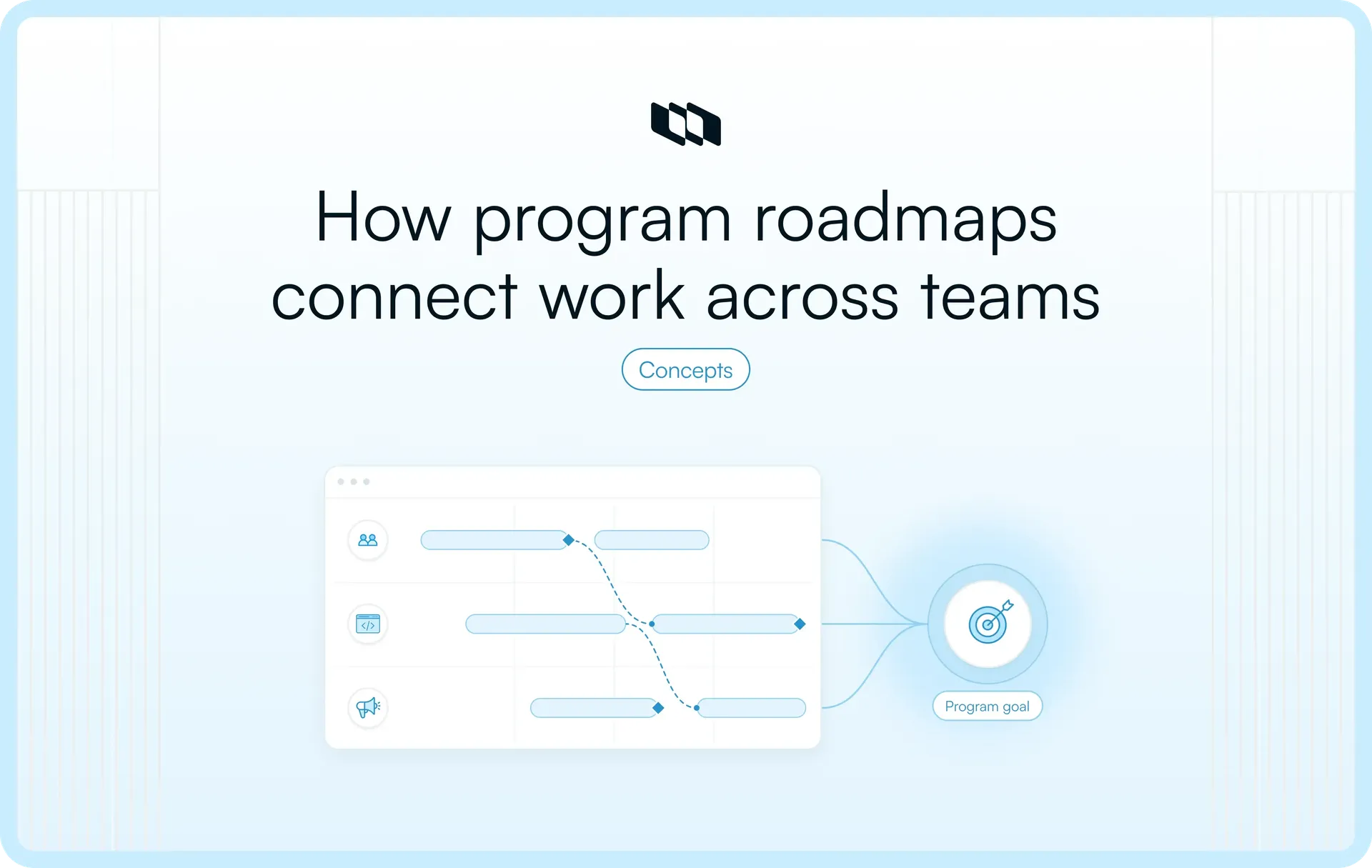
A program roadmap is a high-level visual plan that shows how multiple related projects and workstreams contribute to a shared strategic objective over time. It brings together major program phases, timelines, milestones, dependencies, and expected outcomes, giving stakeholders a consolidated view of how the program is expected to progress.
By connecting individual project deliverables with broader business goals, a program roadmap helps teams understand what needs to happen, in what sequence, and how progress in one project influences the others. It also provides a common reference for coordinating priorities and making program-level decisions.
How does a program roadmap work?
A program roadmap starts with a strategic objective and identifies the projects, activities, and outcomes required to achieve it. These are organized into a shared timeline, with major milestones marking important achievements and dependencies showing where one workstream relies on another.
For example, consider a company modernizing its technology infrastructure. The program might involve upgrading cloud infrastructure, migrating applications, strengthening security controls, and preparing operations teams. The roadmap shows how these workstreams overlap, which milestones must be completed before subsequent activities begin, and when the organization expects to realize the intended benefits.
As projects progress, the program manager uses the roadmap to review dependencies, assess upcoming milestones, and adjust the overall sequence when priorities or delivery conditions change.
When should teams use a program roadmap?
Program roadmaps are particularly useful when several related projects must be coordinated to achieve an outcome that extends beyond any individual project's scope.
Common situations include:
- Coordinating interdependent projects: Managing initiatives where one project's deliverables influence another project's schedule or readiness.
- Managing cross-functional initiatives: Aligning engineering, product, operations, and other departments working toward a shared objective.
- Planning large-scale organizational changes: Coordinating technology migrations, digital transformation programs, and enterprise-wide process improvements.
- Connecting execution with strategic goals: Helping leadership understand how project milestones contribute to planned business outcomes and when those outcomes are expected.
What are the key components of a program roadmap?
An effective program roadmap brings together the information needed to coordinate related projects, manage dependencies, and track progress toward shared business goals. While the level of detail varies by program, the following eight components provide a practical foundation for program-level planning.
1. Strategic goals and expected outcomes
Every program roadmap starts with a clear understanding of what the organization wants to achieve. Strategic goals establish the program's direction, while expected outcomes define the business improvements that its projects should collectively deliver.
For example, a technology modernization program might aim to improve system reliability, reduce infrastructure costs, and increase operational efficiency. These outcomes help determine which projects belong in the program and how their success will be evaluated.
2. Projects and workstreams
Projects and workstreams represent the major areas of work required to deliver the program's objectives. Each contributes specific capabilities or deliverables, while the program roadmap shows how these efforts fit together.
A software transformation program, for instance, might include infrastructure upgrades, application migration, security improvements, and employee training. Grouping these activities into distinct workstreams helps clarify their scope, responsibilities, and contribution to the overall program.
3. Program phases and timelines
Program phases divide the initiative into manageable stages, such as planning, implementation, validation, and rollout. Timelines indicate when each project or workstream is expected to begin, progress, and reach its major checkpoints.
The roadmap typically presents these stages across months or quarters, providing enough detail to understand the sequence of work and identify periods when multiple projects require coordination.
4. Key milestones and deliverables
Milestones represent significant achievements or decision points within the program, while deliverables are the outputs produced by individual projects.
A program roadmap highlights checkpoints such as infrastructure readiness, completion of a migration pilot, security approval, or production rollout. These milestones help stakeholders evaluate whether the program is progressing as planned and whether subsequent activities can proceed.
5. Cross-project dependencies
Cross-project dependencies identify relationships where progress in one project affects another. They are particularly important when teams share technical infrastructure, deliverables, resources, or approval requirements.
For example, an application migration may depend on infrastructure being provisioned and validated. Mapping this relationship helps program managers establish realistic work sequences, identify potential delays, and understand their impact across the program.
6. Resource allocation and ownership
A program roadmap should identify the teams or individuals accountable for major workstreams and indicate where critical resources are required.
This includes shared engineering capacity, specialist expertise, infrastructure, and external support. Visibility into ownership and resource requirements helps program managers identify competing demands and coordinate allocation decisions across projects.
7. Budgets, risks, and constraints
Programs operate within financial, operational, and technical boundaries. The roadmap should highlight major budget considerations, significant risks, and constraints that could influence delivery timelines or priorities.
These might include funding approvals, vendor dependencies, regulatory requirements, or limited specialist availability. Capturing them alongside program milestones helps stakeholders understand where decisions or contingency plans may be necessary.
8. Progress indicators and success metrics
Progress indicators show how program execution is advancing, while success metrics measure whether the intended outcomes are being achieved.
A program roadmap may track milestone completion, project health, dependency readiness, and benefit realization checkpoints. For a modernization program, outcome measures could include system availability, operating costs, or recovery performance. Together, these measures connect delivery progress with the program's broader objectives.
Why is a program roadmap important?
A program roadmap helps organizations maintain a coordinated view of multiple projects while keeping their collective progress tied to strategic priorities. It provides the visibility needed to manage shared resources, identify delivery risks, and make informed decisions throughout the program lifecycle.
- Aligns multiple projects with strategic objectives: A program roadmap connects individual project deliverables to the outcomes the organization wants to achieve. This helps teams understand how their work contributes to the broader program and keeps investment decisions focused on shared priorities.
- Improves coordination across teams and workstreams: When several teams contribute to the same program, their schedules and deliverables often overlap. A shared roadmap helps coordinate activities, clarify responsibilities, and ensure that teams plan their work around common milestones.
- Makes dependencies and potential bottlenecks visible: Mapping relationships between projects helps identify activities that rely on earlier deliverables, approvals, or shared resources. Program managers can use this visibility to anticipate scheduling conflicts and address potential delays before they affect other workstreams.
- Supports effective resource planning and prioritization: A program roadmap shows when major workstreams require people, funding, or technical resources. This helps managers identify competing demands, adjust priorities, and allocate limited capacity to activities that have the greatest impact on program progress.
- Improves stakeholder communication and transparency: A consolidated roadmap gives executives, project owners, and cross-functional teams a consistent view of upcoming milestones, delivery expectations, and program priorities. It also provides a useful reference for discussing progress, explaining schedule changes, and aligning stakeholder expectations.
- Enables better progress tracking and decision-making: By connecting milestones with expected outcomes, a program roadmap helps managers evaluate progress across related projects. When priorities shift or delivery risks emerge, they can assess the implications for the wider program and make informed adjustments to timelines, resources, or project sequencing.
What is the difference between a program roadmap, project roadmap, and portfolio roadmap?
Project, program, and portfolio roadmaps provide visibility into planned work at different levels of an organization. Their primary differences lie in the scope they cover, the decisions they support, and how they measure success. Understanding these distinctions helps teams choose the appropriate roadmap for planning and tracking their work.
Aspect | Project roadmap | Program roadmap | Portfolio roadmap |
Definition and purpose | Outlines the major activities and milestones required to deliver a specific project. | Connects related projects to coordinate delivery and achieve shared outcomes. | Provides an organization-wide view of projects and programs to guide strategic investment decisions. |
Scope of work | A single project with defined deliverables. | Multiple related projects and workstreams contributing to a common objective. | Multiple projects and programs that may serve different strategic objectives. |
Planning horizon | Covers the duration of an individual project. | Spans the lifecycle of a program, often across several phases or quarters. | Supports ongoing planning and prioritization across the organization's investments. |
Level of detail | Focuses on project phases, major activities, and delivery checkpoints. | Highlights cross-project milestones, dependencies, and coordinated workstreams. | Summarizes strategic priorities, investment allocations, and overall performance. |
Milestones and dependencies | Tracks milestones and dependencies within an individual project. | Tracks major milestones and dependencies across related projects. | Highlights strategic milestones and significant relationships across investments. |
Ownership and stakeholders | Managed by project managers for project teams and sponsors. | Managed by program managers for workstream leads, sponsors, and cross-functional stakeholders. | Managed by portfolio leaders or PMOs for executives and investment decision-makers. |
Success measures | Delivery against agreed scope, schedule, budget, and quality expectations. | Achievement of coordinated outcomes and intended program benefits. | Strategic alignment, investment performance, and overall portfolio value. |
Organizations use a project roadmap when planning the delivery of a specific initiative, such as launching a mobile application. A program roadmap becomes useful when several related projects, such as application development, infrastructure upgrades, and security improvements, must be coordinated to achieve a broader objective. A portfolio roadmap helps leadership evaluate these investments alongside other organizational priorities and decide where funding and resources should be allocated.
How do you create a program roadmap?
Creating a program roadmap involves translating strategic objectives into a coordinated plan for multiple projects and workstreams. The process requires identifying major deliverables, establishing dependencies, assessing available resources, and organizing work into a realistic timeline. These eight steps provide a practical approach to building a program roadmap.
1. Define the program's strategic objectives and expected benefits
Start by identifying the business problem the program addresses and the outcomes it should achieve. Establish measurable goals, such as improving system reliability, reducing operating costs, or accelerating product delivery.
These objectives guide project selection, prioritization, and decisions about the program's direction. Each proposed project should have a clear connection to at least one expected program benefit.
2. Identify the projects and workstreams involved
Break the program into related projects that collectively contribute to its objectives. Define the scope, expected deliverables, and accountable owner for each workstream.
Review how these projects fit together and identify any missing capabilities or activities that could affect the program's success. This provides a clearer understanding of what needs to be coordinated across teams.
3. Establish the program timeline and major phases
Determine the overall planning horizon and divide the program into logical phases, such as preparation, implementation, testing, and rollout.
Estimate when major workstreams can begin and how long they may take. Account for activities that can run simultaneously and those that require sequential execution, keeping the initial schedule flexible enough to accommodate changes.
4. Define key milestones and deliverables
Identify significant checkpoints that indicate meaningful progress across the program. These might include completing a technical assessment, validating a migration pilot, obtaining stakeholder approval, or launching a new capability.
Assign target dates, responsible owners, and completion criteria to major milestones. This helps teams understand what must be achieved before the program moves into subsequent phases.
5. Map dependencies across projects
Examine where one workstream relies on another for technical deliverables, decisions, approvals, or shared resources.
For example, application migration may depend on infrastructure provisioning and security validation. Document these relationships, identify the responsible teams, and adjust project sequencing to account for dependencies that could affect major milestones.
6. Assess resources, budgets, and potential risks
Review the people, funding, technical infrastructure, and external support required across the program. Identify where projects compete for the same specialists or where budget limitations could affect delivery.
Evaluate major risks, assess their potential impact, and incorporate appropriate contingencies. This helps establish a roadmap grounded in available capacity and realistic delivery conditions.
7. Prioritize activities and build the visual roadmap
Sequence projects and milestones according to their strategic importance, dependencies, and resource requirements.
Organize the roadmap into workstream lanes using a timeline or Gantt-style view. Show major phases, milestones, and dependencies while keeping detailed task schedules within individual project plans. The resulting visual should make the overall program sequence easy to understand.
8. Review the roadmap with stakeholders and establish an update cadence
Share the proposed roadmap with project owners, functional leads, and program sponsors to validate assumptions, timelines, dependencies, and resource commitments.
Resolve major conflicts before establishing the initial roadmap baseline. Set a regular review cadence to assess milestone progress, revisit priorities, and update the roadmap as delivery conditions change.
What are the common challenges of creating a program roadmap?
Creating a program roadmap requires balancing multiple projects, competing priorities, and shared resources. Several planning challenges can affect its accuracy and usefulness, especially as programs grow in complexity.
- Including too much project-level detail: Excessive tasks and minor deadlines clutter the roadmap, making major priorities harder to identify. Keep the focus on program phases, key milestones, and critical dependencies.
- Overlooking critical cross-project dependencies: Missing dependencies can delay several connected workstreams. Map important handoffs between projects, assign owners, and track their expected completion dates.
- Setting unrealistic timelines and milestones: Overly ambitious schedules can create delays across dependent projects. Validate estimates with project owners and allow contingency time for uncertain activities.
- Failing to account for resource constraints: Projects competing for the same people, budgets, or infrastructure can create bottlenecks. Review shared capacity and adjust project schedules based on resource availability.
- Misalignment between teams and stakeholders: Conflicting priorities and unclear expectations can disrupt program execution. Establish shared objectives, clarify responsibilities, and agree on major milestones before finalizing the roadmap.
- Tracking deliverables without measuring program outcomes: Completed milestones may provide limited insight into whether the program is achieving its goals. Track measurable business outcomes alongside project progress to evaluate overall success.
What are the best practices for maintaining a program roadmap?
A program roadmap needs regular updates to reflect changes in project progress, priorities, and resource availability. Consistent reviews help teams maintain an accurate view of the program and make timely decisions as work progresses.
- Review and update the roadmap regularly: Establish a consistent review schedule to assess milestones, timelines, and project progress. Update the roadmap when delivery plans or dependencies change.
- Keep program priorities aligned with strategic goals: Reassess whether ongoing projects continue to support the program's intended objectives. Adjust priorities when business needs or strategic direction change.
- Monitor dependencies, risks, and resource availability: Track critical handoffs, emerging risks, and shared resource demands. Address potential conflicts before they affect major program milestones.
- Communicate roadmap changes to stakeholders: Share updates on revised timelines, shifting priorities, and important decisions. Ensure project owners and stakeholders understand how changes affect their responsibilities.
- Track program outcomes alongside delivery progress: Monitor milestone completion and measurable business results together. This helps determine whether completed work is producing the expected program benefits.
- Keep project-level execution plans aligned with the roadmap: Ensure individual project schedules reflect program priorities and agreed milestones. When project plans change, assess their impact on the broader program timeline.
Conclusion
A program roadmap provides a clear view of how multiple projects, teams, and milestones contribute to shared strategic objectives. By mapping dependencies, aligning resources, and tracking expected outcomes, it helps program managers coordinate execution and make informed decisions throughout the program lifecycle.
With Plane, teams can connect strategic initiatives to project execution, monitor progress, and maintain visibility across related workstreams. Talk to sales to explore how Plane can support your program management workflows.
Frequently asked questions
1. What is the main purpose of a program roadmap?
The main purpose of a program roadmap is to coordinate multiple related projects toward shared strategic objectives. It provides a high-level view of program timelines, milestones, dependencies, and expected outcomes, helping teams align priorities, track progress, and make informed decisions across workstreams.
2. What is the difference between a program roadmap and a project roadmap?
A project roadmap outlines the major phases, milestones, and deliverables of a single project, while a program roadmap coordinates multiple related projects working toward a common objective. Program roadmaps emphasize cross-project dependencies, shared resources, and broader business outcomes, whereas project roadmaps focus on individual project delivery.
3. Who is responsible for creating and managing a program roadmap?
A program manager is typically responsible for creating, maintaining, and updating the program roadmap. They work with project managers, functional leads, and program sponsors to establish priorities, coordinate dependencies, validate timelines, and ensure the roadmap remains aligned with strategic objectives.
4. What is the difference between a program roadmap and a Gantt chart?
A program roadmap provides a high-level overview of related projects, major milestones, dependencies, and strategic outcomes. A Gantt chart is a scheduling visualization that displays activities against a timeline, including their durations and dependencies. Teams can use a Gantt-style view to visualize a program roadmap.
5. How often should a program roadmap be updated?
A program roadmap should be reviewed regularly, often monthly or at major program checkpoints, depending on the complexity and pace of execution. Updates are also necessary when project timelines, dependencies, resource availability, or strategic priorities change. Regular reviews help maintain accurate planning and stakeholder alignment.
Recommended for you



 Download for Mac
 Download for Android