What is a center of excellence (CoE)?
Introduction
A company hires great people, invests in tools, and builds experienced teams, yet the same operational problems keep resurfacing across departments. One team documents processes thoroughly, another relies on tribal knowledge, and a third rebuilds workflows from scratch every quarter. A center of excellence helps bring structure to that chaos. This guide explores what a center of excellence is, what a CoE does, the benefits of a center of excellence, and how organizations build CoEs that improve consistency, governance, and collaboration at scale.
What is a center of excellence (CoE)?
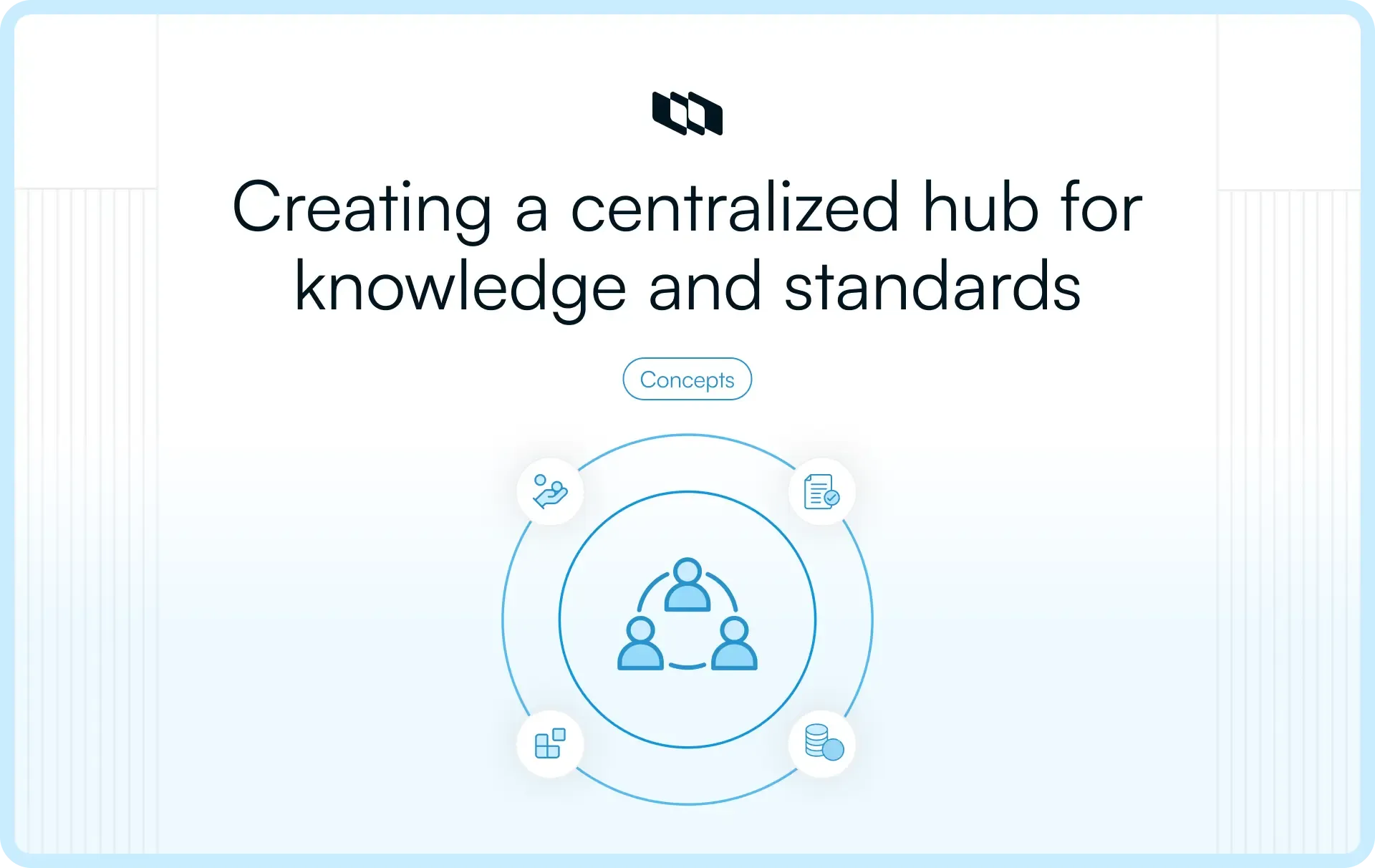
A center of excellence, or CoE, is a team or shared organizational function that helps improve how work happens across the company. It brings together expertise, best practices, frameworks, and guidance for a specific area such as engineering, operations, analytics, security, or product delivery.
Instead of each team creating its own processes independently, a CoE helps teams follow more consistent, proven ways of working. Organizations often use CoEs to improve collaboration, standardize workflows, and scale expertise across departments.
Defining Center of Excellence
A center of excellence is a group of specialists who help teams improve performance in a specific domain. The CoE serves as a central source of knowledge, standards, processes, and best practices for teams across the organization.
For example, an engineering center of excellence may define development standards and release practices, while a data center of excellence may focus on analytics, governance, and reporting consistency. The structure of a CoE can vary between organizations, but the goal stays the same: build expertise once and make it reusable across teams.
What is the purpose of a CoE?
The purpose of a center of excellence is to help organizations improve consistency, operational maturity, and knowledge sharing in an important area of the business.
A CoE usually helps teams:
- Standardize workflows and practices
- Improve collaboration across departments
- Create reusable templates and frameworks
- Support governance and compliance
- Scale expertise across teams
- Drive continuous improvement
Many organizations also use CoEs to support large initiatives such as Agile transformation, AI adoption, process automation, cloud migration, or DevOps modernization.
Why organizations create CoEs
Organizations usually create a center of excellence when teams start facing challenges that affect consistency and scalability. Different teams may begin using different workflows, repeatedly solving similar problems, or relying too heavily on isolated expertise.
A CoE helps bring structure to those areas by creating shared standards, improving visibility, and making expertise easier to scale across the organization. Companies also create CoEs to improve governance, support transformation initiatives, reduce duplicated effort, and continuously improve how teams work.
What does a center of excellence do?
A center of excellence helps teams work more consistently, scalably, and efficiently. Instead of managing day-to-day execution, a CoE focuses on improving how work happens across the organization. It establishes standards, shares expertise, provides guidance to teams, and helps departments follow proven practices more consistently.
The exact responsibilities depend on the type of CoE, but most centers of excellence focus on improving collaboration, reducing duplication of effort, and helping teams scale more effectively over time.
1. Defines standards and best practices
One of the main responsibilities of a center of excellence is creating shared standards and best practices for teams to follow. As organizations grow, teams often develop their own workflows and processes independently. A CoE helps bring more consistency by defining proven ways of working that teams across the organization can reuse.
For example, an engineering CoE may standardize release workflows and code review practices, while a project management CoE may create shared planning and reporting standards.
2. Builds frameworks, playbooks, and templates
A center of excellence also creates reusable resources that help teams work more efficiently.
These resources may include:
- Workflows and SOPs
- Onboarding guides
- Project templates
- Governance checklists
- Documentation standards
- Implementation playbooks
Instead of relying on scattered knowledge across teams, organizations use these shared resources to make processes easier to repeat and scale.
3. Supports teams with expertise and guidance
A CoE acts as a support and enablement function for the organization. It helps teams make better decisions by providing guidance, expertise, and operational recommendations.
For example, a security CoE may help engineering teams follow compliance standards, while a data CoE may guide teams on reporting structures and analytics practices.
The goal is to help teams improve execution while still allowing them to own their work.
4. Improves consistency and governance
As organizations scale, maintaining consistency across teams becomes more difficult. Different departments may use different workflows, documentation styles, or operational standards. A center of excellence helps align teams around shared practices, making work easier to manage, measure, and improve.
This is especially important in areas like:
- Compliance and security
- Delivery governance
- Engineering quality
- Reporting standards
- Operational processes
Shared standards improve visibility, reduce confusion, and help teams maintain higher quality across projects.
5. Drives improvement across the organization
A center of excellence continuously improves how teams operate. It reviews existing processes, identifies gaps, and updates standards as the organization evolves.
For example, a DevOps CoE may refine deployment practices after identifying recurring delivery bottlenecks, while an operations CoE may improve workflows that slow down cross-team collaboration.
This continuous improvement approach helps organizations scale more effectively over time.
Center of excellence vs. department vs. team vs. community of practice
A center of excellence is often confused with departments, project teams, PMOs, or communities of practice because all of them contribute to how work gets done inside an organization. The difference usually comes down to purpose, ownership, and scope.
Structure | Primary focus | Scope | Main responsibility |
Center of excellence (CoE) | Expertise, standards, and enablement | Cross-functional | Improves how teams work across the organization |
Department | Functional execution | Specific business function | Delivers operational work within a team or function |
Project team | Project delivery | Temporary and initiative-based | Delivers a defined outcome within a timeline |
Community of practice | Knowledge sharing and peer learning | Informal and collaborative | Shares ideas, experiences, and practices |
PMO | Project governance and oversight | Organization-wide or portfolio-level | Tracks delivery, reporting, budgets, and compliance |
Center of excellence vs. department
Departments are responsible for executing work within a function. For example, engineering teams build products, marketing teams run campaigns, and operations teams manage business processes. A center of excellence focuses on improving how those teams operate. It creates standards, frameworks, best practices, and reusable systems that help departments work more consistently and efficiently.
For example, an engineering department may own product delivery, while an engineering CoE may define release standards, architecture practices, and development workflows used across multiple teams.
Center of excellence vs. project team
- Project teams are formed to deliver a specific initiative within a defined timeline. Their focus is execution and delivery.
- A center of excellence supports long-term capability development across many projects and teams. Instead of owning one initiative, it helps improve how projects are planned, executed, and governed across the organization.
For example, a project team may implement a cloud migration, while a cloud CoE defines the infrastructure standards and governance practices for future cloud initiatives.
Center of excellence vs. community of practice
- Communities of practice are usually informal groups in which people share ideas, discuss challenges, and learn from one another.
- A center of excellence is more structured and operationally accountable. It often has defined ownership, measurable goals, governance responsibilities, and organizational support.
For example, an Agile community of practice may organize discussions around sprint planning, while an Agile CoE may create delivery standards, reporting structures, and coaching programs for teams across the business.
Center of Excellence vs. PMO
- A PMO, or project management office, typically focuses on project oversight, reporting, timelines, budgets, and governance.
- A center of excellence focuses more on improving expertise and operational maturity in a specific domain. It helps teams adopt better practices, frameworks, and systems over time.
For example, a PMO may monitor project delivery performance, while a project management CoE may create planning templates, workflow standards, and project management best practices for teams across the organization.
Why do organizations set up a center of excellence
A center of excellence helps organizations create more structured and scalable ways of working by centralizing expertise, improving standards, and providing shared guidance to teams.
1. To reduce duplicated effort
As organizations grow, teams often end up solving the same problems independently. Different departments may create separate workflows, templates, reporting systems, or operational processes for similar types of work. A center of excellence helps reduce this duplication by creating shared frameworks and reusable resources that teams across the organization can adopt.
For example, instead of every engineering team defining its own release process, an engineering CoE can create standardized release workflows and documentation practices that work across multiple teams.
2. To standardize how teams work
One of the biggest reasons organizations build CoEs is to improve consistency across teams. Without shared standards, teams may use different tools, documentation structures, planning methods, or governance practices. This makes collaboration harder and creates operational friction as the organization scales.
A center of excellence helps align teams around common processes, standards, and best practices while still allowing flexibility for different use cases.
3. To build and scale specialized expertise
In many organizations, deep expertise exists within a small group of people or teams. Over time, this creates knowledge silos that make scaling difficult. A center of excellence helps organizations distribute expertise more effectively by documenting best practices, creating reusable guidance, and supporting teams across departments.
For example, a data center of excellence may help multiple teams improve analytics practices, governance standards, and reporting quality, rather than keeping that expertise isolated within a single function.
4. To support growth and transformation
Organizations often create CoEs when adopting new capabilities or scaling major operational changes.
This may include:
- Agile transformation
- AI adoption
- Cloud migration
- Process automation
- DevOps modernization
- Enterprise governance initiatives
A center of excellence provides the structure, guidance, and operational support needed to help teams adopt these changes more consistently across the organization.
5. To improve governance without slowing teams down
As organizations scale, governance becomes increasingly important. Teams need clearer standards for quality, security, compliance, reporting, and operational processes. A well-run center of excellence helps create that structure without introducing unnecessary operational overhead. Instead of controlling every decision, the CoE provides teams with clear frameworks, reusable systems, and guidance to help them move faster and achieve better alignment. This balance between consistency and flexibility is one of the biggest reasons organizations invest in centers of excellence.
Benefits of a center of excellence
A center of excellence helps organizations create more scalable, consistent, and efficient ways of working. Instead of every team operating independently, a CoE gives teams shared systems, guidance, and expertise that improve execution across the business.
The benefits of a center of excellence become more visible as organizations grow and operational complexity increases.
1. Better consistency across teams
A center of excellence helps teams follow shared standards, workflows, and best practices across the organization. This reduces process drift across departments and improves consistency in areas such as documentation, delivery, governance, reporting, and operational quality.
For example, an engineering CoE may standardize release processes across teams, while a project management CoE may align teams around shared planning and reporting practices.
2. Faster access to proven practices
Teams move faster when they can reuse proven systems rather than build new processes from scratch. A center of excellence creates reusable frameworks, templates, workflows, and playbooks that help teams start with established practices rather than repeatedly solving the same operational problems. This reduces onboarding time, speeds up execution, and improves decision-making across projects.
3. Better knowledge sharing
Many organizations struggle with knowledge silos where expertise stays concentrated within a few teams or individuals. A center of excellence helps make that expertise reusable across the organization through documentation, training, governance models, and shared guidance.
This improves collaboration and helps teams access specialized knowledge more easily when working on new initiatives or solving operational challenges.
4. Stronger governance and lower risk
As organizations scale, maintaining governance across teams becomes increasingly important. A center of excellence helps teams stay aligned with operational standards, compliance requirements, security practices, and delivery expectations without creating unnecessary complexity. This improves visibility, reduces operational risk, and helps organizations maintain higher quality across projects and processes.
5. Better ROI from tools, systems, and processes
Organizations often invest heavily in tools, platforms, and operational systems, but adoption can vary significantly across teams. A center of excellence helps teams use those systems more effectively by creating shared processes, implementation guidance, standards, and best practices. This improves consistency across teams and helps organizations get more value from existing investments.
6. More room for continuous improvement
A center of excellence creates structured feedback loops that help organizations improve how teams operate over time. By regularly reviewing workflows, identifying operational gaps, and refining standards, CoEs help organizations evolve their processes as business needs change.
This continuous improvement approach supports long-term operational maturity instead of treating improvement as a one-time initiative.
When does an organization need a CoE?
A CoE becomes valuable when the organization needs more structured ways to scale expertise, governance, and operational standards across departments.
1. When teams work in silos
Teams working independently often develop their own workflows, tools, documentation standards, and decision-making processes over time. This creates inconsistencies across the organization and increases duplicated effort between teams solving similar problems separately.
A center of excellence helps create shared guidance and operational alignment, enabling teams to work more consistently while still supporting diverse business needs.
2. When expertise is scattered
In many organizations, critical knowledge exists within a small group of people or isolated teams. This makes scaling difficult because other teams may struggle to access expertise, follow best practices, or make informed decisions without relying heavily on a few specialists.
A center of excellence helps centralize and distribute that knowledge through documentation, frameworks, training, and operational support.
3. When processes are inconsistent across the business
As organizations grow, process inconsistencies often become more visible across departments. Different teams may follow different approval systems, reporting methods, planning structures, governance practices, or operational standards. Over time, this creates confusion, delays, and uneven execution quality.
A center of excellence helps organizations create more consistent ways of working while improving visibility and operational discipline across teams.
4. When a capability becomes strategically important
Organizations often build CoEs when a specific capability becomes critical for long-term growth or transformation. This may include areas such as:
- AI and automation
- Data and analytics
- Engineering operations
- Cybersecurity
- Agile delivery
- Cloud infrastructure
- Process improvement
A center of excellence helps organizations strengthen these capabilities by building expertise, defining standards, and supporting adoption across teams.
5. When scaling starts to create operational friction
Growth often exposes gaps that smaller teams can manage informally. As more teams, tools, and workflows get added, coordination becomes harder, and operational inconsistencies increase.
Organizations may start seeing:
- Duplicated processes
- Inconsistent reporting
- Unclear ownership
- Fragmented documentation
- Slower cross-team collaboration
- Varying quality standards
A center of excellence helps reduce this friction by creating shared frameworks, operational guidance, and reusable systems that scale more effectively across the organization.
Core elements of an effective center of excellence
A center of excellence becomes effective when it has clear ownership, structured processes, and strong organizational support. Without these foundations, CoEs often struggle with adoption, unclear responsibilities, or inconsistent impact across teams.
The most successful CoEs focus on creating practical systems that teams can actually use and scale over time.
1. A clear charter and scope
Every center of excellence needs a clearly defined mission, area of ownership, and operating scope.
Teams should understand:
- What the CoE is responsible for
- Which teams or functions it supports
- What standards or processes it manages
- Where its authority begins and ends
Clear boundaries help reduce confusion and make collaboration easier across departments.
For example, a security CoE may own compliance standards and security frameworks, while individual engineering teams still manage day-to-day product delivery.
2. Executive sponsorship
Leadership support plays an important role in the long-term success of a center of excellence.
Executive sponsorship helps CoEs:
- Gain organizational visibility
- Secure resources and funding
- Improve adoption across teams
- Align initiatives with business priorities
Without leadership support, CoEs often struggle to influence cross-functional processes consistently across the organization.
3. Cross-functional participation
The strongest centers of excellence usually include people from multiple teams and disciplines. This helps the CoE build standards and workflows that work across real operational environments rather than optimizing for a single team.
For example, an Agile CoE may include engineering managers, product leaders, delivery teams, operations stakeholders, and project managers to create practices that support broader organizational needs.
Cross-functional participation also improves adoption because teams feel more involved in shaping shared standards and processes.
4. Shared documentation and resources
A center of excellence needs practical resources that teams can easily access and apply in day-to-day work. These resources may include:
- Workflows and SOPs
- Templates and checklists
- Onboarding guides
- Governance frameworks
- Training materials
- Implementation playbooks
- Documentation standards
Well-maintained documentation helps organizations scale expertise more effectively across teams.
5. Governance and accountability
An effective CoE needs structure, ownership, and review mechanisms to stay aligned with organizational goals. This usually includes:
- Defined leadership roles
- Process ownership
- Review cycles
- Approval structures
- Adoption tracking
- Operational accountability
Governance helps ensure that standards stay relevant, processes continue improving, and teams remain aligned around shared ways of working.
6. Success metrics
Organizations should measure whether a center of excellence is improving operational outcomes across teams. The exact metrics depend on the type of CoE, but common areas include:
- Process adoption
- Delivery consistency
- Workflow efficiency
- Governance compliance
- Operational maturity
- Quality improvements
- Reduction in duplicated effort
Tracking these metrics helps organizations understand the CoE's long-term impact and identify areas for improvement.
How to build a center of excellence
The goal is to create a system that improves how teams work at scale while remaining practical enough for day-to-day operations.
1. Identify the problem or capability gap
The first step is understanding why the organization needs a center of excellence in the first place.
Most CoEs are created to solve challenges such as:
- Inconsistent processes across teams
- Duplicated operational effort
- Fragmented expertise
- Governance gaps
- Delivery inefficiencies
- Scaling challenges in strategic areas
Clearly identifying the problem helps organizations define the scope and priorities of the CoE more effectively.
2. Define the mission and desired outcomes
A center of excellence should have a clearly defined mission tied to business goals.
Teams should understand:
- What the CoE aims to improve
- Which capabilities it supports
- What outcomes it is responsible for
- How success will be measured
For example, a DevOps CoE may focus on improving deployment consistency and infrastructure governance, while an AI CoE may focus on standardizing AI adoption practices across teams.
Clear goals help organizations keep the CoE focused on measurable operational improvements.
3. Choose the right focus area and operating model
Organizations need to decide how the CoE will operate and what level of responsibility it will have across teams.
Some CoEs mainly provide guidance and standards, while others also support governance, training, implementation, or operational reviews.
The organization should define:
- What the CoE owns
- What it influences
- Which teams it supports
- How teams interact with it
- How decisions are made
This helps create clearer expectations and operational boundaries.
4. Assign leaders, sponsors, and stakeholders
A successful center of excellence needs strong leadership and cross-functional involvement. Most organizations assign:
- Executive sponsors for visibility and alignment
- Operational leaders to manage the CoE
- Subject matter experts from key functions
- Stakeholders from teams that will use the CoE’s standards and processes
This combination helps the CoE stay aligned with both business priorities and day-to-day operational realities.
5. Build standards, templates, and enablement resources
Once the structure is defined, the CoE can start turning expertise into reusable operational systems. This may include:
- Workflows and SOPs
- Templates and checklists
- Governance frameworks
- Onboarding resources
- Reporting standards
- Implementation playbooks
- Training materials
These resources help teams adopt shared practices more consistently across the organization.
6. Roll it out across teams
A center of excellence becomes valuable when teams actively use its processes, standards, and resources. Successful rollout usually includes:
- Internal communication
- Onboarding sessions
- Workshops and training
- Pilot programs
- Documentation support
- Feedback loops with teams
This helps improve adoption while making it easier to refine standards based on real operational feedback.
7. Measure, refine, and improve over time
A center of excellence should continuously evolve as the organization grows and operational needs change. Teams should regularly review:
- Adoption levels
- Process effectiveness
- Workflow bottlenecks
- Governance outcomes
- Delivery consistency
- Operational efficiency
These insights help organizations refine the CoE over time rather than treating it as a one-time operational initiative.
Best practices for running a center of excellence
Setting up a center of excellence is only the first step. Long-term success depends on how well the CoE supports teams, improves adoption, and evolves alongside the organization. The most effective CoEs focus on creating practical systems that teams can apply easily in real operational environments.
1. Keep it enabling, not bureaucratic
A center of excellence should help teams work more effectively, not slow them down with unnecessary approvals or operational overhead. The goal is to create clarity, guidance, and reusable systems that improve execution across teams. Processes should remain practical, lightweight, and easy to adopt. Teams are far more likely to follow standards that simplify work than to add friction to day-to-day operations.
2. Focus on adoption, not just documentation
Documentation alone does not improve operational maturity. Standards only create value when teams actively use them. A successful CoE focuses on helping teams apply standards consistently through onboarding, operational support, collaboration, and continuous feedback. This makes processes easier to adopt in real-world working environments rather than turning documentation into static reference material.
3. Build reusable systems
Strong centers of excellence create systems that teams can reuse across projects and departments. This may include workflows, governance frameworks, onboarding structures, implementation playbooks, reporting standards, and operational templates. Reusable systems reduce duplicated effort and make expertise easier to scale across the organization.
4. Review and update practices regularly
Operational needs evolve as organizations grow. Processes that work well for smaller teams may become inefficient as workflows, responsibilities, and delivery complexity increase. A center of excellence should continuously review workflow effectiveness, operational bottlenecks, adoption patterns, and team feedback. Regular updates help the CoE stay aligned with changing business needs and operational realities.
5. Balance consistency with flexibility
Shared standards improve alignment across teams, but rigid processes can create unnecessary operational friction. A good center of excellence provides structured guidance while still allowing teams the flexibility to adapt to project requirements, team structures, and operational complexity. This balance helps organizations maintain consistency without forcing every team into identical workflows.
Final thoughts
A center of excellence helps organizations turn expertise into a scalable operational advantage. Instead of allowing knowledge, workflows, and standards to stay fragmented across teams, a CoE creates shared systems that improve consistency, collaboration, governance, and execution across the business.
The most effective centers of excellence focus on enablement rather than control. They help teams move faster with clearer standards, reusable frameworks, and better operational support. As organizations grow, this becomes increasingly important for maintaining alignment across functions while still allowing teams the flexibility to adapt and execute effectively.
Whether the focus is engineering, delivery operations, AI adoption, analytics, security, or process improvement, a well-structured center of excellence gives organizations a practical way to scale expertise, improve maturity, and continuously refine how teams work over time.
Frequently asked questions
Q1. What is the concept of a center of excellence?
A center of excellence, or CoE, is a team or organizational function created to build expertise, standardize practices, and improve how teams work in a specific area. Organizations use CoEs to share knowledge, improve consistency, support governance, and scale operational maturity across departments.
Q2. What is considered a center of excellence?
A center of excellence is typically a centralized source of expertise in a specific capability, such as engineering, analytics, AI, cybersecurity, operations, or project management. A CoE typically creates standards, frameworks, training resources, governance models, and best practices that multiple teams across the organization can use.
Q3.Which is the center of excellence?
There is no single universal center of excellence because CoEs vary by organization and its priorities. Companies may create engineering, AI, Agile, analytics, security, or process improvement CoEs based on the capabilities they want to strengthen across teams.
Q4. What is the center of excellence in India?
In India, the term "center of excellence" is often used to describe specialized institutions, innovation hubs, research centers, or organizational capability teams focused on areas such as technology, AI, manufacturing, engineering, healthcare, analytics, and digital transformation. Many enterprises and government-supported initiatives in India establish CoEs to enhance innovation, skill development, and operational excellence across strategic sectors.
Q5. What are the benefits of a CoE?
The benefits of a center of excellence include greater consistency across teams, improved knowledge sharing, stronger governance, reduced duplication of effort, faster adoption of best practices, and better operational scalability. A CoE also helps organizations improve long-term operational maturity by creating reusable systems, frameworks, and guidance that support teams across the business.
Recommended for you



 Download for Mac
 Download for Android