What is an iterative process in project management?
Introduction
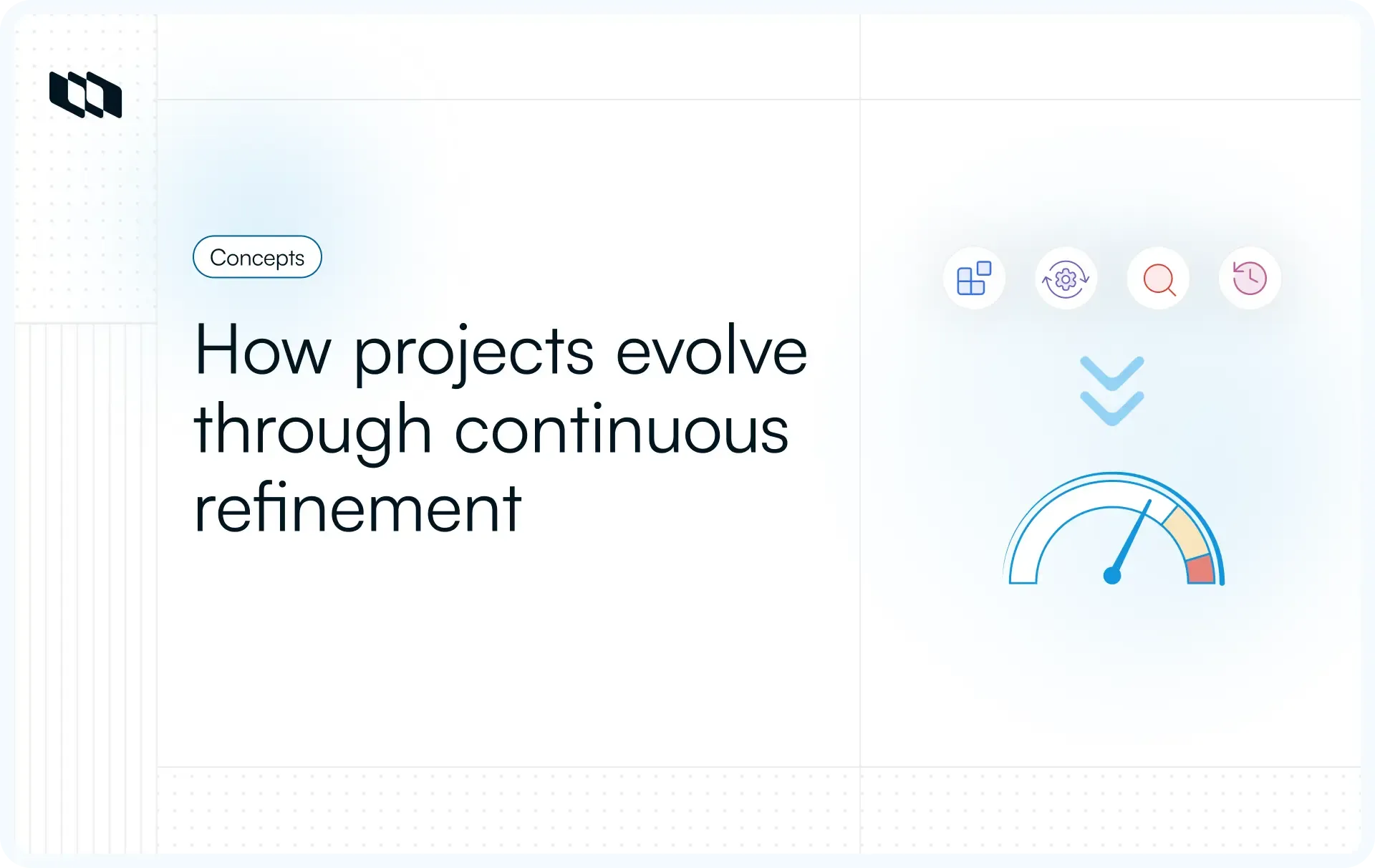
Building successful projects often involves learning along the way. Customer feedback, technical discoveries, and shifting priorities shape the final outcome long after planning begins. An iterative project management approach embraces that reality by turning learning into a repeatable process. Teams plan, build, review, and refine their work through multiple iterations, creating opportunities for improvement at every stage. In this guide, you'll learn how the iterative process works, its benefits, and how teams apply it across projects.
What is an iterative process in project management?
Most projects evolve as teams learn more about the problem, the solution, and stakeholder expectations. An iterative process provides a structured way to incorporate those learnings throughout the project lifecycle.
An iterative process in project management is an approach in which work is completed through repeated cycles, called iterations. During each iteration, teams plan, execute, review results, gather feedback, and make improvements before moving to the next cycle.
Instead of aiming to deliver a final solution in a single attempt, teams progressively refine their work over multiple iterations. Each cycle builds on the insights gained from the previous one, helping teams improve quality, reduce uncertainty, and stay aligned with project goals.
Key characteristics of an iterative process
- Repeated development cycles: Work progresses through multiple iterations, with each cycle contributing to a more refined outcome.
- Continuous feedback and learning: Teams use feedback from stakeholders, customers, and testing activities to guide future improvements.
- Incremental improvements over time: Every iteration adds value by improving functionality, quality, or user experience.
- Flexible response to changing requirements: Teams can adapt priorities and make adjustments as new information becomes available.
- Frequent review and refinement: Regular evaluation helps identify improvements before they become larger issues.
- Early visibility into progress: Stakeholders can review working outputs throughout the project rather than waiting until final delivery.
Why is the iterative process important?
Many projects begin with a clear objective but evolve as teams gather new information. Customer expectations shift, technical constraints emerge, and priorities change throughout execution. An iterative process helps teams respond to these realities by creating regular opportunities to review progress, incorporate feedback, and improve outcomes. Let's have a look at why the iterative process is important:
1. Helps teams manage uncertainty
Teams rarely have complete information at the start of a project. An iterative project management approach allows them to learn as they execute, validate assumptions, and make informed adjustments throughout the project lifecycle. This creates a more practical path for managing complex or evolving work.
2. Reduces project risk
Issues identified early are easier and less expensive to address. Because iterative projects include regular reviews and testing, teams can spot gaps, technical challenges, or misaligned requirements before they affect larger portions of the project.
3. Improves collaboration
An iterative process keeps stakeholders involved through recurring feedback and review cycles. Regular communication creates better alignment between teams, decision-makers, and end users, helping everyone stay focused on the same goals.
4. Leads to higher-quality outcomes
Each iteration provides an opportunity to evaluate and improve the work produced so far. Feedback, testing, and refinement help teams enhance quality incrementally rather than relying on a single review phase at the end.
5. Supports faster decision-making
Frequent feedback creates a steady flow of information that teams can use to make decisions with greater confidence. Instead of waiting for project completion, teams can prioritize improvements and adjust direction based on real-world insights.
How does the iterative process work?
Now that we've covered why the iterative process is valuable, let's look at how it works in practice.
Plan → Build → Test → Review → Improve → Repeat
1. Define objectives
Each iteration begins with a clear goal. Teams identify what they want to achieve during the cycle, whether it's developing a feature, improving a workflow, or validating a specific assumption.
2. Create an initial solution
The team develops a working version of the solution based on the objectives defined for the iteration. The focus is on delivering something usable that can be evaluated and improved.
3. Test and review outcomes
Once the work is completed, the team assesses how well it performs against the intended goals. Testing, reviews, and performance checks help uncover strengths and areas for improvement.
4. Gather feedback
Feedback from users, stakeholders, customers, or team members provides valuable insights into what is working and what could be enhanced in future iterations.
5. Improve the solution
The team prioritizes findings from testing and feedback, then incorporates relevant improvements into the next version of the solution.
6. Repeat the cycle
The process continues through additional iterations until the project achieves its objectives. Each cycle builds on the lessons learned from the previous one, creating steady progress and continuous improvement.
The 5 stages of the iterative process
The iterative process follows a structured cycle that helps teams turn feedback and learning into continuous improvement. While the exact workflow may vary across organizations, most iterative project management approaches follow the same five stages. Each stage contributes to building, validating, and refining the solution before the next iteration begins.
1. Planning and requirement gathering
Every iteration starts with defining what success looks like for that cycle. Teams identify the objectives, determine priorities, and establish the scope of work they want to complete.
During this stage, teams typically:
- Define iteration goals and expected outcomes
- Identify project constraints such as budget, timeline, or resources
- Prioritize requirements and work items
- Establish success metrics to evaluate results
- Align stakeholders on expectations
The goal is to create enough clarity for execution while maintaining flexibility for future iterations.
2. Design and solution development
Once objectives are defined, teams begin designing the solution that will be developed during the iteration. Depending on the project, this could be a product feature, a process improvement, a prototype, a workflow, or an operational initiative.
Activities in this stage may include:
- Creating solution designs or wireframes
- Developing workflows and process maps
- Preparing technical specifications
- Defining acceptance criteria
- Building prototypes or proof-of-concepts
The focus is on creating a practical solution that can be tested and improved, rather than attempting to perfect every detail up front.
3. Implementation
Implementation is where the planned work moves into execution. Teams build, develop, or deliver the solution based on the objectives and designs created during earlier stages.
This stage often involves:
- Developing features or deliverables
- Completing assigned tasks
- Collaborating across teams
- Tracking progress against iteration goals
- Resolving blockers and dependencies
By the end of this stage, the team should have a working version of the solution ready for evaluation.
4. Testing and feedback collection
Testing validates whether the solution achieves the desired outcome. At the same time, feedback collection helps teams understand how users, stakeholders, or customers experience the delivered work.
Common activities include:
- Functional testing and quality reviews
- Stakeholder demonstrations
- User acceptance testing
- Performance evaluations
- Feedback sessions and surveys
This stage provides the insights needed to determine what should be improved, expanded, or adjusted in future iterations.
5. Evaluation and refinement
The final stage focuses on turning feedback into action. Teams analyze results, identify lessons learned, and decide how the solution should evolve in the next iteration.
During evaluation and refinement, teams typically:
- Review iteration performance against success metrics
- Analyze feedback and testing results
- Document key learnings
- Prioritize improvements and enhancements
- Update plans for the next iteration
Once refinement decisions are made, the cycle begins again. Each iteration builds on the knowledge gained from previous cycles, allowing teams to deliver increasingly effective solutions while staying aligned with project goals.
What does an iteration include?
Understanding the stages of an iterative process is helpful, but it's equally important to know what teams actually manage within each iteration. While the size and complexity of iterations vary from project to project, most follow a similar structure that helps teams stay focused, measure progress, and capture learnings for future improvements.
1. Objectives
Every iteration begins with a clear objective. This defines what the team wants to achieve during the cycle, whether it's delivering a feature, improving a workflow, or validating an idea.
2. Scope
The scope outlines the work to be completed during the iteration. A well-defined scope helps teams focus on priorities and maintain alignment throughout the cycle.
3. Tasks and deliverables
Each iteration consists of specific tasks assigned to team members along with expected deliverables. These work items translate iteration goals into actionable work.
4. Reviews and checkpoints
Teams conduct regular reviews to assess progress and ensure work remains aligned with objectives. These checkpoints create opportunities to identify issues early and make adjustments when needed.
5. Feedback and learnings
Feedback gathered from stakeholders, customers, testing activities, or team discussions helps inform future iterations. Capturing these learnings ensures that each cycle contributes to continuous improvement and better project outcomes.
An iterative process example in project management
The best way to understand an iterative process is to see it in action. Consider a product team building a customer-facing project dashboard. Rather than spending months developing every feature upfront, the team delivers an initial version, gathers feedback, and improves the dashboard through multiple iterations.
Iteration 1: Establish the foundation
The team's first goal is to create a functional dashboard that gives users visibility into their projects.
What the team delivers:
- Basic dashboard layout
- Key project metrics and status indicators
- Simple navigation structure
What they learn:
After sharing the dashboard with users, the team discovers that customers can view project data but struggle to find specific information quickly.
Key feedback:
- Users need filtering options
- Data visibility feels limited for larger projects
Iteration 2: Improve usability
Using the feedback from the first iteration, the team focuses on making the dashboard easier to navigate and customize.
What the team delivers:
- Filters for projects, teams, and statuses
- Improved data grouping
- Enhanced dashboard navigation
What they learn:
Users can now find information more efficiently, but stakeholders want additional ways to share and analyze project data.
Key feedback:
- Reporting capabilities would improve decision-making
- Export functionality would help teams share updates
Iteration 3: Expand functionality
With a clearer understanding of user needs, the team adds features that increase the dashboard's value for both customers and stakeholders.
What the team delivers:
- Reporting and export features
- Performance improvements
- Additional dashboard refinements based on user behavior
The outcome
If the team had attempted to build the complete dashboard upfront, many of these requirements would have emerged much later in the project. Through an iterative process, they were able to release a usable solution early, gather real-world feedback, and continuously improve the product.
Each iteration made the dashboard more useful, more aligned with customer needs, and more valuable to the business. That's the core advantage of iterative project management: teams learn through execution and use those insights to guide future improvements.
When should teams use an iterative process?
An iterative process delivers the most value when teams expect learning, feedback, and adaptation to play a significant role in project success. In these situations, repeated cycles of planning, execution, and refinement help teams make better decisions and deliver stronger outcomes over time.
1. Product development projects
Product teams often gather new insights from customers throughout the development lifecycle. An iterative approach helps teams refine features, improve user experiences, and align product decisions with real user needs.
2. Software development initiatives
Software projects benefit from frequent testing, stakeholder reviews, and continuous improvement. Iterations allow teams to deliver working functionality, identify issues early, and incorporate feedback throughout development.
3. Projects with evolving requirements
Some projects begin with broad objectives while detailed requirements emerge over time. An iterative process provides the flexibility needed to adapt plans and priorities as new information becomes available.
4. Innovation and experimentation efforts
Projects involving new ideas, technologies, or business models often require testing and validation. Iterations help teams evaluate assumptions, learn from results, and refine solutions based on evidence.
5. Customer-driven projects
When customer feedback directly influences project outcomes, iterative development creates regular opportunities to gather input and make improvements before final delivery.
6. Process improvement initiatives
Teams looking to improve internal workflows, operational processes, or team efficiency can use iterations to implement changes gradually, measure results, and refine their approach.
7. Complex cross-functional projects
Projects involving multiple teams, stakeholders, and dependencies benefit from regular checkpoints and feedback loops. Iterative project management helps maintain alignment while allowing teams to respond effectively to changing needs and priorities.
Benefits of the iterative process
The iterative process has become a widely adopted project management approach because it helps teams balance execution with continuous learning. Rather than relying on a single delivery cycle, teams improve outcomes through regular feedback, testing, and refinement. The result is better project visibility, stronger alignment with stakeholder expectations, and higher-quality deliverables.
1. Earlier feedback
Iterative project management creates opportunities to gather feedback throughout the project rather than waiting until delivery. Teams can validate assumptions, understand stakeholder expectations, and identify improvement areas while work is still in progress.
2. Reduced risk
Regular reviews and testing help teams uncover issues early in the project lifecycle. Technical challenges, requirement gaps, and usability concerns can be addressed before they grow into larger problems that impact timelines or budgets.
3. Improved quality
Each iteration provides a chance to evaluate results and make improvements. Through repeated cycles of testing, review, and refinement, teams can steadily enhance the quality of the final deliverable.
4. Greater flexibility
Projects often evolve as new information becomes available. An iterative process allows teams to adjust priorities, incorporate new requirements, and respond to changing business needs without disrupting the entire project.
5. Increased customer satisfaction
Customer needs become clearer through ongoing feedback and collaboration. By incorporating those insights throughout development, teams can deliver solutions that better align with user expectations and provide greater value over time.
Common challenges of the iterative process
While the iterative process offers significant advantages, successful implementation requires discipline and clear decision-making. Without the right guardrails, teams can struggle to maintain focus, manage feedback effectively, and keep projects moving forward. Here are four common challenges teams encounter when managing iterative projects.
1. Scope creep
Frequent feedback often generates new ideas, feature requests, and improvement suggestions. While many of these inputs are valuable, continuously expanding the scope of an iteration can affect timelines, priorities, and team focus. Clear prioritization helps teams balance improvement with delivery.
2. Too many revisions
An iterative approach encourages refinement, but excessive revisions can slow progress. Teams benefit from establishing clear objectives for each iteration and focusing on meaningful improvements that support project goals.
3. Unclear iteration goals
Each iteration should have a well-defined outcome. When goals are vague or priorities shift frequently, teams may struggle to make decisions, measure progress, or determine whether an iteration has been successful.
4. Difficulty defining completion
Since iterative projects focus on continuous improvement, teams sometimes find it challenging to decide when the solution is ready. Defining success criteria early helps establish clear expectations and provides a practical endpoint for delivery.
Iterative process vs. incremental process
The terms iterative and incremental are often used together, and many teams assume they mean the same thing. While both approaches support progressive delivery, they solve different problems.
An iterative process focuses on improving an existing solution through repeated cycles of feedback and refinement. An incremental process focuses on expanding a solution by adding new functionality over time.
Factor | Iterative process | Incremental process |
Focus | Improving existing work | Adding new functionality |
Delivery | Repeated refinement | Gradual expansion |
Feedback usage | Drives improvements | Guides future additions |
Goal | Better version of the same solution | Larger overall solution |
To understand the difference, imagine a team building a project dashboard.
- In an iterative approach, the team releases a dashboard, gathers feedback, and improves it across multiple iterations by enhancing navigation, performance, and usability.
- In an incremental approach, the team starts with a basic dashboard and gradually adds new capabilities such as filters, reporting, exports, and custom views.
In practice, most modern product and software teams use both approaches together. They deliver functionality incrementally while continuously refining existing features through iterations. This combination helps teams deliver value faster while maintaining flexibility and quality throughout the project lifecycle.
Iterative process vs. waterfall project management
Both iterative and waterfall project management approaches help teams deliver projects, but they differ significantly in how work is planned, executed, and reviewed. The right approach depends on the project's complexity, level of uncertainty, and likelihood of changing requirements.
Factor | Iterative | Waterfall |
Planning | Adaptive | Sequential |
Feedback | Continuous | Late-stage |
Flexibility | High | Lower |
Risk management | Ongoing | Front-loaded |
Best suited for | Complex and evolving projects | Stable and predictable projects |
Iterative process vs. Agile
The terms iterative and Agile are often used interchangeably, but they refer to different concepts. An iterative process is a way of executing and improving work through repeated cycles, while Agile is a broader approach to managing and delivering projects.
Factor | Iterative process | Agile |
Definition | A development approach based on repeated cycles and continuous improvement | A project management philosophy built around adaptive planning, collaboration, and continuous delivery |
Scope | Focuses on how work is refined | Covers how teams plan, collaborate, prioritize, and deliver work |
Purpose | Improve a solution through multiple iterations | Deliver customer value through Agile principles and practices |
Usage | Can be used within various project management methodologies | Often incorporates iterative development techniques |
Example | Refining a feature over several versions | Running work through Scrum sprints or other Agile frameworks |
In simple terms, iteration is a technique, while Agile is a framework of principles and practices. Agile teams frequently use iterations through sprints, making iterative development one of the foundational practices within Agile project management.
Best practices for managing iterative projects
An iterative process creates opportunities for continuous improvement, but successful iterations require structure and discipline. The following best practices help teams maintain momentum, incorporate feedback effectively, and deliver meaningful outcomes with every cycle.
1. Set clear goals for every iteration
Each iteration should have a specific objective that aligns with the broader project goals. Clear outcomes help teams prioritize work, measure success, and make decisions throughout the iteration.
2. Keep iterations small and manageable
Smaller iterations make it easier to gather feedback, identify issues, and implement improvements quickly. They also help teams maintain focus and deliver value more consistently.
3. Collect and prioritize feedback systematically
Feedback drives the iterative process, but not every suggestion requires immediate action. Establishing a structured review process helps teams evaluate feedback, identify high-impact improvements, and avoid unnecessary changes.
4. Balance flexibility with scope control
An iterative approach supports adaptation, but every iteration should operate within defined boundaries. Managing scope carefully helps teams incorporate valuable improvements while maintaining timelines, priorities, and project objectives.
Final thoughts
The iterative process gives teams a practical way to manage uncertainty, incorporate feedback, and improve outcomes throughout a project. Instead of treating delivery as a single milestone, iterative project management turns progress into a continuous cycle of learning, validation, and refinement.
For product, engineering, and project teams, this approach creates greater flexibility, earlier visibility into risks, and stronger alignment with stakeholder needs. Whether you're building software, launching a product, or improving internal processes, an iterative process helps teams make informed decisions and deliver better results with every cycle.
Frequently asked questions
Q1. What are the 5 steps of the iterative process?
The five steps of the iterative process are planning and requirement gathering, design and solution development, implementation, testing and feedback collection, and evaluation and refinement. These steps are repeated across multiple iterations to continuously improve the solution and achieve project goals.
Q2. What are the 4 types of iteration?
The four common types of iteration are design, development, testing, and process. Each focuses on improving a specific aspect of a project, whether it's the product design, functionality, quality, or team workflow.
Q3. What is an example of an iterative process?
A common example of an iterative process is software development. A team may release an initial version of a feature, collect user feedback, make improvements, and release updated versions through multiple iterations until the feature meets user and business requirements.
Q4. What are the 4 stages of iterative design?
The four stages of iterative design are planning, designing, testing, and refining. Designers use feedback from each cycle to improve the solution before beginning the next iteration, helping create more effective and user-centered outcomes.
Q5. What are the 5 C's in project management?
The 5 C's of project management are commonly defined as Concept, Commitment, Communication, Control, and Closure. Together, they provide a framework for planning, executing, monitoring, and successfully completing projects while maintaining alignment among stakeholders and teams.
Recommended for you


 Download for Mac
 Download for Android