What is project portfolio management (PPM)?
Introduction
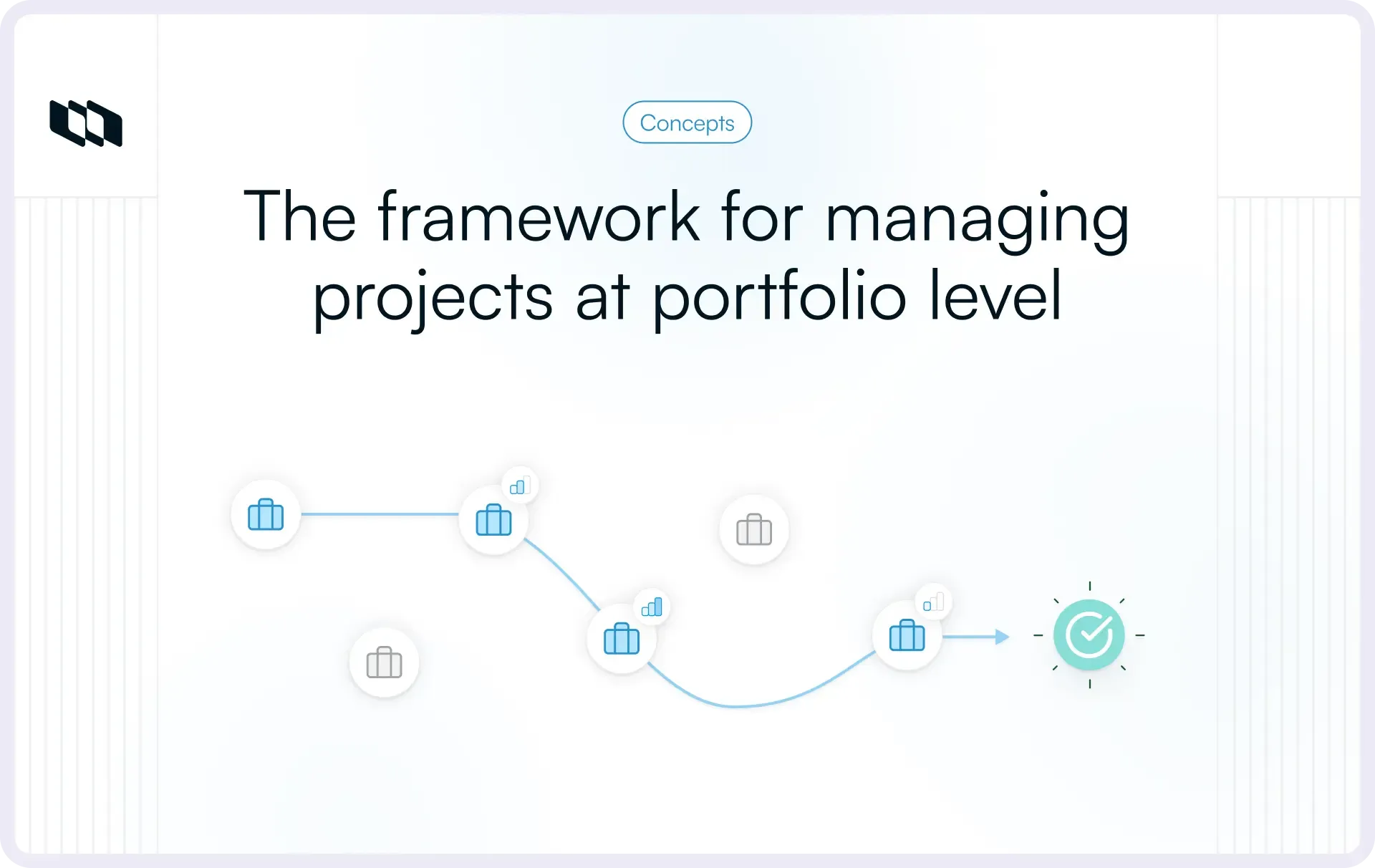
Launching more projects rarely leads to better business outcomes. Selecting the right projects, allocating resources wisely, and aligning execution with strategy creates lasting impact. Project portfolio management (PPM) helps organizations make those decisions through a structured approach to planning, prioritization, and governance. This guide explores what project portfolio management is, the project portfolio management process, its benefits, best practices, and the role of project portfolio management software.
What is project portfolio management (PPM)?
Project portfolio management (PPM) is the process of selecting, prioritizing, and managing multiple projects as a single portfolio. Instead of evaluating each project independently, PPM helps organizations consider all initiatives together so they can allocate resources wisely, balance risks, and invest in work that delivers the greatest business value.
Think of it as a decision-making framework for answering questions like:
- Which projects should we start?
- Which projects should wait?
- Where should we invest our resources?
- Which initiatives contribute most to our strategic goals?
Why do organizations use project portfolio management?
As organizations grow, project requests grow with them. Every team has ideas worth pursuing, yet resources remain limited. PPM provides leaders with a structured way to compare initiatives based on factors such as business value, cost, effort, risk, and strategic alignment. As a result, teams spend more time on high-impact work while maintaining a balanced portfolio.
Example of project portfolio management
Imagine a SaaS company with resources to deliver only two of four planned initiatives this quarter: an AI feature, security compliance updates, infrastructure improvements, and a redesigned onboarding experience. Instead of choosing projects based on urgency alone, leadership evaluates each initiative based on business goals, customer impact, implementation effort, and available capacity. They prioritize the AI feature and compliance updates while scheduling the remaining work for the next planning cycle.
This is project portfolio management in practice. It helps organizations invest in the right combination of projects rather than simply managing every project that comes along.
What is a project portfolio?
Project portfolio management becomes much easier to understand once you know what a project portfolio is. While an individual project focuses on delivering a specific outcome, a project portfolio brings multiple pieces of work together, allowing leaders to manage them from a broader business perspective.
What is a project portfolio?
A project portfolio is a collection of projects, programs, and strategic initiatives managed together to help an organization achieve its business objectives. These projects may belong to different teams, departments, or business units, yet they share the same pool of resources and contribute to the organization's overall strategy.
Unlike a program, where related projects work toward a common outcome, a project portfolio can include initiatives with completely different objectives. The common link is that they compete for the same investment, resources, and executive attention.
What does a project portfolio include?
A project portfolio provides a complete view of the work an organization is planning, delivering, and evaluating. Depending on the organization's size and structure, a portfolio may include:
- Projects: Individual efforts with defined goals, timelines, and deliverables.
- Programs: Groups of related projects managed together to achieve a larger business objective.
- Strategic initiatives: High-level business priorities such as digital transformation, market expansion, or AI adoption.
- Resources: People, teams, skills, and available capacity required to deliver the work.
- Budgets: Funding allocated across projects and initiatives.
- Risks: Portfolio-level risks that could affect project delivery, resource availability, or business outcomes.
Bringing these elements together helps leaders evaluate the health of the entire portfolio instead of reviewing projects one at a time.
Example of a project portfolio
Consider a software company preparing its annual roadmap. Its project portfolio could include several initiatives across different departments:
- A customer-facing AI feature for the product team
- A cloud migration project led by engineering
- Security compliance upgrades managed by the IT team
- A CRM implementation for the sales organization
- A website redesign driven by the marketing team
Although each initiative has different owners, timelines, and goals, leadership manages them as a single portfolio. This makes it easier to prioritize investments, allocate resources, monitor risks, and ensure every project supports the company's strategic direction.
Why project portfolio management is important
Managing projects successfully is only part of the equation. Organizations also need confidence that they are investing in the right projects at the right time. Let’s explore why project portfolio management is essential for driving long-term value and organizational success:
1. Aligns projects with business goals
PPM helps organizations evaluate every project against their strategic objectives. This ensures teams focus on initiatives that contribute to business growth, customer value, or operational improvements instead of pursuing competing priorities.
2. Improves project prioritization
Every project request carries value, but resources remain finite. PPM provides a structured way to compare projects based on factors such as business impact, urgency, effort, and strategic alignment, making prioritization more consistent and transparent.
3. Helps allocate resources effectively
People, budgets, and time are shared across multiple projects. Project portfolio management gives leaders a clear view of resource availability, helping them distribute work where it delivers the greatest value while avoiding overloaded teams.
4. Provides portfolio-wide visibility
Instead of tracking projects individually, PPM offers a centralized view of the entire portfolio. Stakeholders can quickly understand project status, upcoming milestones, dependencies, and overall portfolio health.
5. Reduces risk across projects
Viewing projects as a portfolio makes it easier to identify resource conflicts, budget constraints, and dependencies before they affect delivery. This allows teams to address potential risks early and keep projects on track.
6. Improves decision-making
PPM brings project data, resource information, and business priorities together in one place. With a complete picture of the portfolio, leaders can make informed decisions about which initiatives to start, pause, or accelerate.
7. Maximizes return on investment
Every project represents an investment. By prioritizing initiatives that align with strategic goals and deliver the greatest business value, project portfolio management helps organizations generate stronger returns from their time, budget, and resources.
Project portfolio management vs. project management vs. program management
Project portfolio management, project management, and program management often appear together, but each serves a different purpose. Project management focuses on delivering one project well. Program management coordinates related projects to achieve a shared outcome. Project portfolio management evaluates all projects and programs to determine where the organization should invest its resources.
Comparison area | Project management | Program management | Project portfolio management |
Scope | One project with a defined goal, timeline, and deliverables. | A group of related projects is managed together. | A collection of projects, programs, and initiatives managed as one portfolio. |
Focus | Planning, execution, delivery, scope, timeline, and quality. | Coordinating related work, managing dependencies, and achieving program-level outcomes. | Selecting, prioritizing, balancing, and monitoring projects based on business goals. |
Objectives | Deliver the project successfully within agreed constraints. | Ensure related projects work together toward a larger objective. | Maximize business value across the entire project portfolio. |
Success metrics | On-time delivery, budget adherence, scope completion, and stakeholder satisfaction. | Program outcomes, cross-project coordination, benefits realization, and dependency management. | Strategic alignment, portfolio value, resource utilization, risk balance, and ROI. |
Stakeholders | Project manager, project team, sponsor, and immediate stakeholders. | Program manager, project managers, sponsors, and cross-functional leaders. | Portfolio manager, executives, PMO, finance, business leaders, and delivery leads. |
Time horizon | Short- to medium-term, based on the project timeline. | Medium- to long-term, based on the program roadmap. | Long-term, based on strategic planning cycles and business priorities. |
Example | Launching a new onboarding workflow. | Improving the complete customer activation experience through onboarding, lifecycle emails, and help center updates. | Choosing between customer growth initiatives, infrastructure upgrades, compliance work, and product innovation projects. |
Core components of project portfolio management
Successful project portfolio management depends on more than tracking projects. It requires a structured framework that helps organizations evaluate opportunities, allocate resources, manage risks, and measure outcomes consistently. Together, these components ensure every project contributes to the organization's strategic priorities.
1. Strategic alignment
Every project should support a business objective, whether that is driving revenue, improving customer experience, reducing operational costs, or meeting compliance requirements. Strategic alignment ensures projects are selected based on their contribution to organizational goals rather than individual requests or short-term priorities.
2. Project intake and demand management
Project intake is the process of collecting and reviewing new project requests. Demand management helps organizations assess incoming ideas, business cases, and stakeholder requests before they enter the portfolio. This creates a consistent process for evaluating opportunities and prevents teams from taking on more work than they can realistically deliver.
3. Project evaluation and selection
Every proposed project should be evaluated against predefined criteria, including business value, expected outcomes, implementation effort, strategic fit, risks, and resource requirements. This structured evaluation helps organizations select projects that deliver the greatest overall value.
4. Prioritization frameworks
Once projects have been evaluated, they need to be ranked by importance. Prioritization frameworks provide objective criteria for comparing initiatives, helping leaders balance quick wins, long-term investments, customer needs, regulatory work, and innovation.
5. Resource management
People, skills, and time are among an organization's most valuable resources. Resource management helps teams understand capacity, distribute workloads effectively, and assign the right people to the right projects while maintaining a balanced portfolio.
6. Budget management
Every project competes for funding. Budget management helps organizations allocate financial resources across the portfolio, monitor spending, and ensure investments remain aligned with expected business outcomes.
7. Risk management
Risks rarely affect a single project in isolation. Delays, resource shortages, shifting priorities, and external factors can affect multiple initiatives simultaneously. Portfolio-level risk management helps organizations identify these risks early and develop mitigation strategies before they impact delivery.
8. Portfolio governance
Portfolio governance establishes the processes, policies, and decision-making responsibilities that guide the portfolio. It defines how projects are approved, reviewed, prioritized, and monitored while ensuring accountability throughout the portfolio lifecycle.
9. Performance reporting
Effective project portfolio management relies on accurate, timely information. Performance reporting provides visibility into project health, resource utilization, budget performance, risks, and overall portfolio progress, helping stakeholders make informed decisions as priorities evolve.
How project portfolio management works
Project portfolio management is an ongoing process rather than a one-time planning exercise. As business priorities evolve, new opportunities emerge, and resources change, organizations continuously evaluate and adjust their portfolios to ensure they invest in the right work. While every organization follows its own approach, most PPM practices follow the lifecycle below:
1. Define strategic objectives
Every portfolio starts with a clear understanding of what the organization wants to achieve. These objectives form the foundation for every subsequent project decision. Without clear priorities, project selection often becomes reactive and inconsistent.
Strategic objectives may include:
- Expanding into new markets
- Increasing customer retention
- Accelerating product innovation
- Improving operational efficiency
- Meeting regulatory or security requirements
When every project is evaluated against these objectives, teams can focus on initiatives that contribute to measurable business outcomes.
2. Collect project requests
Once strategic goals are defined, organizations gather project requests from across the business. These requests may come from product, engineering, IT, marketing, sales, customer success, or executive leadership.
Each proposal typically includes information such as:
- Business problem or opportunity
- Expected benefits
- Estimated effort
- Resource requirements
- Budget estimates
- Target timeline
A standardized project intake process ensures every request is documented and evaluated consistently before moving forward.
3. Evaluate potential projects
After collecting project requests, decision-makers assess each proposal to understand its overall value and feasibility. Rather than relying on intuition or stakeholder influence, projects are evaluated using consistent criteria.
Common evaluation factors include:
- Strategic alignment
- Business value
- Customer impact
- Implementation effort
- Cost
- Technical complexity
- Risks
- Resource availability
- Expected return on investment (ROI)
This evaluation helps organizations identify projects that offer the strongest balance between value, effort, and risk.
4. Prioritize projects
Evaluation identifies which projects deserve consideration, while prioritization determines which ones should move forward first.
Organizations use prioritization frameworks to compare initiatives objectively and balance immediate business needs with long-term strategic investments. The goal is to build a portfolio that delivers maximum value instead of simply approving the loudest or most urgent requests.
Projects are often prioritized based on:
- Strategic importance
- Expected business impact
- Customer demand
- Urgency
- Risk level
- Dependencies
- Available resources
5. Build the portfolio
After prioritization, leaders select the combination of projects that best fits the organization's goals, budget, and capacity. This stage focuses on creating a balanced portfolio rather than approving every high-scoring initiative.
A well-balanced portfolio often includes a mix of:
- Revenue-generating initiatives
- Product improvements
- Infrastructure investments
- Security and compliance projects
- Innovation initiatives
- Operational improvements
Balancing different types of work helps organizations create short-term value while supporting long-term growth.
6. Allocate resources and budgets
With the portfolio finalized, organizations distribute people, budgets, and other resources across approved projects.
This step ensures:
- Teams have realistic workloads.
- Critical skills are available where needed.
- Budgets align with project priorities.
- Capacity supports delivery timelines.
Resource allocation is rarely static. Portfolio managers regularly adjust assignments as projects progress, priorities shift, or new initiatives enter the portfolio.
7. Monitor portfolio performance
Execution begins once projects are underway, but portfolio management continues throughout the delivery phase. Leaders monitor the health of the portfolio to ensure projects remain aligned with strategic objectives and continue delivering expected value.
Portfolio reporting typically tracks:
- Project progress
- Budget utilization
- Resource capacity
- Risks and issues
- Portfolio health
- Business outcomes
This portfolio-wide visibility helps stakeholders identify potential issues early and make informed decisions before they affect delivery.
8. Review and rebalance regularly
Business priorities, customer expectations, market conditions, and resource availability change over time. A portfolio that made sense six months ago may require adjustments today.
Regular portfolio reviews help organizations:
- Reprioritize existing work
- Approve new opportunities
- Pause or retire lower-value initiatives
- Reallocate resources
- Respond to changing business priorities
Continuous review keeps the project portfolio aligned with organizational goals and ensures that investments continue to generate the greatest possible value.
How project prioritization works in PPM
Project prioritization sits at the heart of project portfolio management. While organizations may receive dozens of project requests, only a limited number can move forward at any given time. Prioritization helps leaders compare opportunities objectively and build a portfolio that delivers the greatest business value without overextending teams or budgets.
Most organizations evaluate projects using a combination of the following criteria.
1. Strategic alignment
A project should contribute directly to the organization's strategic objectives. Initiatives that support business growth, customer satisfaction, product innovation, or regulatory requirements typically receive higher priority because they advance long-term goals.
2. Business value
Every project should create measurable value for the organization. This value may come from increased revenue, improved customer experience, operational efficiency, reduced costs, or stronger competitive positioning. Projects with higher potential impact often move higher on the priority list.
3. Cost and effort
High-value projects also require investment. Decision-makers evaluate the estimated budget, implementation effort, and delivery timeline to understand whether the expected benefits justify the required resources. This helps organizations balance quick wins with larger strategic initiatives.
4. Risk level
Every project carries some level of uncertainty. Teams assess factors such as technical complexity, implementation challenges, regulatory concerns, and delivery risks before approving a project. Understanding these risks helps leaders make balanced investment decisions and prepare appropriate mitigation plans.
5. Resource requirements
A project may offer significant value, yet available capacity often determines whether work can begin immediately. Organizations evaluate the people, skills, tools, and time required to complete each initiative, ensuring critical resources remain available across the portfolio.
6. Dependencies
Projects frequently rely on other initiatives, shared systems, or specialized teams. Identifying dependencies helps organizations sequence work correctly, reduce delivery bottlenecks, and avoid delays caused by unfinished prerequisite work.
7. Expected ROI
Expected return on investment (ROI) helps organizations compare the value generated by a project against the resources required to deliver it. Projects with stronger long-term returns often receive higher priority, particularly when they align with strategic business objectives.
8. Urgency and timing
Some projects carry fixed deadlines driven by customer commitments, compliance requirements, contractual obligations, or market opportunities. Evaluating urgency alongside business value helps organizations determine which initiatives require immediate attention and which can be scheduled for future planning cycles.
Rather than relying on a single factor, effective project portfolio management considers all these criteria together. This balanced approach helps organizations prioritize projects that align with both their strategic direction and available capacity.
What does a project portfolio manager do?
A project portfolio manager oversees the health and performance of the entire project portfolio. Instead of managing the day-to-day execution of individual projects, they focus on ensuring the organization invests in the right initiatives, allocates resources effectively, and keeps the portfolio aligned with strategic goals.
Their responsibilities span planning, governance, performance monitoring, and decision-making across multiple projects.
1. Evaluate project proposals
Project portfolio managers review incoming project requests to determine whether they align with business priorities. They assess factors such as strategic fit, expected value, costs, risks, and resource requirements before recommending which initiatives to move forward with.
2. Support portfolio planning
Portfolio planning involves selecting the right mix of projects for a planning cycle. Project portfolio managers work with leadership to balance strategic initiatives, operational improvements, compliance work, and innovation projects while considering organizational capacity and business priorities.
3. Manage resource allocation
Since projects often compete for the same teams and budgets, portfolio managers help distribute resources where they create the greatest impact. They monitor resource availability, identify capacity constraints, and adjust allocations as priorities evolve.
4. Monitor portfolio performance
A key responsibility is tracking the overall health of the portfolio. Project portfolio managers review project progress, budget utilization, resource capacity, timelines, and portfolio-level metrics to ensure initiatives continue delivering expected outcomes.
5. Communicate with stakeholders
Portfolio decisions involve executives, project managers, finance teams, and department leaders. Project portfolio managers provide regular updates on portfolio performance, project status, resource utilization, and strategic priorities, enabling stakeholders to make informed decisions.
6. Manage portfolio-level risks
Some risks extend beyond individual projects and affect the portfolio as a whole. Portfolio managers identify resource conflicts, budget pressures, scheduling challenges, and strategic risks early, enabling organizations to respond before they affect multiple initiatives.
7. Recommend project continuation or termination
As business priorities change, some projects may require additional investment, while others may lose strategic relevance. Project portfolio managers regularly review ongoing initiatives and recommend whether projects should continue as planned, be paused, reprioritized, or retired to ensure the portfolio continues delivering maximum business value.
Key project portfolio management techniques and frameworks
Project portfolio management relies on structured techniques to evaluate opportunities, compare competing initiatives, and make informed investment decisions. While organizations may use different methodologies, the following techniques form the foundation of most PPM practices.
1. Scoring models
Scoring models help organizations evaluate projects using predefined criteria instead of subjective opinions. Each project receives a score based on factors such as strategic alignment, business value, customer impact, implementation effort, risk, and expected ROI.
This approach creates a consistent and transparent way to compare projects and identify those with the highest overall value.
2. Cost-benefit analysis
Cost-benefit analysis compares the expected benefits of a project with the resources required to deliver it. Organizations estimate implementation costs, operational expenses, and expected returns to determine whether a project justifies the investment.
This technique helps prioritize initiatives that deliver meaningful business outcomes while making efficient use of available budgets.
3. Portfolio matrices
Portfolio matrices provide a visual way to compare projects using two evaluation criteria, such as business value and implementation effort, or expected return and risk. By placing projects into different quadrants, decision-makers can quickly identify quick wins, strategic investments, high-risk initiatives, and lower-priority work. These matrices simplify discussions when multiple projects compete for the same resources.
4. Scenario planning
Scenario planning allows organizations to evaluate different portfolio options before making investment decisions. Teams can model various scenarios, such as budget reductions, increased hiring, changing market conditions, or shifting business priorities, to understand how each situation affects the portfolio.
This helps leaders prepare for uncertainty and choose a portfolio that remains resilient under different conditions.
5. Capacity planning
Capacity planning ensures the organization has enough people, skills, and time to deliver approved projects successfully. By comparing available capacity against planned work, organizations can identify resource shortages, prevent team overload, and make realistic delivery commitments.
It also helps determine whether additional hiring, outsourcing, or project reprioritization is needed.
6. Portfolio roadmapping
A portfolio roadmap provides a high-level view of planned projects, major milestones, dependencies, and strategic initiatives over a defined time horizon. Unlike detailed project schedules, portfolio roadmaps focus on how initiatives fit together and how they contribute to broader business goals.
This shared view helps executives, portfolio managers, and delivery teams align priorities, coordinate work across departments, and communicate long-term plans more effectively.
Benefits of project portfolio management
Project portfolio management helps organizations move beyond managing individual projects to making better business decisions. By evaluating projects within a broader portfolio, leaders can prioritize investments, optimize resources, and increase the likelihood of achieving strategic objectives.
1. Better strategic alignment
PPM ensures every approved project supports the organization's strategic priorities. Instead of pursuing disconnected initiatives, teams focus on work that contributes to measurable business goals, whether that involves product growth, operational improvements, customer experience, or compliance.
2. Improved resource utilization
People, budgets, and time are finite resources. Project portfolio management provides visibility into team capacity and project demand, helping organizations allocate resources where they create the greatest value. This reduces resource conflicts and supports more realistic planning.
3. Greater visibility and decision-making
PPM provides a centralized view of projects, budgets, risks, and resource utilization across the organization. With accurate portfolio data in one place, leaders can evaluate performance, identify bottlenecks, and make faster, well-informed decisions as priorities evolve.
4. Better risk and budget management
Managing projects as a portfolio makes it easier to identify shared risks, budget constraints, and dependencies before they affect delivery. Teams can address issues early, adjust investments when priorities shift, and maintain better financial control across multiple initiatives.
5. Higher business value
The ultimate goal of project portfolio management is to maximize the value generated from organizational investments. By selecting the right mix of projects and continuously reviewing portfolio performance, organizations can improve project outcomes, achieve strategic objectives, and generate stronger returns from their available resources.
Common project portfolio management challenges
Project portfolio management helps organizations make better investment decisions, yet implementing it successfully requires consistent processes, reliable data, and strong cross-functional collaboration. As organizations scale, several challenges can complicate portfolio planning and governance.
1. Too many competing priorities
Every department has initiatives it considers important, from product enhancements and infrastructure upgrades to compliance projects and internal improvements. Without clear prioritization criteria, organizations often spread resources across too many initiatives, reducing focus and delaying delivery.
2. Limited resource visibility
Projects frequently compete for the same people, budgets, and specialized skills. When leaders lack a clear view of team capacity, resource allocation becomes reactive, leading to overloaded teams, scheduling conflicts, and unrealistic delivery plans.
3. Inconsistent project evaluation
Different stakeholders often evaluate projects using different criteria. One initiative may be driven by customer demand, while another is approved based on urgency or executive preference. A lack of standardized evaluation makes it difficult to compare projects fairly and prioritize investments objectively.
4. Balancing short-term needs with long-term strategy
Organizations must deliver immediate business outcomes while continuing to invest in innovation, technical improvements, and future growth. Maintaining the right balance between short-term priorities and long-term strategic initiatives remains one of the biggest challenges in project portfolio management.
5. Deciding when to pause or stop projects
Business priorities evolve throughout the year, and projects that once delivered value may lose strategic relevance. Continuing low-impact initiatives consumes valuable resources that could be used to support higher-value work. Regular portfolio reviews help organizations identify when projects should be paused, reprioritized, or retired to keep the portfolio aligned with business objectives.
Example of project portfolio management in practice
Imagine a SaaS company planning work for the next quarter. Multiple teams have proposed projects, yet engineering capacity and budget can support only three major initiatives.
Proposed projects
Project | Business goal |
AI-powered feature | Increase enterprise adoption |
Infrastructure improvements | Improve application performance and reliability |
Security initiative | Meet compliance requirements |
Technical debt reduction | Improve developer productivity and system maintainability |
Customer onboarding improvements | Increase product adoption and user retention |
Without project portfolio management, each department would push its own priorities, making it difficult to decide which projects deserve immediate investment.
With PPM, leadership evaluates every initiative using the same framework.
Portfolio activity | How it helps |
Evaluate opportunities | Compare each project based on business value, strategic alignment, cost, effort, and risk. |
Prioritize investments | Select projects that deliver the greatest overall impact instead of simply choosing the most urgent requests. |
Allocate resources | Balance engineering capacity, budgets, and specialized skills across approved initiatives. |
Monitor portfolio health | Track project progress, risks, budgets, and resource utilization from a single portfolio view. |
Adjust priorities | Rebalance the portfolio as customer needs, business goals, or market conditions evolve. |
Using this approach, the company decides to prioritize the AI-powered feature, security initiative, and infrastructure improvements for the upcoming quarter. The technical debt and customer onboarding initiatives remain in the portfolio and are scheduled for a future planning cycle, subject to available capacity and evolving business priorities.
This example illustrates how project portfolio management helps organizations make informed investment decisions, optimize resources, and maintain a portfolio that stays aligned with strategic objectives.
Final thoughts
Managing projects successfully is important, but managing the right projects creates a greater business impact. Project portfolio management (PPM) helps organizations look beyond individual initiatives and make strategic decisions about where to invest their time, budget, and resources. By aligning projects with business goals, prioritizing work objectively, and continuously reviewing portfolio performance, teams can build a balanced portfolio that delivers lasting value.
As organizations grow, project portfolio management becomes an essential practice for improving visibility, optimizing resources, and adapting to changing priorities. With the right processes and tools in place, teams can move from managing multiple projects to managing them with purpose.
Frequently asked questions
Q1. What is PPM (project portfolio management)?
Project portfolio management (PPM) is the process of selecting, prioritizing, managing, and monitoring multiple projects as a single portfolio. It helps organizations align projects with business goals, allocate resources effectively, manage risks, and maximize the value of their investments.
Q2. What are the 4 Ps of PMO?
The 4 Ps of a Project Management Office (PMO) commonly refer to People, Processes, Projects, and Performance.
- People: Build the skills, roles, and governance needed to deliver projects successfully.
- Processes: Standardize project management methodologies and workflows.
- Projects: Oversee project execution and ensure alignment with organizational priorities.
- Performance: Measure outcomes using metrics, reporting, and continuous improvement.
Q3. What are the 7 steps of project portfolio management?
While organizations may tailor the process to their needs, a typical project portfolio management lifecycle includes:
- Define strategic objectives.
- Collect project requests.
- Evaluate potential projects.
- Prioritize initiatives.
- Build the project portfolio.
- Allocate resources and budgets.
- Monitor, review, and rebalance the portfolio.
Q4. What does PPM stand for in portfolio management?
In portfolio management, PPM stands for Project Portfolio Management. It is a strategic discipline that helps organizations evaluate, prioritize, and manage projects to achieve business objectives while balancing resources, budgets, risks, and expected outcomes.
Q5. Which is better, PM or PMO?
Project management (PM) and a Project Management Office (PMO) serve different purposes, so one is not inherently better than the other. Project management focuses on planning and delivering individual projects, while a PMO establishes governance, standardizes processes, and provides oversight across multiple projects. Organizations managing several projects or portfolios often benefit from working together.
Recommended for you





 Download for Mac
 Download for Android