What is a functional vs. cross-functional team? Key differences
Introduction
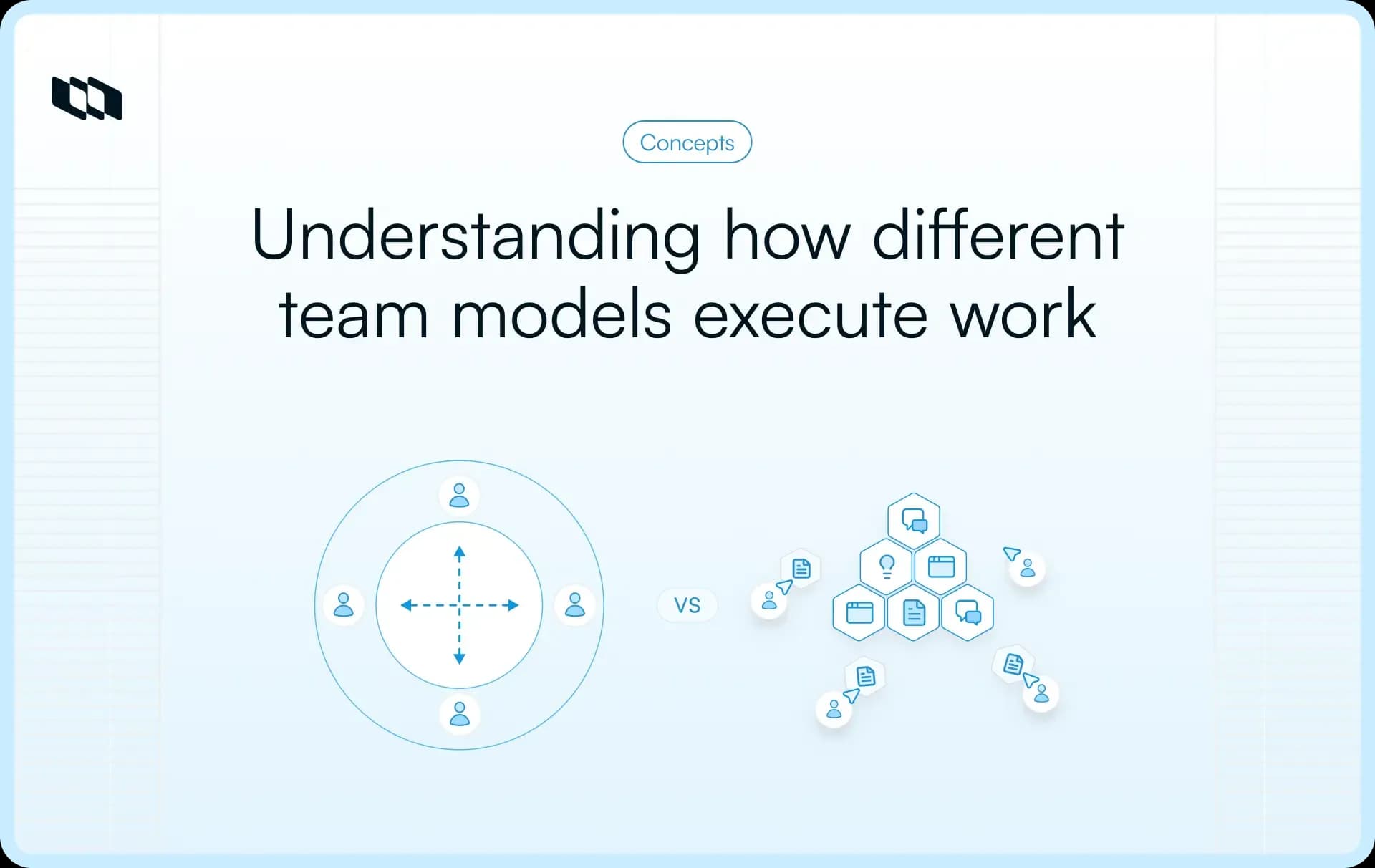
Every delayed project has a familiar pattern. One team completes its part, another team waits for inputs, a decision gets parked with a manager, and the timeline stretches. The work may be important, but the structure slows it down. Functional teams and cross-functional teams solve different coordination problems. One builds expertise within a discipline. The other brings multiple disciplines together around one shared outcome. This guide breaks down functional vs. cross-functional teams, their key differences, advantages, challenges, and best-fit use cases.
What is a functional team?
A functional team is a team organized around a specific skill, department, or area of expertise. People with similar roles work together within the same function, such as engineering, marketing, finance, HR, or customer support.
This is one of the most common team structures used in organizations because it helps teams build deep expertise and maintain consistent ways of working within a specific domain.
How a functional team is structured
Functional teams are grouped by discipline. Engineers work within the engineering team, marketers work within the marketing team, and finance professionals work within the finance department. Team members usually report to a single functional manager who oversees priorities, processes, and performance in that area. Since team members handle similar types of work, functional teams are often optimized for specialization, standardization, and skill development.
Examples of functional teams
Some common examples of functional teams include:
- A content marketing team managing SEO content and campaigns
- A QA team responsible for testing and release quality
- A finance team handling budgets and reporting
- A customer support team managing tickets and escalations
- An HR team focused on hiring and employee operations
Why organizations use functional teams
Organizations use functional teams when they want stronger expertise within a specific area of work. This structure makes it easier to develop specialized skills, maintain consistent processes, and manage teams within one discipline. Functional teams also work well for operational, repeatable, and department-focused work where deep domain knowledge matters most.
What is a cross-functional team?
A cross-functional team is a team composed of people from different departments or skill sets who work together toward a shared goal. Instead of operating in separate functions, the team combines multiple areas of expertise into a single working unit. Cross-functional teams are common in product development, project delivery, operations, and growth initiatives where collaboration across teams directly affects speed, coordination, and execution.
How a cross-functional team is structured
A cross-functional team brings together people with different responsibilities. Instead of separating work completely by department, the structure connects the people needed to deliver a shared outcome.
For example, a product team may include:
- A product manager
- A designer
- Software engineers
- A QA engineer
- A marketer or growth lead
Since the required skills already exist within the team, collaboration becomes faster, and teams can move work forward with fewer delays and handoffs.
Examples of cross-functional teams
Some common examples of cross-functional teams include:
- A product squad is building and shipping a new feature
- A launch team coordinating a product release
- A growth team improving user activation and retention
- An incident response team handling production outages
- A customer onboarding team is improving setup and adoption
In each case, the team combines different skill sets to work toward one shared outcome.
Why organizations use cross-functional teams
Organizations use cross-functional teams when work depends on close coordination across multiple departments. This structure helps teams move faster, improve communication, and reduce the delays created by constant handoffs between separate functions.
Cross-functional teams also help organizations solve more complex problems because decisions include perspectives from different disciplines. Product, engineering, design, operations, marketing, and support teams can collaborate more closely toward the same goal rather than working in isolation. For product and project teams, cross-functional collaboration often improves execution speed, ownership, and visibility across the entire workflow.
Functional vs. cross-functional team: Key differences
Functional teams and cross-functional teams organize work in very different ways. One structure focuses on specialization within a department, while the other focuses on bringing multiple disciplines together around a shared outcome.
Here is a quick comparison of the key differences between functional and cross-functional teams.
Area | Functional team | Cross-functional team |
Team composition | People with similar skills and expertise | People from different departments and disciplines |
Primary focus | Department-level work and specialization | Shared project, product, or business outcome |
Ownership | Owns one part of the workflow | Shares ownership of the overall outcome |
Collaboration style | Cross-team coordination through handoffs | Collaboration happens within the same team |
Decision-making | Decisions often move across departments | Faster decisions with shared context |
Best suited for | Specialized and repeatable work | Dynamic and high-dependency work |
Difference in team composition
Functional teams are made up of people with similar expertise working within the same discipline. For example, an engineering team consists of engineers, while a finance team consists of finance professionals.
Cross-functional teams combine diverse skill sets into a single working group. A product team, for example, may include a product manager, designer, developers, QA engineers, and marketers working together toward one shared goal.
Difference in goals and alignment
Functional teams usually focus on department-level goals tied to their area of expertise. A marketing team may focus on campaign performance, while a QA team focuses on product quality and testing standards.
Cross-functional teams align around a shared business, project, or product outcome. Instead of optimizing for one department alone, the team works toward a common result such as shipping a feature, improving onboarding, or launching a release.
Difference in ownership
Functional teams usually own one part of a broader workflow. Their responsibilities stay closely tied to their discipline or department.
Cross-functional teams often share ownership of the entire outcome. Since multiple functions work together inside the same team, accountability extends across planning, execution, delivery, and coordination.
Difference in collaboration style
Functional teams collaborate through structured handoffs between departments. Work often moves from one team to another as each function completes its part of the process.
Cross-functional teams collaborate within the same working unit. Designers, engineers, product managers, and other contributors work more closely throughout the project or initiative lifecycle.
Difference in decision-making speed
Functional teams can slow down when work depends on approvals, inputs, or coordination across several departments. Decisions may move through multiple teams before work progresses.
Cross-functional teams usually move faster because the required expertise already exists inside the team. Discussions, prioritization, and execution can happen with fewer delays.
Difference in flexibility
Functional teams work well for specialized and repeatable work where consistency and deep expertise matter most.
Cross-functional teams work better for dynamic work involving multiple dependencies, changing priorities, and closer collaboration across functions. This structure is especially common in Agile product development and project delivery environments.
Advantages of functional teams
Functional teams continue to play an important role in many organizations because they create depth, consistency, and operational clarity within a specific discipline. This structure works especially well when teams need strong expertise, standardized processes, and clearly defined responsibilities.
1. Strong specialization
Functional teams help people build deep expertise within their area of work. Engineers spend more time solving engineering problems, finance teams focus on financial operations, and QA teams develop stronger testing processes and quality standards over time. This level of specialization often improves technical quality, efficiency, and discipline-level knowledge across the organization.
2. Clear reporting structure
Functional teams usually have straightforward reporting lines and management structures. Team members report within the same department, priorities stay aligned within the function, and managers have a clearer understanding of team responsibilities and performance. This structure also makes operational planning and resource management easier within a department.
3. Easier training and skill development
People working within the same discipline can learn from each other more easily. Teams often develop shared workflows, mentoring systems, documentation standards, and best practices that support faster skill development. For junior employees, functional teams offer greater exposure to experienced specialists in the same domain.
4. Better consistency within a function
Functional teams make it easier to maintain consistent processes, quality benchmarks, and workflows across a department. Since the team focuses on similar work, standards become easier to define, review, and improve over time. This consistency becomes especially valuable in areas such as compliance, finance, QA, IT operations, and customer support.
5. A good fit for stable, repeatable work
Functional teams work well when work remains mostly within a single department and follows predictable workflows. Operational tasks, recurring processes, and discipline-specific work often benefit from this structure because teams can focus on efficiency, expertise, and long-term process improvement within their function.
Advantages of cross-functional teams
Cross-functional teams help organizations bring together multiple skills, perspectives, and responsibilities into a single working unit. This structure is widely used in product development, project delivery, and Agile environments because it improves coordination across teams and helps work move faster from planning to execution.
1. Better collaboration across disciplines
Cross-functional teams bring product managers, designers, engineers, QA teams, marketers, and operations teams into the same workflow. Since the people involved in the work collaborate more closely, teams spend less time waiting for updates, approvals, or information from separate departments. This often creates better alignment throughout the project lifecycle.
2. Faster decision-making
Teams can make decisions more quickly when the required stakeholders are already part of the same team. Discussions happen in shared planning sessions, priorities stay visible, and blockers can be resolved faster without lengthy cross-departmental escalation chains. This becomes especially valuable in fast-moving product and project environments.
3. Fewer handoff delays
Traditional workflows often move work from one department to another in stages. Design hands work to engineering, engineering passes work to QA, and marketing joins later in the process. Each transition adds coordination overhead. Cross-functional teams reduce these delays because collaboration happens continuously within the same working group.
4. Broader problem-solving
Different functions bring different perspectives to the same problem. Engineers may focus on technical feasibility, designers on usability, marketers on positioning, and support teams on customer pain points. This combination often improves decision quality and helps teams solve complex problems more effectively.
5. Stronger ownership of outcomes
Cross-functional teams usually share responsibility for the overall result rather than focusing on a single part of the workflow. The team collectively owns the progress, delivery, and success of the initiative. This shared accountability often improves visibility, alignment, and execution across the team.
6. Better fit for product development and delivery
Modern product and project work usually involves multiple dependencies across teams. Building a feature, launching a product update, improving onboarding, or managing a release often requires coordination across engineering, design, QA, operations, and marketing. Cross-functional teams support this type of work more effectively because the people needed to plan, execute, and deliver are already working together inside the same team structure.
Challenges of functional teams
Functional teams foster strong specialization and consistency within a department, but this structure can also pose coordination challenges when work depends on multiple teams working together. These challenges become more visible in product, project, and delivery environments where cross-functional collaboration directly affects execution speed.
1. Siloed thinking
Functional teams often focus heavily on their own priorities, processes, and goals. Engineering teams may prioritize technical stability, marketing teams may focus on campaign timelines, and support teams may concentrate on ticket resolution. Without strong cross-team alignment, departments can lose visibility into the broader business or customer outcome.
2. More handoff friction
In a functional structure, work usually moves from one department to another in stages. Each handoff creates additional coordination work, context switching, and communication overhead. As more teams become involved, delays and misunderstandings become more common, especially when priorities shift across departments.
3. Slower coordination
Projects involving multiple functions often require meetings, approvals, and dependency management across several teams. Since each department operates separately, coordination can take longer, and decisions may move more slowly through the workflow. This challenge becomes more visible in fast-moving product and project environments.
4. Limited visibility into end-to-end work
Functional teams usually focus on one part of the workflow instead of the full delivery lifecycle. As a result, teams may have limited visibility into how their work affects customers, timelines, downstream dependencies, or the final outcome. This can make it harder to identify bottlenecks, improve collaboration, or optimize the overall delivery process across teams.
Challenges of cross-functional teams
Cross-functional teams improve collaboration and execution across departments, but they also introduce coordination challenges that teams need to manage carefully. Since people from different disciplines work closely together, alignment, communication, and ownership require more deliberate effort.
1. Role ambiguity
Cross-functional teams bring together multiple functions with overlapping responsibilities. Without clearly defined ownership, teams can struggle with confusion around decision-making, approvals, or accountability. Clear roles, responsibilities, and expectations become especially important as projects grow in complexity.
2. Conflicting priorities
Different functions often approach work from different perspectives. Engineering teams may prioritize system stability, product teams may focus on delivery speed, while marketing teams may concentrate on launch timelines and adoption goals. These differences can create friction when priorities compete inside the same workflow.
3. Communication overhead
Cross-functional collaboration depends heavily on shared context and ongoing communication. Teams need regular alignment across planning, execution, dependencies, and delivery timelines. Without strong coordination practices, communication overhead can increase as more stakeholders become involved in the work.
4. Skill gaps or dependency gaps
Some teams operate as cross-functional teams in structure but still depend heavily on external specialists for certain types of work. Security reviews, infrastructure changes, legal approvals, or data engineering support may still sit outside the team. These external dependencies can slow execution and reduce some of the speed advantages cross-functional teams are designed to create.
5. Team cohesion takes time
Cross-functional teams combine people with different workflows, communication styles, and problem-solving approaches. Building trust and alignment across multiple disciplines often takes time, especially in newly formed teams or fast-growing organizations. Teams that invest in shared goals, visibility, and collaborative planning usually build stronger cohesion over time.
When to use a functional team
A functional team structure works best when organizations need deep expertise, stable workflows, and strong consistency within a specific discipline. This model is especially effective for operational work where tasks remain largely within a single department and rely on specialized knowledge.
1. Use a functional team when work needs deep specialization
Some types of work require strong discipline-level expertise and clearly defined processes. Areas such as compliance, finance operations, cybersecurity, legal review, infrastructure management, and technical support often benefit from functional teams because the work depends heavily on specialized knowledge and established standards. In these environments, depth of expertise usually matters more than constant cross-team collaboration.
2. Use a functional team when work is repeatable and department-led
Functional teams work well when workflows remain stable and most tasks stay within a single function. Teams handling recurring operational work, standardized processes, or department-specific responsibilities can often execute more efficiently inside a functional structure.
For example, a finance team managing reporting cycles or a QA team handling structured testing workflows may benefit from dedicated processes and consistent ownership within the same department.
3. Use a functional team when consistency matters more than speed across departments
Some organizations prioritize standardization, governance, and process consistency over rapid cross-functional execution. Functional teams make it easier to maintain shared workflows, quality benchmarks, approval structures, and operational controls within a discipline. This structure can work especially well in regulated industries, enterprise operations, and environments where accuracy, reliability, and process discipline are highly important.
When to use a cross-functional team
A cross-functional team structure works best when work depends on close collaboration across multiple disciplines. Product development, project delivery, customer experience initiatives, and operational improvements often require teams to coordinate continuously rather than work in isolated stages.
In these situations, bringing the required expertise into one team usually improves speed, visibility, and execution quality.
1. Use a cross-functional team for product development
Modern product development depends on multiple functions working together throughout the delivery cycle. Product managers define priorities, designers shape user experience, engineers build functionality, QA teams validate quality, and support or marketing teams contribute customer and launch insights. A cross-functional team enables these roles to collaborate continuously rather than relying on disconnected handoffs between departments.
2. Use a cross-functional team for high-dependency work
Some projects involve strong dependencies across teams, where progress in one area directly affects another. Product launches, platform migrations, onboarding improvements, and workflow redesigns often require coordinated execution across engineering, operations, design, marketing, and support. Cross-functional teams work well in these environments because the people needed to move the work forward already operate within the same team structure.
3. Use a cross-functional team for customer-facing initiatives
Customer-facing work often affects multiple parts of the business simultaneously. Launching a new feature, improving onboarding, redesigning workflows, or rolling out a pricing update may involve product, engineering, customer support, operations, and marketing teams working together. Cross-functional collaboration helps teams align decisions, timelines, and customer communication more effectively throughout the initiative.
4. Use a cross-functional team when speed and shared ownership matter
Cross-functional teams are especially effective when organizations need faster execution and stronger accountability around outcomes. Since teams can plan, discuss, and resolve issues together, work moves with fewer approval layers and coordination delays. This structure also fosters stronger ownership because the team shares responsibility for the overall outcome rather than focusing on a single isolated part of the workflow.
Functional vs. cross-functional teams in Agile environments
Agile environments rely heavily on collaboration, fast feedback loops, and continuous delivery. Since Agile teams work in shorter planning and delivery cycles, team structure directly affects how quickly work can move from idea to release.
This is one reason cross-functional teams are widely used in Agile product and engineering organizations.
Why Agile teams are often cross-functional
Agile teams are designed to deliver value continuously rather than move work through long departmental stages. To support this, teams usually need access to multiple skills within the same workflow, including product planning, design, engineering, testing, and delivery coordination. A cross-functional team structure helps reduce delays because the people responsible for planning, building, testing, and shipping work already collaborate within the same team.
How cross-functional teams improve flow
In many traditional workflows, work moves across departments in separate phases. Product teams define requirements, design teams create interfaces, engineers build functionality, and QA teams test the release later in the cycle. Cross-functional teams improve flow by reducing these transitions. Planning, feedback, testing, and delivery occur more continuously because teams work together throughout the process rather than operating in isolated stages.
This usually creates smoother execution, faster iteration cycles, and better visibility across the workflow.
Why this matters for product and engineering teams
Product and engineering teams often work in environments where priorities evolve quickly, and delivery depends on close coordination across multiple roles. Cross-functional collaboration helps teams respond to changes faster, resolve blockers earlier, and make decisions with better shared context.
This structure also keeps teams closer to the outcome they are building because product, engineering, design, QA, and operational perspectives remain connected throughout the delivery lifecycle.
How project management tools support cross-functional work
Project management tools help teams collaborate more effectively by giving everyone visibility into the same workflow, rather than spreading communication across disconnected systems, documents, and meetings.
1. Shared visibility
Cross-functional teams work more effectively when everyone can see the same priorities, timelines, blockers, and progress in one shared workspace. Tools like Plane help product, engineering, design, operations, and support teams stay aligned around the same goals instead of managing work in isolated systems.
This shared visibility makes it easier to coordinate delivery, track dependencies, and maintain alignment across teams.
2. Clear ownership
Cross-functional work often involves many moving parts across multiple functions. A centralized project management platform like Plane helps teams keep tasks, blockers, responsibilities, and project status visible throughout the workflow. Clear ownership reduces confusion around accountability and helps teams identify who is responsible for moving work forward at every stage.
3. Better coordination across dependencies
Cross-functional initiatives usually involve dependencies across planning, design, development, testing, operations, and release workflows. Project management tools help teams track these dependencies more effectively and adjust plans as priorities evolve. This coordination becomes especially important in fast-moving product and project environments where delays in one area can affect multiple teams.
4. Faster execution
When planning, collaboration, progress tracking, and communication exist in one place, teams spend less time switching between systems or searching for updates. Shared workflows help teams resolve blockers faster, align decisions more quickly, and move work forward with less operational friction.
Final thoughts
Functional teams and cross-functional teams solve different organizational challenges. Functional teams create depth, specialization, and consistency within a discipline. Cross-functional teams improve coordination, shared ownership, and execution across complex workflows. For most modern organizations, the decision usually depends on the type of work being done. Stable, department-focused operations often benefit from functional team structures, while product development, project delivery, and customer-facing initiatives often work better with cross-functional collaboration.
Many companies use both models together. Teams maintain functional expertise within departments while collaborating through cross-functional squads, projects, or delivery teams. The most effective structure is usually the one that helps teams stay aligned, move work forward efficiently, and deliver outcomes with clarity and accountability.
Frequently asked questions
Q1. What is the difference between a functional team and a cross-functional team?
A functional team is organized around a specific department or skill set, such as engineering, finance, marketing, or customer support. Team members usually share similar expertise and focus on department-level responsibilities.
A cross-functional team brings together people from different functions to work toward one shared goal, project, or product outcome. These teams often include roles from product, design, engineering, QA, operations, and marketing working together inside the same workflow.
Q2. What are the 4 types of teams?
Organizations commonly use several team structures depending on the type of work being done. Four widely used team types include:
- Functional teams
- Cross-functional teams
- Self-managed teams
- Project-based teams
Each structure supports different levels of specialization, collaboration, ownership, and operational flexibility.
Q3. What is a cross-functional team?
A cross-functional team is a team composed of people from different departments or disciplines who work together toward a common objective. Instead of operating in isolated functions, team members collaborate throughout planning, execution, and delivery.
Cross-functional teams are common in product development, Agile environments, project management, and customer-facing initiatives where multiple skill sets are needed to deliver outcomes efficiently.
Q4. What is an example of a cross-functional team?
A product development squad is one of the most common examples of a cross-functional team. The team may include a product manager, designer, software engineers, QA engineers, and a marketer working together to build and launch a new feature.
Other examples include launch teams, incident response teams, growth teams, and onboarding improvement teams.
Q5. What are the 4 pillars of collaboration?
The four pillars of collaboration often include:
- Clear communication
- Shared goals
- Trust and accountability
- Visibility into work and progress
Strong collaboration is especially important in cross-functional teams, where multiple disciplines must coordinate closely throughout the workflow.
Recommended for you


 Download for Mac
 Download for Android